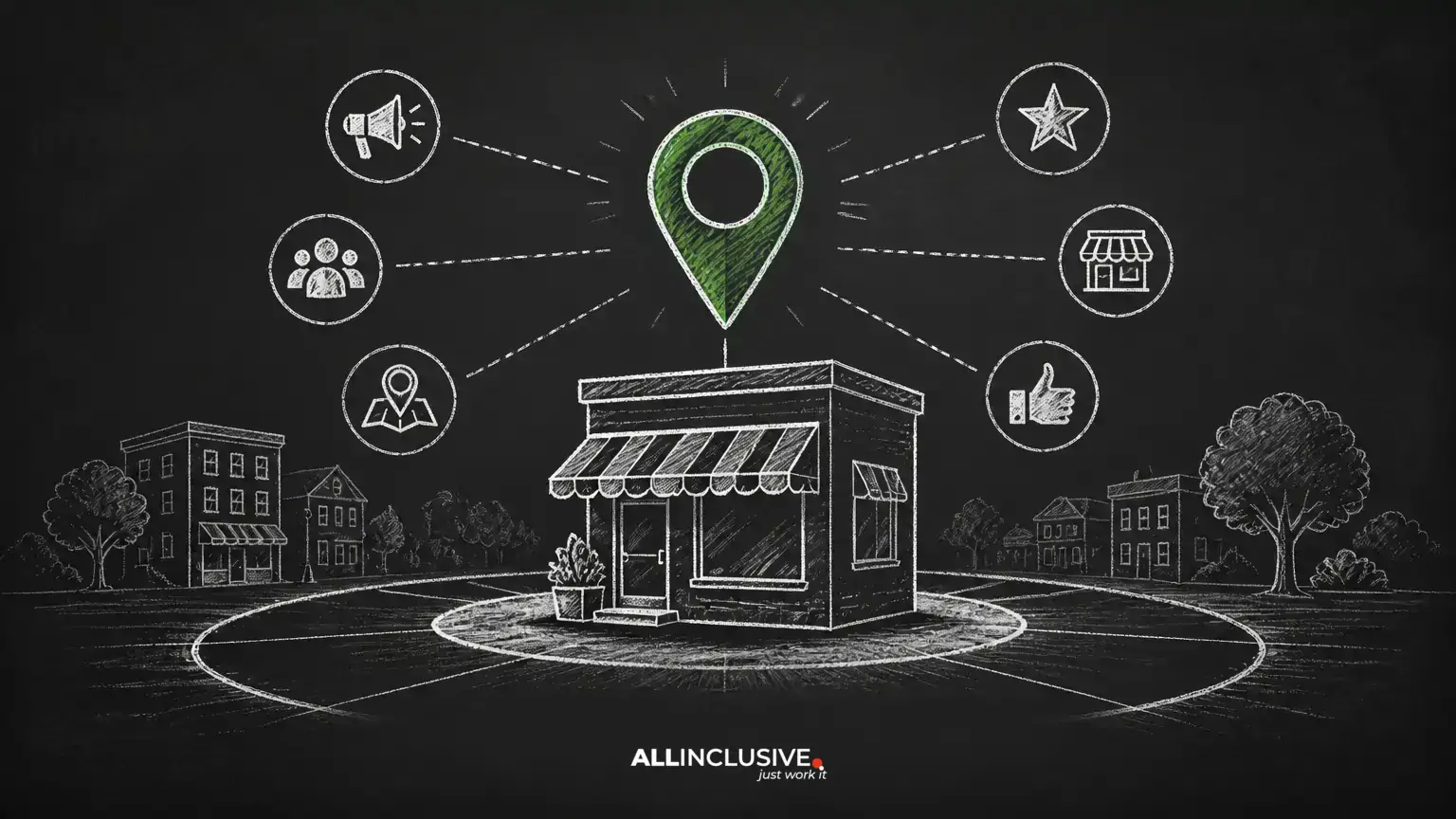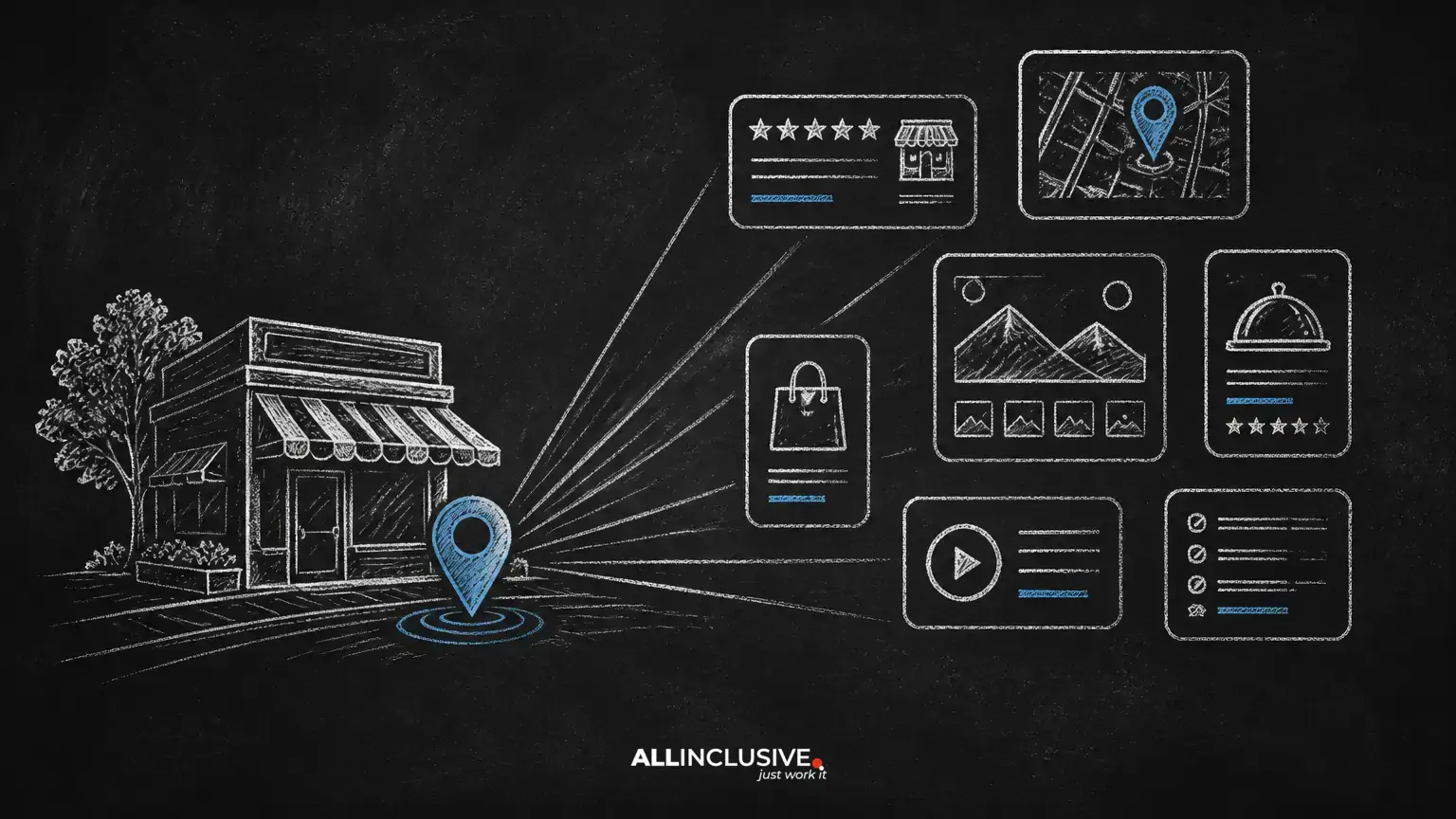
Search engine results pages, or SERPs, no longer consist only of ten blue organic links. Depending on the query, Google may show maps, business profiles, images, videos, questions, reviews, shopping results, or a direct answer above or alongside traditional listings. These elements are called SERP features. Businesses that appear in map results can also use Google Maps marketing to strengthen their visibility in local search experiences.
For a local business, understanding SERP features matters because visibility is distributed across the page. A company may attract a call from a map result, earn a visit through an organic listing, appear in an image result, or answer a customer’s question without receiving a click. The right optimization depends on the searcher’s intent and the feature Google chooses to display.
This guide explains the most useful SERP features for local SEO, what influences eligibility, and how to build a practical improvement process.
What are SERP features?
A SERP feature is any search result element that adds information or functionality beyond a standard organic result. Google selects features based on the query, the topic, the searcher’s location, device, and other context. The exact layout can change, so no feature should be treated as permanently guaranteed.
Common examples include:
- Local packs and map results
- Featured snippets and direct answers
- People Also Ask questions
- Image and video results
- Review or rating enhancements
- Sitelinks beneath a website result
- Knowledge panels
- Shopping, job, hotel, or other specialized results
Some features are primarily organic, while others may include advertising or data from third-party platforms. A feature can improve visibility without producing a conventional website visit, which is why local SEO measurement should include actions such as calls, direction requests, profile interactions, and qualified leads where those data are available. To connect visibility with meaningful local actions, use local SERP rank tracking to compare features, queries, and outcomes.
Why SERP features matter for local SEO
Local searches often have immediate intent. Someone searching for a service near a location may be comparing providers, checking availability, reading reviews, finding directions, or deciding whom to contact. Search features can place those decision-making details directly in front of the searcher.
This creates three practical implications:
- Ranking position is not the whole story. A traditional number-one result may appear below a map, questions, or other prominent elements.
- Different searches require different assets. A service page, business profile, photo, review, or video may each support a different discovery path.
- Optimization must match the user’s task. A person looking for directions needs accurate location information; a person comparing services needs clear value, proof, and contact options.
Use the Allinclusive local SEO guide as the broader framework, then use SERP features to identify how your business can be more useful at specific points in the search journey.
Local pack and map results
The local pack is the map-based result commonly shown for searches with local intent, such as a service and city combination or a “near me” query. It can display business names, categories, locations, ratings, hours, phone options, website links, and other profile information. The appearance and number of listings can vary by query and location.
Local pack visibility depends on more than adding keywords to a website. A sound local search process should include:
- Claiming and maintaining the business’s Google Business Profile
- Using an accurate primary category and relevant additional categories
- Keeping address, service area, phone, hours, and website information current
- Writing a clear business description for people, not keyword repetition
- Adding useful, authentic photos when appropriate
- Building legitimate mentions and citations with consistent core details
- Requesting reviews from real customers without incentives or manipulation
- Responding to reviews professionally and specifically
Do not assume that a complete profile guarantees a particular position. Local visibility can differ by searcher location, competition, relevance, and other factors. Treat the profile as a customer-facing information source that must remain accurate.
Organic listings and sitelinks
Standard organic results remain important even when a SERP contains several additional features. A strong organic listing should make the page’s purpose clear through its title, description, URL, and visible content. The page should also answer the query efficiently and provide an obvious next step.
Sitelinks are additional links that may appear beneath a website result. Site owners cannot simply switch them on, but a clear information architecture can help search engines understand important sections. Use descriptive navigation labels, logical page relationships, concise titles, and consistent internal links. Avoid creating multiple pages that serve nearly the same purpose, because unnecessary duplication can make both users’ and search engines’ understanding harder.
Featured snippets and direct answers
A featured snippet is a highlighted answer extracted from an organic page. It may use a paragraph, list, table, or another format. Eligibility is not guaranteed, and structured data does not create a featured snippet by itself.
For local businesses, snippet opportunities often arise from practical questions related to a service:
- What does a particular service include?
- How long does a common process take?
- What should a customer prepare before an appointment?
- What is the difference between two related services?
- When should someone contact a professional?
Answer these questions directly in a short opening response, then add context, limitations, examples, and next steps. Avoid making universal promises when timing, pricing, eligibility, or results depend on the customer’s situation.
People Also Ask
People Also Ask boxes present related questions that searchers may explore. They are useful for content planning because they reveal adjacent concerns around a topic. However, the questions shown can vary, and their presence should not be treated as a fixed content requirement.
To create genuinely useful supporting content:
- Collect recurring customer questions from sales, support, consultations, and on-site searches.
- Group questions by intent rather than publishing a disconnected list.
- Answer each important question in plain language.
- Link the answer to a relevant service or location page when the connection is natural.
- Review answers periodically when policies, pricing, regulations, or processes may change.
A concise FAQ section can help users, but adding large blocks of low-value questions solely to target a SERP feature usually weakens the page.
Reviews and rating enhancements
Reviews influence how people evaluate local providers, and search results may display rating information when the underlying data is eligible and understood. Businesses should focus on earning honest feedback through a consistent customer experience rather than attempting to manufacture ratings.
Make review requests easy and timely. Ask customers to describe their actual experience, but do not script praise, suppress negative feedback, post reviews on customers’ behalf, or offer incentives where prohibited. Respond to criticism with empathy and move sensitive details to a private channel when appropriate.
On the website, show testimonials transparently and identify their source when permission and applicable requirements allow. Do not assume that adding review markup will produce stars in search results. Structured data must accurately represent visible, eligible content and should be implemented according to current search guidelines.
Images and video results
Visual features can support local discovery for businesses where appearance, workmanship, products, facilities, or demonstrations affect the buying decision. Useful images should be original, relevant, properly oriented, and accompanied by descriptive context. Use meaningful file names and alt text for accessibility; do not treat alt text as a place to insert keywords.
Video can be valuable when it answers a question or demonstrates a process. A useful video should have a clear title, accurate description, understandable audio or captions, and a page where the surrounding text explains its relevance. Publishing a video does not guarantee a video result, so judge the asset by whether it helps customers make a decision.
How to find SERP feature opportunities
Start with a focused set of queries rather than attempting to track every possible result. Include service terms, location modifiers, question queries, brand searches, and searches associated with high-value actions.
For each query, record:
- The searcher’s likely intent
- The features currently visible
- Whether competitors appear in those features
- The asset supporting each result
- The action a searcher can take
- Any obvious information gaps or accuracy problems
Search results can vary by location, device, language, personalization, and time. Record the conditions of your review and avoid treating a single observation as definitive. Search Console, business profile reporting, analytics, call tracking, and customer feedback can provide complementary evidence, but each measures a different part of the journey.
A practical optimization workflow
1. Map queries to intent
Separate informational searches from comparison, transactional, navigational, and local discovery searches. This prevents a single page from being forced to answer every need.
2. Improve the underlying page or profile
Make the information accurate, complete, easy to scan, and specific to the audience and service area. Resolve confusing navigation, missing contact details, weak calls to action, and inconsistent business information.
3. Add only useful supporting content
Create an FAQ, image, video, comparison section, or location page only when it serves a real user need. Avoid thin pages made solely to target a visual result.
4. Strengthen internal connections
Link related service, location, contact, and educational pages using descriptive anchor text. For a broader search strategy, review the available SEO services from Allinclusive and connect technical, content, and local priorities rather than treating them as isolated tasks.
5. Measure business outcomes
Track relevant organic visibility alongside actions such as calls, form submissions, direction requests, qualified visits, and booked appointments. A SERP feature is useful when it helps the right person understand or choose the business—not merely because it appears.
Common mistakes to avoid
- Promising guaranteed placement in a SERP feature
- Adding irrelevant schema markup or marking up content users cannot see
- Repeating a city name unnaturally throughout a page
- Creating near-duplicate location pages with little local value
- Using fabricated, incentivized, or copied reviews
- Ignoring mobile usability and contact accessibility
- Measuring impressions without examining qualified actions
- Relying on old screenshots or assumptions about a feature’s current appearance
Conclusion
SERP features are the many result formats that help searchers find answers, businesses, products, locations, and next steps. For local companies, the most valuable approach is not to chase every feature. It is to understand the intent behind important searches, keep business information accurate, publish genuinely helpful answers, and make the preferred action easy.
When local profiles, service pages, reviews, media, internal links, and measurement work together, your business can become more useful across the search results page—even when the exact layout changes.