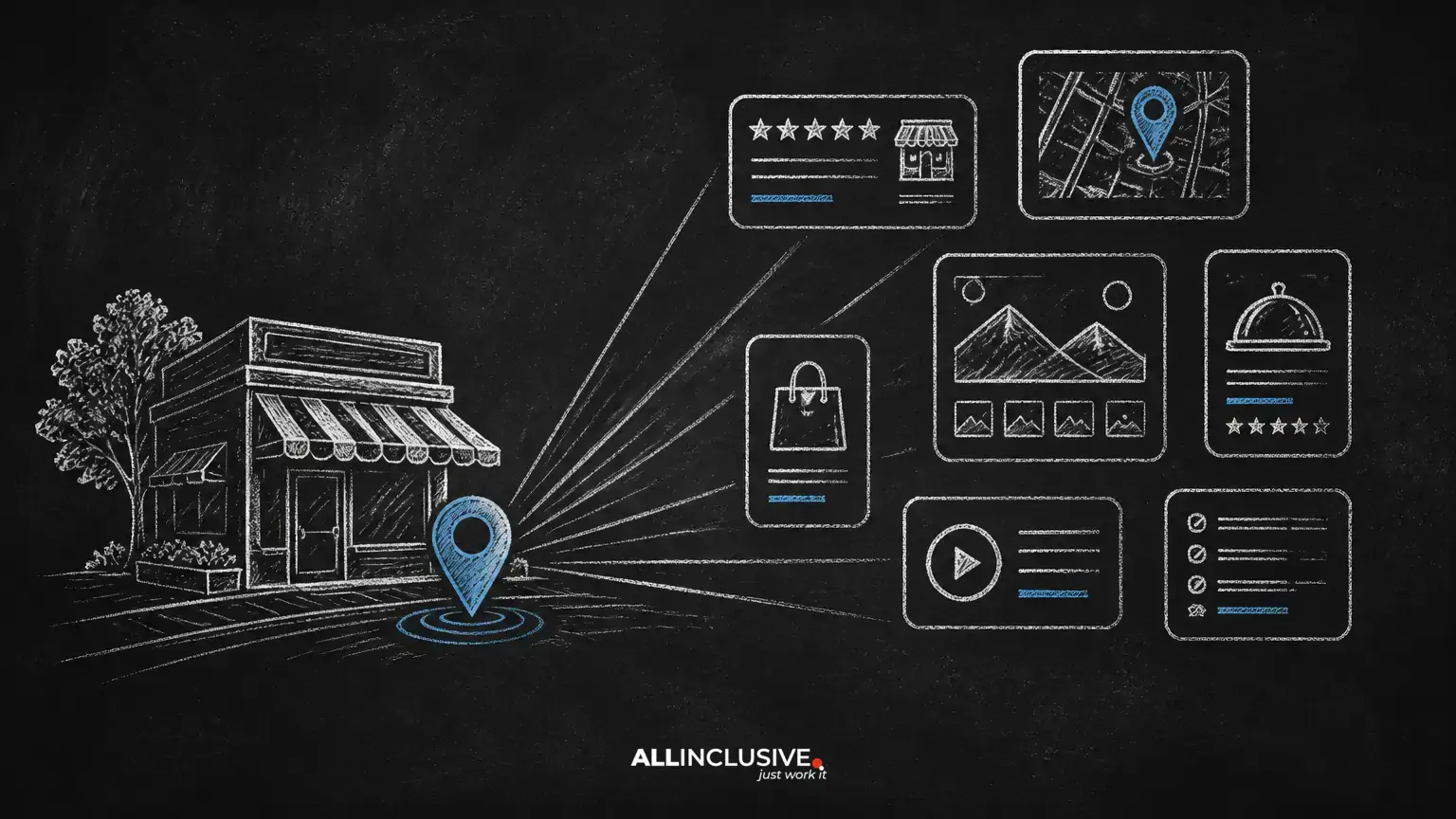
Finding local SEO clients is not only a lead-generation problem. It is also a positioning, qualification, and delivery problem. A clear offer helps the right businesses recognize that you can solve a specific need, while a disciplined sales process helps you avoid projects your team cannot support well.
This guide explains how to build a practical local SEO client-acquisition system—from defining your services and choosing a market to conducting outreach, presenting an audit, setting expectations, and reporting progress.
1. Define exactly what your local SEO service includes
“Local SEO” can describe very different work. It may include website improvements, location pages, business-profile management, review processes, citation cleanup, local content, technical SEO, digital PR, or performance reporting. If your offer includes everything, prospects may struggle to understand what they are buying.
Start by documenting the work you can deliver consistently. Separate it into three groups:
- Core services: work your team performs confidently and repeatedly.
- Optional services: useful additions that depend on the client’s goals, market, budget, or internal resources.
- Partner or referral services: work outside your capabilities that should not be presented as an in-house specialty.
Define the intended business outcome for each service. For example, a location-page project may improve the usefulness of a website for people in a service area, while business-profile maintenance can help keep public business information accurate. Avoid promising a specific ranking or a guaranteed lead volume; search visibility depends on competition, relevance, website quality, customer behavior, and other factors beyond an agency’s control.
2. Choose a workable market and client profile
You do not need to serve only one industry, but you do need a clear idea of which businesses are a good fit. Local SEO is most relevant to organizations with a physical location, a defined service area, or both. Examples can include professional practices, home-service companies, retailers, hospitality businesses, and locally focused service providers.
Evaluate potential niches using practical criteria:
- Does the business depend on local discovery or location-based demand?
- Can the business legally and accurately describe its services and service area?
- Is there a meaningful difference between competitors that better search visibility could expose?
- Does the business have the capacity to answer inquiries and convert prospects?
- Can the likely value of a new customer support a sustainable marketing investment?
- Does your team understand the industry, or can it learn the customer journey responsibly?
A niche is useful when it sharpens your messaging and improves your ability to recognize recurring problems. It should not become an excuse to make unsupported claims or use the same template for every business.
3. Make your own agency easy to evaluate
Prospects often assess an SEO provider by examining its website, explanations, communication, and process. Your own local presence should therefore be clear and accurate. Explain who you serve, where you operate, what you do, and how a prospective client can begin a conversation.
Review the fundamentals before investing heavily in promotion:
- Use consistent business information wherever your organization is represented.
- Describe services in plain language rather than filling pages with repeated location phrases.
- Publish useful guidance that answers questions business owners actually ask.
- Make contact details and qualification steps easy to find.
- Show your methodology, boundaries, and reporting approach.
Your agency does not need to rank first for every local query to demonstrate competence. A more credible signal is a clear, useful site and a process that connects recommendations to business goals. For broader search strategy and technical support, see Allinclusive SEO services. Agencies can turn that credibility into action by improving local SEO and connecting recommendations to local visibility and client goals.
4. Create educational content that supports sales
Local business owners may know they need more customers but not understand why their visibility is weak. Educational content can reduce that uncertainty before a sales call. Focus on practical questions such as:
- What information should a local business keep consistent online?
- How should a service-area business describe where it works?
- What should a business review before creating new location pages?
- Which local SEO metrics are useful for a particular business model?
- How can a business request customer feedback without manipulating reviews?
Good content should help a reader make a better decision even if they do not hire you. That means explaining tradeoffs, identifying limitations, and distinguishing foundational work from activities that require ongoing investment.
Use content to create a path toward a relevant next step. A checklist can lead to an assessment, an assessment can lead to a consultation, and a consultation can lead to a scoped proposal. The path should feel useful rather than coercive.
5. Find prospects through focused research
Broad lists of local businesses are usually less valuable than a smaller group selected against clear criteria. Build prospect research around observable business needs, not assumptions about poor performance.
For each potential client, review:
- The clarity and usefulness of the website’s service and location information.
- The consistency of contact and location details across important public profiles.
- The quality of pages that describe services, locations, or customer questions.
- Whether the business makes its next step clear on mobile and desktop.
- Whether public information appears current and aligned with the customer experience.
Do not treat a single ranking check as a complete diagnosis. Search results vary by query, location, device, personalization, competition, and time. Your research should identify questions for discussion, not manufacture certainty.
6. Lead with a useful, personalized outreach message
Effective outreach demonstrates relevance quickly. It does not need to be long, and it should not imply that you know more about the business than your research supports.
A strong message can include:
- A specific observation about the business or customer journey.
- A concise explanation of why the observation may matter.
- One or two practical questions that invite context.
- A low-pressure offer to review the issue together.
For example, instead of saying that a company is “losing thousands of leads,” explain that a key service page does not clearly communicate its service area and ask whether local inquiries are a priority. This is more credible and gives the owner an opportunity to correct your interpretation.
Use email, professional networks, partnerships, community organizations, referrals, and local events according to the market. The channel matters less than the quality of the research and the relevance of the conversation. Respect consent, applicable marketing rules, and reasonable follow-up boundaries.
7. Use an audit as a conversation tool, not a scare tactic
A prospective-client audit should be concise enough to understand and specific enough to act on. Avoid producing a long automated report filled with warnings that do not affect the business.
Organize the review around business impact:
- Discoverability: Can relevant customers find the business for important needs and locations?
- Relevance: Do the website and public profiles explain the services accurately?
- Trust: Is the information consistent, current, and supported by a credible customer experience?
- Conversion: Can a visitor understand the next step and complete it without unnecessary friction?
- Measurement: Can the business distinguish meaningful inquiries from superficial traffic metrics?
Separate confirmed observations from hypotheses. Explain what should be verified with analytics, call records, customer interviews, or the client’s operational team. This approach builds trust and prevents the proposal from becoming a list of exaggerated problems.
8. Qualify before you propose
A proposal is more useful when it follows a qualified conversation. Learn how the business currently acquires customers, which locations or services matter most, what has already been attempted, who approves marketing work, and what resources are available for implementation.
Also assess operational readiness. More search visibility will not solve slow responses, unclear pricing, limited availability, or a poor customer experience. Those issues may be relevant to the engagement, but they should be discussed honestly rather than hidden behind SEO language.
A good-fit decision should work both ways. Decline or reshape a project when expectations are incompatible, access will not be available, the timeline is unrealistic, or the requested tactics would compromise accuracy or user trust.
9. Build a proposal around priorities and responsibilities
Translate research into a sequence of actions. A local SEO proposal might begin with information accuracy and measurement, continue with high-value website improvements, and then address content, authority, reviews, or ongoing optimization according to the client’s situation.
For every major recommendation, state:
- The problem or opportunity being addressed.
- The planned work and who owns implementation.
- What access, content, approvals, or client participation are required.
- Which indicators will be monitored.
- What cannot be guaranteed.
Use a realistic delivery schedule. Search changes may take time to be crawled, evaluated, and reflected in business outcomes, and some work depends on the client or third parties. Establish an initial baseline instead of promising a fixed ranking date.
10. Report on outcomes that matter
Reporting should help the client decide what to do next. Combine activity reporting with evidence of progress and business context.
Depending on the business model, useful reporting may include:
- Organic impressions, clicks, and landing-page engagement.
- Visibility for a carefully selected set of local queries, interpreted cautiously.
- Business-profile interactions where reliable data is available.
- Calls, form submissions, appointment requests, or other agreed conversions.
- Changes to important pages, listings, reviews, and technical issues.
- Open risks, client dependencies, and priorities for the next period.
Do not present rankings as revenue, or traffic as success without examining lead quality. Agree on definitions before work begins and distinguish reported data from estimates. A short narrative explaining what changed, why it matters, and what happens next is often more valuable than a dashboard full of disconnected numbers.
11. Improve the client-acquisition system over time
Track your own process. Record which industries respond, which problems lead to useful conversations, where prospects disengage, and which services are difficult to deliver profitably. Review this information periodically and refine your positioning.
Use the lessons to improve your qualification questions, educational content, audit format, proposal structure, onboarding, and reporting. The goal is not to send more generic pitches. It is to create a repeatable system that attracts appropriate clients and gives them a clear, honest path to improvement.
Conclusion
Winning local SEO clients starts with a defensible offer and continues through careful research, relevant education, personalized outreach, realistic proposals, and accountable reporting. Agencies that explain both opportunity and limitation are more likely to build durable relationships than those that rely on ranking guarantees or automated warnings.
Define what you can deliver, select businesses you can genuinely help, and make every stage of the client journey useful—even before a contract is signed.
For related guidance, see Local SEO.