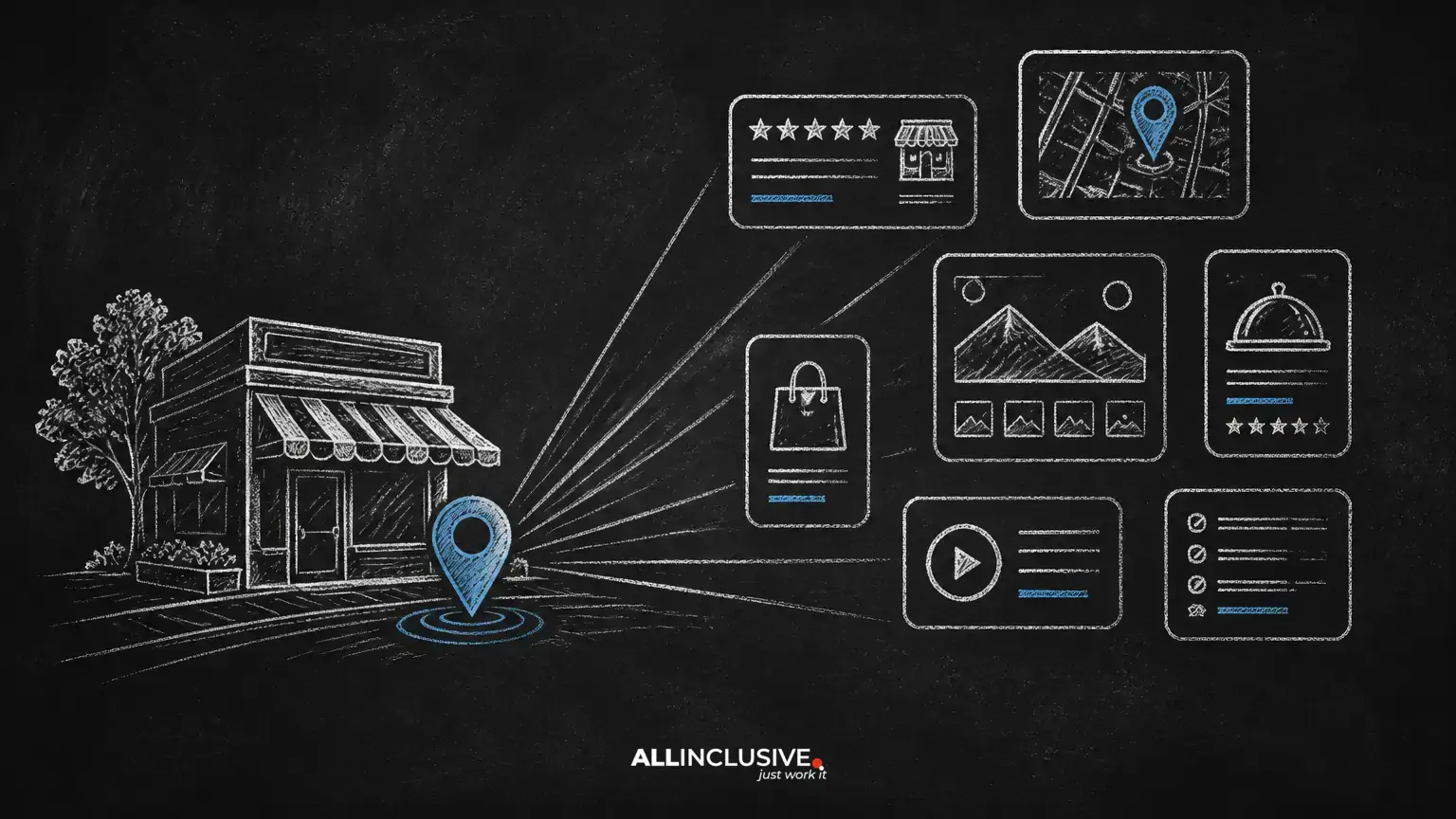
Local SEO is not one task or one directory listing. It is the coordinated work of making your business understandable, credible, and useful to people searching in a specific place. A strong process connects your business profile, website, customer experience, reputation, and measurement.
Use this checklist as a working system rather than a one-time setup. Complete the foundational items first, then review performance regularly and improve the areas that create the greatest friction for local customers.
1. Define your local search strategy
Before changing pages or listings, clarify what you want local search to accomplish. A neighborhood service business may need phone calls and quote requests, while a shop, clinic, or restaurant may prioritize visits, directions, bookings, or menu views.
Document your service area
- List the cities, neighborhoods, or communities you genuinely serve.
- Separate primary locations from areas served occasionally.
- Note any service boundaries, travel fees, appointment requirements, or delivery limits.
- Identify the services that are most valuable and most relevant to each location.
This prevents a common mistake: publishing location pages or listing information for places the business does not meaningfully serve. Local relevance should reflect the actual customer experience.
Map search intent to useful pages
Group searches by what the person needs. Examples include a service, a service near a location, an urgent problem, pricing or availability, directions, and business comparisons. Each important intent should lead to a page that answers the question rather than sending every visitor to the home page.
2. Establish accurate business information
Customers and search systems need consistent core details. Create one approved source of truth for the business name, address, phone number, website, hours, service area, booking URL, and primary descriptions.
Review your business profile
- Claim or verify the profile through the platform’s official process.
- Choose the category that most accurately describes the primary business activity.
- Add only services, attributes, and locations that are accurate.
- Use a clear description written for customers, not a string of repeated keywords.
- Publish current photos that represent the premises, team, products, or completed work where appropriate.
- Check regular hours, holiday hours, appointment instructions, and contact options.
Do not select a category solely because it appears popular. Relevance and accuracy matter more than trying to attach the business to every possible term.
Audit third-party listings
Search for the business name, phone number, address, and website. Record important directories, industry associations, chambers of commerce, social profiles, and local publications. Correct meaningful inconsistencies, remove duplicates when the platform allows it, and prioritize sources customers actually use.
Not every directory deserves equal effort. Focus on accuracy, visibility, and trust rather than collecting a large number of low-quality listings.
3. Improve the website for local customers
Your website should confirm that the business serves the visitor, explain what happens next, and make contacting the business easy. Local optimization is most effective when it improves usability as well as discoverability.
Strengthen core pages
- Give each important service a clear, descriptive page.
- State the relevant service area naturally and specifically.
- Show the business name and contact details consistently.
- Include practical information such as pricing guidance, availability, parking, accessibility, process, or response times when appropriate.
- Use descriptive page titles and headings that match the page’s actual purpose.
- Add clear calls to action, such as calling, booking, requesting a quote, or visiting.
A location page should contain original, useful information about that location. Avoid creating many near-identical pages that change only the city name. Thin or duplicated pages rarely help customers and can make the site harder to manage.
Check technical foundations
- Confirm that important pages can be crawled and indexed.
- Fix broken internal links and incorrect redirects.
- Use one preferred version of each URL.
- Make pages readable and usable on mobile devices.
- Compress oversized images and remove unnecessary page friction.
- Write meaningful alternative text for informative images.
- Use internal links to connect related services, locations, and helpful guidance.
Structured data can help describe entities and page content when it accurately reflects what users can see. Treat it as supporting context, not a guarantee of enhanced search results. Validate implementation and avoid adding markup for information that is absent or misleading.
4. Build local relevance and authority
Local authority grows when the business is genuinely connected to its community and industry. Look for legitimate opportunities to be useful, not schemes designed only to obtain links.
- Participate in relevant local organizations or professional associations.
- Support community events or initiatives that align with the business.
- Offer expert commentary or practical resources to local publications.
- Create guides that answer location-specific customer questions.
- Develop relationships with complementary businesses where referrals make sense.
A worthwhile local mention should help a reader understand or choose the business. Avoid paid or reciprocal link arrangements that exist only to manipulate rankings, and never create fake locations to expand coverage.
5. Manage reviews and customer feedback
Reviews influence customer confidence and can reveal operational problems that marketing cannot solve. Make review collection part of a normal post-purchase process, subject to the policies of the platform and applicable law.
Create a responsible review process
- Choose a natural moment to request feedback, such as after delivery, completion, or a resolved support interaction.
- Make the request easy to understand and provide the correct review destination.
- Ask for honest feedback rather than directing customers toward a particular rating.
- Never offer prohibited incentives, submit reviews for customers, or suppress legitimate negative feedback.
- Record recurring complaints and assign them to an owner for resolution.
Respond with care
Thank customers for useful positive feedback without repeating promotional language. For critical reviews, acknowledge the concern, avoid sharing private details, explain the next step, and invite the customer to continue the conversation through an appropriate private channel. Do not argue publicly or disclose personal information.
Social channels can support local trust, but they should serve the audience rather than become a checklist of forced posts. Share genuinely useful updates, answer questions, and keep business information current.
6. Measure local SEO performance
Measurement should connect visibility to business outcomes. Rankings can vary by location, device, personalization, and search context, so do not use a single position as the entire definition of success.
Track meaningful indicators
- Calls, form submissions, bookings, quote requests, and other qualified actions.
- Organic visits and engagement on service and location pages.
- Business-profile interactions such as website visits, calls, messages, or direction requests where available.
- Search impressions and clicks for important local queries.
- Review volume, themes, response coverage, and recurring service issues.
- Visibility across the locations and devices that matter to the business.
Use consistent naming for campaigns and conversion events. Compare performance over sensible periods, account for seasonality, and investigate changes before attributing them to a single optimization.
Turn data into an action list
Review performance monthly or on a schedule that fits the business. Look for pages that receive impressions but few visits, pages that attract visits but few conversions, locations with weak engagement, and customer questions that the website does not answer. Prioritize changes by likely customer impact and implementation effort.
7. Use a repeatable local SEO maintenance schedule
| Frequency | Recommended checks |
|---|---|
| Weekly | Review important messages, calls, new reviews, and urgent listing changes. |
| Monthly | Check hours, contact details, key conversions, important pages, and recurring customer questions. |
| Quarterly | Audit major listings, update photos and service information, review local competitors, and test important forms or booking paths. |
| After a business change | Update profiles, website pages, directories, redirects, signage, and customer communications as needed. |
Local SEO checklist summary
- Define the real service area and priority services.
- Keep business information accurate and consistent.
- Improve service and location pages for people, not just search engines.
- Resolve technical issues that block access or create friction.
- Earn local relevance through genuine community and industry participation.
- Request and manage honest customer feedback responsibly.
- Measure qualified actions alongside visibility.
- Review and maintain the system continuously.
Local SEO works best as an operating discipline shared by marketing, customer service, and business owners. Start with accuracy and usability, then use evidence from customers and performance data to decide what deserves the next improvement.
For a broader view of how local visibility fits into an organic search program, visit Allinclusive’s local SEO resources. Businesses evaluating wider search priorities can also review the SEO services overview.