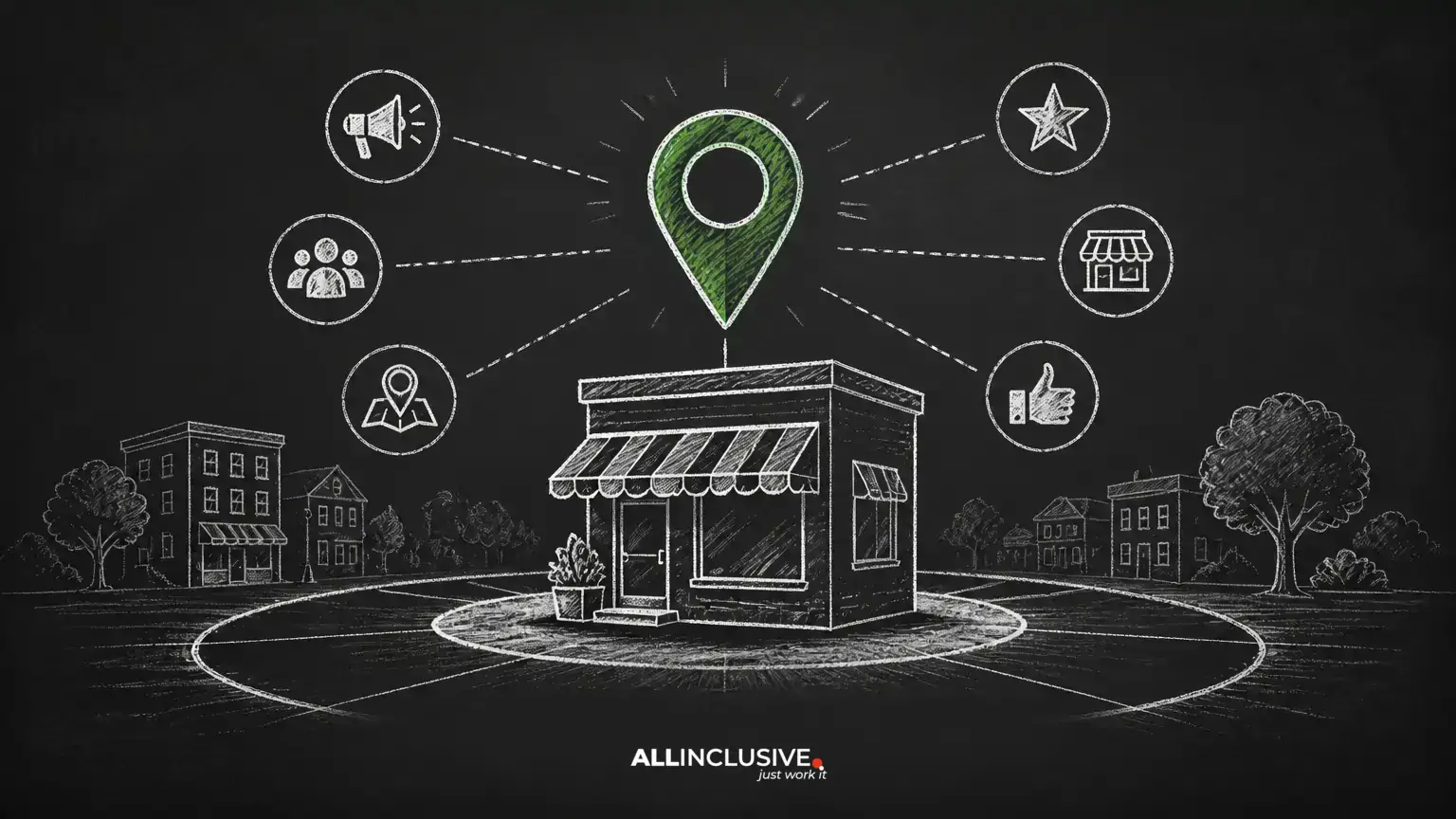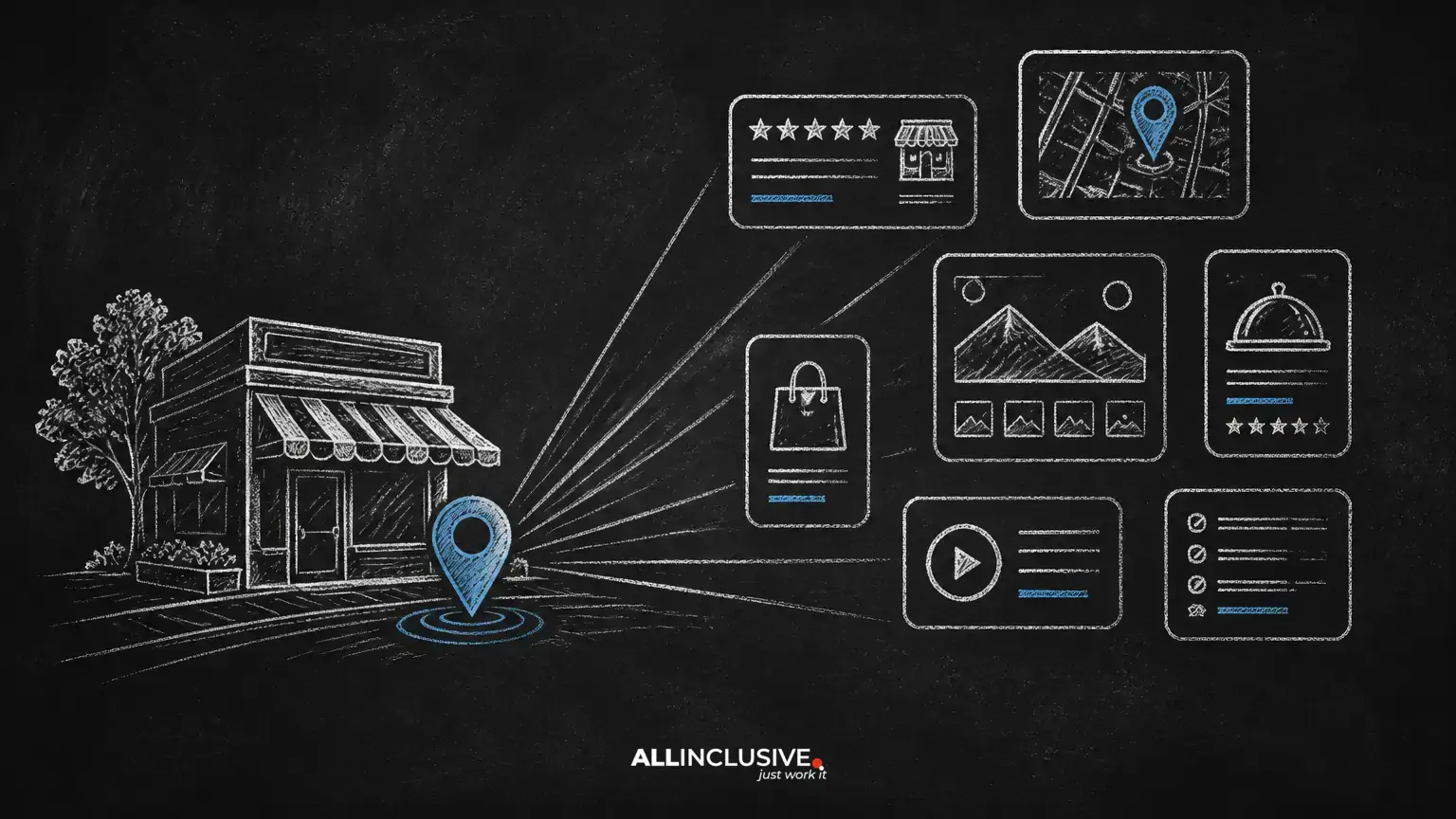
Local SEO helps a business become more visible when people search for products or services in a particular area. It includes more than appearing in Google Maps. A complete strategy supports both local map results and the organic website listings that appear alongside or below them.
The goal is not to manipulate rankings or publish the same location page repeatedly. The goal is to make your business easy to understand, easy to verify, and genuinely useful to people in the communities you serve. This guide explains how to build that foundation.
Understand the two local search opportunities
Local searches commonly produce two distinct opportunities:
- Map results: Business profiles that show location, category, hours, reviews, photos, and actions such as calls or directions.
- Organic results: Website pages that answer a local searcher's question or support a service, product, or location need.
These systems overlap, but they are not interchangeable. A complete business profile does not replace a useful website, and a well-optimized website does not replace accurate business information on the map platform. Treat both as connected parts of one customer journey.
Set a realistic local SEO objective
Start with business outcomes rather than a list of keywords. Decide whether the priority is phone calls, appointment requests, quote submissions, store visits, online purchases, or qualified traffic to a service page. The right objective determines which pages, profile actions, and conversions deserve attention.
Define the geographic area you can actually serve. A storefront may primarily compete for searches near its address, while a service-area business may travel to customers across several communities. Do not promise coverage in places the business cannot reliably serve. Location targeting should reflect operations, not wishful reach.
Build an accurate Google Business Profile
Your business profile is often a customer's first interaction with the company. Complete every relevant field accurately, but do not add keywords to the business name unless they are part of the real-world name. Misrepresenting a name, address, service area, or category can create customer confusion and may violate platform guidelines.
Review the essential fields
- Business name: Use the name customers see on signage, documents, and the website.
- Primary category: Select the category that best describes the main business activity. Add secondary categories only when they are genuinely relevant.
- Address or service area: Show a customer-facing address when customers visit that location. Service-area businesses should configure their coverage accurately and follow current platform requirements.
- Hours: Keep regular and holiday hours current. Incorrect hours can create a poor experience even when rankings are unaffected.
- Phone and website: Use contact information that connects customers to the right business location or service page.
- Services, products, attributes, and photos: Add information that helps people decide whether the business meets their needs.
Write the description for customers. Explain what the business does, who it serves, and what makes the offering useful. Repeating a keyword unnaturally is less helpful than clear, specific information.
Research local demand and search intent
Local keyword research should identify how real customers describe their needs. Look for combinations of service, product, problem, location, urgency, and audience. Examples might include a service plus a city, a product plus “near me,” or a question about cost, availability, or timing.
Use first-party evidence whenever possible. Search Console can show queries that already generate impressions, while calls, customer questions, sales conversations, and on-site search data reveal language that keyword tools may miss. Compare this evidence with the services and locations the business can actually support.
Do not create a separate page for every nearby suburb simply by changing the place name. A location page should have a legitimate reason to exist, such as a meaningful service area, local staff or facilities, distinct customer information, or genuinely different content and proof.
Create useful local website pages
Your website should make three things clear: what you offer, where you offer it, and why a customer should trust you. Begin with the core pages that match demand and business priorities.
Strengthen core service and product pages
Each important service or product should have a dedicated page when the offer, audience, or buying process is meaningfully different. Explain the problem addressed, what the service includes, who it is for, expected next steps, limitations, and how to contact the business.
Use natural geographic references where they clarify availability. A page about emergency plumbing, for example, can explain response coverage and access requirements without repeating a city name in every heading.
Use location pages responsibly
A location page should contain information a person in that area would actually need. Consider local access details, service boundaries, parking or delivery information, staff knowledge, project examples, regulations, or frequently asked questions. Avoid publishing thin pages that provide no evidence of local relevance.
Make contact information consistent
Keep the business name, address, phone number, hours, and service coverage consistent across the website and important third-party listings. Minor formatting differences are not automatically a problem, but conflicting information should be corrected. Add the details where customers can find them, such as the contact page, location page, and footer when appropriate.
Earn trust through reviews and customer experience
Reviews influence how people evaluate a local business and may contribute to local visibility. They are not a substitute for quality service, and there is no reliable shortcut to a strong review profile.
Ask customers for honest feedback after a genuine interaction. Make the process easy, but do not pressure customers to use specific wording, reward only positive reviews, or create reviews from people who were not customers. Respond professionally to both positive and negative feedback. A response should acknowledge the person, protect privacy, and move detailed resolution to a private channel when necessary.
Review themes can also improve the business itself. Repeated comments about scheduling, communication, pricing clarity, or a particular service may identify operational improvements and useful topics for the website.
Develop credible local authority
Local prominence is built through real-world recognition and consistent online evidence. Prioritize relevant opportunities over volume:
- Memberships in legitimate trade associations or chambers
- Community partnerships, sponsorships, or events that the business genuinely supports
- Local news or industry coverage based on something newsworthy
- Supplier, partner, or professional organization profiles
- Useful collaborations with complementary local businesses
These activities can produce mentions, referrals, and links, but their primary value is being useful and credible. Buying large quantities of low-quality directory links or creating listings solely to manipulate rankings is not a durable strategy.
Improve technical and on-page foundations
Local relevance cannot compensate for a website that is difficult to crawl, use, or trust. Check that important pages are indexable, load reliably, work on mobile devices, and have descriptive title tags and headings. Fix broken links, duplicate or missing metadata, unclear navigation, and forms that fail to submit.
Use descriptive internal links. “View emergency drain repair services” gives users and search engines more context than a repeated “learn more” link. Connect location pages, service pages, FAQs, case studies, and contact paths in a structure that reflects how customers research and decide.
Structured data can help search engines interpret information when it accurately describes visible content. Treat it as supporting context, not a guarantee of enhanced results. Validate implementation and keep business details synchronized with the page content.
Performance work should focus on the user experience: appropriately sized images, efficient scripts, stable layouts, accessible text, and dependable hosting. Test changes on representative mobile devices and connections rather than assuming a single tool score tells the whole story.
Measure visibility, actions, and quality
Track more than rankings. Local results can vary by searcher's location, device, language, and intent, so a single rank number does not describe the whole market.
Build a measurement set that may include:
- Search Console impressions, clicks, queries, and landing pages
- Business profile calls, website visits, direction requests, and other available actions
- Form submissions, booked appointments, calls, or purchases attributed to organic discovery
- Review volume, themes, response coverage, and recurring customer concerns
- Indexation, broken links, page performance, and conversion-path health
Use tracking parameters where appropriate and document changes before evaluating results. Separate branded from non-branded demand, and compare performance by service and location. Ranking improvements matter only when they lead to useful visits, qualified inquiries, or better customer access.
A practical local SEO priority order
- Correct the facts: Verify business details, ownership, categories, hours, service areas, and important listings.
- Fix conversion barriers: Make calls, forms, directions, booking, and key service information easy to use.
- Strengthen core pages: Improve the pages that match the highest-value services, products, and locations.
- Build a review process: Request honest feedback consistently and respond with care.
- Resolve technical issues: Address indexation, mobile usability, speed, accessibility, and internal linking.
- Invest in local relationships: Earn relevant mentions and links through legitimate community or industry activity.
- Publish selectively: Add local content when it answers a real customer question or demonstrates meaningful expertise.
- Measure and iterate: Review outcomes regularly and prioritize the changes with the clearest customer or business value.
Conclusion
A durable local SEO strategy combines accurate business information, helpful website pages, credible reviews, technical reliability, and genuine community relevance. Start with the fundamentals that affect customer trust, then use performance data and customer feedback to decide what to improve next.
For a broader view of how local search fits into a complete search program, explore Allinclusive’s local SEO services. You can also review guidance on content marketing and technical SEO when expanding the website and measurement plan.