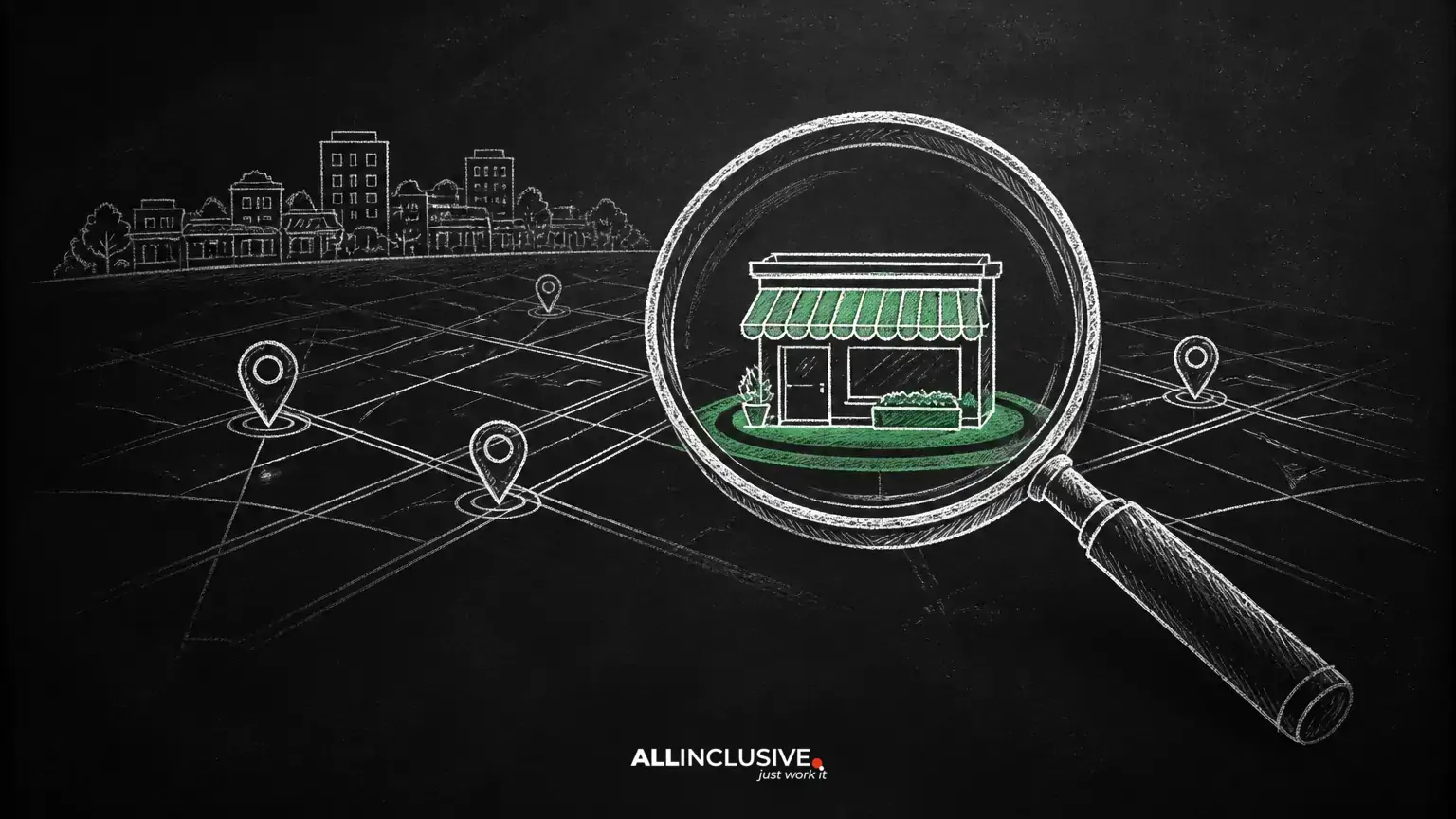
Small businesses do not need to appear for every search to benefit from SEO. They need to become visible when nearby or service-area customers are looking for the specific products, services, and answers the business can genuinely provide.
That makes local SEO a practical growth channel, but it is not a one-time setup. Strong results usually come from aligning your business information, website, local relevance, customer experience, and measurement over time. This guide explains where to start, what to prioritize, and which shortcuts to avoid.
What local SEO means for a small business
Local SEO is the process of improving a business’s visibility for searches connected to a location, service area, or nearby need. Depending on the query, searchers may see map results, local business profiles, organic website pages, directories, reviews, or a combination of these.
The goal is not simply to rank for a broad phrase such as “plumber” or “accountant.” A more useful goal is to be discoverable for searches that show a realistic need, such as a service combined with a city, neighborhood, or “near me” wording. Your visibility should also lead to a useful next step: a call, form submission, appointment, visit, quote request, or purchase.
For a broader overview of the discipline, see Allinclusive’s local SEO resource.
Set a realistic local SEO objective
Before changing pages or publishing content, define what success means for your business. A local restaurant, home-service company, medical practice, and professional firm may need different outcomes.
- Discovery: more relevant appearances for priority services and locations.
- Engagement: more profile visits, website visits, calls, direction requests, or appointment actions.
- Qualified demand: more inquiries or transactions from customers you can actually serve.
- Efficiency: a clearer understanding of which pages, services, and locations generate worthwhile leads.
Record a baseline before making major changes. Keep the measurement simple enough to maintain. Ranking position can be useful context, but it should not replace business outcomes or the quality of incoming inquiries.
Build a reliable business information foundation
Search engines and customers need consistent information about who you are, what you offer, where you operate, and how to contact you. Create a master record containing your official business name, address or service area, phone number, website, hours, primary services, and preferred business description.
Use the same core facts across your website, business profiles, reputable directories, chamber or association pages, and other legitimate mentions. Small formatting differences are not automatically harmful, but conflicting addresses, old phone numbers, duplicate profiles, or outdated hours can create confusion.
Choose the correct business model
A storefront that serves customers at its address is different from a service-area business that travels to customers. A business that operates at both a staffed location and customer sites may need a hybrid setup. Represent the real-world operation accurately rather than selecting locations solely because they appear attractive in search.
Review your listings regularly
Assign ownership for checking important profiles after changes such as a move, new phone number, revised hours, rebranding, or service expansion. A quarterly review is a useful starting point, with additional checks around holidays and major operational changes.
Optimize your business profile for usefulness
Your primary business profile should help a potential customer decide whether to contact you. Complete the fields that accurately describe the business, select the most specific available categories, add services where appropriate, and use clear, current photos that represent the real location, team, products, or work.
Do not treat the profile as an opportunity to repeat keywords. Write descriptions for customers, explain your service area honestly, and make the next action obvious. If customers need an appointment, quote, menu, booking page, or directions, make that path easy to find.
Monitor questions, messages, suggested edits, and reviews. Respond professionally and avoid publishing private customer information. If a platform offers performance data, use it as directional evidence rather than assuming every view or action represents a qualified lead.
Create pages around real services and locations
A small-business website often performs better when its structure reflects how customers choose the business. Start with a clear homepage, service pages for meaningful offerings, an about or trust page, and a contact page. Add location pages only when the business genuinely serves those locations and can provide distinct, useful information.
A strong service page should explain:
- What the service includes and who it is for.
- Which problems or situations it addresses.
- What the process involves.
- Relevant qualifications, limitations, or preparation requirements.
- Service area and availability details.
- What a customer should do next.
A location page should do more than replace a city name in a template. Include genuinely relevant information about availability, local logistics, service boundaries, parking or access where appropriate, and examples that are truthful for that location. Avoid creating thin pages for every nearby town when the business has no meaningful presence or service capability there.
Make the website technically dependable
Technical SEO for a small business starts with making important pages accessible, understandable, and usable. You do not need to solve every advanced issue before improving the basics.
- Confirm that important pages can be crawled and indexed.
- Use one preferred version of each page and redirect obsolete URLs appropriately.
- Fix broken internal links and important dead-end pages.
- Ensure pages work well on mobile devices and common browsers.
- Use descriptive page titles and headings that match the page’s purpose.
- Compress and size images sensibly, while retaining useful visual information.
- Provide a clear sitemap and check for accidental noindex or blocking directives.
Prioritize issues that prevent customers or search engines from reaching valuable content. A clean, useful page is generally more valuable than a large collection of low-priority technical recommendations.
Publish content that supports local decisions
Local content should answer questions customers actually ask before contacting or visiting a business. Useful subjects may include pricing factors, preparation checklists, service comparisons, maintenance advice, eligibility requirements, timelines, accessibility information, or what to expect during the first appointment.
Use local context when it changes the answer. For example, explain service boundaries, local regulations only when you can verify them, seasonal considerations, or practical access details. Do not add city names merely to make a page appear local.
Use first-hand business knowledge carefully
People working in the business often know which questions cause hesitation, which mistakes are common, and which details customers need before requesting a quote. Turn that knowledge into clear explanations, but separate general guidance from advice that requires a licensed or qualified professional.
Review older content for outdated hours, discontinued services, expired offers, unsupported claims, and references to rules or prices that may have changed. When information is time-sensitive, verify it before publication and note the relevant date or scope.
Earn reviews and local references ethically
Reviews can help customers evaluate a business and can reveal recurring service issues. Ask genuine customers for feedback through a simple, neutral process. Do not pressure people to leave only positive reviews, offer incentives that violate platform rules, write reviews for customers, or selectively hide legitimate criticism.
Respond to reviews in a way that protects privacy. Thank customers for useful feedback, address concerns without arguing, and invite sensitive conversations into an appropriate private channel.
Local references can also strengthen discovery when they are earned naturally. Consider legitimate relationships with suppliers, professional associations, community organizations, event partners, local publications, and complementary businesses. A mention should be relevant and editorially appropriate. Buying large quantities of low-quality links or submitting to irrelevant directories can create more risk than value.
Connect local SEO to conversion quality
Visibility has limited value if visitors cannot act. Make phone numbers, inquiry forms, booking paths, opening hours, and directions easy to find. Explain what happens after a form is submitted, what information a caller should prepare, and whether the business serves the customer’s location.
Review the experience from a customer’s perspective on a mobile device. Check that forms work, confirmation messages appear, phone links dial correctly, and important pages do not hide basic information behind unnecessary steps.
For broader search strategy and technical support, compare local priorities with the wider guidance on SEO services.
Measure progress without chasing vanity metrics
Use a small reporting set that connects search visibility to business value. Depending on your setup, track:
- Impressions and clicks for important queries and pages.
- Visits to service and location pages.
- Calls, forms, bookings, quote requests, or store visits where measurable.
- Profile actions such as calls, website visits, or direction requests.
- Lead quality, close rate, and recurring customer patterns.
Compare periods carefully because seasonality, promotions, staffing, service capacity, and tracking changes can affect results. Search impressions may rise without producing better leads, while a smaller number of highly relevant inquiries may be more valuable than broad traffic.
A manageable 90-day starting plan
- Weeks 1–2: define goals, document business information, check profile ownership, and identify critical tracking gaps.
- Weeks 3–4: correct inaccurate listings, improve the primary profile, and fix major contact, indexing, and mobile usability problems.
- Weeks 5–8: improve the homepage and priority service pages; create only the location pages the business can support with real information.
- Weeks 9–10: publish one or two customer-focused resources based on recurring questions and verify any time-sensitive claims.
- Weeks 11–12: review calls, forms, profile actions, search data, reviews, and lead quality; then choose the next highest-impact work.
Common small-business SEO mistakes to avoid
- Creating duplicate pages for every nearby location without unique value.
- Changing business names or addresses to include search terms.
- Writing for algorithms instead of answering customer questions.
- Using anonymous, copied, or unverifiable reviews.
- Buying links or submitting to directories with no clear audience or editorial value.
- Measuring rankings while ignoring calls, bookings, revenue, and lead quality.
- Publishing outdated legal, medical, financial, pricing, or operating information.
Conclusion
Small-business local SEO works best as a sequence of practical improvements: make the business information trustworthy, build useful service and location pages, maintain a dependable website, earn authentic customer feedback, and measure actions that matter to the business. Start with the foundations, focus on the places where customers make decisions, and improve based on evidence rather than shortcuts.