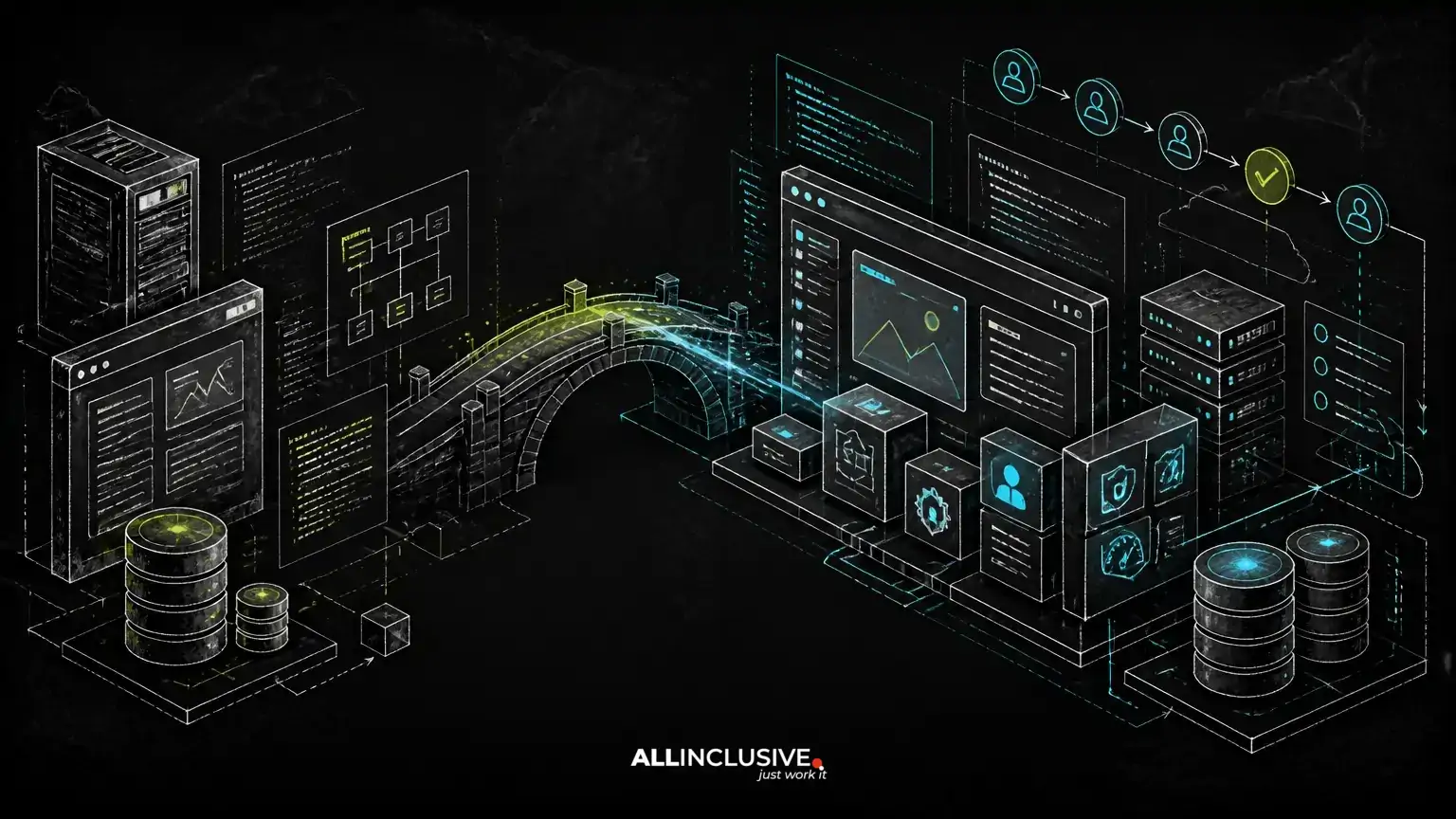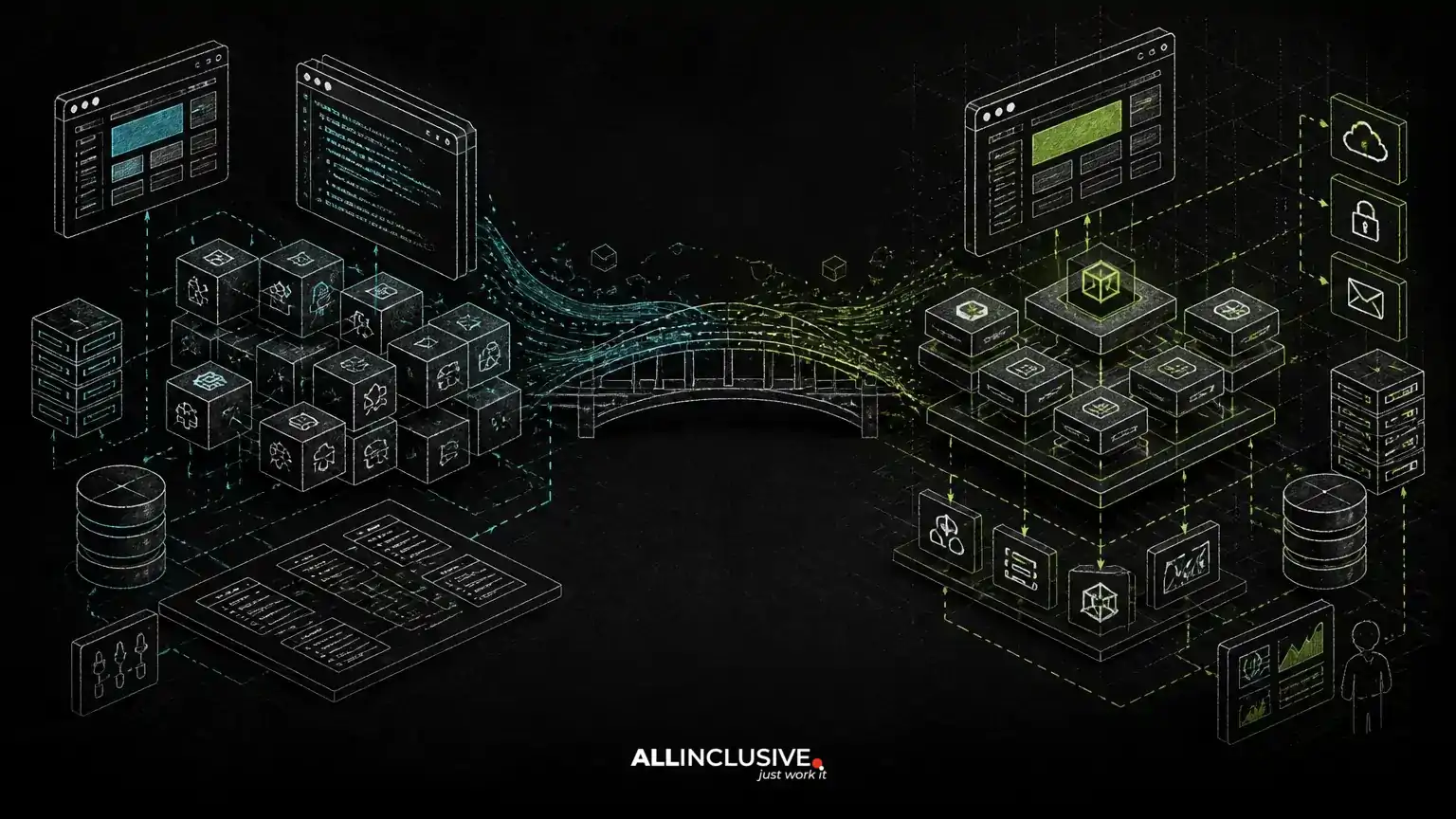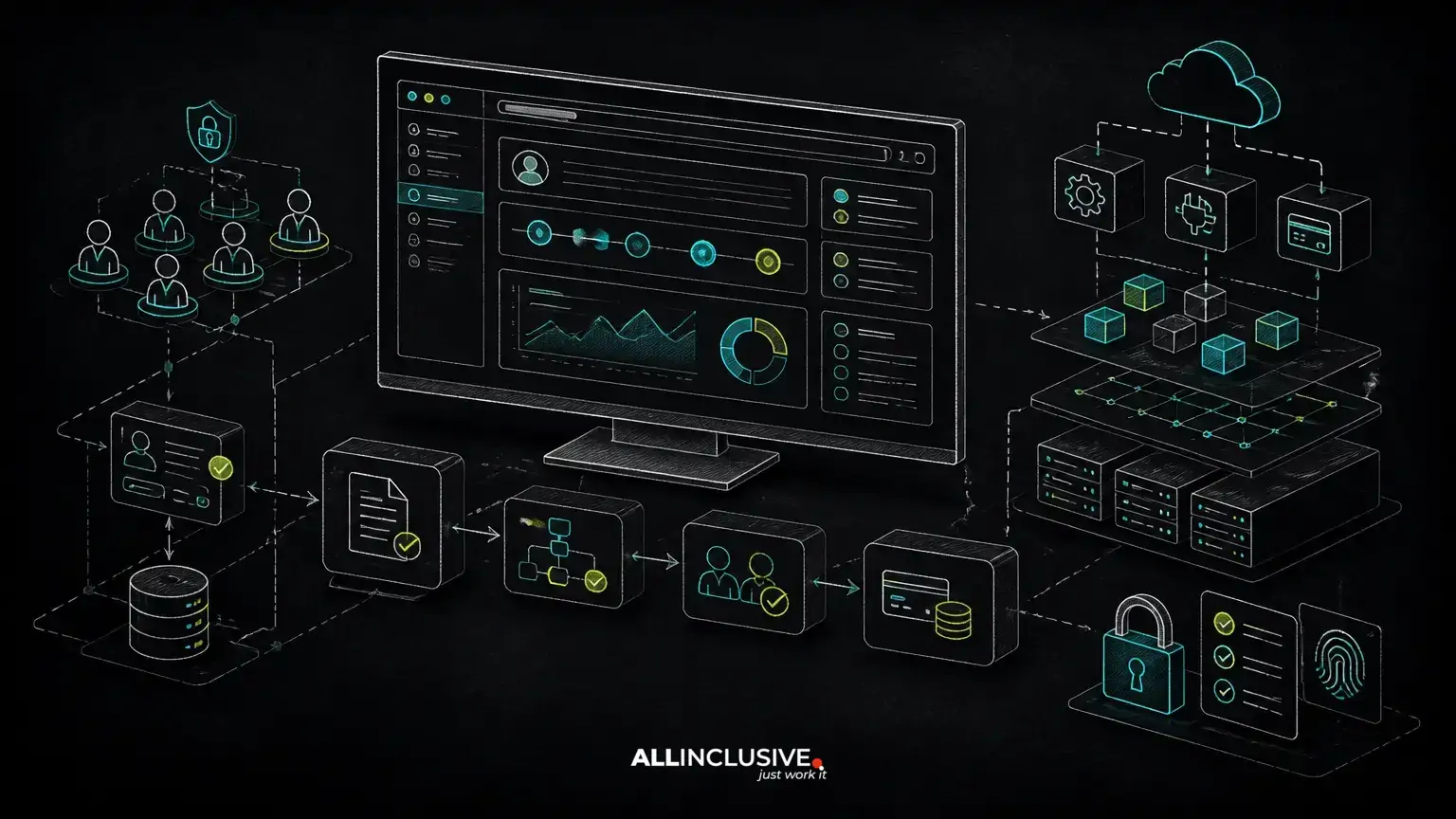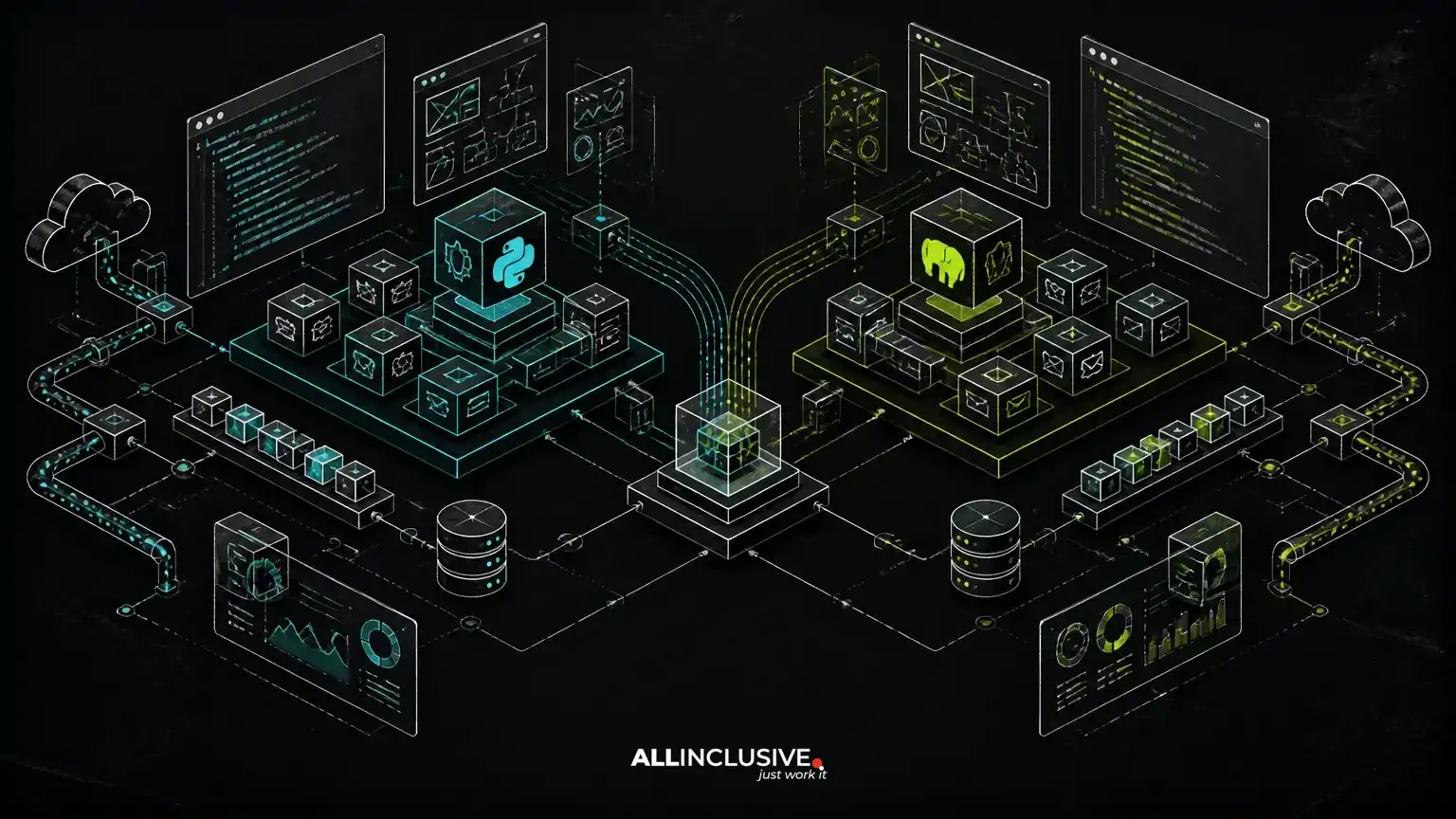
Django and Laravel are both mature frameworks for building business applications, but they lead teams toward different ecosystems and engineering choices. Django is a Python framework with strong conventions, an integrated administrative interface and a natural path into data, automation and AI services. Laravel is a PHP framework known for productive web development, expressive conventions and close alignment with the broader PHP hosting ecosystem.
Neither framework is a universal winner. The better choice depends on the team’s language expertise, existing systems, product workflow, deployment model and likely future integrations. For a conventional business web application, both can provide a reliable foundation. The more important question is which framework reduces long-term ownership risk for the specific product.
Django vs Laravel at a glance
- Choose Django when Python is already important to the organization, the product includes data workflows or AI-related services, or a structured backend and administrative tooling are valuable.
- Choose Laravel when the team has strong PHP experience, the application is primarily web and transactional, or existing Laravel and PHP infrastructure can accelerate delivery.
- Use either carefully when the application has complex domain rules, asynchronous workflows, external integrations or strict operational requirements. Framework choice does not replace architecture.
Django and Laravel can both support modular monoliths, API-driven products, background processing, relational databases, automated testing and cloud deployment. Their differences become more significant in team composition, ecosystem fit and the services that surround the core application.
How Django and Laravel approach application structure
Django follows a convention-oriented approach built around reusable applications, URL routing, views, models, templates and a strong settings system. It includes substantial functionality for common backend concerns and is often a good fit when a product benefits from an explicit, opinionated structure. Django’s administrative interface can also provide a useful internal operations surface when the underlying data model maps cleanly to business workflows.
Laravel offers a similarly productive foundation in PHP, with conventions for routing, controllers, models, validation, queues, notifications and database migrations. Its expressive syntax and broad ecosystem can make common application features approachable for teams already comfortable with PHP. Laravel applications can be organized as modular monoliths or API backends, depending on the product’s requirements.
The practical distinction is not that one framework is structured and the other is not. Both can be engineered well or poorly. The distinction is how naturally each framework fits the team’s preferred language, design patterns, libraries and deployment environment.
Where Django is often the stronger fit
Python-centered product teams
Django is a logical choice when Python is already used for data engineering, automation, analytics or machine learning. A shared language can simplify contracts between the application backend and adjacent services, although it does not eliminate the need for clear boundaries. Data processing and AI workloads may still belong in separate workers or services rather than inside request-handling code.
This makes Django especially relevant for products that combine user accounts, permissions, workflow management and data-heavy features. Teams can use Django for the core business application while introducing FastAPI or dedicated workers for specialized APIs and processing paths where that is appropriate.
Administrative and operational workflows
Many business applications need more than a public-facing interface. Staff may need to review records, correct data, manage users, approve transactions or investigate workflow exceptions. Django’s administrative capabilities can shorten the path to a usable internal tool when the domain model is carefully designed.
This is not a substitute for designing a purpose-built operations experience. High-volume or highly specialized workflows may still require custom screens, granular permissions and audit behavior. However, an integrated administrative foundation can be valuable during early delivery and for lower-complexity back-office tasks.
Data, automation and AI integration
Python’s ecosystem can reduce friction when a business application must exchange data with analytical systems, run automation workflows or call machine learning services. The application still needs production discipline: queued jobs, retries, idempotency, observability, access control and tests. Python makes those adjacent capabilities accessible, but it does not make them reliable automatically.
For broader Python architecture considerations, see this guide to Python backend development.
Where Laravel is often the stronger fit
Existing PHP expertise and infrastructure
Laravel can be the lower-risk option when a company already operates PHP applications, has experienced Laravel developers or relies on hosting and deployment practices built around PHP. Reusing operational knowledge, coding standards and integration patterns can matter more than theoretical framework differences.
An existing Laravel codebase may also make incremental modernization more practical than introducing Django. A migration to another language can be justified, but it introduces new tooling, hiring needs, deployment patterns and ownership responsibilities.
Web-first transactional products
Laravel is well suited to many web applications centered on accounts, forms, payments, content, permissions and database-backed workflows. Its conventions support rapid development without requiring a team to assemble every common web capability independently.
That productivity still depends on sound engineering. Teams must make deliberate decisions about authorization, query performance, queue workers, dependency updates, testing and production monitoring. A productive framework can accelerate both good and bad implementation choices.
Shared PHP ecosystem capabilities
For organizations with established PHP packages, hosting providers, deployment pipelines or internal libraries, Laravel may integrate naturally with the existing platform. This can reduce delivery and support complexity, particularly for products that do not need Python-specific data or AI capabilities in the application layer.
Django vs Laravel for APIs, queues and integrations
Both frameworks can expose APIs and support background processing, but application teams should separate synchronous user requests from work that may be slow, failure-prone or externally dependent. Examples include sending notifications, importing files, generating reports, synchronizing records and invoking an AI provider.
A robust design commonly includes a relational database, a queue system, worker processes, retry policies and structured logging. Jobs should be idempotent where possible, so a retry does not create duplicate records or repeat an irreversible action. External integrations also need timeouts, error classification and a strategy for partial failure.
Django is often paired with Python services and workers, while Laravel teams may use PHP-based queue workers and the surrounding Laravel ecosystem. Either approach can work. The decision should focus on operational ownership, team skills and the reliability requirements of the workflow rather than on framework branding.
For data-heavy background work, a separate workflow design may be more important than the web framework itself. See Python data pipeline development for considerations around scheduled jobs, dependencies and observability.
Security, testing and maintainability trade-offs
Django and Laravel both provide mechanisms for common web security concerns, but secure production software requires configuration, review and ongoing maintenance. Teams should address authentication, authorization, secret management, input validation, dependency updates, database access, file handling, logging and incident response.
Framework defaults can reduce avoidable mistakes, but they do not decide who can access a business record or whether an integration is safe to retry. Those decisions belong in the application’s domain design and review process.
Testing should cover more than controller or view behavior. A business application usually needs unit tests for domain rules, integration tests for databases and external services, authorization tests and workflow tests that reflect real user actions. Automated checks should run in deployment pipelines, with production observability covering errors, latency, job failures and important business events.
Maintainability also depends on boundaries. A large monolith can remain healthy when modules have clear responsibilities and dependencies. Conversely, splitting a small product into multiple services can increase deployment and troubleshooting overhead without improving the user workflow.
Scaling a Django or Laravel business application
Both frameworks can scale beyond an initial release, but scaling is not a single framework feature. Teams need to understand the application’s workload: read-heavy traffic, complex queries, large file processing, scheduled jobs, real-time events, external API limits and administrative usage can create very different bottlenecks.
Common improvements include database indexing, query analysis, caching, pagination, asynchronous processing, connection management and horizontal application capacity. These changes should be guided by measurement and failure analysis rather than assumptions about the framework.
A modular monolith is often a sensible starting architecture for a custom business application. It can keep transactions and deployment straightforward while preserving boundaries for later extraction. If a service eventually needs independent scaling or ownership, the team can separate it with a clearer reason and a known contract.
How the choice affects delivery and total ownership
Initial feature speed is only one part of the decision. A framework that is familiar to the team may reduce onboarding time, review friction and production support risk. A framework that aligns with future data or AI capabilities may reduce later integration work. Existing infrastructure may lower operational cost even when another framework appears attractive on paper.
Ownership questions should be answered before development begins:
- Which language can the team confidently maintain for several years?
- Does the product need Python-based data, automation or AI capabilities close to the application?
- Are there existing PHP or Laravel systems that must share authentication, data or deployment processes?
- Who will operate queues, scheduled jobs, databases, monitoring and deployments?
- Which workflows require audit trails, approvals, permissions or recovery after partial failure?
- Will the application remain a modular monolith, or is there a credible reason to separate services?
These answers are more useful than choosing based on a generic framework ranking. A custom-made application should fit the organization’s operating model as well as its feature list.
When using both Django and Laravel can make sense
Some organizations already have Laravel or PHP systems while adding Python for data services, automation or AI-enabled capabilities. In that situation, replacing the existing application may not be necessary. A clear service boundary can allow Laravel to continue owning transactional web workflows while Python handles specialized processing.
This approach introduces integration costs: authentication, authorization, data ownership, deployment coordination, observability and failure handling must be explicit. Two frameworks should not be combined merely to follow technology preferences. The arrangement is most defensible when each side has a distinct responsibility and the boundary can be operated reliably.
For AI-related product work, the application should also distinguish prototype behavior from production requirements such as evaluation, access control, privacy, cost controls, fallback behavior and monitoring. The django vs laravel workflow also connects to the guidance in AI development.
A decision checklist for Django vs Laravel
- Map the product’s core workflows. Identify transactional screens, internal operations, integrations, data processing and asynchronous jobs.
- Assess the current team. Include language expertise, hiring plans, code review capability and production ownership.
- Review existing systems. Favor compatibility when it meaningfully reduces migration and operational risk.
- Define the deployment model. Account for workers, scheduled tasks, databases, secrets, observability and rollback procedures.
- Design the boundaries early. Decide what belongs in the web application, queue workers, data workflows and external services.
- Validate with a representative slice. Build a small workflow that includes authentication, persistence, authorization, an integration and failure handling.
For teams evaluating broader implementation options, custom software development can provide a useful starting point for connecting framework decisions to product scope, architecture and ownership.
Choosing the framework that fits the business system
Django and Laravel are both credible foundations for serious business applications. Django generally becomes more compelling when Python, data workflows, automation or AI services are central to the product. Laravel can be the better fit when PHP expertise, existing Laravel systems and web-first transactional workflows are the dominant factors.
The strongest choice is the one the team can design, test, deploy and operate consistently. Evaluate the framework alongside the data model, workflow boundaries, integration strategy and long-term ownership plan. That is how a comparison becomes an architecture decision rather than a preference between two popular tools.