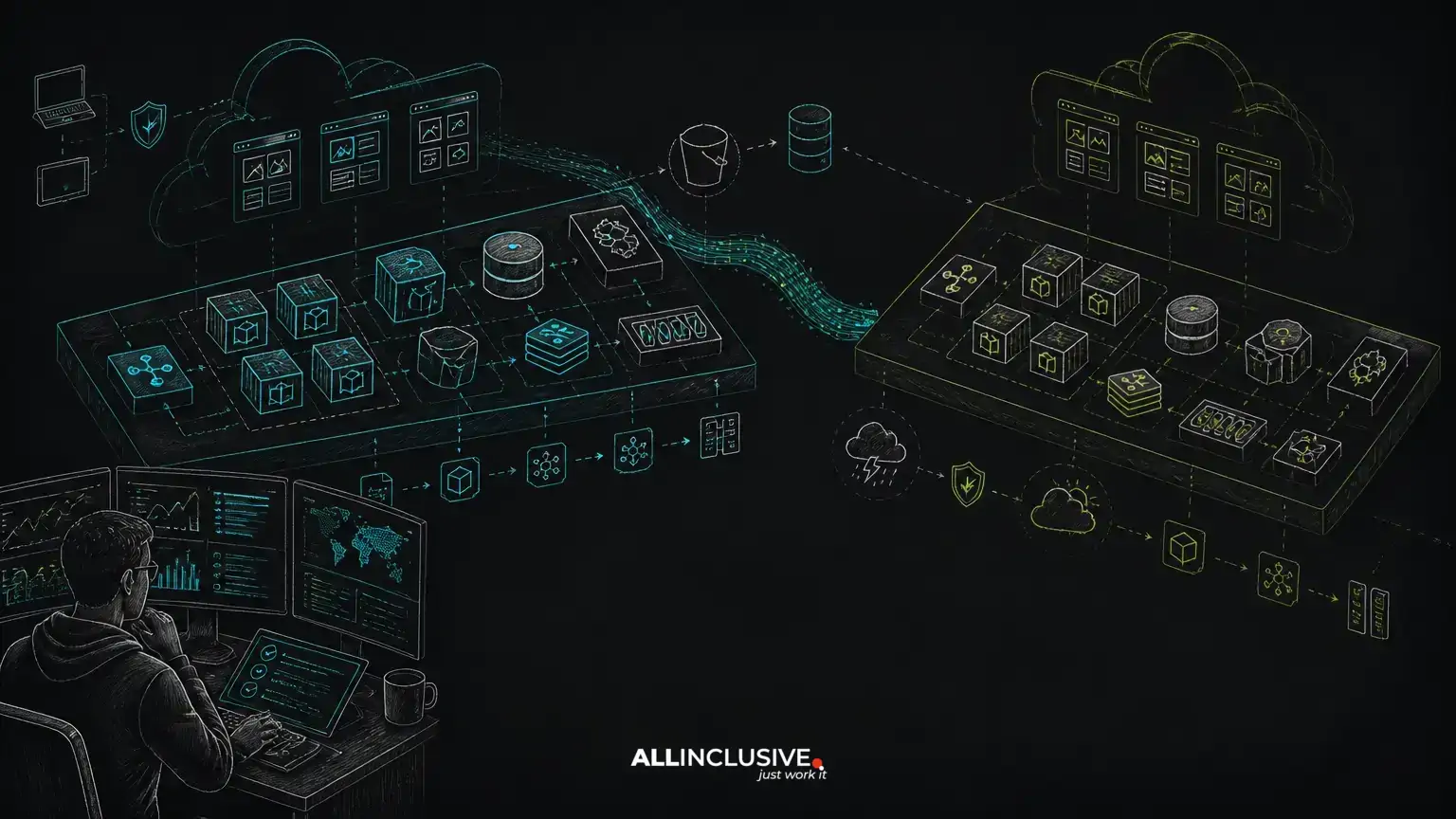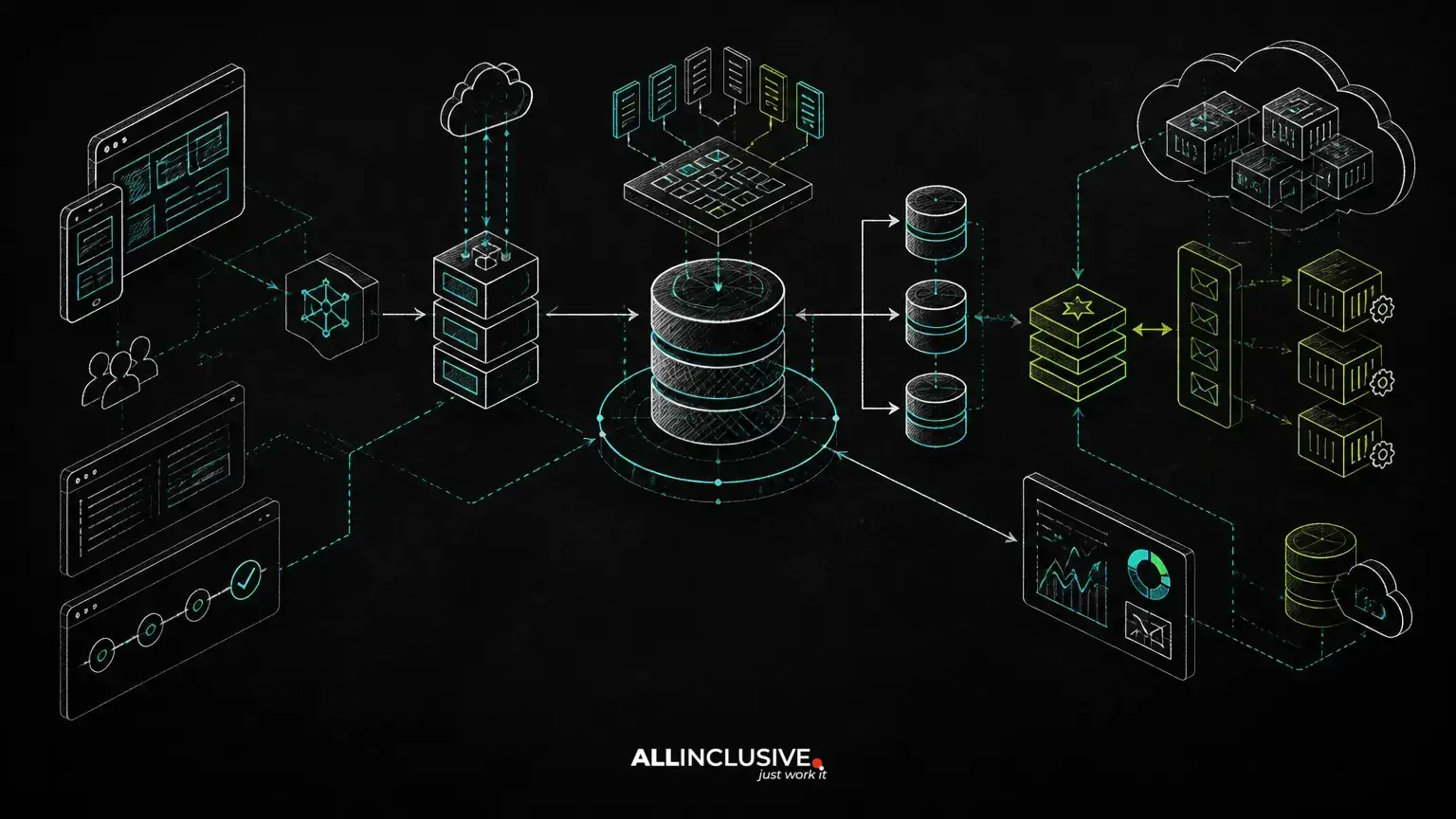
A php security audit of a mature custom application is not just a scan for outdated packages or obvious injection flaws. Older PHP systems often combine business rules, database behavior, scheduled jobs, third-party integrations and deployment assumptions that were never documented in one place. A useful audit must examine how those parts work together, identify realistic attack paths and produce remediation steps that the team can safely implement.
The objective is usually not to rewrite the application immediately. It is to establish whether the system can be stabilized, refactored, upgraded, migrated or rebuilt—and in what order. That distinction matters when the application supports revenue, operations or customer workflows that cannot tolerate an unplanned architectural change.
For broader guidance on planning and delivering custom software work, see Allinclusive development services. The remainder of this article focuses on the technical and operational questions specific to mature PHP applications.
What a PHP security audit should examine
A credible audit combines automated evidence with targeted manual review. Tools can identify known vulnerable dependencies, suspicious code patterns and configuration problems, but they do not understand whether a permission check is applied at the correct business boundary or whether a seemingly harmless endpoint can alter an important workflow.
A mature application audit commonly covers:
- Application entry points, routing and request handling
- Authentication, authorization, sessions and account recovery
- Input validation, output encoding and file handling
- Database queries, transactions and data exposure
- Dependencies, PHP runtime versions and framework components
- Secrets, environment configuration, logging and deployment controls
- Background jobs, scheduled commands and administrative tools
- External integrations, webhooks and outbound requests
- Business-logic abuse cases that ordinary vulnerability scanners may miss
The audit should also record uncertainty. If a legacy module cannot be tested safely, that limitation is itself a risk that needs an owner and a follow-up plan.
Common security risks in mature custom PHP applications
Authorization applied inconsistently
Authentication confirms who a user is; authorization determines what that user may do. In mature applications, authorization checks are often distributed across controllers, templates, helper functions and database queries. A route may be protected while a related export, background command or alternate endpoint is not.
Review access by business action rather than only by URL. Test whether a user can view, modify, approve, export or delete another organization’s records by changing identifiers, replaying requests or using a less obvious workflow. Pay particular attention to administrative endpoints and object-level access controls.
The business consequence of an authorization defect can be greater than the technical severity label suggests. Unauthorized access to a pricing rule, customer record or approval action may create regulatory exposure, revenue loss or difficult-to-reverse operational changes.
Unsafe handling of input, output and files
Legacy code may assume that validation performed in a browser or upstream system is sufficient. Server-side validation must remain authoritative, especially for identifiers, uploaded files, serialized values, HTML content and data passed to shell commands or other interpreters.
SQL injection remains a concern where queries are assembled from strings. Parameterized queries reduce that risk, but they do not validate business constraints or prevent excessive data access. Output encoding must also match the context: HTML, an attribute, JavaScript, a URL and a response header have different safety requirements.
File uploads require more than checking an extension. Review storage location, generated names, content handling, download authorization and whether uploaded data can be interpreted as executable code. A safe design separates user-controlled files from executable application paths wherever practical.
Session and account-recovery weaknesses
Review session creation, rotation, expiration, cookie settings, logout behavior and concurrent-session handling. Mature applications may contain multiple login paths—for example, a public portal, an internal administration area and an integration account—each with different assumptions.
Password-reset and account-recovery flows deserve separate testing. Look for predictable tokens, excessive token lifetime, user enumeration, missing rate controls and recovery links that expose more account information than necessary. These flows are often implemented outside the main authentication code and can remain overlooked during routine maintenance.
Outdated dependencies and runtime assumptions
Dependency risk is not limited to whether a package has a published advisory. Determine which packages are actually loaded, which versions are constrained, whether transitive dependencies are tracked and whether the application still relies on abandoned libraries or unsupported PHP behavior.
Upgrading PHP or framework components can improve security, but it can also change type handling, error behavior, extensions, default configuration or library compatibility. Treat an upgrade as an engineering change with a test plan—not as a package update performed in isolation. The guide to PHP 8 upgrade planning covers the inventory and compatibility questions that should precede that work.
Secrets and configuration exposed through operations
Review where database credentials, API keys, signing secrets and encryption material are stored and who can access them. Check source repositories, deployment artifacts, logs, error pages, backups and shared configuration files. Rotating a secret without removing its historical exposure may leave the underlying problem unresolved.
Production error responses should provide enough information for diagnosis without revealing file paths, SQL details, credentials or internal topology. Logging also needs review: sensitive data should not be captured merely because it is convenient during debugging.
Database and business-logic vulnerabilities
Security failures frequently emerge from valid application features used in an unintended sequence. Examples include applying a discount repeatedly, approving a record after its ownership changed, bypassing a required status transition or triggering a financial action more than once.
Review state transitions, idempotency, transaction boundaries and concurrency behavior. A database constraint may protect uniqueness, while the application still permits an invalid workflow. Conversely, application checks may appear correct but fail when two requests execute at the same time.
Preserving business logic does not mean preserving every existing implementation detail. It means identifying which rules are intentional, documenting them, and changing the code without silently altering the outcomes users and operations depend on.
Background jobs, webhooks and outbound requests
Scheduled tasks and queue workers often run with broader privileges than web requests. Audit who can trigger them, how job payloads are validated, whether failures are retried safely and whether duplicate execution can create duplicate effects.
Webhook endpoints should authenticate the sender, validate message structure, handle replay concerns and record processing outcomes. Outbound requests deserve review for server-side request forgery risks, unrestricted destinations, weak certificate validation and missing timeouts. A failed external service should not leave the application in an ambiguous business state.
How to conduct the audit without destabilizing production
Start with an application map. Document public and internal entry points, user roles, sensitive data, integrations, scheduled processes, deployment paths and the most important business workflows. This provides context for test coverage and helps distinguish a low-value code smell from a high-impact attack path.
- Inventory the runtime and dependencies. Record PHP versions, extensions, framework components, package managers, operating-system assumptions and deployment environments.
- Map trust boundaries. Identify where data enters from browsers, administrators, integrations, files, queues and scheduled jobs.
- Prioritize sensitive workflows. Include authentication, permissions, payments, exports, data changes, approvals and administrative actions.
- Run automated checks. Use dependency analysis, static analysis, secret detection and configuration review as evidence—not as the complete audit.
- Perform manual abuse-case testing. Test alternate identifiers, changed roles, repeated requests, unexpected state transitions and partial failures.
- Validate findings with owners. Confirm whether behavior is intended, identify compensating controls and estimate remediation complexity.
- Retest after remediation. Verify the original issue, related paths and regression coverage before closing the finding.
Testing should use representative data in a controlled environment whenever possible. If production validation is unavoidable, define safe boundaries, backups, monitoring and rollback procedures before sending intrusive requests.
Prioritizing findings for a custom application
Severity alone does not determine the correct order of work. Prioritize using a combination of exploitability, affected assets, user exposure, business impact, existing controls and remediation risk.
- Immediate containment: active exposure, leaked credentials, unauthorized administrative access or a defect affecting sensitive data.
- Near-term remediation: repeatable authorization failures, unsafe file handling, vulnerable internet-facing dependencies or weak recovery flows.
- Planned engineering work: architectural weaknesses, inconsistent validation and modules that require refactoring before secure changes can be made reliably.
- Risk acceptance with review: findings with low practical exposure or strong compensating controls, documented with an owner and reassessment date.
For each finding, provide affected components, reproduction conditions, impact, recommended fix, temporary mitigation, test requirements and dependencies. This format turns an audit into an executable engineering backlog rather than a static list of warnings.
When to stabilize, refactor, upgrade, migrate or rebuild
Security findings often reveal a modernization decision, but they do not automatically justify a rewrite. Stabilize when containment, monitoring, dependency control and targeted fixes can reduce immediate risk. Refactor when the behavior is valuable but the code structure makes secure change difficult. Upgrade when the runtime or framework can move forward with manageable compatibility work.
Migrate to Laravel or another suitable architecture when the existing application’s framework conventions, maintainability and ecosystem limitations create sustained delivery or security problems, and when the business logic can be mapped and tested. A migration is justified by a clear architectural case, not by framework preference alone.
Rebuild only when the existing system cannot reasonably support required security, operational or product changes, or when its business rules are sufficiently understood to recreate safely. Rebuilding before documenting behavior can replace visible legacy risks with undocumented new ones.
Across all five options, separate business rules from accidental implementation details. Characterization tests, workflow inventories, database analysis and controlled releases help preserve behavior while the technical foundation changes. For related modernization sequencing, see legacy PHP modernization.
What a useful audit deliverable contains
A decision-ready report should include an executive risk summary, technical findings, affected workflows, evidence, remediation options and a proposed sequence. It should identify quick containment steps separately from work requiring architectural investment.
Include a dependency and runtime inventory, an access-control matrix, a data-flow view for sensitive information, test coverage gaps and operational recommendations. Findings should be traceable to code, configuration or observed behavior without exposing secrets in the report itself.
Security work also needs an ownership model. Assign each action to a team or role, define acceptance criteria and record whether the fix requires product, infrastructure, database or support coordination. Ongoing maintenance matters because a secure baseline can erode through dependency changes, new integrations and rushed feature delivery. Teams responsible for continued application care can review support and maintenance for custom software as part of that operating model.
Turning audit findings into safer PHP engineering
A mature PHP application should be treated as an operational system, not a collection of isolated files. The strongest audit connects code-level weaknesses to permissions, data, workflows, deployments and business consequences. It then gives the team a proportionate path forward: contain the urgent risk, improve testability, modernize where justified and preserve the behavior that the organization depends on.
That approach makes security improvement compatible with modernization. It avoids both extremes—ignoring legacy risk and replacing a working system without understanding it—while giving technical and business stakeholders a shared basis for deciding what should change next.