Legacy PHP modernization should not begin with a framework rewrite. It should begin with control. Before changing application structure, teams need to understand how the system behaves in production, where business rules are encoded, which dependencies are exposed, and what failures would interrupt revenue or operations. A related decision for legacy php modernization is covered in custom software development.
A safe modernization program separates five activities that are often confused: stabilize the existing system, refactor code without changing its behavior, upgrade runtime and dependencies, migrate to a different framework or architecture, and rebuild capabilities when the existing foundation no longer supports the product. These choices can be combined, but they are not interchangeable.
For custom PHP systems, the most defensible sequence is usually to reduce operational risk first, create visibility into business behavior, and then modernize the parts that constrain security, performance, maintainability or delivery speed. This approach preserves valuable domain logic without treating every historical implementation detail as permanent.
What legacy PHP modernization actually includes
A legacy PHP application is not defined only by its PHP version. It may include an aging runtime, unsupported libraries, custom database conventions, server-level assumptions, tightly coupled modules, undocumented scheduled jobs, fragile integrations or business rules embedded in templates and SQL.
Modernization therefore has both technical and organizational dimensions. The engineering team must improve the code and runtime, while the product and operations teams must clarify which workflows are essential, which behaviors are accidental, and which changes require user or compliance review.
The objective is not to make old code look new. It is to make the system safer to change and more predictable to operate.
Stabilize the application before restructuring it
Stabilization creates a reliable baseline. It is especially important when the current system is business-critical but poorly documented or difficult to reproduce outside production.
Establish operational visibility
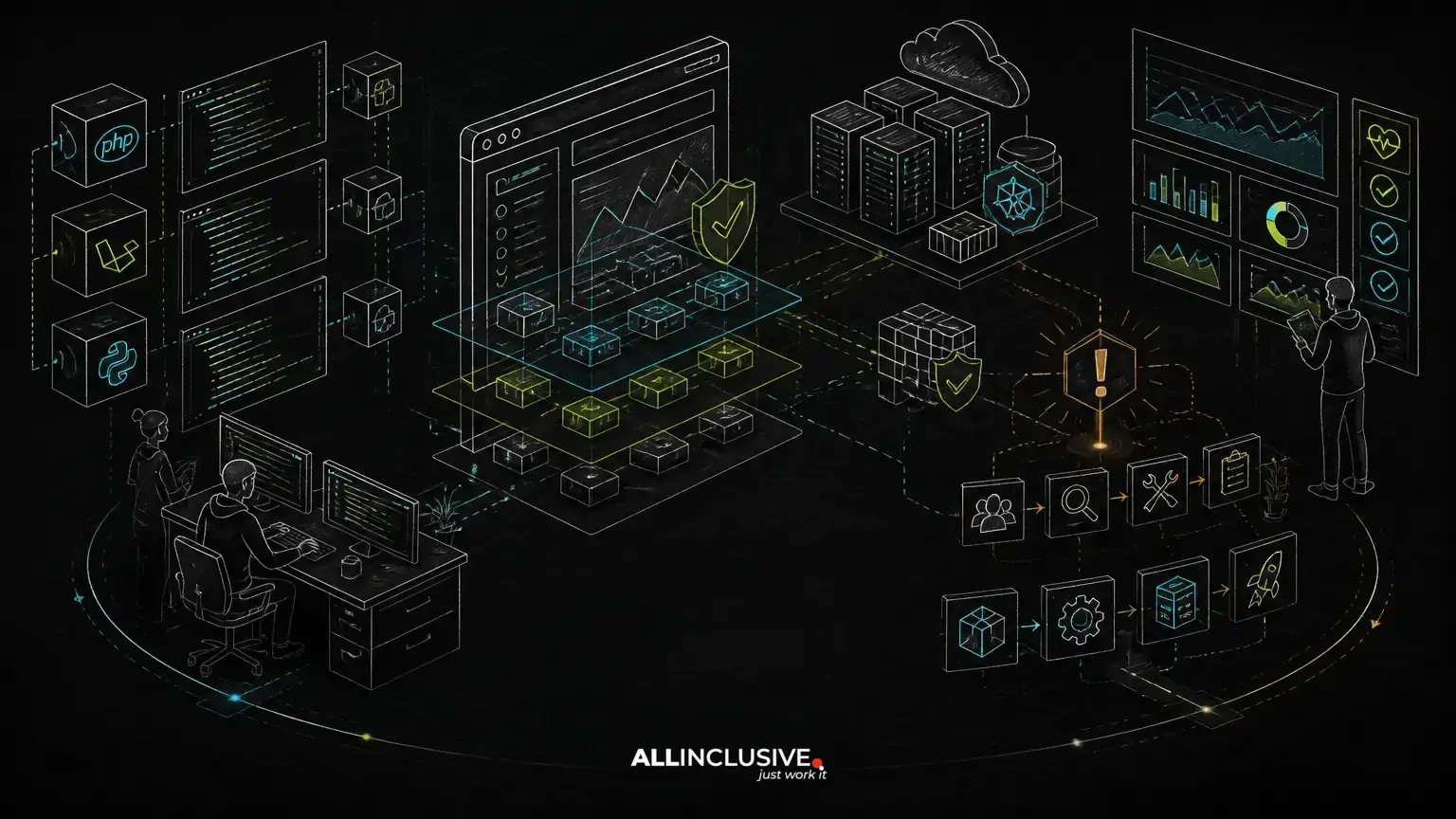
Start by documenting deployment steps, runtime versions, environment variables, scheduled tasks, queues, external services, database connections and privileged accounts. Centralize application and infrastructure logs where practical, and ensure errors can be correlated with requests, jobs or user workflows.
Without this information, a modernization project can misinterpret an undocumented cron job or integration as unused code. It can also introduce a technically clean change that breaks a process no one realized depended on a particular database side effect.
Protect critical behavior with tests and checks
Legacy systems may have limited automated test coverage, but that does not mean testing must wait for a complete rewrite. Add characterization tests around important workflows: authentication, order creation, billing events, exports, permissions, inventory updates or other domain-specific operations.
These tests record observed behavior before refactoring. They should be supplemented by database backups, rollback procedures, smoke tests and deployment checks. A test that verifies only whether a page loads is not enough if the real risk is an incorrect transaction, duplicated webhook or altered reporting total.
Address immediate security and reliability risks
Stabilization can include removing exposed secrets, tightening administrative access, replacing unsafe input handling, updating supported dependencies, correcting error disclosure and reviewing file upload or deserialization paths. The exact priorities depend on the application and its threat model.
Security work should be planned alongside compatibility. A dependency upgrade that changes authentication, serialization or database behavior deserves the same care as a feature release.
Separate refactoring, upgrading, migration and rebuilding
Clear terminology helps decision-makers select the smallest intervention that solves the actual problem.
- Stabilize: make the existing application observable, deployable, recoverable and secure enough to change safely.
- Refactor: improve internal structure while preserving externally important behavior. Examples include extracting services from controllers, reducing duplicated rules or isolating database access.
- Upgrade: move the runtime, extensions or packages to supported versions while managing compatibility and regression risk.
- Migrate: move functionality to a new framework, application boundary or platform while deliberately transferring data and business behavior.
- Rebuild: implement a replacement system when the existing architecture, data model or operational constraints make incremental change uneconomical or unsafe.
A PHP 8 upgrade, for example, may be valuable even if the application remains on its current framework. Conversely, moving to Laravel may not solve a domain model that is unclear or a database whose behavior is poorly understood.
Preserve business logic without preserving every implementation detail
The most valuable asset in a legacy application is often not its code. It is the accumulated knowledge represented by pricing rules, permissions, workflow states, accounting treatments, exception handling and integrations.
Teams should identify these rules before replacing controllers, models or database queries. Interviews with users and operators can reveal exceptions that source code does not explain. Production data can show which paths are common, but infrequent paths may still be legally, financially or operationally important.
Business logic preservation does not mean copying flawed structure into a new codebase. It means making behavior explicit, naming the rule, defining its owner and deciding whether it remains required. A refactoring or migration is safer when the team can distinguish an intentional rule from an accidental side effect.
Modernization should preserve validated business outcomes, not undocumented coupling.
Audit dependencies, database behavior and integration boundaries
Dependencies and runtime assumptions
Inventory Composer packages, extensions, custom libraries, operating-system dependencies and deployment scripts. Check whether packages are maintained, whether version constraints prevent upgrades, and whether application code relies on behavior that was never part of a formal contract.
Runtime upgrades can expose changes in type handling, error behavior, removed functions, serialization, date processing or extensions. Treat compatibility findings as engineering work to investigate, not as a reason to suppress warnings indefinitely.
Database behavior
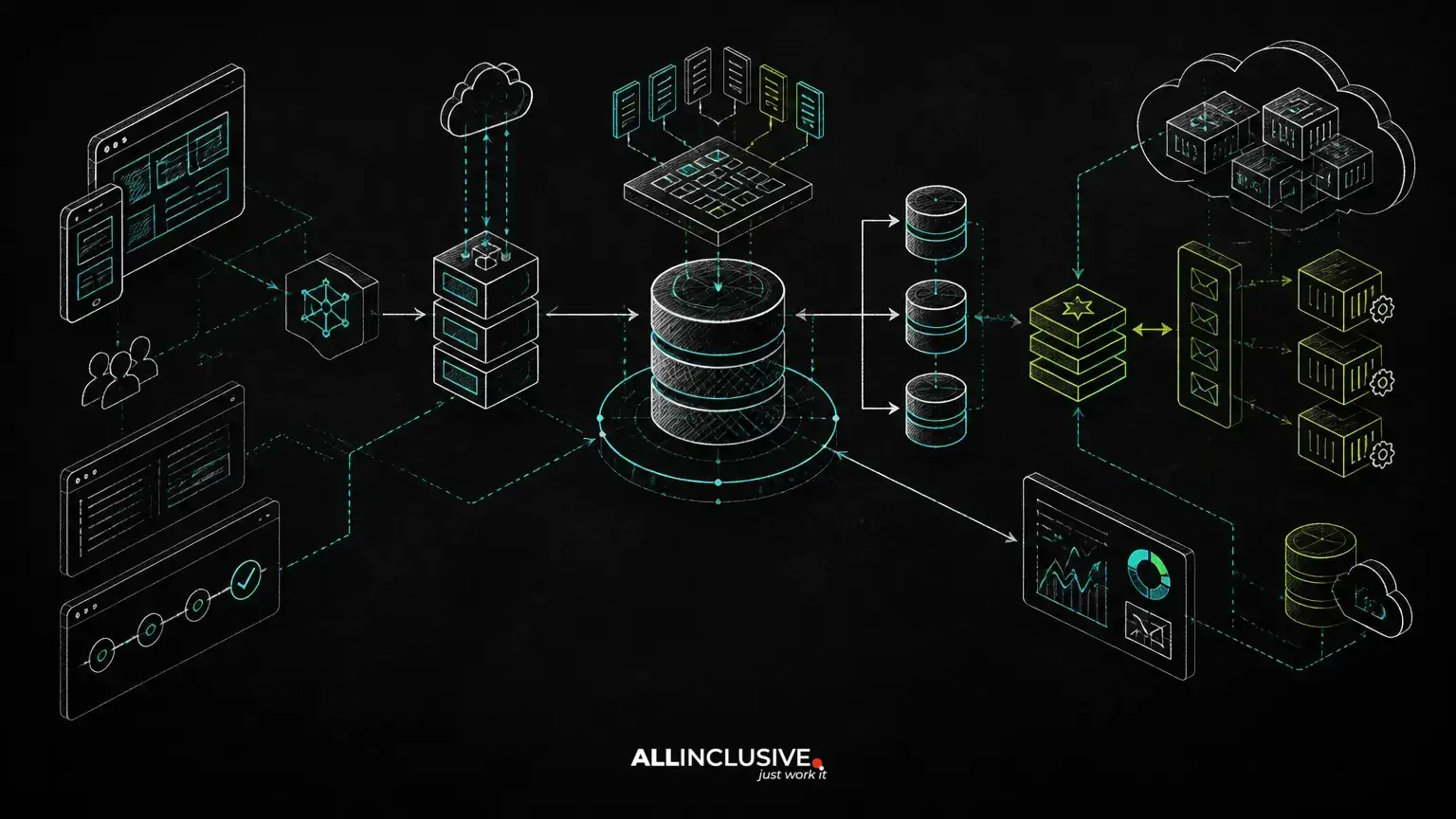
Legacy PHP systems often place important behavior in SQL, triggers, stored procedures, implicit conversions or transaction patterns. Review schema constraints, indexes, connection settings, migration history, character sets and isolation assumptions before changing data access code.
Query rewrites should be evaluated against realistic data volumes and production-like access patterns. A query that appears equivalent in a small development database may behave differently when indexes, locking or concurrent writes are involved. Performance-focused investigation may also require examining application code and database plans together; see this guide to PHP and MySQL query optimization for a related perspective.
External integrations
Document authentication methods, timeout behavior, retry policies, webhook handling, idempotency and failure recovery for every external service. During migration, integrations are common sources of duplicate actions and inconsistent state because the old system may have depended on timing or implicit retries.
A boundary with explicit request and response models is easier to test and replace than a scattered collection of direct API calls.
When Laravel migration is justified
Laravel can be a strong choice when a PHP application needs a coherent application structure, established conventions, maintainable dependency management and a team that can support the framework. It may reduce the cost of implementing common concerns such as routing, validation, queues, authentication and background jobs.
That does not make a Laravel migration automatically correct. The decision should consider:
- Whether the current framework or custom structure blocks routine maintenance.
- Whether the team has the skills and operating practices to support Laravel.
- Whether the domain model and database can be mapped without losing important behavior.
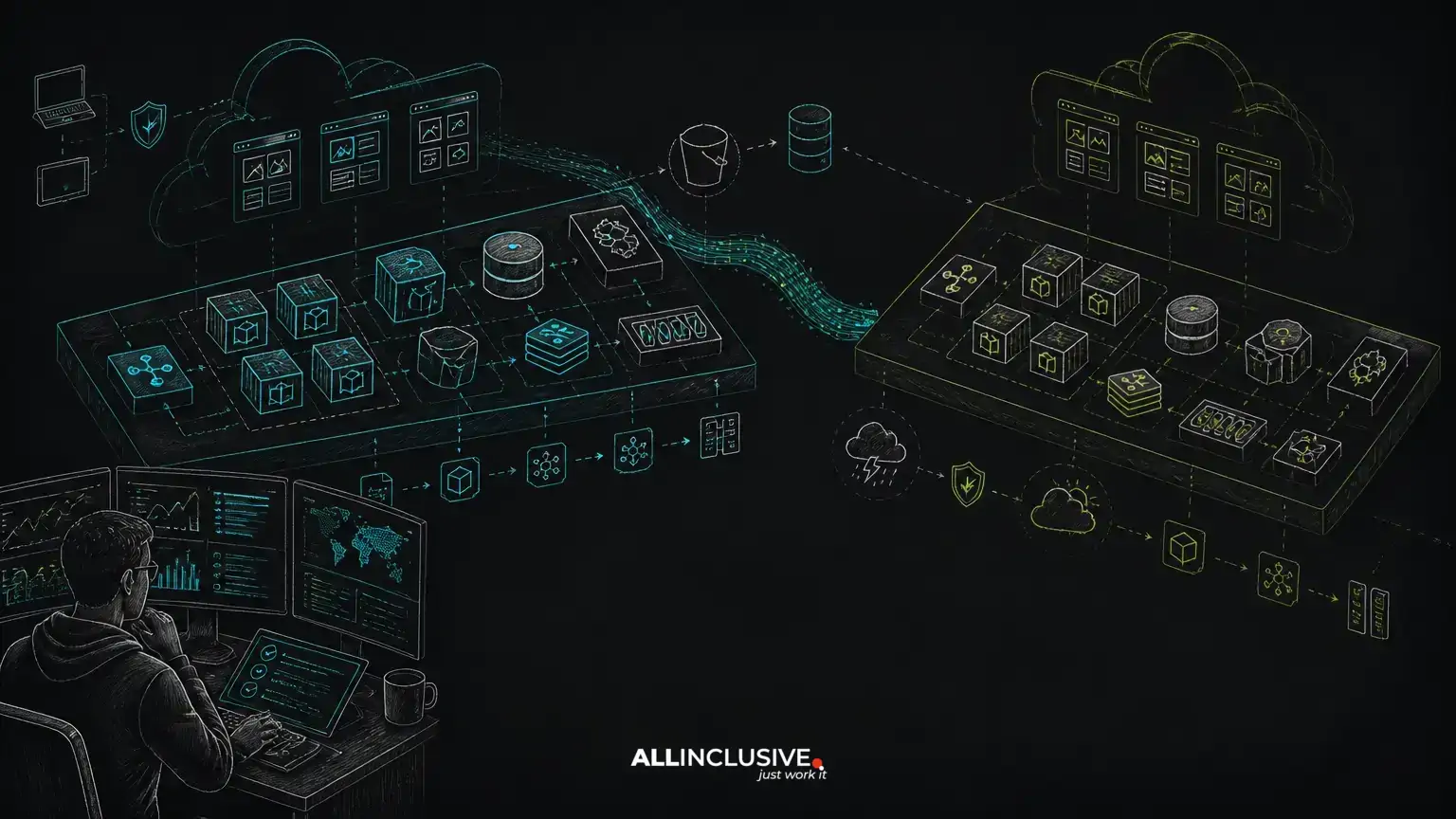
- Whether an incremental strangler approach is feasible at existing system boundaries.
- Whether the migration improves delivery and ownership enough to justify dual-running complexity.
In some applications, a modular refactor within the existing codebase is safer than a framework migration. In others, Laravel provides a practical destination for newly isolated modules while legacy functionality is retired gradually. The right answer depends on boundaries, not preference.
Choose an incremental modernization path
A staged plan reduces the size of each change and gives stakeholders evidence before the next investment. A typical sequence might include:
- Baseline: inventory the system, map critical workflows and record operational risks.
- Stabilize: improve deployment repeatability, observability, backups, access controls and failure handling.
- Characterize: add tests and monitoring around business-critical behavior.
- Upgrade selectively: address the runtime and dependency constraints that create immediate security or operational risk.
- Isolate boundaries: separate domain services, integrations, reporting and other areas that can be changed independently.
- Modernize by value: refactor, migrate or replace the areas with the clearest business and technical payoff.
This sequence does not require every team to follow identical phases. A small application may combine steps, while a large custom platform may need separate workstreams for runtime, data, integrations and user-facing modules.
Recognize when a rebuild is the better choice
Incremental modernization becomes less attractive when the system lacks trustworthy data boundaries, cannot be deployed safely, has pervasive security defects, or encodes contradictory business rules across nearly every feature. A rebuild may also be appropriate when the product has fundamentally changed and the original workflows no longer represent the required operating model.
Even then, a rebuild should not begin with a blank repository and assumptions. Existing data, user behavior, reporting, integrations and operational procedures remain requirements. A replacement system needs migration rehearsals, reconciliation rules, coexistence planning and a controlled retirement path for the old application.
For many organizations, the practical answer is hybrid: stabilize the legacy core, replace one high-value capability, and use that boundary to validate the new architecture before expanding the program.
Manage modernization as an ongoing ownership capability
After the first modernization phase, maintenance practices determine whether the system remains changeable. Keep dependency ownership explicit, review runtime support regularly, monitor error and performance trends, and reserve capacity for architectural cleanup rather than treating it as emergency work.
Teams inheriting an unfamiliar codebase can begin with an inherited PHP codebase audit, then use a documented risk register to prioritize changes. For ongoing operational work, PHP application support and maintenance can complement planned modernization by keeping security, reliability and release discipline visible between larger initiatives.
For organizations evaluating custom application work alongside modernization, custom web development can provide a broader delivery context, while the PHP development practice focuses on application architecture, upgrades and maintainable implementation.
The strongest legacy PHP modernization plans do not promise that every old component will survive or that every new component will be replaced. They make behavior visible, reduce avoidable risk and direct investment toward the boundaries that matter most to the business.