An inherited PHP codebase audit should happen before the first refactor, dependency upgrade or feature change. The goal is not to judge whether the application looks modern. It is to discover how the system actually behaves, where business rules live, what can break, and which changes are safe to make first.
That distinction matters because custom PHP systems often contain years of undocumented decisions: validation rules embedded in controllers, database behavior relied on by scheduled jobs, integrations with undocumented retry assumptions, and workflows that are more important to the business than their code structure suggests.
A disciplined audit gives a team an evidence-based choice between stabilizing, refactoring, upgrading, migrating or rebuilding. It also helps preserve business logic while reducing security, performance and delivery risk.
Start by mapping the application’s real boundaries
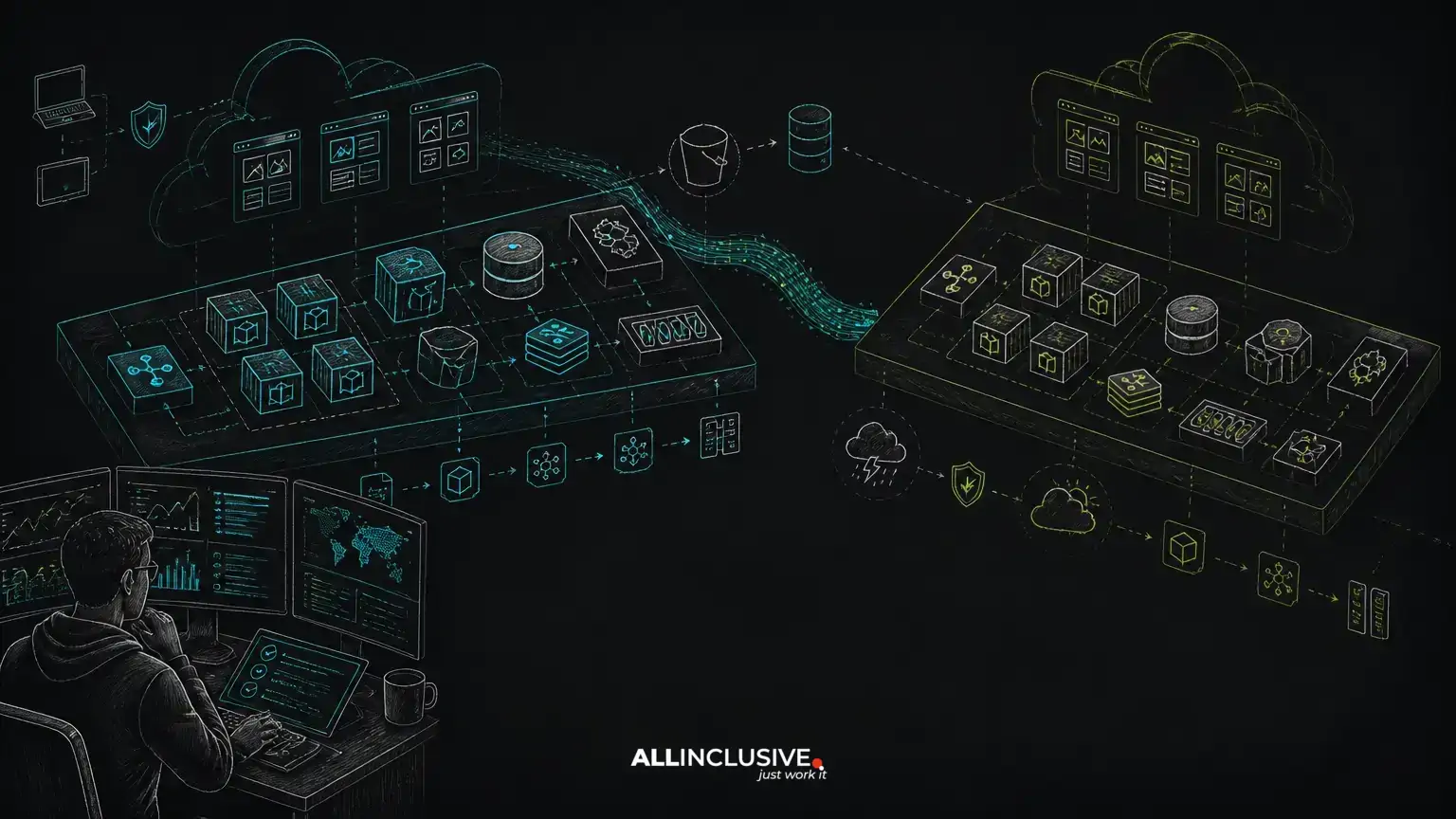
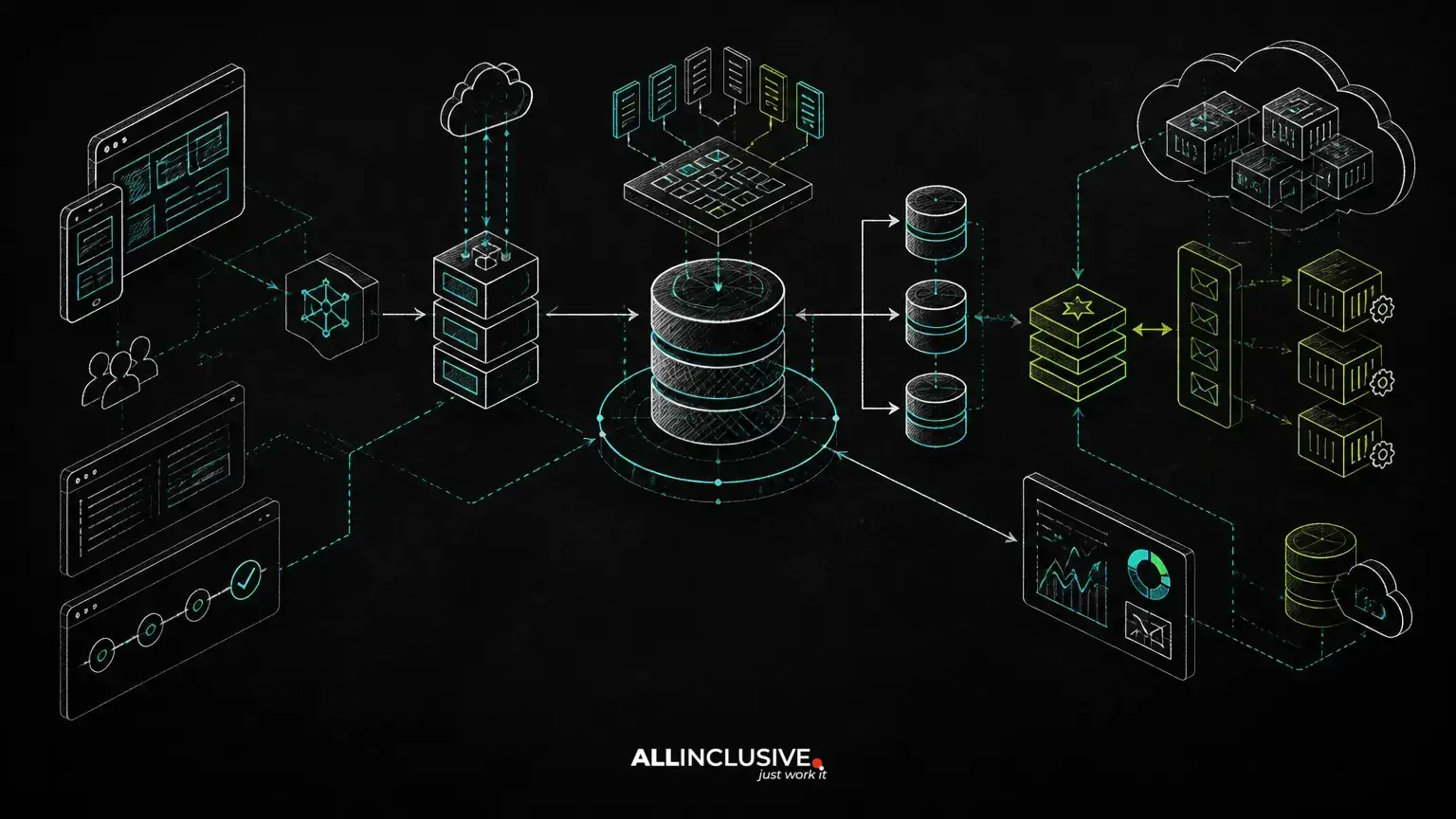
Before reading individual classes, identify what the application owns and what it depends on. Create a system map that covers:
- Public websites, authenticated areas and administrative interfaces
- HTTP entry points, command-line scripts, queue workers and scheduled tasks
- Databases, caches, file storage and external services
- Payment, email, identity, search, shipping and reporting integrations
- Deployment environments, hosting infrastructure and operational access
- Data exports, imports and manual processes that are not visible in the main application
This inventory reveals hidden surface area. A PHP application may appear to be a single web application while also running cron jobs that modify orders, scripts that generate invoices, or administrative tools used to correct production data.
Document ownership as well. Determine who approves releases, who understands the database, who receives operational alerts and which vendors control connected services. Technical risk is also an ownership risk when no one knows who can validate a change.
Trace business logic before reorganizing code
The most valuable behavior in an inherited system is often not expressed in a clean domain model. It may be distributed across controllers, templates, SQL statements, event handlers, configuration files and database triggers.
Choose representative business workflows and trace them end to end. Examples include:
- Creating and updating a customer or account
- Submitting an order, invoice or payment
- Changing a record’s status
- Generating a report or export
- Sending a notification after a business event
- Importing data from an external system
For each workflow, record inputs, validation rules, side effects, permissions, database writes, external calls and failure behavior. Pay particular attention to rules that are easy to miss, such as whether a status transition is reversible, whether a notification is sent once or repeatedly, or whether a deletion is logical rather than physical.
Do not assume duplicated code has identical behavior. Two similar-looking functions may exist because different users, data states or historical integrations require different rules. Consolidation should follow behavioral comparison, not visual similarity.
Inspect the PHP runtime and dependency chain
Establish what PHP versions, extensions, package managers and deployment commands the application actually uses. Compare declared dependencies with the runtime environment rather than relying only on documentation.
Review:
- Composer configuration, lock files and custom autoloading
- Framework components and application bootstrap code
- PHP extensions required in development, staging and production
- Environment variables and configuration precedence
- Deprecated language features and incompatible runtime assumptions
- Local patches, vendored libraries and unmaintained packages
- Build, deployment and rollback procedures
A dependency may be old without being immediately unsafe, while a newer dependency can still introduce compatibility or behavioral risk. Assess version changes in the context of the application’s tests, runtime, extensions and integration contracts.
Also look for dependency behavior that is hidden behind custom wrappers. An application may appear to use a standard mail, storage or HTTP library while custom adapters alter timeouts, error handling or payload formats.
Examine database behavior, not just database structure
Schema inspection is necessary but insufficient. The audit should connect tables and indexes to application behavior.
Review migrations, schema dumps, foreign keys, indexes, constraints, triggers, stored procedures and nullable fields. Then trace important queries to determine whether the application assumes a particular ordering, implicit conversion, default value or transaction boundary.
Questions worth answering include:
- Which tables are authoritative for important business records?
- Are writes performed inside explicit transactions where multiple records must remain consistent?
- Can background jobs process the same record more than once?
- Are soft-deleted rows excluded consistently?
- Do reports run against operational tables during busy periods?
- Which columns are used for filtering, sorting and joins?
- Are database credentials, backups and restore procedures documented?
Database behavior frequently determines whether a modernization project is safe. Refactoring PHP code without understanding transaction boundaries can create duplicate records, partial updates or inconsistent status changes.
Performance review should begin with production-shaped workloads and query evidence where available. Look for repeated queries, unbounded result sets, missing pagination, expensive joins and code that loads more data than the user workflow requires. Avoid changing queries solely because they look inelegant; first confirm their role and measure the relevant behavior.
Review security at the boundaries of trust
An inherited codebase audit should treat security as a behavior and configuration review, not just a search for old syntax.
Inspect the points where untrusted data enters or leaves the system:
- Request parameters, uploaded files and serialized input
- Authentication, session and password-reset flows
- Authorization checks for records and administrative actions
- Database queries and dynamic SQL construction
- Template rendering and output encoding
- Redirects, webhooks and outbound HTTP requests
- Logs, error pages, backups and exported files
Check whether authorization is enforced centrally or repeated inconsistently across controllers and templates. Verify that sensitive operations have explicit permission checks rather than relying on a hidden interface or an unguessable URL.
Review secrets management, production error handling and dependency maintenance separately. A system can have careful input validation while still exposing credentials through configuration, logging sensitive payloads or returning detailed exceptions to users.
Security findings should be prioritized by exposure, exploitability, business impact and ease of remediation. Fixing a severe boundary issue may be more urgent than undertaking a broad architectural cleanup.
Find operational and performance risks before changing architecture
Application structure does not tell the whole operational story. Inspect logs, monitoring, scheduled tasks, queue behavior, deployment history and rollback capability.
Identify how the team detects:
- Failed requests and background jobs
- Slow endpoints and database queries
- Integration timeouts and rate limits
- Repeated job execution and duplicate side effects
- Disk, memory and database capacity issues
- Authentication failures and unusual administrative activity
Pay special attention to long-running requests, synchronous external calls and work performed during web requests that could fail after a partial database update. If the application uses queues, determine whether jobs are retryable, idempotent and observable.
A performance problem may be caused by database access, rendering, network calls, PHP runtime configuration, infrastructure limits or an inefficient workflow. Diagnose the bottleneck before selecting a structural solution. Moving code into a new framework does not automatically remove a slow query or an unnecessary external call.
Use tests as evidence, then fill the gaps deliberately
Existing tests are useful evidence, but their presence does not prove that the most important behaviors are covered. Classify tests by what they protect:
- Unit tests for isolated rules and transformations
- Integration tests for database and service interactions
- End-to-end tests for critical user workflows
- Contract tests for external integrations
- Regression tests for previously fixed defects
Run the test suite in a reproducible environment and record failures caused by setup, data, timing or genuine behavior. A test that passes only against a particular local database state is not reliable protection for a production change.
When coverage is weak, do not attempt to test every line before making progress. Start with characterization tests around high-risk workflows. These tests capture current behavior so the team can distinguish intentional improvements from accidental business-rule changes.
Separate stabilize, refactor, upgrade, migrate and rebuild
These terms describe different interventions and should not be treated as interchangeable.
Stabilize
Stabilization reduces immediate operational risk. It may include securing exposed boundaries, fixing deployment failures, improving backups, adding monitoring, documenting scheduled jobs or making a critical workflow repeatable.
Refactor
Refactoring changes internal structure while preserving observable behavior. Examples include extracting domain services, isolating database access, removing duplicated validation or introducing clearer module boundaries.
Upgrade
An upgrade changes the runtime, framework components or dependencies. It requires compatibility analysis, test coverage, extension review and a rollback plan. A PHP runtime upgrade can expose assumptions in third-party packages or application code even when the business behavior should remain unchanged.
Migrate
Migration moves behavior or components to another framework, platform or architecture. A Laravel migration may be justified when the team needs a maintainable application foundation, consistent conventions, improved onboarding or better support for planned product work. It should be evaluated against the cost of translating existing behavior and preserving integrations.
Rebuild
A rebuild replaces substantial parts of the system. It may be appropriate when the current architecture cannot support essential requirements or when its operational and security risks exceed the value of incremental change. It also carries the highest risk of losing undocumented workflows and edge cases.
Many successful modernization programs combine these approaches: stabilize critical paths, add behavioral protection, refactor bounded areas and upgrade or migrate only where the evidence supports it.
Decide whether Laravel migration is justified
Laravel should be considered as an architectural option, not a default verdict on older PHP code. Assess the decision against concrete needs:
- Will framework conventions reduce recurring maintenance cost?
- Can the team support the proposed application structure over time?
- Are existing integrations and data models compatible with a staged transition?
- Can old and new paths coexist while workflows are validated?
- Does the migration improve delivery, security or operability enough to justify its risk?
A strangler-style transition can reduce exposure by moving one bounded workflow at a time while the existing system remains operational. A full rewrite may be simpler in some cases, but only if the team has a dependable inventory of business rules and a way to reconcile old and new behavior.
The right target may also be a better-structured custom PHP application rather than an immediate framework migration. The decision should follow constraints, evidence and product priorities.
Produce an audit package the delivery team can use
An audit is valuable when it becomes an actionable change plan. Deliver documentation that includes:
- A system and dependency map
- Critical business workflows and known invariants
- Runtime, deployment and environment findings
- Database risks, query observations and data-quality concerns
- Security findings prioritized by impact
- Performance and operational risks
- Test coverage gaps and recommended characterization tests
- Quick wins, prerequisites and longer-term options
- Explicit assumptions, unknowns and evidence still required
Rank recommendations by business impact, risk reduction, effort and sequencing dependencies. “Modernize the codebase” is not a useful first ticket. “Document and test invoice status transitions before changing the billing module” is specific enough to guide work and validate progress.
For organizations inheriting a custom PHP application, the audit is the bridge between uncertainty and controlled change. Our PHP development capabilities can support assessment, stabilization, modernization and carefully scoped framework migration. For ongoing operational needs, see our support and maintenance services.
Related planning topics include legacy PHP modernization, PHP 8 upgrade planning and PHP application maintenance. Broader software engineering capabilities are covered in our development services.