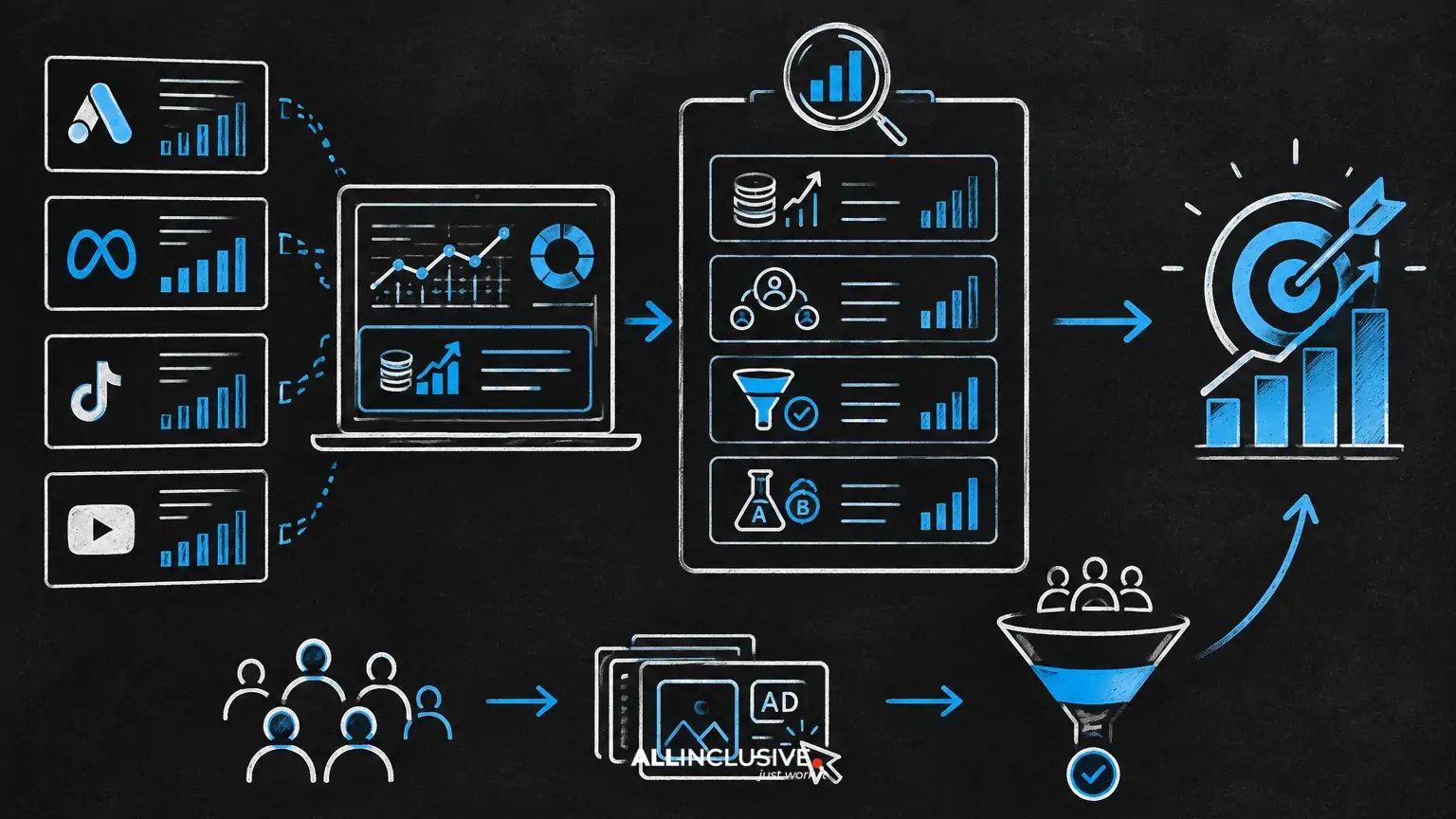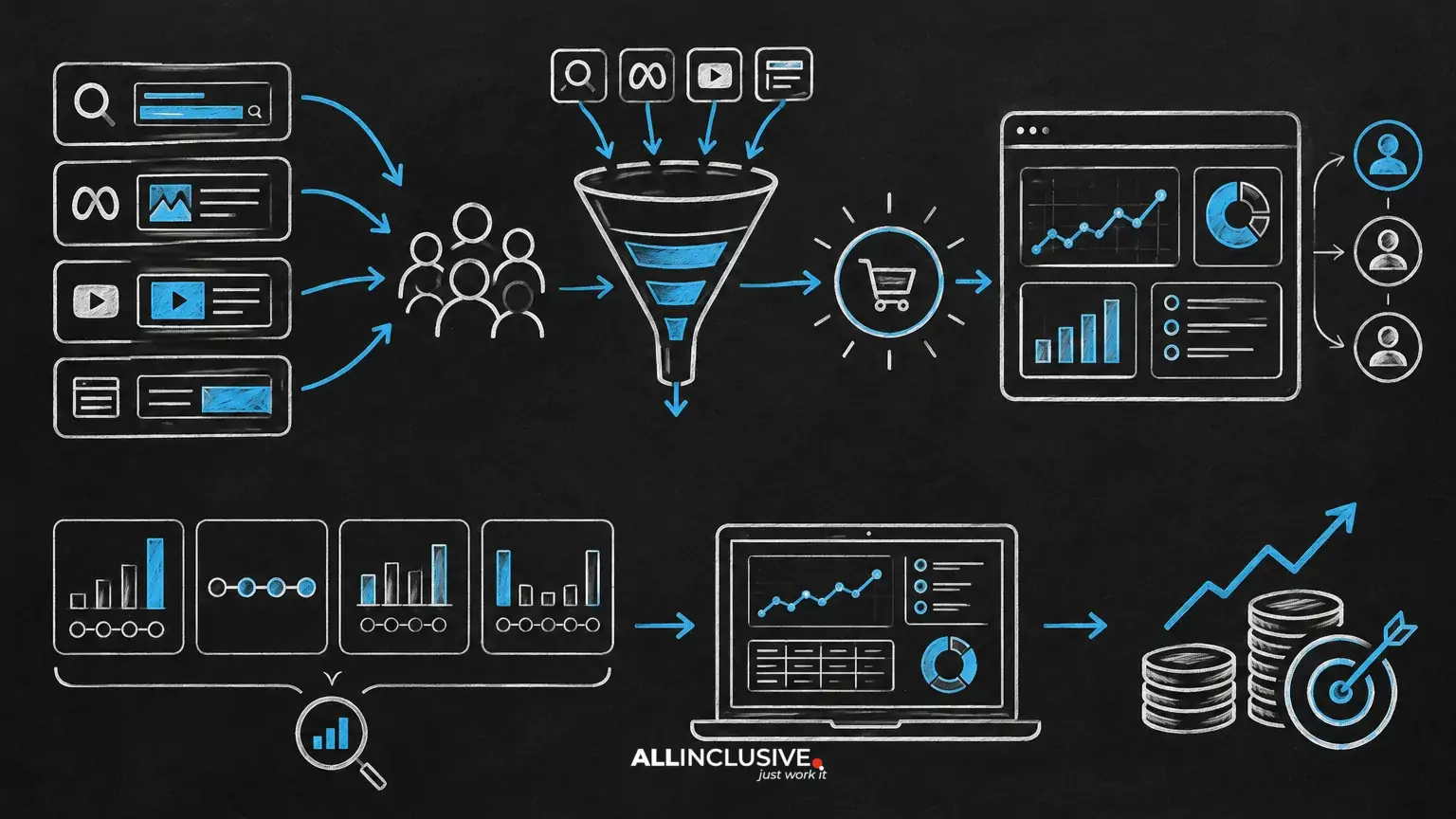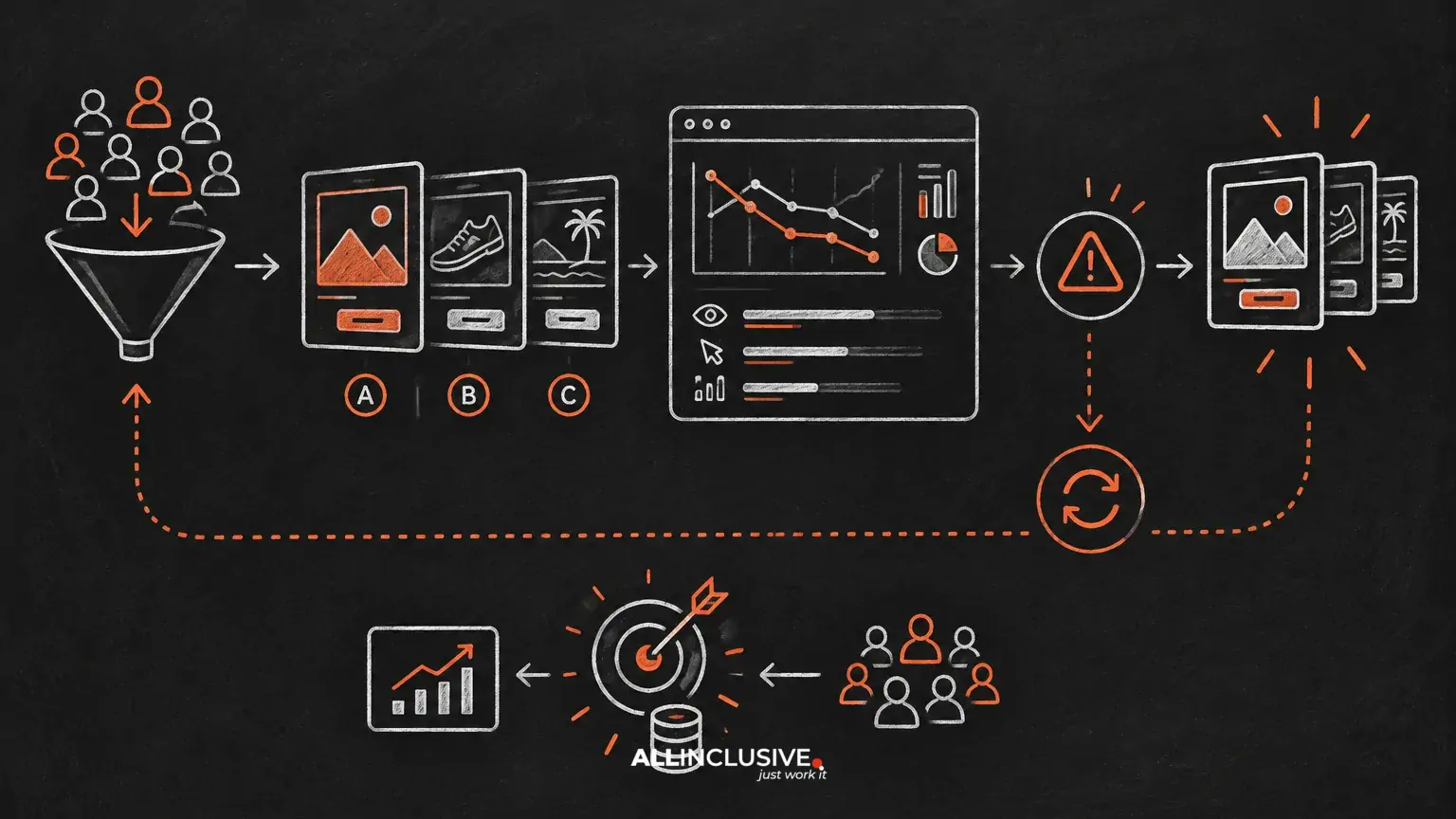
A creative refresh cadence is the operating rhythm you use to decide when paid-media ads should be reviewed, iterated, replaced, or retired. The right cadence is not simply “every two weeks” or “once a month.” It depends on spend, audience size, delivery concentration, conversion volume, offer changes, and the strength of the evidence behind each decision.
For most advertisers, the best approach is a combination of scheduled reviews and signal-based action. Review creative on a regular operating cycle, but replace ads when performance evidence shows that the current concept is no longer doing its job—or when the business context has changed.
Why a fixed refresh schedule is usually not enough
A calendar-only approach creates two common problems. Teams may replace a productive ad before it has generated enough evidence, or they may leave a declining ad live because the next scheduled refresh is still weeks away.
Creative performance is affected by several variables at once:
- Spend and delivery: An ad receiving substantial delivery can produce fatigue signals faster than an ad with limited exposure.
- Audience size: Narrow audiences may see the same message repeatedly, while broad audiences can support longer learning cycles.
- Buying objective: A creative optimized for lead quality or purchases should not be judged only by engagement metrics.
- Offer and market conditions: Pricing, promotions, seasonality, competitor activity, and customer priorities can change the meaning of an ad.
- Creative diversity: A campaign with multiple genuinely different concepts may remain resilient longer than one with many minor variations.
A cadence should therefore provide structure without turning an arbitrary date into a performance decision.
The three decisions: refresh, iterate, or replace
Not every weak result calls for a completely new ad. Separate the possible actions before changing the creative system.
Refresh the existing concept
Refresh when the core idea remains relevant but the execution needs renewed attention. Examples include a new opening visual, a different first sentence, updated proof, a revised product demonstration, or a new crop and format for a placement.
A refresh is appropriate when the ad still communicates a valid customer problem and the offer remains competitive, but delivery or response is weakening.
Iterate the concept
Iterate when performance data suggests that one part of the ad works and another part needs improvement. For example, strong initial engagement with weak landing-page action may indicate that the promise attracts attention but does not set up the conversion step clearly enough.
Useful iterations preserve the learning while changing one meaningful variable, such as the hook, proof point, objection, call to action, or product framing. For a broader testing structure, see Creative Iteration: Turning Ad Data Into the Next Winning Concept.
Replace the ad
Replace an ad when the underlying concept is no longer competitive, the offer has changed, the audience has materially changed, or repeated iterations have failed to recover the desired business outcome. Replacement should introduce a new strategic angle, not just a different background color or headline permutation.
How to recognize that an ad needs replacement
There is no universal threshold that proves an ad is fatigued. Instead, look for patterns across delivery, attention, conversion, and business value.
1. The ad is receiving enough delivery to support a decision
Do not retire an ad solely because it has existed for a certain number of days. First ask whether it has received enough relevant delivery to make the comparison meaningful. A low-spend ad may need more time, while a heavily delivered ad can produce a clear signal quickly.
Evaluate performance in the context of the campaign’s objective and conversion volume. If the ad has had little opportunity to generate the intended action, label the result as inconclusive rather than failed.
2. Attention is deteriorating
Declining early engagement can be a sign that the opening has become familiar or less relevant. Depending on the format and measurement setup, inspect indicators such as thumbstop behavior, video retention, click-through rate, or other attention signals.
Attention decline alone does not always justify replacement. It becomes more persuasive when it appears alongside worsening conversion efficiency or rising costs.
3. Conversion quality is weakening
An ad can maintain clicks while producing fewer qualified leads, purchases, or downstream actions. This is one reason to avoid optimizing the refresh cadence around top-of-funnel metrics alone.
Compare the ad’s intended outcome with the most reliable business signal available. For lead generation, that may include lead qualification or sales progression. For ecommerce, it may include purchase value, contribution margin, or repeat-purchase quality where measurement is available.
4. Frequency or exposure is rising without sufficient response
Repeated exposure is not automatically harmful. Familiarity can support consideration when the message remains useful. The concern is sustained exposure combined with weaker response, negative feedback, declining conversion efficiency, or a clear increase in cost.
This distinction matters because high exposure can result from audience saturation, creative fatigue, or both. The diagnostic framework in Ad Fatigue vs. Audience Saturation: How to Tell the Difference can help separate those conditions.
5. The customer or business context has changed
Replace creative even when historical results were strong if the underlying context is no longer accurate. Common triggers include:
- A new product, feature, price, or packaging structure
- A changed promotion or landing-page experience
- A new customer segment or buying committee
- A shift in category language or customer objections
- Seasonal, regulatory, or market changes that affect the claim
Creative should represent the current buying situation, not preserve an old winner indefinitely.
A practical creative refresh cadence
A useful operating model has four layers: continuous monitoring, a regular review, a planned production cycle, and an event-based replacement rule.
Continuous monitoring
Monitor delivery and outcome signals often enough to catch material deterioration. The exact frequency depends on spend and conversion volume. High-spend campaigns may need more frequent checks; low-volume campaigns require more caution so that normal variance is not mistaken for a trend.
At this stage, look for directional changes rather than making immediate decisions from one unusual day. Record whether the change affects attention, click behavior, conversion, cost, or lead quality.
Regular creative review
Conduct a structured review on a recurring schedule, such as weekly or biweekly, depending on account complexity. The purpose is not to replace ads automatically. It is to review evidence, classify each asset, and decide what the production team should make next.
A simple review table can include:
- Creative concept and audience
- Launch date and delivery level
- Primary business outcome
- Attention and engagement signals
- Conversion and efficiency signals
- Known offer, landing-page, or tracking changes
- Decision: continue, monitor, iterate, refresh, or replace
Planned production cycle
Maintain a forward-looking production pipeline instead of waiting for an ad to collapse. The number of concepts and variations should reflect budget, audience breadth, creative complexity, and testing capacity. The related guide on Creative Volume: How Many New Ads Do You Actually Need? provides a framework for planning that workload.
Planning ahead gives media buyers room to validate new concepts before the existing control becomes fragile. It also prevents rushed replacements that lack a clear hypothesis.
Event-based replacement
Allow immediate creative action when a material event occurs. Examples include a discontinued offer, an inaccurate claim, a broken landing page, a major product update, or a meaningful change in audience strategy. These events override the normal calendar.
How to set the cadence by campaign conditions
The same cadence should not be applied to every account. Use the following conditions to calibrate the operating rhythm.
High spend and concentrated delivery
When a small audience receives substantial delivery, review creative more frequently and keep replacement concepts in development. The risk is not that every ad will fatigue on schedule; it is that the campaign has less room to absorb a weak or overexposed message.
Broad audience and diversified delivery
Broader reach can support a longer lifespan, particularly when the campaign contains distinct concepts rather than superficial variations. Continue monitoring conversion quality, because broad delivery does not guarantee that the message remains relevant.
Low conversion volume
With limited conversions, avoid frequent changes based on unstable data. Use leading indicators carefully, document the hypothesis behind each iteration, and allow enough delivery to assess whether the change improved the intended outcome.
Short promotional windows
Time-sensitive campaigns may require a compressed cadence. Build the creative sequence before launch, define the offer’s end conditions, and prepare alternatives for different stages of the promotion. Do not use evergreen performance expectations to judge a campaign designed for a short window.
What to change when refreshing an ad
A refresh should be substantial enough to create a new user experience and test a meaningful hypothesis. Consider changing one or more of the following:
- Hook: Lead with a different problem, tension, question, or customer situation.
- Angle: Reframe the value around speed, risk reduction, quality, control, convenience, or another relevant buying motivation.
- Proof: Use a different demonstration, use case, comparison, testimonial, or evidence type that the business can substantiate.
- Format: Adapt the concept into a different video, static, carousel, creator-led, or product-focused execution where appropriate.
- Audience context: Use language that reflects a specific role, stage of awareness, use case, or objection.
- Call to action: Make the next step consistent with the promise and the landing-page experience.
Changing every element at once may produce a new ad, but it makes learning difficult. When possible, preserve the strongest known component and change the component most likely to explain the weakness.
A decision framework for media buyers and creative teams
Use a short decision sequence before requesting a replacement:
- Confirm the business objective. Identify the outcome that determines success.
- Check delivery sufficiency. Decide whether the ad has generated enough relevant exposure or conversions to support a conclusion.
- Separate creative from non-creative causes. Review tracking, landing-page performance, offer changes, audience composition, budget shifts, and auction conditions.
- Identify the failing stage. Determine whether the problem is attention, message comprehension, click behavior, conversion, or downstream quality.
- Choose the smallest useful intervention. Iterate when the concept is sound; replace when the strategic idea is exhausted or no longer relevant.
- Define the next hypothesis. State what the new creative is expected to improve and how that improvement will be evaluated.
A strong refresh cadence is not a content calendar disguised as media strategy. It is a decision system that connects delivery evidence, customer context, and production capacity.
Build the cadence into your paid-media operating system
Creative refresh decisions work best when media, creative, analytics, and landing-page owners share the same review process. The broader performance creative discipline connects audience insight, concept development, production, testing, and measurement rather than treating ad replacement as an isolated task.
For a wider view of how creative fits into channel planning, measurement, and optimization, explore paid media.
The practical goal is simple: keep a pipeline of credible new ideas, review existing ads against meaningful business signals, and replace creative when the evidence supports a change. That approach is more reliable than either constant churn or waiting for obvious failure.