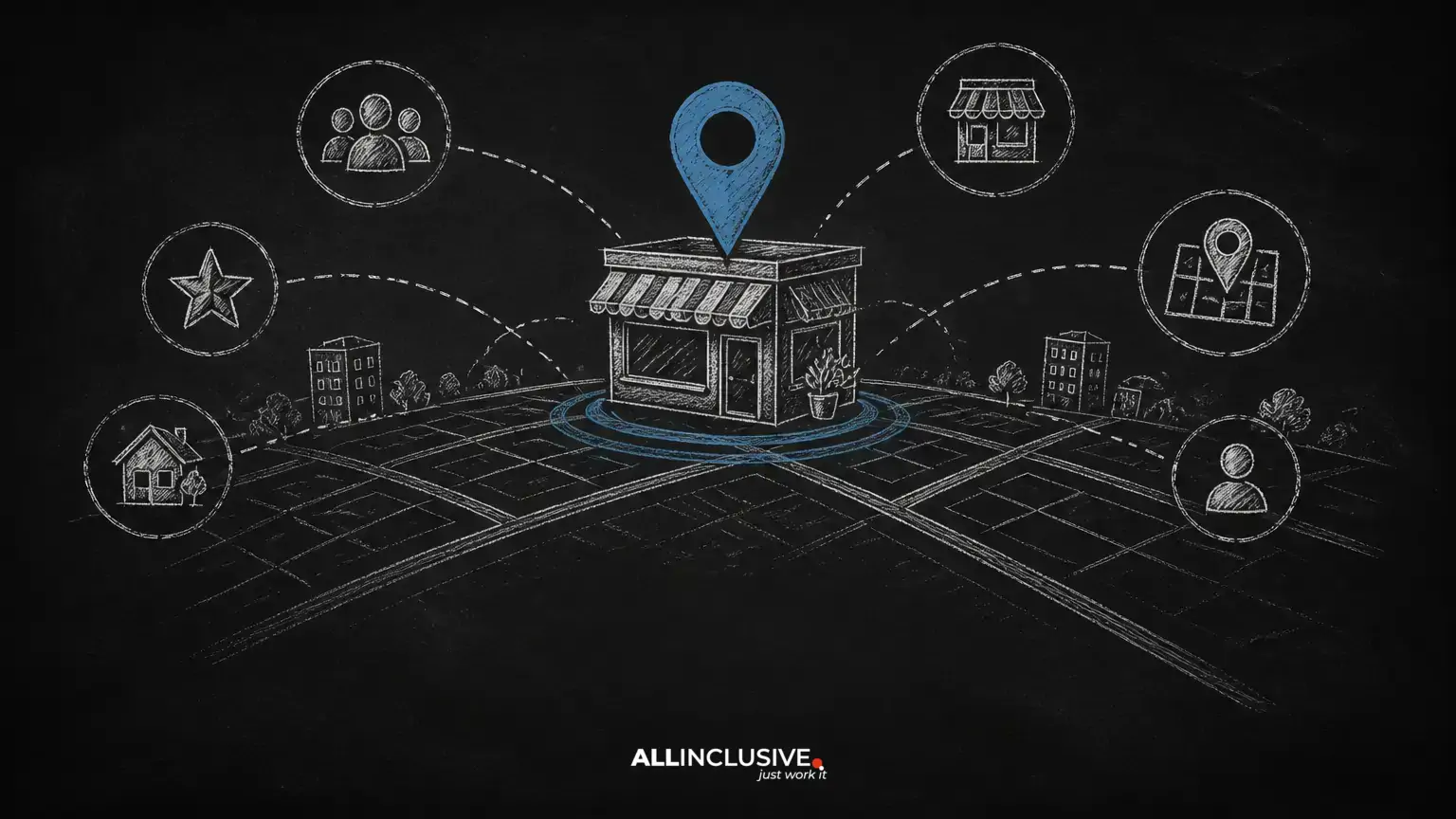
Augmented reality (AR) places digital information over a view of the physical world. Depending on the device and application, that information might include directions, product details, translated text, three-dimensional objects, or nearby places. For local businesses, the important question is not whether AR sounds futuristic. It is whether a potential customer can find, understand, and trust the business when digital discovery becomes more visual and location-aware.
AR is not a replacement for local SEO. It is better understood as a possible interface for information that businesses already need to manage: their name, address, phone number, hours, services, products, images, accessibility details, and customer feedback. If those underlying details are incomplete or inconsistent, a more immersive interface will not solve the problem.
This guide explains how to prepare for AR-influenced discovery while keeping the strategy grounded in durable local SEO principles. It avoids assuming that a particular app, device, or search engine feature will remain available. Instead, it focuses on the information and experiences that can support customers across search, maps, websites, and emerging visual interfaces.
Why augmented reality matters to local discovery
Traditional local search usually begins with a query, such as a service and location. AR can begin with a place, object, or camera view. A person might look at a storefront and want to know whether it is open, point a phone at a product, or explore businesses within walking distance. The interaction may feel different, but the customer still needs reliable answers.
That creates several practical requirements for local businesses:
- Discoverability: The business must be represented accurately in the platforms and datasets that support local discovery.
- Context: Customers need to understand what the business offers, where it is located, and whether it fits their immediate need.
- Trust: Reviews, photographs, policies, and clear contact information help people decide whether to visit or contact the business.
- Usability: The linked website and landing pages must work well on mobile devices and provide the next step without unnecessary friction.
None of these requirements depends on predicting a specific AR ranking system. They are useful because they improve the customer experience in existing local search environments as well.
Build a reliable local information foundation
AR experiences generally depend on structured information about places, products, and services. A business should therefore treat its local data as an operational asset rather than a one-time listing task.
Keep core business details consistent
Review the business name, physical address or service area, phone number, primary website, categories, hours, and holiday exceptions. Use wording that reflects the real business and avoid adding promotional phrases to the name field. If the business has multiple locations, give each location its own accurate page and location-specific details.
Consistency does not mean every platform must display identical formatting. It means customers should not encounter conflicting facts. A closed location, outdated phone number, or incorrect pin can undermine trust before a customer ever reaches the website.
Explain the offer in plain language
People using a visual or location-based interface may not begin with a carefully worded keyword query. Make the business understandable through concise descriptions of services, products, specialties, service boundaries, appointment requirements, parking, accessibility, and other decision-making details.
Write for customers first. Do not fill descriptions with lists of near-duplicate phrases or claims that the business cannot substantiate. Clear information is more adaptable than copy written for a single search feature.
Use visual content to clarify, not decorate
AR increases the importance of visual context, but simply adding more images does not guarantee better visibility. Images should help a customer recognize the location, understand the offer, or judge whether the business is suitable.
Useful local visuals may include:
- The exterior of the building from the street and from the likely entrance.
- Interior views that show layout, atmosphere, seating, or accessibility.
- Products, completed work, menus, rooms, equipment, or service outcomes.
- Staff or process photographs when they help customers know what to expect.
- Directional details for entrances, parking, reception areas, or hard-to-find locations.
Keep image descriptions accurate and accessible. Use meaningful file names and alternative text where appropriate, but do not treat image metadata as a substitute for useful content. Review photographs periodically so that they still represent the current location, branding, services, and customer experience.
Make reviews part of the customer experience
Ratings and reviews can influence whether someone chooses to visit a nearby business. In a location-aware interface, the decision may happen quickly, which makes recent, relevant, and authentic customer feedback especially valuable.
Businesses should create a repeatable review process:
- Ask eligible customers for honest feedback after a genuine interaction.
- Make the request easy to complete without pressuring customers to leave a particular rating.
- Monitor reviews across the platforms that matter to the business.
- Respond professionally and address specific concerns when possible.
- Use recurring complaints to improve operations, not merely to craft better replies.
Do not buy reviews, submit reviews on behalf of customers, or selectively manipulate feedback. These practices can damage credibility and may violate platform rules or consumer-protection requirements. A thoughtful response to a negative review cannot erase the complaint, but it can demonstrate accountability to future customers.
Connect local listings to useful landing pages
A listing should lead to a page that answers the customer’s likely next question. A generic homepage may be appropriate for a small business with one clear offer, but many businesses benefit from dedicated location, service, or product pages.
A strong local landing page typically includes:
- The exact location or service area and an easy-to-use contact option.
- A concise explanation of the service or product.
- Hours, appointment instructions, pricing context, or availability information where appropriate.
- Original photographs and details that distinguish the location.
- Answers to common customer questions.
- A clear next action, such as calling, booking, requesting directions, or visiting.
Ensure that the page loads well on mobile devices and that important information is available in normal HTML text, not only inside an image or interactive effect. Immersive features should enhance the page rather than block basic access to its content.
For broader search strategy and implementation support, see Allinclusive’s local SEO resources. Businesses seeking a wider organic search program can also review the SEO services overview.
Consider structured data carefully
Structured data can help search systems interpret information about a business, location, services, products, events, and frequently asked questions. It should describe content that is visible and accurate on the page. Marking up information that customers cannot find, or adding properties that do not apply, can create quality and eligibility problems.
Before publishing structured data, confirm:
- The business type accurately reflects the organization.
- Address, phone, hours, and URLs match the visible page and operational reality.
- Multiple locations are not combined into one misleading entity.
- Reviews and ratings are represented according to applicable platform and search guidelines.
- The implementation is tested after significant site or business changes.
Structured data is an interpretation aid, not a guarantee of enhanced search results or AR placement. Its value comes from reducing ambiguity and maintaining a consistent information model.
Design AR and interactive features around real customer needs
If a business invests in an AR feature, begin with a specific problem. A furniture retailer might help customers visualize dimensions in a room. A museum might provide contextual information about an exhibit. A service business might use visual guidance to explain preparation requirements or identify a location.
Evaluate the experience against practical questions:
- Does it work for customers who do not use the newest device?
- Is there a clear non-AR alternative?
- Can users understand what data, permissions, or downloads are required?
- Does the experience load quickly enough for the intended setting?
- Is the information accessible to people who cannot use camera-based interaction?
- Can the business maintain the content as products, hours, and locations change?
An impressive demonstration that is difficult to access or rarely updated may create less value than a fast, accurate page with useful photographs and directions. Treat AR as one part of the customer journey, not as the entire local strategy.
Measure business outcomes instead of novelty
Emerging interfaces can produce attention without producing visits, calls, bookings, or sales. Define the intended outcome before launching an experiment. Depending on the business, useful measures may include calls from local listings, direction requests, appointment submissions, store visits where measurement is reliable, product interactions, qualified inquiries, or assisted conversions.
Use a reasonable comparison period and document changes to listings, pages, promotions, and operating conditions. Avoid claiming that an AR feature caused an outcome when several variables changed at the same time. For new platforms, measurement capabilities may be limited, so record the available signals and state the limitations clearly.
A practical preparation checklist
- Audit business information across major local profiles and the website.
- Correct location, hours, service-area, and contact inconsistencies.
- Create or improve location and service pages with useful, visible details.
- Replace outdated images and add visuals that help customers navigate or decide.
- Establish an ethical process for requesting and responding to reviews.
- Validate relevant structured data after changes.
- Improve mobile speed, accessibility, and straightforward navigation.
- Choose one customer problem before testing an interactive or AR experience.
- Define success measures and document verification limits for emerging platforms.
Conclusion
Augmented reality may change how customers encounter local businesses, but it does not eliminate the fundamentals of local SEO. Accurate business data, useful pages, authentic reviews, clear visuals, mobile usability, and measurable customer journeys remain valuable across changing interfaces.
Prepare for AR by making the business easier to understand in every format. When local information is trustworthy and the customer’s next step is clear, the business is better positioned for conventional search, maps, visual discovery, and future experiences that cannot yet be predicted with certainty.