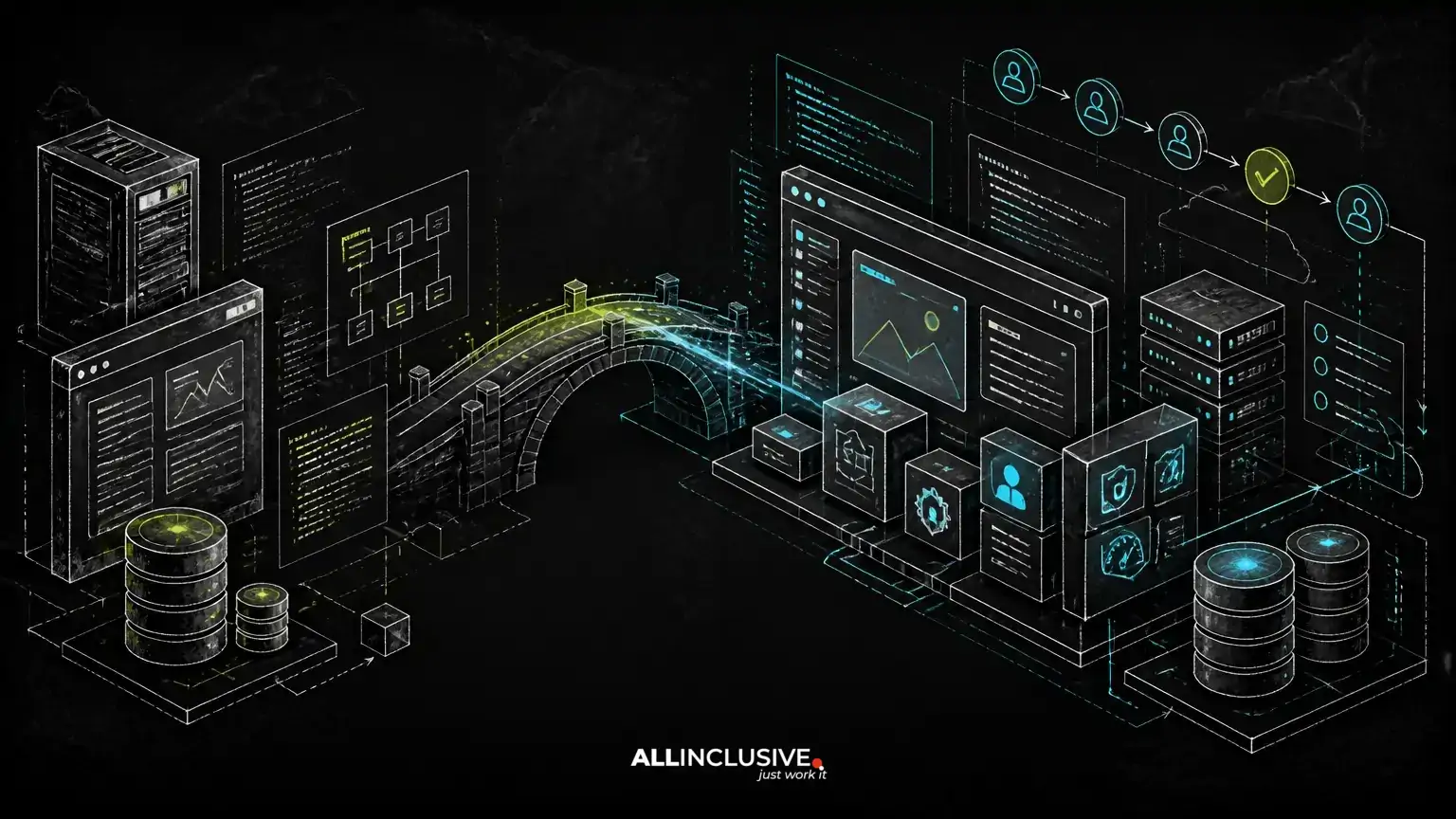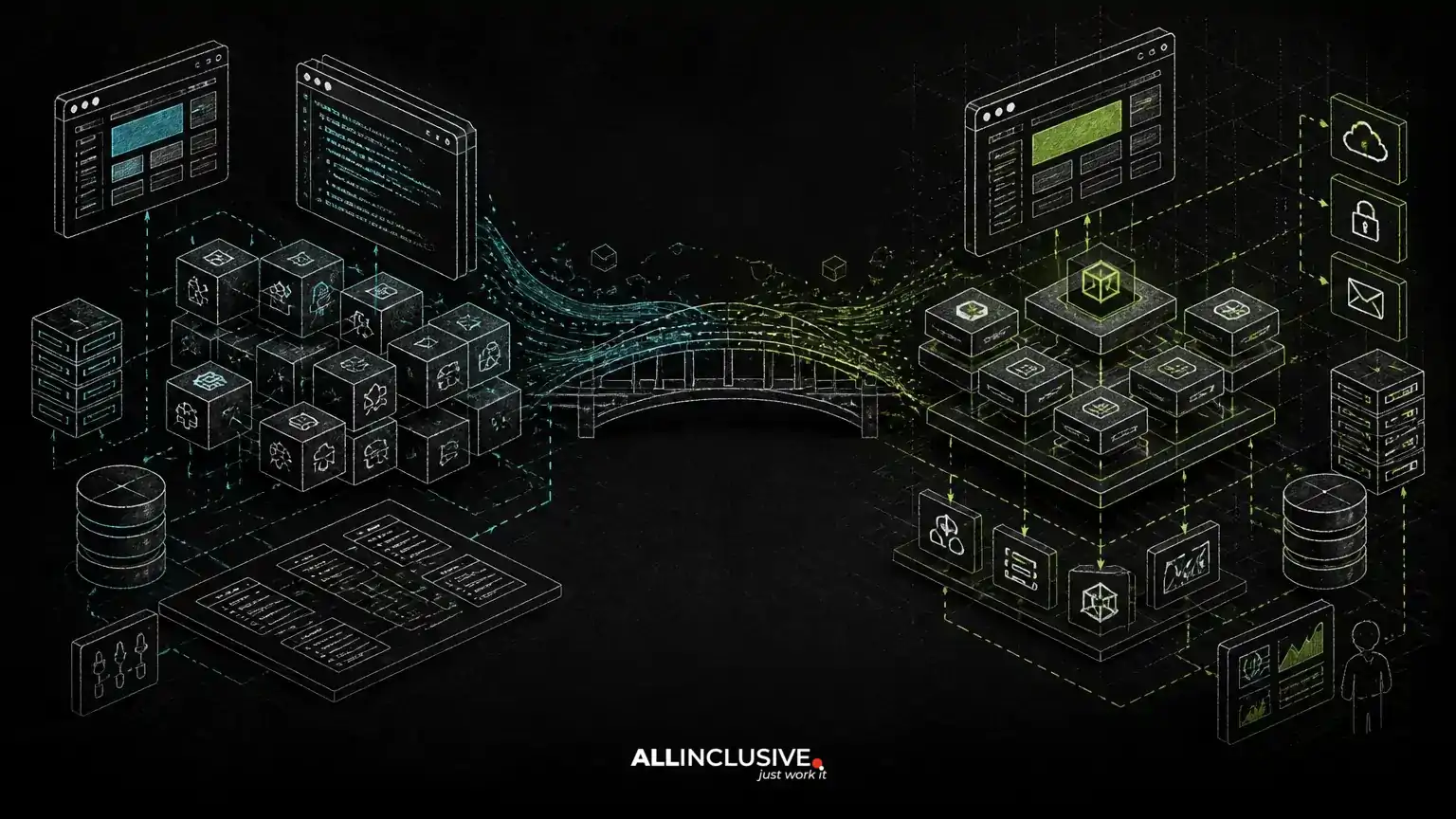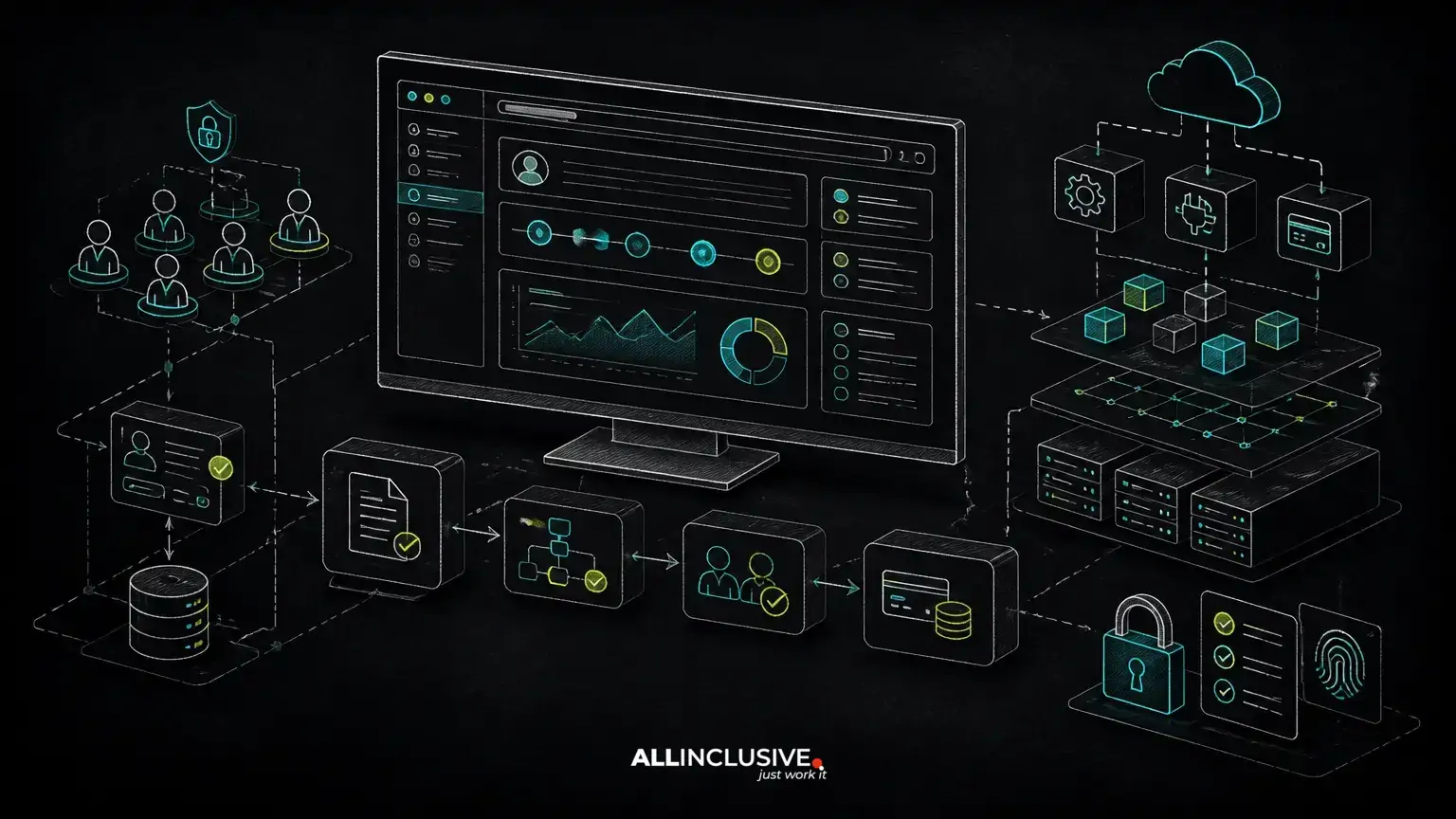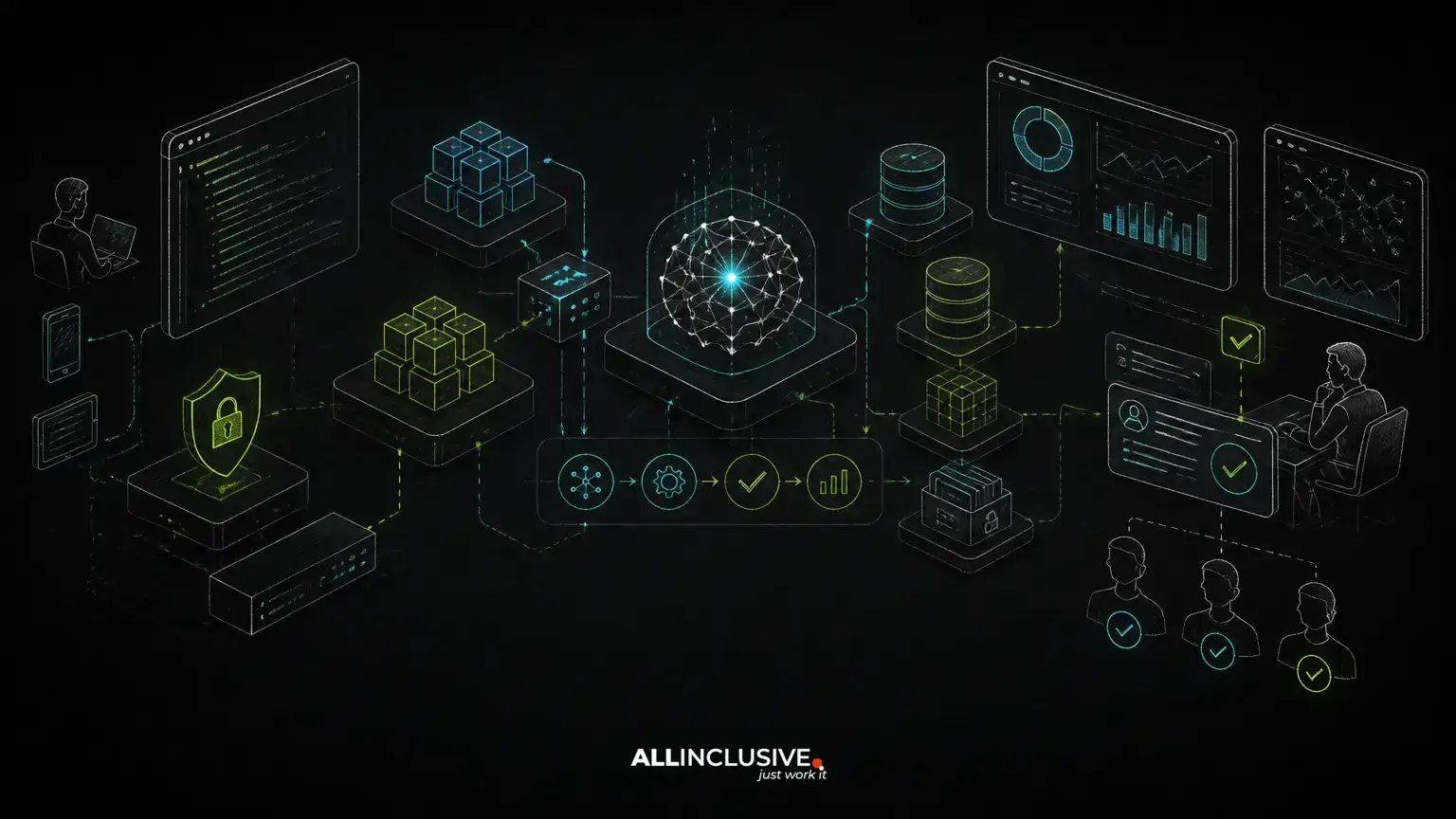
Choosing an AI development company is not primarily a question of which vendor can produce the most convincing chatbot demo. The more important question is whether the team can turn uncertain model behavior into dependable software that fits your workflows, data controls, application architecture and operating budget.
Evaluate candidates against the full production lifecycle: discovery, architecture, data and retrieval design, model integration, evaluation, deployment, observability, security, maintenance and handoff. A company that can explain these areas clearly is more likely to build a system your team can operate after launch.
This guide outlines what to assess, which questions to ask and which warning signs should change your shortlist.
Start with the business workflow, not the model
A capable AI partner should first clarify the job the system must perform. “Add AI to our support platform” is not a sufficient specification. The useful questions are more concrete:
- Which users will interact with the system?
- What decision, task or workflow should it improve?
- What happens when the model is uncertain or wrong?
- Which actions may be automated, and which require approval?
- How will success be measured by product, operations and finance teams?
The answers affect the architecture. A knowledge assistant may need retrieval-augmented generation (RAG), document permissions and citations. A process assistant may need tool calls into business systems, approval gates and an audit trail. A classification workflow may need structured outputs, confidence thresholds and a queue for human review.
Strong discovery connects model capabilities to operational consequences. It should also identify where conventional software is better than AI. Not every business rule needs a language model.
Assess whether the company understands production AI
Prototype work can demonstrate that a model is capable of producing an answer. Production engineering must demonstrate that the overall system behaves acceptably across normal, ambiguous, adversarial and changing inputs.
Ask the company to explain how it handles:
- Prompt and model versioning
- Structured outputs and validation
- Retrieval quality and source attribution
- Timeouts, rate limits and provider failures
- Fallback behavior when a model is unavailable or uncertain
- Latency and token-cost controls
- Permissions, data retention and sensitive information
- Human review and escalation
- Monitoring after release
A vendor that focuses only on prompts may be able to deliver a demonstration but may not be prepared to own a production service. Read more about the difference in AI proof of concept versus production systems.
Review the proposed architecture
Request a system diagram before accepting a proposal. It should show the user interface, application layer, model providers, retrieval components, data stores, external tools, queues, logging and human-review paths.
LLM integration
The company should explain why a particular model or model family fits the use case. The right choice depends on quality requirements, context size, supported output formats, latency, availability, privacy constraints and cost. A sound architecture should avoid unnecessary coupling to one model when practical, while recognizing that abstraction layers can also add complexity.
RAG, embeddings and reranking
For systems that answer from company content, ask how documents are ingested, segmented, indexed and updated. Embeddings can help retrieve semantically related material, but retrieval quality also depends on chunking, metadata, filters and query design. Reranking may improve the ordering of candidates before generation, although it adds processing and cost.
Ask how the team will test retrieval separately from answer generation. If the wrong documents reach the model, prompt changes alone are unlikely to solve the problem.
Agents and tools
Agentic workflows can be useful when a system must select among tools or complete a sequence of steps. They also introduce more failure modes than a single response: incorrect tool selection, repeated actions, partial completion and ambiguous state.
A production design should define tool permissions, input validation, maximum steps, idempotency, transaction boundaries and approval requirements. For high-impact actions, human confirmation may be more appropriate than unrestricted autonomy.
Application integration
AI should fit the existing product rather than become an isolated experiment. Python may own model orchestration, data processing or evaluation workloads while Laravel, PHP or another application layer owns authentication, billing, business workflows and user-facing behavior. This split can work well when service boundaries, contracts, observability and deployment responsibilities are explicit.
When assessing a proposed build, ask how the AI component communicates with the rest of the application, how failures are surfaced to users and which team owns each service. Explore broader AI development capabilities and architecture options alongside the specific project proposal.
Ask how quality will be evaluated
“The answers look good” is not a production evaluation strategy. A serious AI development company should help create a representative test set based on real tasks, expected sources, acceptable outputs and known failure cases.
Evaluation may include:
- Correctness against reviewed answers or expected actions
- Retrieval relevance and citation accuracy
- Instruction following and structured-output validity
- Resistance to prompt injection and unauthorized requests
- Consistency across repeated or slightly varied inputs
- Human review scores for ambiguous cases
- Latency, token usage and failure rates
Evaluation should run whenever prompts, retrieval settings, tools, application code or models change. It should also include regression cases discovered after launch. Ask whether the company will build the evaluation harness, document the methodology and transfer ownership to your team.
For a deeper view of scope, see what custom AI development should include beyond an API wrapper.
Examine observability and operations
AI systems need more than standard application logs. Teams must be able to investigate what the user asked, which context was retrieved, which model and prompt version were used, what tools were called, how long each step took and where the result failed.
Ask to see the proposed approach for:
- Request tracing across application and AI services
- Model, prompt and retrieval-version tracking
- Latency and error monitoring
- Token and provider-cost reporting
- Quality feedback and review queues
- Redaction of sensitive data in logs
- Alerts and incident-response procedures
Observability has a direct business benefit: it reduces the time required to distinguish a model-quality problem from a data, integration or infrastructure problem. It also makes cost optimization more targeted. Compare approaches in AI cost optimization.
Check privacy, permissions and security design
Privacy should be addressed in architecture and contracts, not treated as a final checklist. Ask where prompts, retrieved documents, uploaded files, evaluation data and logs are stored; who can access them; how long they are retained; and whether they may be used for provider training under the selected arrangement.
Permission-aware retrieval is especially important. A user should not receive content merely because it exists in the connected knowledge base. Retrieval filters and application authorization must work together, with tests for cross-user and cross-tenant access.
Also ask how the system handles prompt injection, malicious documents, unsafe tool requests and sensitive data submitted in free text. No design eliminates all risk, but a professional team should identify threats, reduce exposure and define human escalation paths.
Compare delivery models and ownership
The cheapest proposal is not necessarily the lowest-cost option if it leaves your team with undocumented prompts, fragile scripts or an application nobody can maintain. Compare what each company will deliver:
- Architecture and technical decision records
- Source code and infrastructure configuration
- Evaluation datasets and test harnesses
- Deployment and rollback procedures
- Monitoring dashboards and alert definitions
- Documentation for prompts, tools and data pipelines
- Training and knowledge transfer
- Post-launch support and change-management responsibilities
Clarify whether the engagement is a fixed discovery phase, a product build, an ongoing engineering partnership or a combination. The right model depends on uncertainty, internal capacity and the importance of the workflow.
If the project includes a broader application or integration layer, review the team’s web development experience and its ability to maintain the surrounding product, not just the model call.
Warning signs during vendor evaluation
Several patterns deserve scrutiny:
- Demo-first proposals: The vendor shows a polished interaction but cannot describe evaluation, failure handling or deployment.
- Model guarantees: The company promises universal accuracy, fixed behavior or guaranteed cost without a defined workload and test method.
- Vague data answers: It cannot explain retention, access, logging or tenant isolation.
- Autonomy without controls: Agents are proposed for consequential actions without approvals, limits or auditability.
- Prompt-only thinking: Every issue is framed as a prompt problem rather than a retrieval, data, workflow or authorization problem.
- No ownership plan: Your team will receive a working demo but not tests, documentation or operational access.
A practical shortlist checklist
Before selecting a partner, ask each finalist to provide a concise response to the same scenario. The response should cover:
- The proposed user workflow and measurable outcome
- Architecture, integrations and technology boundaries
- Data, retrieval and permission handling
- Model-selection and fallback reasoning
- Evaluation design and acceptance criteria
- Privacy, security and human-review controls
- Observability, support and incident response
- Estimated scope, dependencies and major cost drivers
- Handoff, documentation and long-term ownership
Then test the company’s reasoning. Change one assumption—such as stricter privacy requirements, a second tenant, a higher review burden or a need for deterministic actions—and ask what would change in the design. Experienced teams should be able to explain trade-offs without turning every requirement into a larger model or a more complex agent.
Choose the team that can operate what it builds
The best AI development company for a production project is not necessarily the one with the most impressive demo or the longest list of model integrations. It is the one that can connect AI capabilities to a maintainable software architecture, measurable quality standards and responsible operating processes.
Look for evidence of disciplined engineering: clear boundaries, realistic failure modes, repeatable evaluations, permission-aware data access, observable services and a credible ownership plan. That approach may produce a less theatrical prototype, but it gives product and technical teams a stronger path from experiment to software people can trust.
For context on the wider engineering disciplines that support these systems, visit the software development hub.