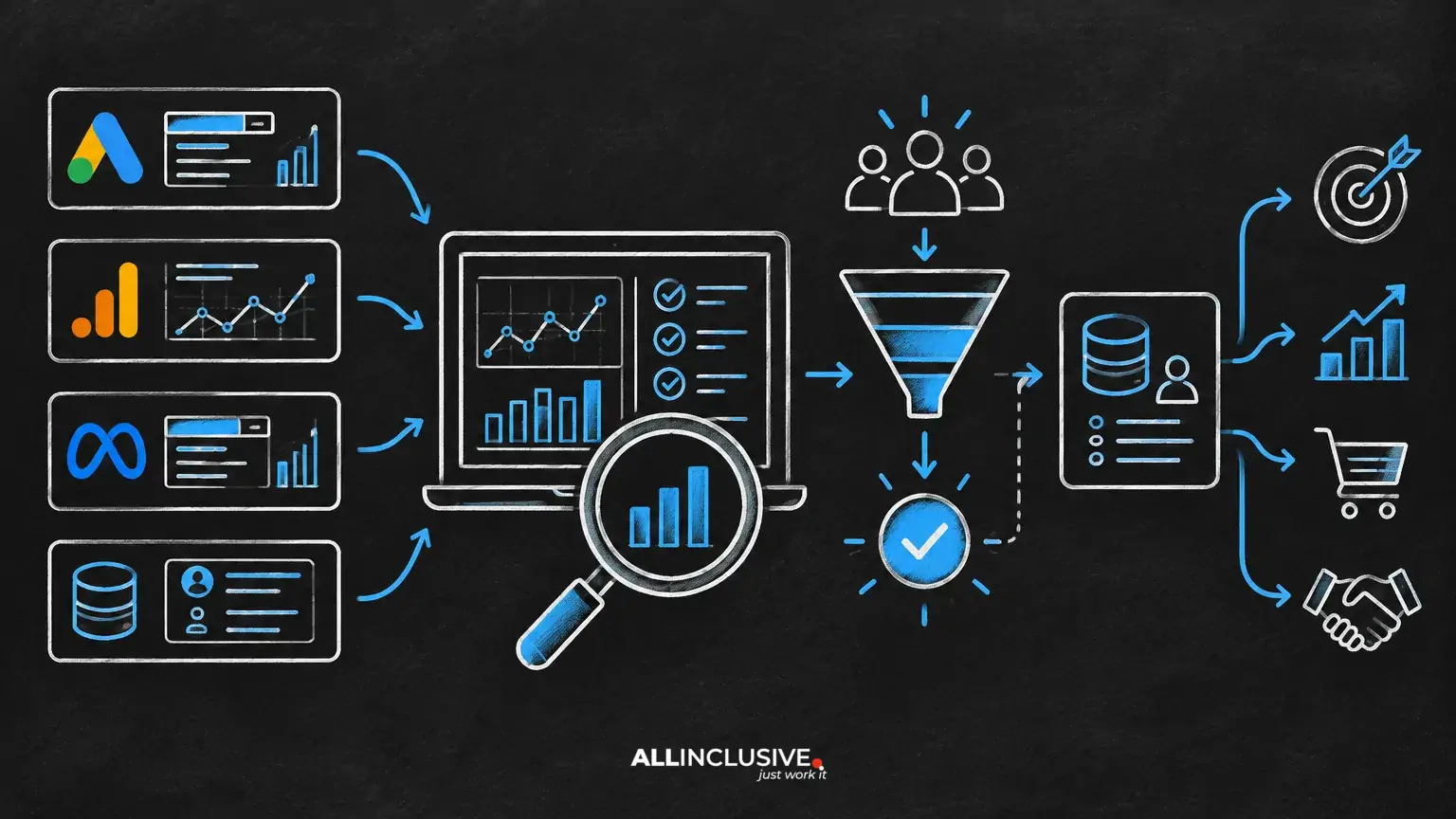
Google Ads for nonprofits can provide a valuable way to reach people searching for help, information, services or ways to support a cause. For eligible organizations, Google Ad Grants may provide advertising credit for qualifying search campaigns. The opportunity is meaningful, but access to a grant does not automatically create effective marketing.
The strongest nonprofit programs begin with a clear conversion goal, a technically prepared website and a campaign structure built around real search intent. Eligibility and platform requirements also need to be reviewed before launch because nonprofit status alone does not guarantee access or continued participation.
This guide explains how to evaluate the opportunity, prepare for setup and decide where paid search should fit in a broader acquisition strategy.
What Google Ads for nonprofits can accomplish
Search advertising can support several nonprofit objectives:
- Service access: Help people find programs, hotlines, clinics, educational resources or other support.
- Volunteer recruitment: Reach people actively looking for volunteer opportunities or community involvement.
- Donor acquisition: Capture searches from users researching a cause, campaign or giving opportunity.
- Event registration: Promote fundraisers, webinars, workshops and local or virtual events.
- Awareness and education: Connect people with credible information about an issue or organization.
Search is especially useful when the audience expresses a need in a query. It is less suitable as a standalone solution for every communications objective. A campaign designed to generate broad awareness may require other channels, while search can capture demand created by public relations, partnerships, email or social activity.
How Google Ad Grants fits into the decision
Google Ad Grants is a nonprofit advertising program associated with Google Ads. The program has eligibility, application, account and ongoing compliance requirements that can change over time. Treat the current program documentation as the final authority rather than relying on an old checklist or an agency summary.
Before investing time in campaign construction, confirm three separate questions:
- Can the organization qualify? Review legal status, location, registration and any organization-specific exclusions or requirements.
- Can the website support the intended goal? A campaign cannot compensate for unclear messaging, broken forms, slow pages or an inaccessible donation experience.
- Can the team manage the account? Grant accounts still require governance, monitoring, conversion review, search-term analysis and policy awareness.
For a detailed preparation path, see the Google Ad Grants eligibility guide and the Google Ad Grants application checklist.
Eligibility: what to review before applying
Eligibility is a compliance question, not a marketing preference. Organizations should verify their status using the latest official requirements and identify documentation that may be needed during the application process.
Important review areas commonly include:
- Whether the organization has an eligible nonprofit or charitable status in its operating country.
- Whether the organization falls within an excluded category or has a structure that requires additional review.
- Whether the organization can accept the applicable terms and maintain an account in good standing.
- Whether the website clearly explains the organization, its programs and the action users can take.
- Whether the organization has a responsible account owner who can handle ongoing requirements.
Do not assume that a fiscal sponsor, school, government entity, foundation, international branch or affiliated organization will be treated in the same way as an independently registered nonprofit. Confirm the specific case before building a forecast.
Setup: prepare the organization before the campaigns
1. Define one primary business or mission outcome
Start with the outcome that matters most for the initial launch. Examples include completed volunteer applications, qualified service inquiries, event registrations or completed donations. A long list of possible actions makes optimization and reporting harder.
Use a simple planning statement: “We want to reach [audience] when they search for [need] and encourage them to [measurable action].” This connects the query, landing page and conversion event before account settings enter the discussion.
2. Audit the website and landing pages
Review each destination page for message clarity, mobile usability, accessibility, page speed, form functionality and trust signals. The page should make the next step obvious without forcing visitors to navigate through unrelated content.
For example, an organization recruiting mentors should send searches for “youth mentoring volunteer” to a volunteer page that explains time commitment, location, screening and application steps—not to the homepage.
3. Establish conversion tracking
Track actions that indicate progress toward the mission objective. Depending on the program, this may include form submissions, completed registrations, donation completions, phone interactions or meaningful engagement with a service resource.
Separate primary conversions from diagnostic actions. A page view or button click may help diagnose a funnel, but it should not automatically be treated as equivalent to a completed application or donation. Validate tracking with test submissions and document how each event is counted.
Our guide to Google Ad Grants conversion tracking covers the measurement decisions that should be made before optimization.
4. Prepare access and governance
Use organization-controlled accounts, documented ownership and appropriate user permissions. Record who approves landing-page changes, who reviews search terms and who is responsible for compliance checks. This reduces disruption when staff or agency relationships change.
Campaign strategy for nonprofit search accounts
Group campaigns by intent, not just topic
Campaigns should reflect meaningful differences in audience intent, destination, geography or conversion objective. A service-access campaign may require different messaging from a donor campaign even when both relate to the same issue.
Useful intent categories may include:
- Direct service searches: Queries from people seeking immediate help or a specific program.
- Action searches: Queries containing terms such as volunteer, donate, register or apply.
- Educational searches: Queries seeking explanations, statistics or guidance.
- Branded searches: Searches that mention the organization or a named initiative.
Keep the first launch narrow enough to review. Expansion should follow evidence from search terms, conversion quality and landing-page performance.
Build keyword themes around real language
Use the words your audience uses, not only internal program names. Interview service teams, review site search data, analyze inquiries and examine existing content to identify useful language.
Prioritize terms with a plausible connection to the intended action. Broad issue terms can attract research traffic without producing applications, donations or service engagement. That does not make them useless, but they should be evaluated as an awareness or education objective rather than assumed to be direct-response terms.
Account for ambiguity. A phrase such as “housing support” could represent a person seeking help, a professional looking for resources or someone researching policy. The ad and landing page should make the intended audience clear, and search-term reviews should identify irrelevant interpretations.
Write ads that set accurate expectations
Ad copy should explain what the organization offers and who it serves. Avoid implying guaranteed outcomes, immediate availability or eligibility unless the landing page and service process support those claims.
Strong nonprofit ad messaging often includes:
- The specific service, program or action.
- The relevant audience or geographic area, where applicable.
- A clear next step.
- Trust-building information that is accurate and supportable.
Do not use emotionally powerful claims as a substitute for clarity. The best ad is one that helps the right person choose the right next step.
Budget and prioritization decisions
A grant-supported account still has an opportunity cost. Teams spend time planning, reviewing data, improving pages and responding to inquiries. Prioritize campaigns according to mission value, audience urgency and operational capacity.
Ask these questions before expanding:
- Can the organization respond promptly to leads or applications?
- Is there enough program capacity to accept the expected action?
- Can the team distinguish a qualified outcome from a superficial interaction?
- Are the landing pages and forms ready for additional traffic?
- Will expansion create useful learning or simply add low-intent volume?
If a program has limited capacity, campaign targeting should reflect that constraint. More traffic is not inherently better when staff cannot serve the resulting demand.
Compliance and account health
Program compliance should be treated as an operating process, not a one-time setup task. Requirements can involve account activity, targeting, conversion measurement, keyword quality, website standards and other platform conditions. Review the current official guidance regularly.
Common operational risks include:
- Leaving irrelevant or very broad campaigns unattended.
- Tracking weak actions while ignoring meaningful outcomes.
- Sending every ad to the homepage.
- Allowing broken forms, expired events or unavailable programs to remain active.
- Failing to document changes and account ownership.
See the Google Ad Grants compliance guide for a focused review of account-health considerations. Compliance is necessary, but it should not become the sole objective. A compliant campaign that produces no useful mission outcome still needs strategic improvement.
How to evaluate performance
Use a measurement hierarchy that connects media activity to mission value:
- Delivery: Are relevant searches, impressions and clicks occurring?
- Engagement: Do users reach and interact with the intended landing pages?
- Conversion: Are users completing the defined primary actions?
- Quality: Are those actions eligible, complete and useful to the organization?
- Mission impact: Does the activity contribute to service access, fundraising, participation or another agreed outcome?
Review performance by campaign, query theme, landing page and audience context where available. A high click volume can conceal poor-fit traffic, while a smaller volume of qualified actions may be more valuable.
Create a recurring review rhythm. Weekly checks can catch broken links, irrelevant searches and urgent service changes. Monthly or quarterly reviews can address keyword expansion, landing-page improvements, conversion quality and strategic priorities.
When to use Google Ads beyond the grant
Some nonprofit objectives may require capabilities or scale that a grant account does not provide. The right decision depends on the organization’s goals, available budget, audience and operational needs. A paid account may be considered when the organization needs greater control over campaign types, targeting, bidding, geographic reach or testing options that are not available within the grant context.
This should be a strategic decision, not an assumption that the grant is inadequate. First determine whether the limitation is truly platform-related or whether the underlying issue is weak targeting, unclear measurement or an ineffective landing page.
Recommended implementation sequence
- Confirm current eligibility and assign account ownership.
- Choose one primary mission outcome for the initial program.
- Audit the website, landing pages and conversion paths.
- Implement and validate conversion tracking.
- Build a small set of intent-led campaign themes.
- Launch with accurate ads and tightly matched destinations.
- Review search terms, conversion quality and operational capacity.
- Improve landing pages and expand only when the evidence supports it.
For broader channel planning, explore our paid media resources. For the program overview and related guidance, visit the Google Ads Grants hub.
Google Ads for Nonprofits: What to Prioritize
Google Ads for nonprofits works best when the grant is treated as one part of a measurable acquisition system. Eligibility opens the door, but strategy determines whether the organization reaches the right people, sends them to useful pages and learns from the resulting actions.
Start with a defined mission outcome, verify the technical foundation, keep targeting connected to search intent and maintain a regular compliance and quality review. That approach produces a more durable program than simply trying to maximize available advertising activity.