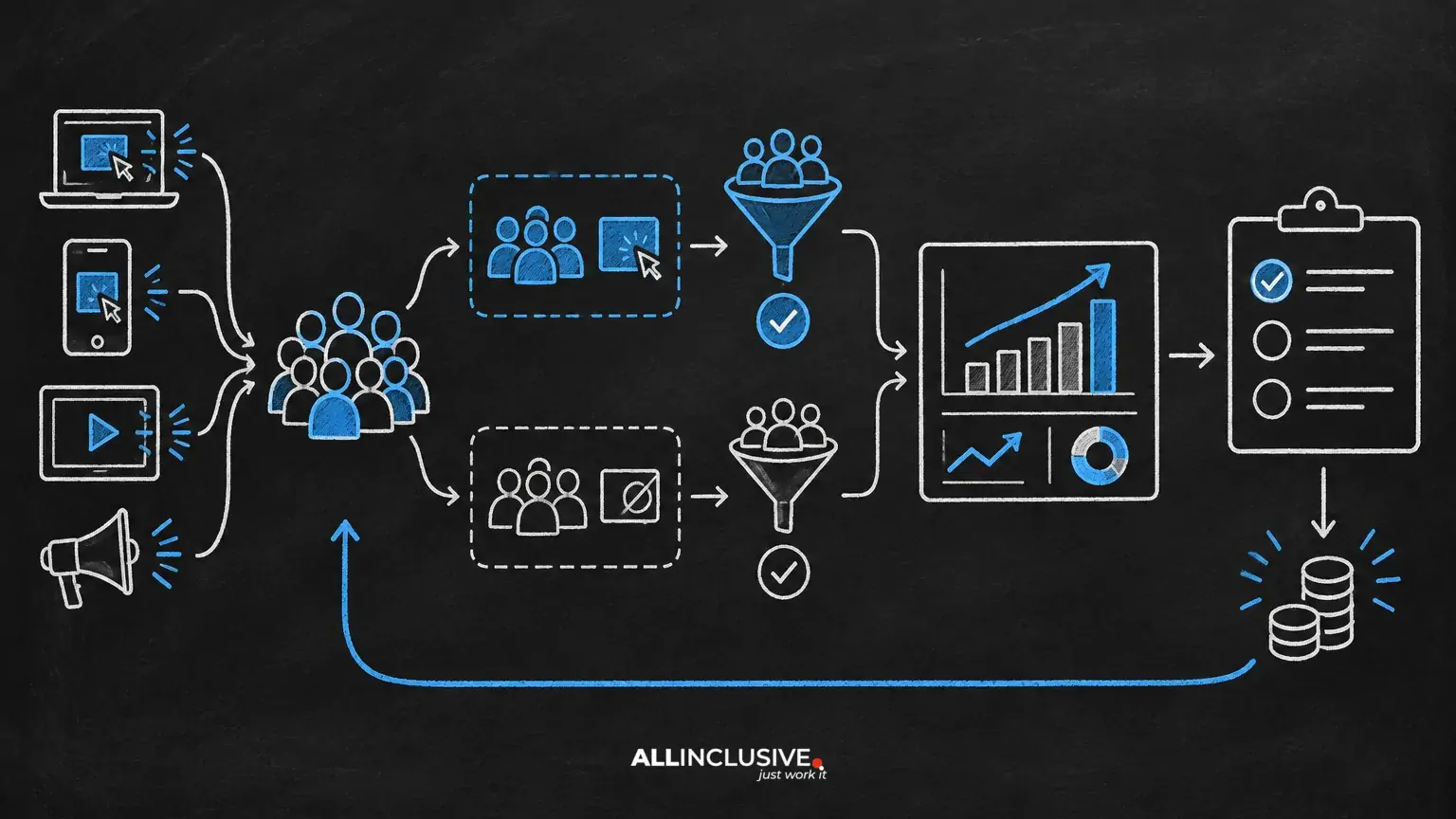
Google Ad Grants conversion tracking helps nonprofits understand whether search campaigns are producing meaningful outcomes—not merely clicks or website visits. The right setup connects ad spend and search intent to actions such as donations, volunteer applications, event registrations, resource downloads, or completed contact forms.
The central principle is simple: track the actions that reflect your organization’s objectives, assign primary goals carefully, and validate every important conversion before using the data to guide campaign decisions. Platform mechanics can change, but this measurement discipline remains useful across accounts.
What Google Ad Grants conversion tracking should measure
Conversion tracking should answer a business question: what did the visitor do that created value for the nonprofit?
Depending on your mission and website, meaningful actions may include:
- Donations: a completed donation transaction or a confirmed contribution.
- Volunteer recruitment: a submitted application, completed interest form, or scheduled orientation.
- Advocacy: a completed petition, message to a representative, or other verified action.
- Program participation: an appointment request, eligibility inquiry, registration, or intake form.
- Event registrations: a completed registration rather than a visit to the event page.
- Audience development: a confirmed newsletter subscription or resource request, when those actions support a defined engagement strategy.
- Qualified inquiries: a contact form submission or phone call that meets your organization’s quality criteria.
Page views, time on site, and clicks on navigation elements can help diagnose user behavior, but they are usually weaker indicators of mission impact. Treat them as diagnostic signals unless your organization has a clear reason to classify them as business outcomes.
Separate primary conversions from supporting actions
Not every tracked event should influence campaign optimization in the same way. A useful measurement plan distinguishes between primary conversions and secondary actions.
Primary conversions
Primary conversions represent the outcomes you most want campaigns to generate. Examples include a completed donation, a submitted volunteer application, or a qualified program inquiry. These should be limited to actions that are sufficiently valuable and measurable to support budget and targeting decisions.
Secondary actions
Secondary actions provide context but should not automatically be treated as equivalent to a completed outcome. Examples include viewing a donation page, clicking an email address, downloading an information pack, or beginning a form.
This distinction prevents a common reporting error: counting every interaction as success. If a campaign generates many form starts but few completed submissions, the data should expose that gap rather than conceal it inside an inflated conversion total.
Build a conversion measurement plan before implementation
Document the measurement plan before adding tags or importing events. A simple table can keep stakeholders aligned.
- Business objective: the organizational result you are trying to support.
- User action: the exact action that indicates progress or completion.
- Conversion name: a clear, consistent label for reporting.
- Source: the analytics or advertising system where the event originates.
- Primary or secondary status: whether the action should guide campaign optimization or provide context.
- Owner: the person responsible for validating the data and resolving issues.
- Quality rule: the condition that determines whether the action is meaningful.
For example, “donation page view” and “donation completed” should be separate events. The former describes intent; the latter represents the outcome. Likewise, a “contact form submitted” event may need a quality review if the form receives spam or requests outside the nonprofit’s service area.
Choose the right implementation approach
The technical method depends on the website, analytics setup, form provider, donation platform, and consent requirements. Common approaches include:
- Destination-based tracking: recording a conversion when a user reaches a dedicated confirmation page.
- Event-based tracking: recording a specific interaction, such as a form submission or button action.
- Imported analytics conversions: using an analytics platform to define events and then making appropriate conversions available for advertising analysis.
- Transaction-based tracking: passing transaction details from a donation or registration system when supported.
- Call or offline measurement: connecting phone inquiries or later-qualified actions to campaigns where the organization has the systems and permissions to do so.
Use the least fragile method that accurately represents the outcome. A confirmation page is often easier to audit than a generic button click, provided users cannot reach it without completing the intended action. Event-based tracking may be necessary for single-page forms or third-party tools, but it requires careful testing.
Do not choose an implementation solely because it is technically convenient. The method should preserve the distinction between an attempted action and a completed one, avoid duplicate counting, and respect the organization’s privacy and consent obligations.
Validate tracking before trusting the data
Conversion tracking is only useful when the recorded data reflects reality. Create a validation checklist for each conversion:
- Complete the action yourself in a test environment or with a controlled real submission.
- Confirm that the expected event or confirmation state occurs once.
- Check that the event is attributed to the correct page, form, transaction, or interaction.
- Test unsuccessful submissions to ensure they are not counted as completions.
- Test refreshes, back-button behavior, and duplicate form submissions.
- Verify that thank-you pages are not publicly accessible without a completed action.
- Compare advertising and analytics records with the source system where possible.
- Document the test date, result, and person responsible for approval.
Pay particular attention to third-party donation and event platforms. Redirects, embedded forms, cross-domain journeys, consent settings, and payment failures can all affect measurement. If the nonprofit cannot independently verify the event, label the conversion as provisional rather than treating it as definitive.
Use values without creating false precision
Conversion values can help compare actions with different levels of organizational importance, but they should be based on a defensible method. A donation transaction may have a direct monetary value. A volunteer application or program inquiry may require an internal estimate based on downstream value, capacity, or historical qualification.
If reliable values are unavailable, use a consistent ranking or qualitative framework rather than inventing precise financial figures. The goal is to improve prioritization, not to make uncertain assumptions appear authoritative.
Review values when the organization’s goals, service capacity, fundraising model, or qualification process changes. A conversion value is a planning input, not a permanent fact.
Connect tracking to campaign and landing-page decisions
Tracking becomes useful when it changes decisions. Review performance by campaign, search theme, landing page, audience context, and conversion type. Ask questions such as:
- Which searches produce completed actions rather than shallow engagement?
- Do informational searches assist later conversions even when they rarely complete an action immediately?
- Are certain landing pages generating form starts but losing users during completion?
- Are campaigns attracting people outside the nonprofit’s service area or eligibility criteria?
- Is a high conversion count being driven by a low-value micro-action?
Interpret results in context. A campaign promoting educational resources may play an early role in the journey, while a campaign for a direct service may be expected to generate immediate inquiries. Comparing them on one undifferentiated conversion total can lead to poor decisions.
Landing-page analysis is especially important. If an ad receives relevant clicks but produces few completed actions, investigate message match, page clarity, mobile usability, form length, accessibility, eligibility information, and trust signals before changing keywords alone.
Protect data quality and privacy
Nonprofits often handle sensitive information. Conversion tracking should collect only what is necessary for measurement and should align with applicable privacy, consent, security, and platform requirements. Avoid placing personal or sensitive information in URLs, event names, ad parameters, or analytics fields.
Establish access controls and a change log for tracking configurations. Record who can edit tags, analytics events, conversion settings, and donation integrations. A small unauthorized change can affect reporting across multiple campaigns.
Also distinguish between measurement limitations and campaign performance. Consent choices, browser behavior, blocked scripts, cross-domain journeys, and offline interactions can create gaps. Report those limitations clearly instead of presenting incomplete data as a precise estimate.
Common Google Ad Grants tracking mistakes
- Tracking clicks as outcomes: a button click does not prove that a form, donation, or registration was completed.
- Counting the same action twice: imported analytics events and separately configured advertising conversions can duplicate results.
- Using every event as a primary goal: this can prioritize low-value interactions over mission outcomes.
- Ignoring unsuccessful journeys: without testing errors and abandoned forms, completion data may look better than the user experience really is.
- Failing to review changes: website redesigns, form-provider updates, and checkout changes can silently break tracking.
- Optimizing around volume alone: more recorded conversions are not necessarily better if quality declines.
- Leaving names and definitions unclear: vague labels make it difficult for teams to interpret reports consistently.
A practical review cadence
Use a three-level review process:
Weekly or campaign-level checks
Look for sudden changes in conversion volume, tracking status, spend, traffic quality, or landing-page behavior. Investigate abrupt shifts before making major optimization decisions.
Monthly quality review
Compare recorded actions with source-system records, lead quality, donation confirmations, registration data, or internal follow-up outcomes. Review whether primary conversions still represent the organization’s current priorities.
Quarterly measurement audit
Revisit the full measurement plan after website, CRM, donation, consent, or campaign changes. Remove obsolete events, test the critical user journeys, and confirm that stakeholders agree on definitions.
For a broader account review, see the Google Ad Grants audit checklist. Tracking is one part of a healthy account; keyword relevance, landing-page quality, and policy alignment also matter. The related guide to Google Ad Grants optimization can help connect measurement findings to campaign improvements.
How conversion tracking supports compliance and strategy
Measurement should not be treated as a reporting exercise separate from account management. Reliable conversion data can reveal whether keyword themes attract the right users, whether landing pages deliver on ad promises, and whether campaigns support real organizational goals.
It also helps teams distinguish a technical issue from a strategic one. If no conversions are recorded, the cause may be broken implementation, insufficient traffic, an overly demanding form, weak message match, or genuinely low demand. Each diagnosis requires a different response.
For context on the wider program, visit the Google Ad Grants guide and explore All Inclusive’s broader paid media resources.
Google Ad Grants Conversion Tracking: Final Review Checklist
- Define the nonprofit outcome before choosing the tracking method.
- Separate completed outcomes from supporting interactions.
- Assign primary status only to meaningful, sufficiently reliable conversions.
- Use a defensible approach to values and document assumptions.
- Test successful, unsuccessful, duplicate, and cross-domain journeys.
- Compare platform data with source-system records when possible.
- Protect sensitive information and document access and changes.
- Review tracking after website, form, donation, or consent changes.
- Use conversion quality—not volume alone—to guide optimization.
Well-designed Google Ad Grants conversion tracking gives nonprofit teams a clearer connection between search activity and mission progress. The strongest setups are not the ones with the most events; they are the ones with definitions stakeholders trust, implementation they can validate, and data that supports better decisions.