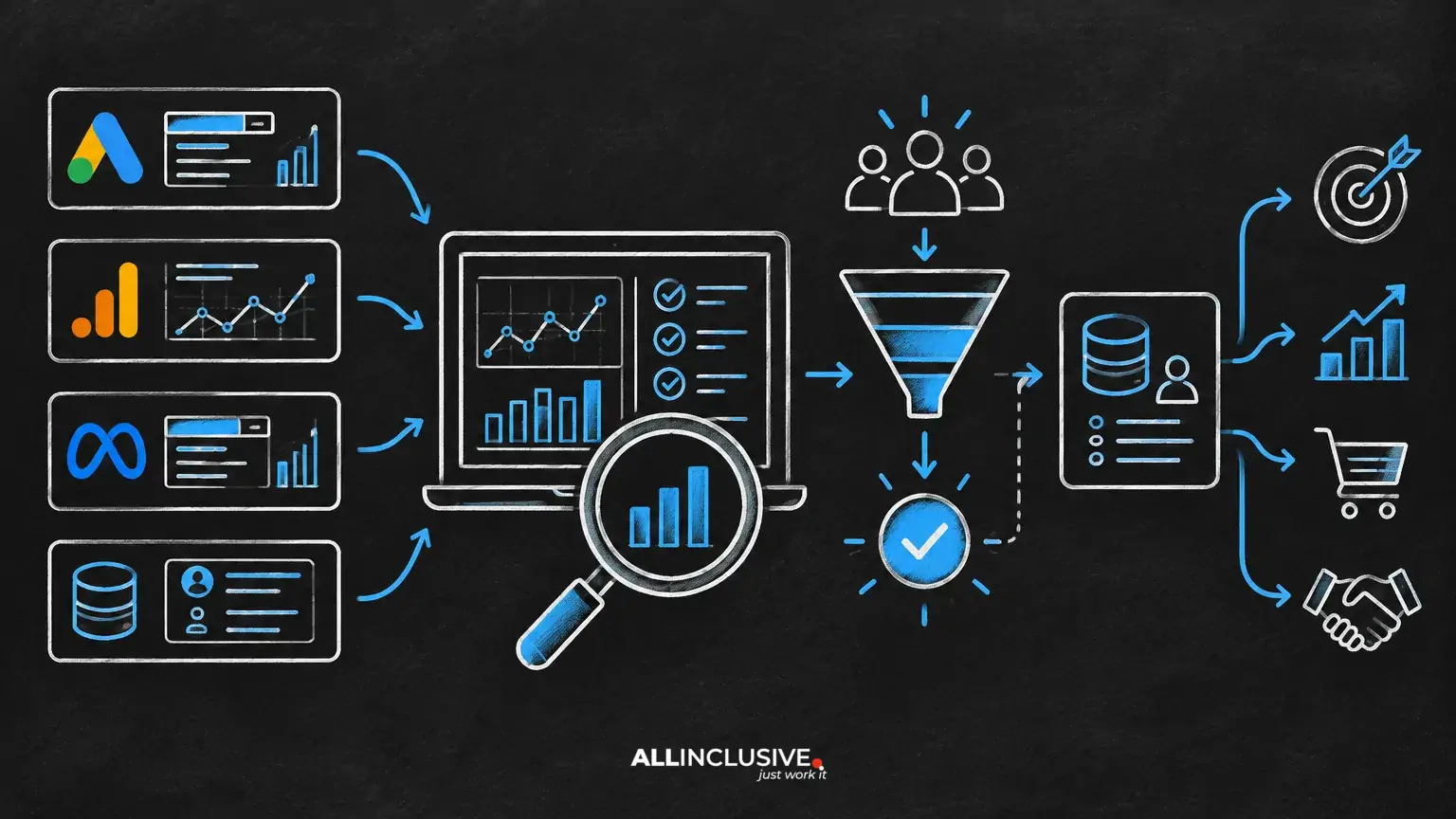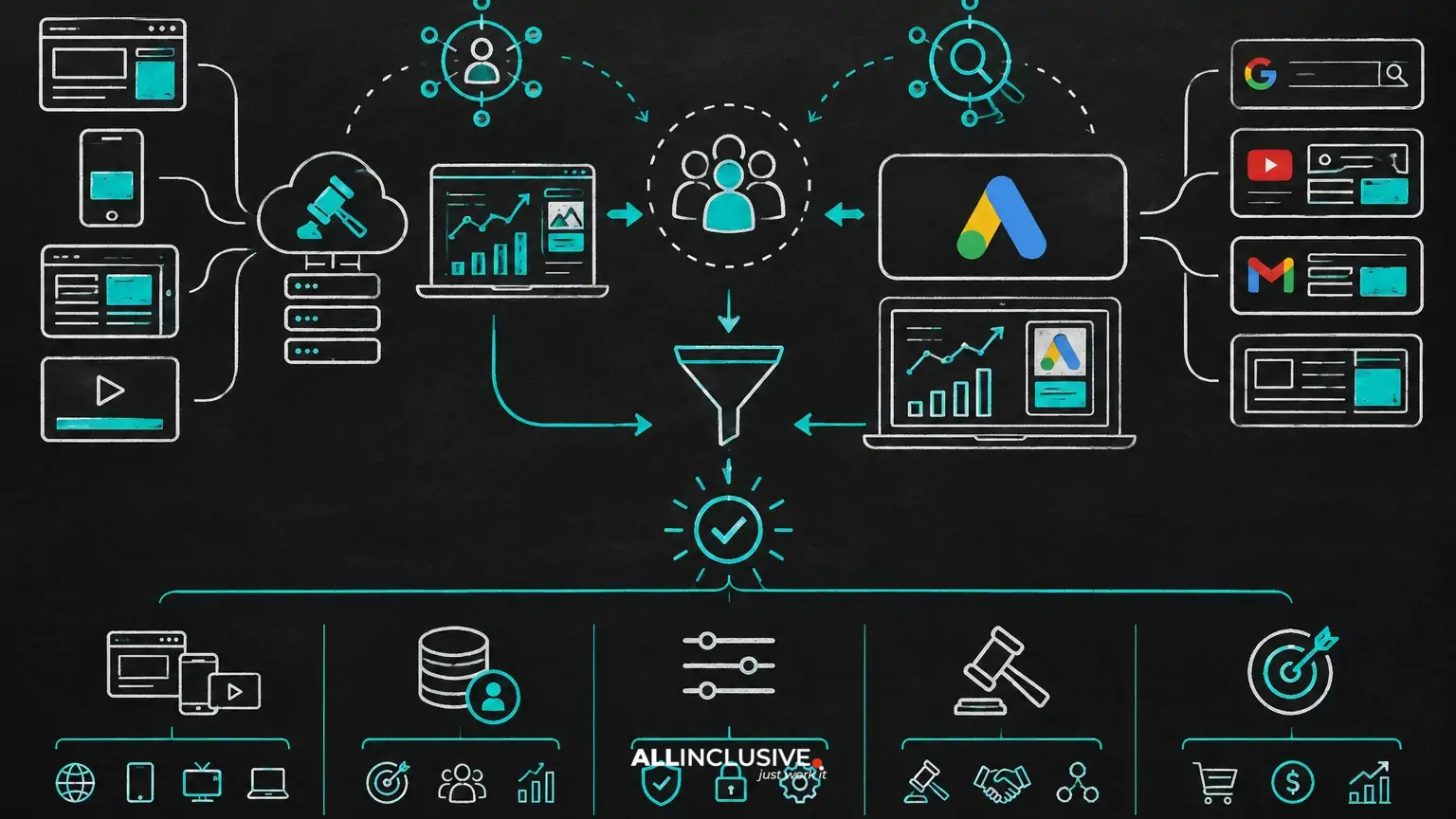
When comparing programmatic vs google ads, the most useful question is not which channel is universally better. It is which buying environment matches the audience, inventory, objective and level of control your campaign requires.
Google Ads is often the more direct route to demand already expressed through search, while programmatic gives advertisers access to a broader range of display, video, connected TV, audio and other addressable inventory through automated buying platforms. The two can complement each other, but they should not be evaluated as interchangeable line items.
The short answer: when each approach fits
- Choose Google Ads when capturing active search demand, managing product feeds, reaching users on Google-owned properties where available, or launching a relatively direct conversion campaign is the priority.
- Choose programmatic when you need cross-publisher reach, audience activation, contextual media, premium video or connected TV access, frequency management across inventory, or more granular control over supply and deal types.
- Use both when the strategy needs demand capture and demand creation. Programmatic can build awareness and consideration, while Google Search can capture users who later research or convert.
The right decision depends on more than media cost. Evaluate the quality of available inventory, the data you can lawfully use, the transparency you need, the buying expertise required and how success will be measured.
What is the difference between programmatic and Google Ads?
Programmatic advertising is an automated method of buying digital media, commonly through a demand-side platform (DSP). Advertisers can bid on impressions across participating exchanges, publishers, private marketplaces and other supply sources. Depending on the platform and agreements, campaigns may use display, online video, connected TV, audio, native or digital out-of-home inventory.
Google Ads is an advertising platform that provides access to Google search results and other eligible inventory across Google’s advertising ecosystem and partner supply. Its campaign types, targeting options, inventory access and reporting depend on the specific product and current platform configuration.
The important distinction is structural: programmatic is a broad media-buying category with multiple platforms and supply paths, whereas Google Ads is a specific advertising ecosystem. A comparison should therefore focus on practical buying differences rather than treating “programmatic” as one uniform product.
Inventory: where the ad can appear
Google Ads
Google Ads is particularly strong for intent-led search. A user’s query can provide a direct signal of a need, category or problem. This makes search valuable for lead generation, ecommerce demand capture and branded or non-branded keyword strategies.
Google also offers access to additional inventory through its campaign products. The exact placement mix and controls vary by campaign type, so advertisers should review the available settings, reporting and eligibility rather than assuming every campaign reaches the same surfaces.
Programmatic
Programmatic expands the potential inventory set beyond search. Depending on the DSP and supply relationships, this may include publisher websites, mobile applications, online video, connected TV, digital audio, native placements and private marketplace deals.
This breadth creates opportunity, but it also increases the need for supply-quality controls. A programmatic plan should define acceptable environments, geography, device mix, viewability expectations, brand-safety requirements, fraud protections, frequency limits and exclusions before launch.
For advertisers evaluating inventory, a useful question is not “How many impressions are available?” but “Which environments can deliver the audience and context we need, with enough transparency to evaluate quality?”
Data and audience targeting
Google Ads can use search intent and platform signals that are valuable for demand capture. Depending on the campaign and policy environment, advertisers may also use customer data, remarketing-related audiences, demographic signals, contextual signals or automated optimization features where eligible.
Programmatic targeting can combine several approaches across supply sources:
- First-party data: authenticated customer, prospect or site-engagement signals activated in accordance with applicable consent and privacy requirements.
- Contextual targeting: selecting content or environments based on page, program, topic or other contextual signals rather than relying on a user profile.
- Intent and behavioral signals: audience segments supplied by the DSP or approved data partners, subject to availability, permissions and platform terms.
- Geographic, device and time controls: adjusting delivery based on market, region, device type, operating system or schedule.
- Account-based or curated audiences: reaching defined organizations or business segments where the platform and data permissions support that use case.
Programmatic does not automatically mean better data. Its advantage is often the ability to combine data and inventory choices in a more modular way. Its disadvantage is greater operational complexity and variation among providers. For background, see our guide to programmatic audience targeting.
Control and transparency
Control has several dimensions, and the strongest option in one area may be weaker in another.
- Placement control: Can you choose individual publishers, apps, channels, content categories, domains or private deals?
- Audience control: Can you use your own segments, contextual logic, modeled audiences or account lists?
- Bid control: Can you set bid strategies, floors, frequency rules, pacing logic and optimization events?
- Supply control: Can you inspect inventory sources, remove unwanted paths and understand fees or auction mechanics?
- Measurement control: Can you define conversion windows, deduplicate outcomes and connect exposure to downstream business events?
Google Ads can be operationally efficient because campaign management, audience tools and reporting are brought together in one ecosystem. Programmatic can provide more explicit control across supply and deal structures, but the degree of control depends on the DSP, measurement stack and contractual access.
Advertisers should request a clear explanation of inventory access, fees, data use, optimization logic and reporting limitations. A platform’s feature list is less important than whether the controls are usable for the campaign’s actual governance requirements.
Buying models and programmatic rate cards
Google Ads is commonly associated with auction-based buying, particularly in search, where advertisers compete for eligible opportunities according to the platform’s rules and bid system. Other Google campaign products may use different delivery and optimization mechanics.
Programmatic can include open auction buying as well as more curated arrangements:
- Open auction: access to eligible impressions through exchanges and other automated supply paths.
- Private marketplace: selected inventory made available to approved buyers, often with agreed parameters.
- Preferred deal: access to inventory at an agreed price or priority before broader auction availability, subject to the arrangement.
- Programmatic guaranteed: an automated transaction with agreed inventory and delivery commitments, where offered and contractually defined.
A “programmatic rate card” should not be treated as a universal price list. Costs vary by market, format, audience, publisher, deal type, seasonality, auction pressure, data use, service model and measurement requirements. Ask for the commercial assumptions behind any quoted rate: media cost, platform fees, data fees, agency or managed-service fees, verification, creative production and minimum commitments.
Comparing a programmatic CPM with a Google Ads CPC without accounting for funnel role and conversion quality can produce a misleading conclusion. Normalize the analysis around qualified reach, incremental outcomes, attention or business value—not only the platform’s buying metric.
Measurement: direct response versus broader influence
Google Search often has a clear relationship between a query, an ad interaction and a conversion event. That can simplify reporting, although it does not prove that every credited conversion was incremental or that other channels played no role.
Programmatic may influence users before they search or convert. Display, video, audio and connected TV can contribute to awareness, consideration, site engagement and assisted demand. These effects are harder to evaluate with last-click reporting alone.
A robust measurement plan should define:
- The primary business outcome, such as qualified leads, revenue, pipeline, subscriptions or store visits.
- Which events are optimization signals and which are diagnostic only.
- Attribution rules and conversion windows applied consistently across channels.
- How view-through, engaged-view or exposure-based outcomes will be treated, if used.
- Whether incrementality testing, geo experiments, holdouts or media-mix analysis is feasible.
- How lead quality and downstream revenue will be returned to the buying platforms.
Where first-party measurement matters, align tagging, consent, CRM integration and conversion definitions before scaling spend. Our guide to first-party data in programmatic advertising covers the activation and measurement considerations in more detail.
Which option is better for common use cases?
Capturing high-intent demand
Google Search is usually the starting point when users are actively looking for a product, service or solution. Build coverage around commercially meaningful queries, then assess query quality, conversion rate, lead quality and marginal return.
Building category awareness
Programmatic display, online video, audio or connected TV may be better suited to reaching relevant audiences before they search. Creative quality, reach, frequency, context and brand lift or consideration measurement become important.
Reaching business audiences
Both approaches can support B2B campaigns, but the data and inventory strategy should match the buying committee. Google Search can capture solution research, while programmatic can support account-based reach, contextual placements and sequential messaging where the data and platform capabilities permit.
Retargeting and re-engagement
Either ecosystem may support re-engagement, subject to consent, platform eligibility and audience scale. Set frequency limits, exclude converters and coordinate audience definitions to prevent duplicated or excessive exposure.
Premium or guaranteed media
Programmatic private deals or guaranteed arrangements can be useful when publisher context, placement quality or predictable delivery matters. Evaluate the deal against direct publisher buying, including fees, reporting, creative specifications and cancellation terms.
Decision framework for allocating budget
Use the following sequence before choosing a channel:
- Define the job to be done. Is the campaign capturing existing demand, creating demand, generating leads, driving ecommerce sales or influencing a longer buying cycle?
- Map the required inventory. Identify whether search, display, online video, connected TV, audio, native or premium publisher environments are necessary.
- Specify the audience signal. Determine whether queries, first-party audiences, contextual environments, account lists or broader reach are most relevant.
- Set governance requirements. Establish brand safety, supply transparency, privacy, consent, frequency and exclusions before selecting a platform.
- Choose the measurement method. Decide how direct conversions, qualified outcomes and incremental effects will be evaluated.
- Compare total economics. Include media, platform, data, verification, creative and management costs, then compare against the appropriate business outcome.
- Test with a defined learning agenda. Set a budget, duration and decision criteria that allow the team to distinguish signal from normal volatility.
Platform selection should follow this framework, not replace it. If programmatic is under consideration, our guide on how to choose a demand-side platform provides a more detailed evaluation checklist. For broader channel planning, visit our paid media hub.
Common mistakes when comparing the channels
- Comparing unlike objectives: judging an awareness campaign by last-click conversions or a search campaign by reach alone.
- Treating programmatic as one vendor: DSPs differ in inventory, data, controls, fees and service models.
- Using the cheapest apparent CPM as the decision: low cost can reflect differences in placement quality, viewability, audience composition or measurement.
- Ignoring overlap: the same user may encounter multiple campaigns across platforms, creating duplicated reach and frequency.
- Launching without exclusions: define brand, supply, audience and conversion exclusions before delivery begins.
- Over-relying on platform attribution: platform-reported conversions are useful for optimization but should be interpreted alongside independent or business-level measurement.
Programmatic vs. Google Ads: Decision Summary
Google Ads is often strongest for capturing explicit intent and activating demand within a familiar advertising ecosystem. Programmatic is often strongest when the plan requires broader inventory, curated supply, audience activation, contextual reach or coordinated exposure across formats.
The best answer to programmatic vs. Google Ads is frequently a role-based media plan rather than an either-or choice. Define the customer journey, match each channel to a specific job, compare total economics and use measurement that reflects both immediate response and incremental business impact.
For broader strategic context, see our programmatic advertising resource.