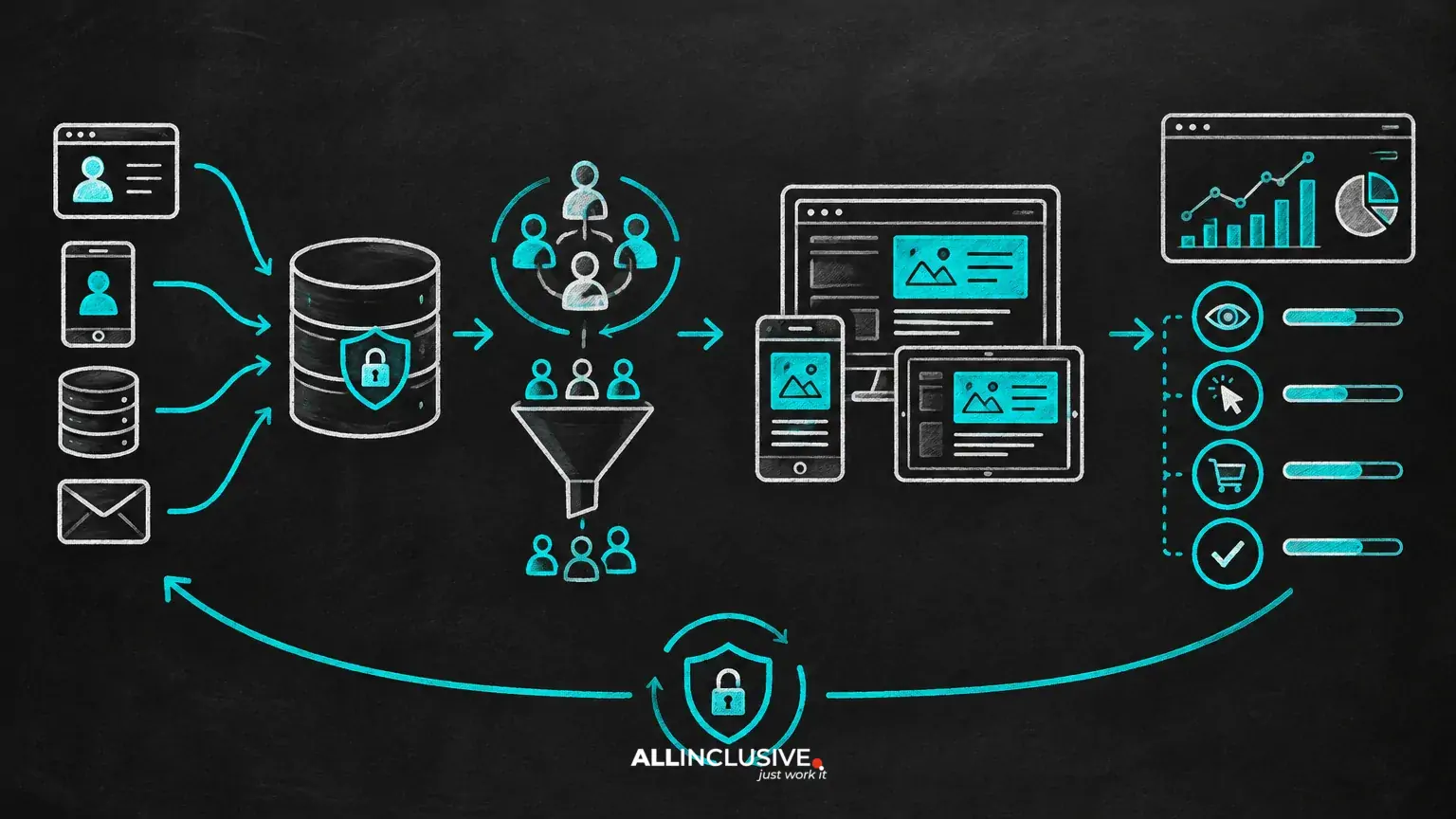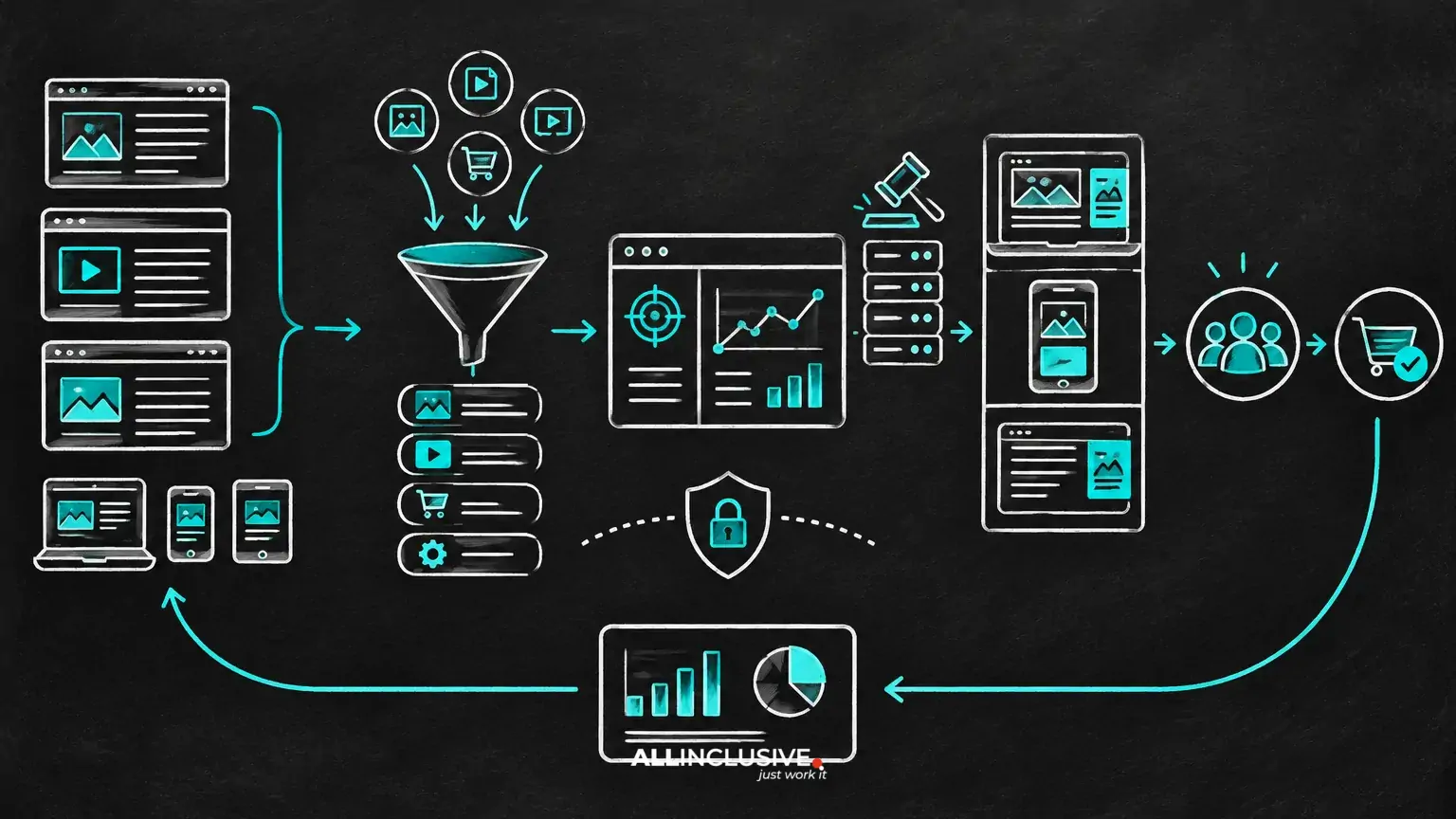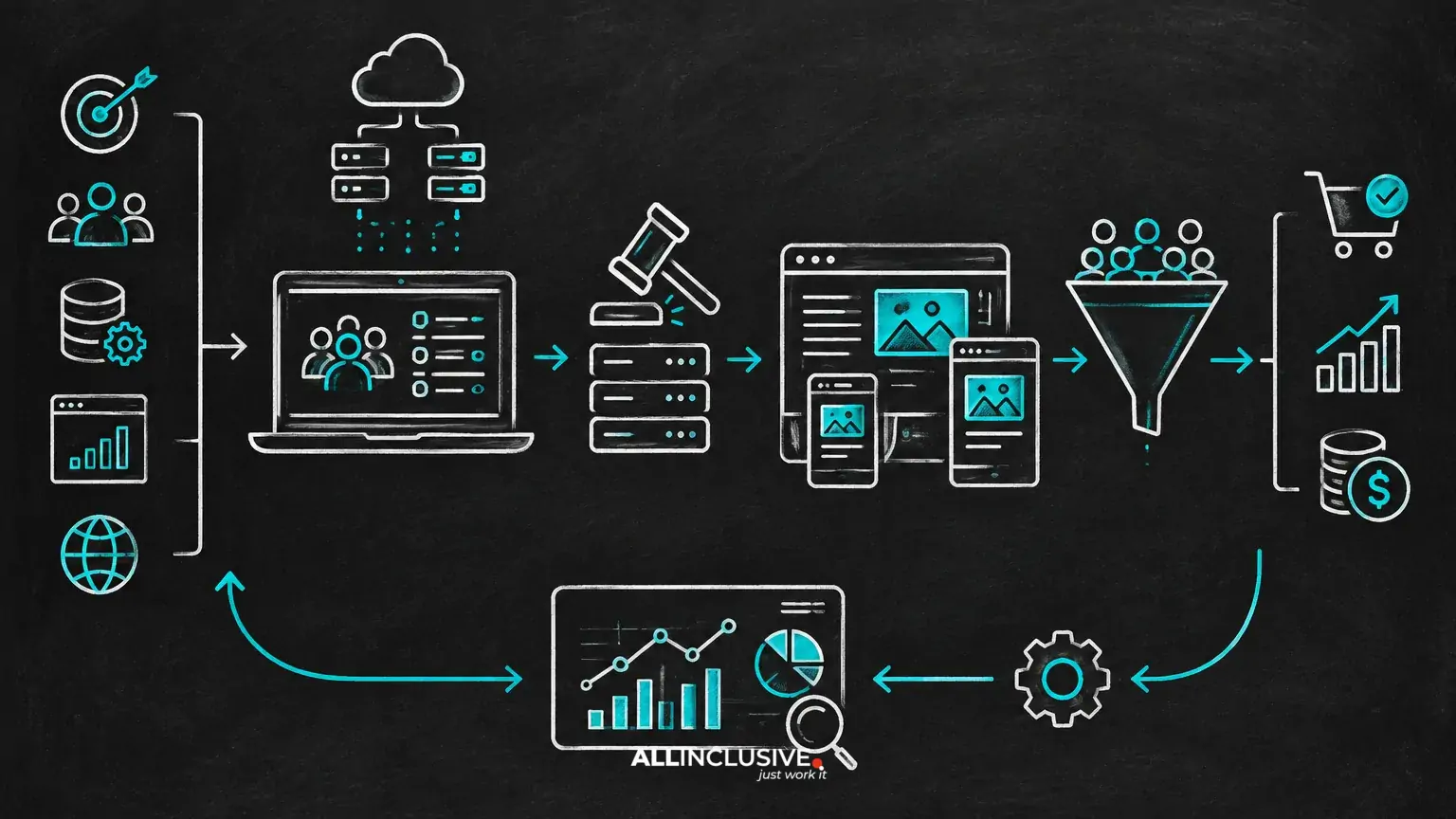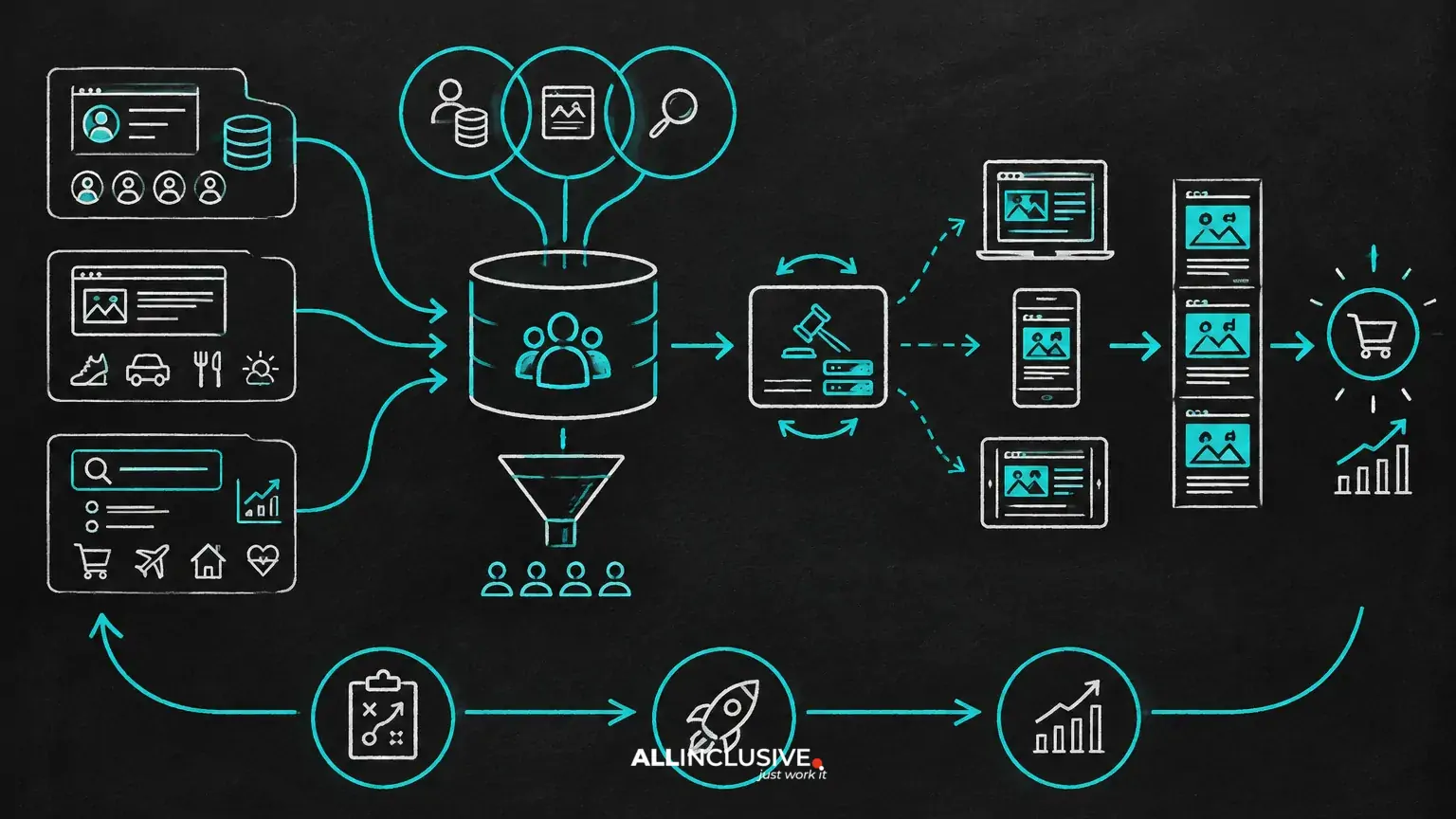
Programmatic audience targeting uses automated buying systems to reach selected users, households, accounts or content environments across digital advertising inventory. The strongest approach is not simply choosing the largest available audience segment. It is matching the right signal to the buying objective, applying sensible controls, and measuring whether exposure contributes to a business outcome.
In practice, programmatic audience targeting usually combines three signal families: first-party data owned or collected by the advertiser, contextual signals describing the content or environment, and intent signals indicating likely interest or purchase consideration. Each has different strengths, limitations and activation requirements.
What programmatic audience targeting means
Programmatic buying automates parts of the process of selecting inventory, evaluating an impression and submitting a bid. Audience targeting determines which impressions are eligible, valuable or excluded according to campaign rules.
Those rules may include location, device, language, content category, recency, frequency, customer status, account list membership, site activity or inferred interest. The exact options depend on the demand-side platform, inventory source, data provider and applicable privacy requirements.
Audience targeting is therefore a planning discipline as much as a platform setting. A campaign can technically reach a defined segment while still performing poorly if the segment is too broad, too small, stale, expensive or disconnected from the creative and conversion path.
The three core signal types
First-party data
First-party data comes from an organization’s direct interactions with its customers and prospects. Examples can include CRM records, authenticated site activity, product usage, subscription status, lead stages and consented marketing engagement.
It is particularly useful when the advertiser needs to distinguish between known business states. A B2B company might separate open opportunities from new prospects, exclude current customers from acquisition campaigns, or create different messages for users who downloaded technical content versus those who requested a consultation.
Useful first-party audiences often include:
- Customer and prospect lists organized by lifecycle stage.
- Recent site visitors, with recency windows aligned to the buying cycle.
- High-value account lists for account-based campaigns.
- Product, plan or category audiences for cross-sell and retention activity.
- Suppression audiences for customers, converted leads and ineligible users.
First-party data is not automatically accurate or activation-ready. Teams should review consent, matching quality, field completeness, refresh frequency, audience size and retention rules before using it for media buying. For more detail on activation and measurement, see our guide to first-party data in programmatic advertising.
Contextual targeting
Contextual targeting selects inventory based on the surrounding content or environment rather than relying on a persistent user profile. Signals may include topics, keywords, page classification, language, content suitability and other attributes available through the buying system.
Contextual approaches are useful when the message is closely related to the information a person is consuming. A cybersecurity provider could place educational creative around content about security operations, compliance or breach prevention. A financial software company might prioritize articles about cash flow, forecasting or business finance.
Context is also valuable for prospecting when the advertiser has limited first-party scale or wants to reduce dependence on inferred audience categories. However, keyword or category selection needs review. A page can mention a relevant term without reflecting genuine commercial interest, and broad categories may include environments with very different levels of suitability or attention.
Intent signals
Intent targeting attempts to identify people or organizations showing behavior associated with research or consideration. Depending on the provider and platform, signals may include search-related activity, content consumption, site visits, product comparisons, business research or engagement with relevant topics.
Intent can help prioritize audiences closer to a decision, but it should not be treated as proof that a user is ready to buy. Signals may be delayed, modeled, shared across providers or based on behavior that is ambiguous. A person researching a category may be a buyer, student, analyst, competitor or existing customer.
Use intent as a prioritization input rather than a substitute for qualification. Validate it against downstream metrics such as qualified leads, opportunities, pipeline progression or revenue where tracking permits.
How to choose the right targeting approach
Start with the campaign objective, not the available audience menu. The best signal depends on what the campaign must accomplish.
- Acquisition: Use contextual and intent signals to find new prospects, supported by exclusions for existing customers and converted users.
- Lead nurture: Use consented first-party lifecycle audiences and recency rules to align creative with known engagement.
- Account-based marketing: Use account lists where available, then layer geography, role, content context or engagement signals carefully.
- Retention or cross-sell: Use customer and product data, with messaging based on eligibility and current relationship status.
- Awareness: Favor scalable contextual environments and broad, quality-controlled reach before adding restrictive audience layers.
Audience design should also reflect the buying cycle. A short consumer purchase journey may support narrow recency windows. A complex B2B sale may require longer windows, account-level coordination and separate audience stages for research, evaluation and active sales engagement.
Layering audiences without overconstraining delivery
Layering can improve relevance, but every additional condition reduces eligible impressions. For example, requiring a specific account, job function, recent intent event, premium content category and narrow geography may create a segment too small to buy efficiently.
A practical structure is to separate audiences into tiers:
- Priority audience: The highest-confidence signal, such as a qualified first-party list or strategically important account group.
- Expansion audience: A related contextual or intent segment used to find additional prospects.
- Control or broad audience: A wider, quality-controlled group that provides a comparison point and delivery scale.
Keep these groups distinguishable in campaign structure or reporting. Combining them too early makes it difficult to determine whether performance comes from known audiences, contextual relevance or broader algorithmic optimization.
Frequency controls, exclusions and recency windows should be treated as part of audience design. They protect the user experience and prevent budget from concentrating on people who are already saturated or no longer eligible for the message.
Audience targeting and programmatic bidding
Targeting defines eligibility; bidding determines how much an eligible impression is worth under the campaign’s optimization strategy. These are related but distinct decisions.
A high-intent audience may justify a higher bid only if the signal is reliable, the inventory is suitable and the expected business value supports the cost. Conversely, an apparently inexpensive audience may be inefficient if it produces weak engagement or low-quality conversions.
Before changing bids, evaluate:
- Whether the audience is genuinely incremental or overlaps another campaign.
- How much inventory is available at the required quality level.
- Whether conversion tracking captures meaningful post-click and post-view behavior.
- Whether frequency or placement mix is creating diminishing returns.
- Whether the audience is producing qualified outcomes rather than only cheap clicks.
For a deeper explanation of how bidding decisions are automated, read our guide to programmatic bidding algorithms.
Privacy, consent and data governance
Audience activation must follow the advertiser’s legal, contractual and platform obligations. Requirements vary by market, data type, collection method, identity solution and inventory environment, so teams should not assume that a technically available audience is automatically permissible to use.
Operational checks should cover:
- The legal basis or consent standard applicable to collection and activation.
- Whether data-provider terms permit the intended advertising use.
- Retention, deletion and suppression processes.
- Access controls for customer and prospect data.
- Disclosure and user-choice requirements in relevant markets.
- Whether sensitive categories or regulated information could be inferred or exposed.
Data minimization is usually preferable to collecting more attributes than the campaign needs. Define the business purpose, select the minimum useful signal and document how it is refreshed and removed.
Measurement framework
Measure audience strategy at several levels. Delivery metrics show whether the audience can be reached, but they do not establish business value.
- Delivery: Reach, impressions, eligible inventory, frequency and viewability where available.
- Engagement: Video completion, landing-page engagement, qualified visits or other objective-aligned actions.
- Conversion: Leads, registrations, purchases or other tracked outcomes.
- Quality: Lead qualification, opportunity creation, pipeline progression, customer status or revenue.
- Efficiency: Cost per meaningful outcome, return on advertising spend or another agreed business measure.
Use holdouts, geographic comparisons, conversion-lift studies or other controlled methods where feasible. Last-click reporting can overstate the value of audiences that assist a conversion, while view-through reporting can over-credit impressions that had little causal effect. The appropriate method depends on the sales cycle, conversion volume and available data.
Programmatic Audience Targeting: Implementation Checklist
- Define the commercial objective and the audience’s role in the customer journey.
- List available first-party, contextual and intent signals.
- Check consent, permissions, freshness, scale and match quality.
- Create priority, expansion and control audiences where appropriate.
- Apply exclusions, recency windows, frequency controls and suitability rules.
- Align creative and landing pages with the audience’s likely level of awareness.
- Separate audiences in reporting so results are interpretable.
- Set primary and quality metrics before launch.
- Review overlap, delivery, frequency and downstream outcomes on a defined cadence.
- Refresh or retire audiences when their source data, purpose or performance changes.
Programmatic Audience Targeting: Key Decision Point
Effective programmatic audience targeting is a disciplined combination of data selection, contextual judgment, bidding logic, privacy governance and measurement. First-party data can provide valuable relationship context; contextual targeting can create relevance without relying on user profiles; and intent signals can help prioritize likely consideration. None is universally best.
Choose the signal that matches the objective, preserve enough scale to learn, and judge performance using business-quality outcomes rather than audience labels or low-cost delivery alone. For broader planning, explore our programmatic advertising pillar and the wider paid media resource hub.