Programmatic advertising is the automated buying and selling of digital advertising inventory through software. Instead of negotiating every placement manually, advertisers use demand-side platforms (DSPs) to evaluate available impressions against campaign rules, bid when an opportunity fits, and deliver an ad if the bid wins. Publishers and supply-side platforms (SSPs) make that inventory available, while exchanges and other intermediaries facilitate transactions.
The automation is only one part of the model. Programmatic performance depends on the quality of the inventory, the signals used for decision-making, the bidding strategy, measurement design and controls for brand suitability, fraud, privacy and frequency. The goal is not to automate judgment out of the process; it is to apply judgment consistently across a large and changing set of opportunities.
How programmatic advertising works
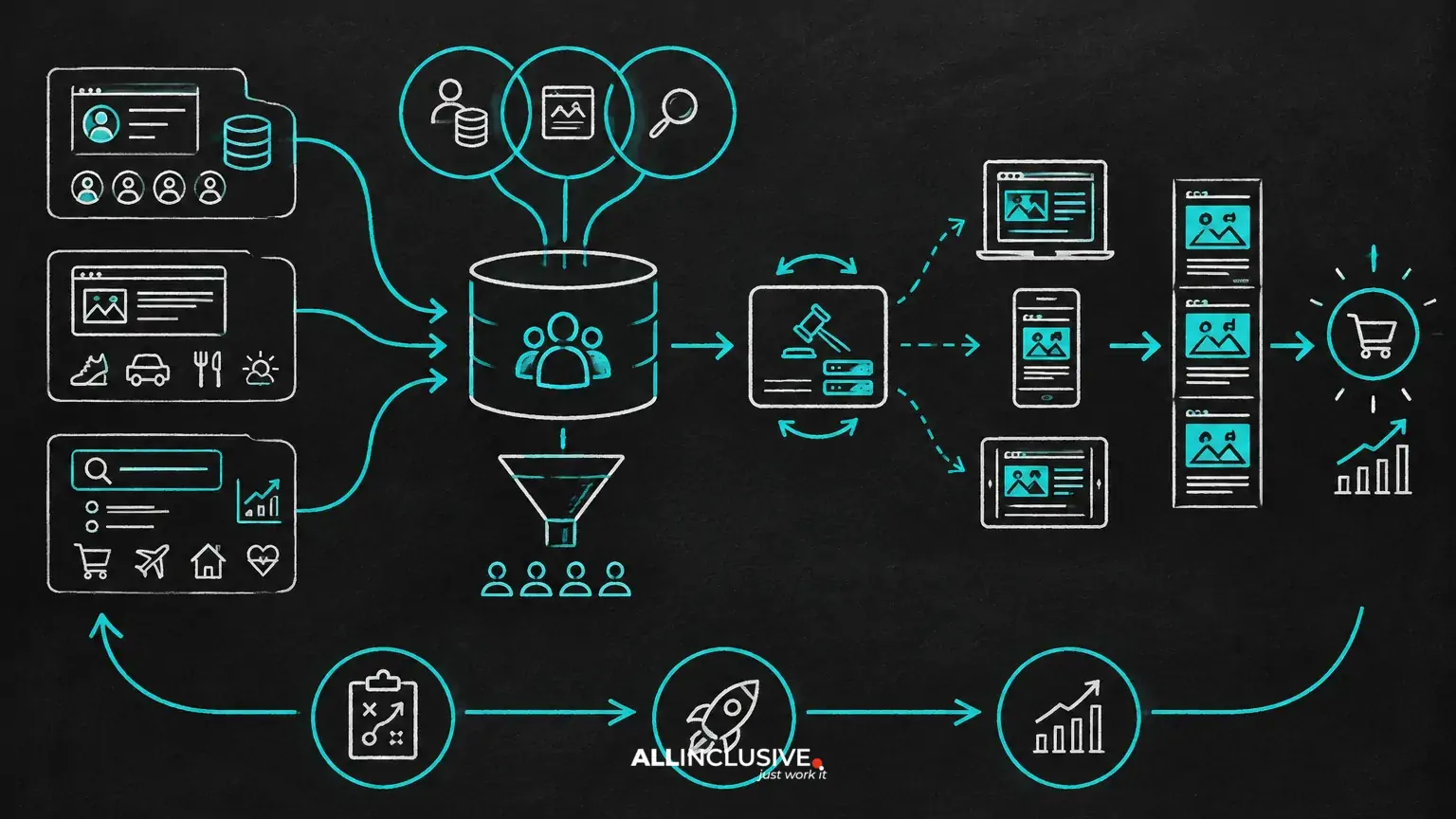
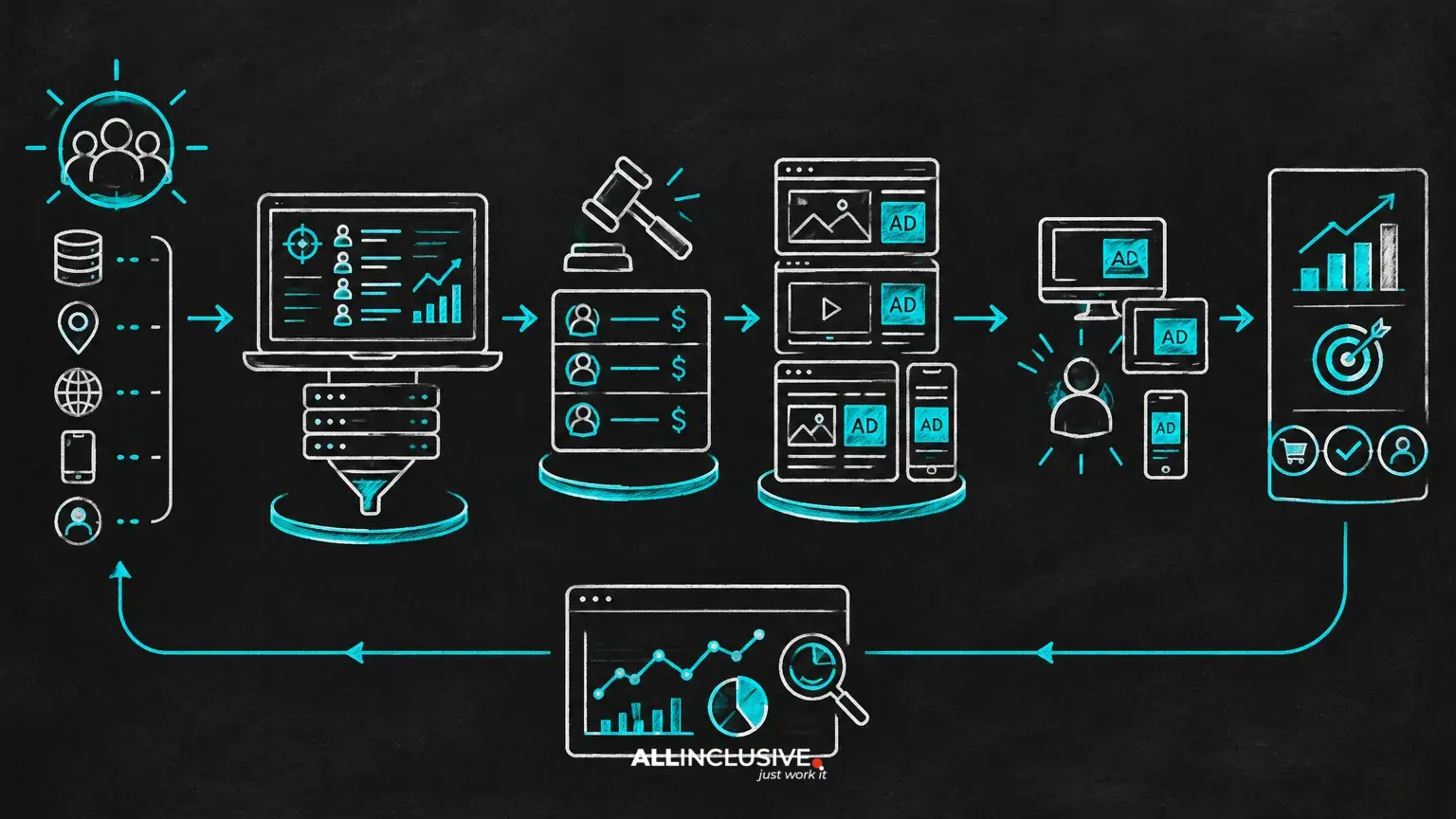
A typical transaction happens in a fraction of a second:
- A person opens a page, app, streaming environment or other ad-supported experience.
- The publisher or app sends an impression opportunity through its supply technology, including information permitted by the relevant environment and privacy rules.
- Eligible DSPs evaluate the opportunity against campaign settings such as audience strategy, geography, device, placement, budget, bid logic and brand-safety requirements.
- Each participating buyer may submit a bid. The exchange or auction mechanism determines the winning eligible bid according to the rules of that marketplace.
- The winning creative is returned to the publisher, and the impression is served.
- Event and outcome signals can later inform reporting, optimization and attribution, subject to measurement limitations and consent requirements.
Not every programmatic transaction follows the same path. Open-market auctions, private marketplaces, preferred deals and programmatic guaranteed arrangements differ in access, pricing, forecasting and control. The buying method should match the campaign’s need for scale, quality, certainty and transparency.
The main components of the programmatic ecosystem
Demand-side platform (DSP)
A DSP is the buyer’s interface and decisioning layer. It helps advertisers or agencies define campaigns, connect approved data sources, select inventory, apply bids and budgets, manage creatives and review delivery. DSP capabilities vary, so buyers should assess actual access, reporting detail, optimization controls and supply transparency rather than treating all platforms as interchangeable.
For a clearer comparison with other buying routes, see our guide to DSPs versus ad networks.
Supply-side platform (SSP)
An SSP helps publishers package and sell inventory to potential buyers. It can support auction access, deal management, yield decisions and reporting. The publisher’s commercial objectives and the SSP’s configuration influence how an impression enters the market.
Ad exchange
An ad exchange is a marketplace that connects demand and supply. In practice, the boundaries among exchanges, SSPs and other supply technologies can differ by platform and transaction. The important operational question is how many intermediaries sit between advertiser spend and publisher revenue, and what visibility the buyer receives at each stage.
Data and identity signals
Programmatic decisions may use contextual information, first-party data, consented audience signals, device or location information, and modeled or platform-provided segments. Availability varies by channel, market, browser, operating system, identity framework and privacy requirements. A strong plan does not assume that an audience label is equally reliable across every environment.
Ad verification and measurement providers
Independent or platform-integrated tools may help assess viewability, invalid traffic, brand suitability, reach, frequency and conversion activity. Verification improves governance, but it does not eliminate the need for clear definitions, careful implementation and human review.
What is bought: inventory and formats
Programmatic inventory can include display, online video, connected television, audio, native placements, digital out-of-home and in-app environments. Each format has different creative requirements, supply characteristics and measurement constraints.
Inventory is more than a list of websites. Buyers should evaluate:
- Environment: web, app, streaming television, audio or out-of-home.
- Placement: position, size, player behavior, screen context and user experience.
- Audience opportunity: whether the impression aligns with the intended market or relies mainly on contextual relevance.
- Supply path: the sellers, resellers and auction routes involved.
- Quality: viewability, invalid-traffic risk, content suitability and evidence of genuine delivery.
- Commercial terms: auction dynamics, deal conditions, fees and the level of buying certainty.
Cheap inventory is not automatically efficient inventory. A low media price can be offset by weak attention, poor suitability, excessive duplication, hidden fees or limited ability to connect exposure with business outcomes.
How programmatic auctions and bidding work
At the impression level, a DSP can estimate whether an opportunity is worth pursuing. That estimate may incorporate campaign goals, expected action, audience fit, historical delivery signals, creative eligibility, remaining budget and the value of the available placement. A bid is then calculated according to the platform’s configured logic.
This does not mean the system knows the true value of every impression. Automated bidding is an optimization process operating with incomplete information. It can overvalue easy-to-measure actions, follow noisy signals or concentrate spend where delivery is easiest rather than where incremental business value is highest.
Advertisers should define guardrails before optimization begins. These can include minimum quality requirements, supply-path exclusions, placement or content controls, frequency limits, geographic boundaries, pacing rules and explicit success metrics. Our related guide explains the role of programmatic bidding algorithms in real-time optimization.
Data, targeting and privacy
Programmatic targeting is not synonymous with personal tracking. A campaign may use first-party customer information where permitted, contextual signals about content, broad geographic or device parameters, modeled audiences, or publisher-provided segments. The appropriate mix depends on the objective and the legal, technical and commercial environment.
First-party data can help a business distinguish prospects, customers and high-value accounts, but it requires governance: lawful collection, clear permissions where applicable, secure activation and sensible retention policies. Contextual targeting can align an ad with the subject matter or environment without requiring an individual profile. Neither approach is automatically superior; the decision should reflect reach, relevance, privacy requirements and measurement feasibility.
Privacy and identity conditions continue to differ across markets and channels. Therefore, campaign documentation should state what signals are used, their source, permitted purposes, retention expectations and known limitations. Avoid treating a platform’s audience category as proof of user identity or purchase intent.
Programmatic advertising versus traditional media buying
Traditional media buying often relies more heavily on direct negotiations, fixed placements, insertion orders and publisher relationships. Programmatic buying introduces software-based selection, auction or deal workflows, dynamic pacing and more granular delivery controls.
The distinction is not absolute. Direct publisher deals can be transacted programmatically, and programmatic campaigns still require negotiated strategy, creative planning, commercial review and human oversight. The useful comparison is operational: how is inventory selected, how quickly can buying decisions change, what data is available, and how clearly can the advertiser reconcile spend with delivery and outcomes?
How to evaluate programmatic advertising ROI
Programmatic advertising ROI should be evaluated against the business objective, not only against platform-reported clicks or conversions. A direct-response campaign may focus on qualified leads or revenue, while an awareness campaign may prioritize incremental reach, attention, completed views or downstream brand effects.
A practical measurement framework includes:
- Business outcome: define the action or commercial result that matters.
- Cost definition: separate media cost from technology fees, data costs, verification, creative and agency charges where possible.
- Delivery quality: review reach, frequency, viewability, completion, invalid traffic and suitability according to the format.
- Attribution limits: distinguish exposure correlation from demonstrated incremental impact.
- Experimentation: use holdouts, geographic tests or other credible comparisons when the budget and design permit.
- Time horizon: account for delayed consideration and conversion when immediate response is not the objective.
Last-touch reporting can be useful for operational diagnostics, but it may over-credit impressions close to a conversion and understate earlier influence. For a deeper treatment of measurement choices, see programmatic attribution.
What Is Programmatic Advertising? DSPs, Auctions, Data and Inventory: Implementation Checklist
- Clarify the objective. Decide whether the campaign is intended to drive demand, generate actions, build reach or support a broader media plan.
- Choose the buying route. Compare open auction, private marketplace, direct and guaranteed options based on scale, quality, transparency and certainty.
- Define the audience strategy. Use the least complex signal that can answer the business need, and document assumptions.
- Set inventory controls. Establish approved environments, suitability rules, supply-path preferences, fraud protections and exclusion procedures.
- Prepare creative and landing experiences. Match assets to each format, confirm tracking, and ensure the post-click experience supports the campaign promise.
- Establish measurement before launch. Align conversion definitions, reporting windows, cost treatment and any test design with stakeholders.
- Optimize toward quality and outcomes. Do not let the platform optimize solely toward the easiest signal if it conflicts with business value.
- Review supply and performance regularly. Investigate concentration, duplication, unexplained delivery shifts, fee visibility and outcome quality.
Common programmatic mistakes
- Confusing automation with strategy: a platform can execute rules without choosing the right rules.
- Over-targeting: excessive audience, device and placement restrictions can reduce scale and create artificial scarcity.
- Ignoring frequency across channels: users may receive repeated exposure through separate campaigns or platforms.
- Optimizing to proxy metrics: cheap clicks, high completion rates or low CPMs may not represent profitable demand.
- Accepting opaque supply: limited visibility into sellers, fees and placements makes quality harder to govern.
- Leaving measurement until the end: missing or inconsistent event definitions can make post-campaign conclusions unreliable.
Where programmatic advertising fits in a media plan
Programmatic is a buying infrastructure, not a guaranteed strategy or channel outcome. It can help advertisers access distributed inventory, manage large campaigns and apply consistent decision rules, but its value depends on the quality of inputs and controls. Integrate it with search, social, direct publisher activity, retail media, connected television or other channels only when the roles, audiences and measurement approach are clear.
For broader planning context, explore our paid media resources. For specialized guidance, visit the programmatic advertising pillar.
In summary: programmatic advertising automates the evaluation and purchase of digital impressions, but effective execution still requires deliberate choices about inventory, data, bidding, privacy, measurement and business value. Treat the auction as a mechanism—not the strategy—and programmatic can become a controlled, testable part of a broader media system.