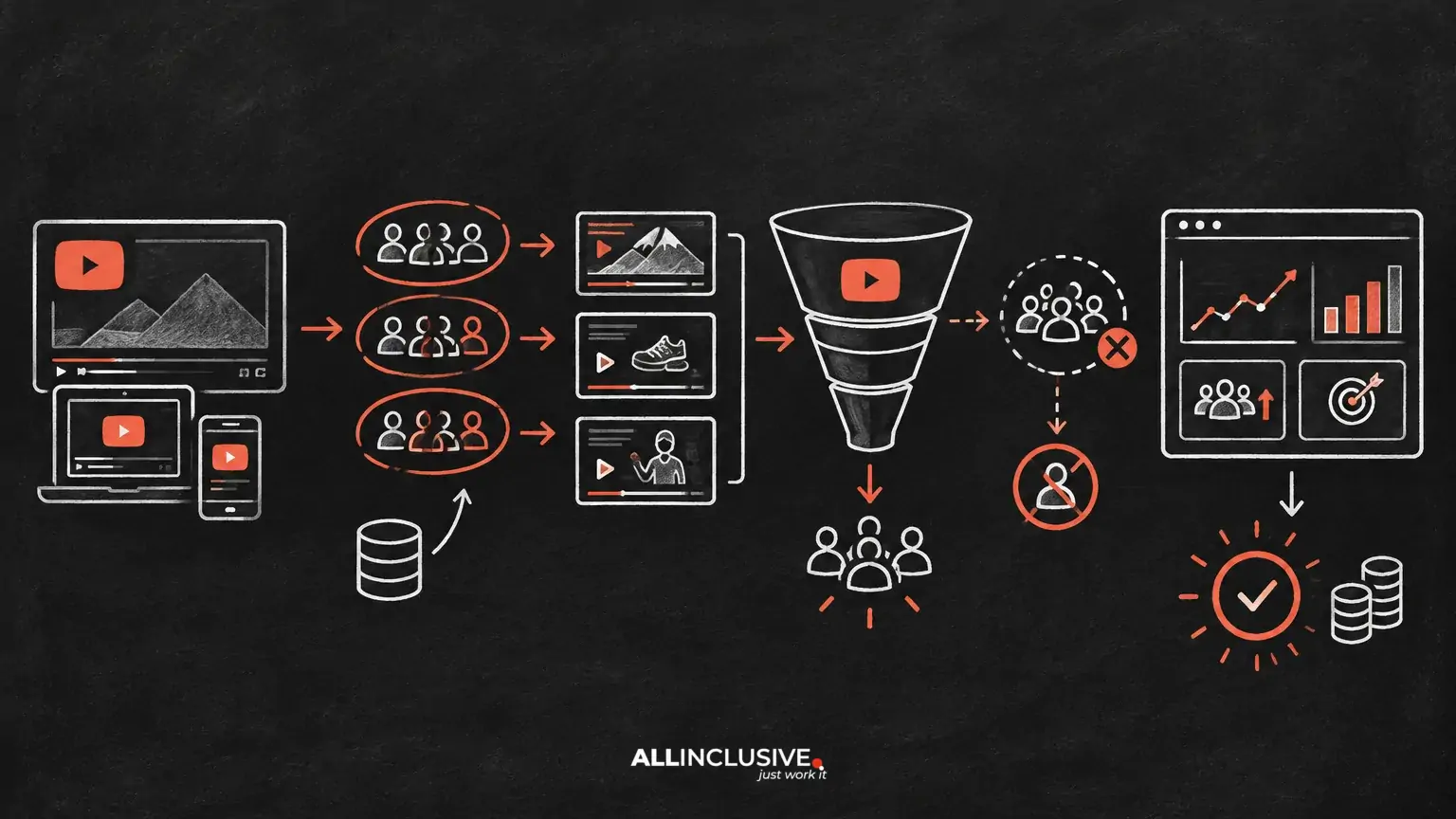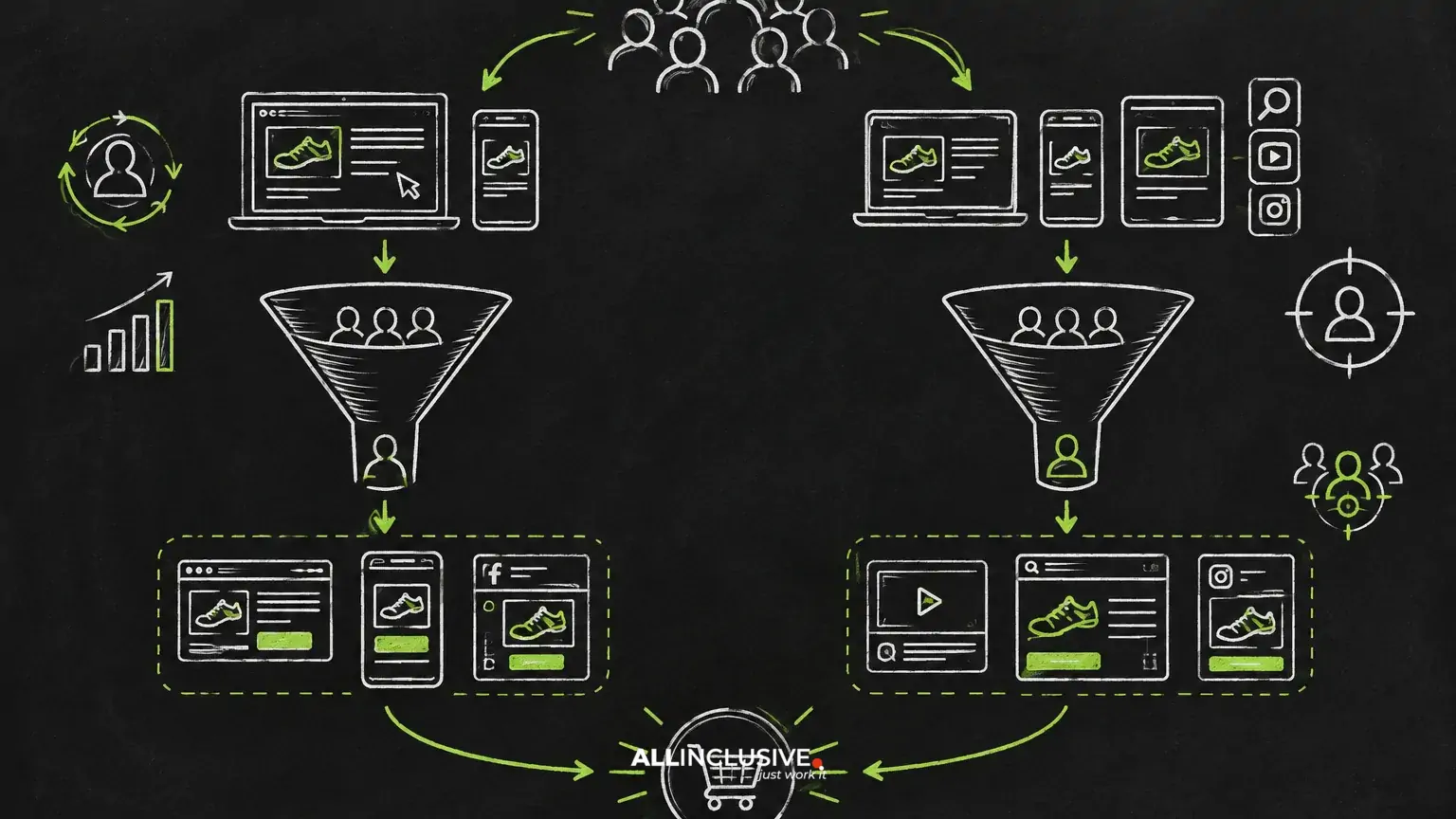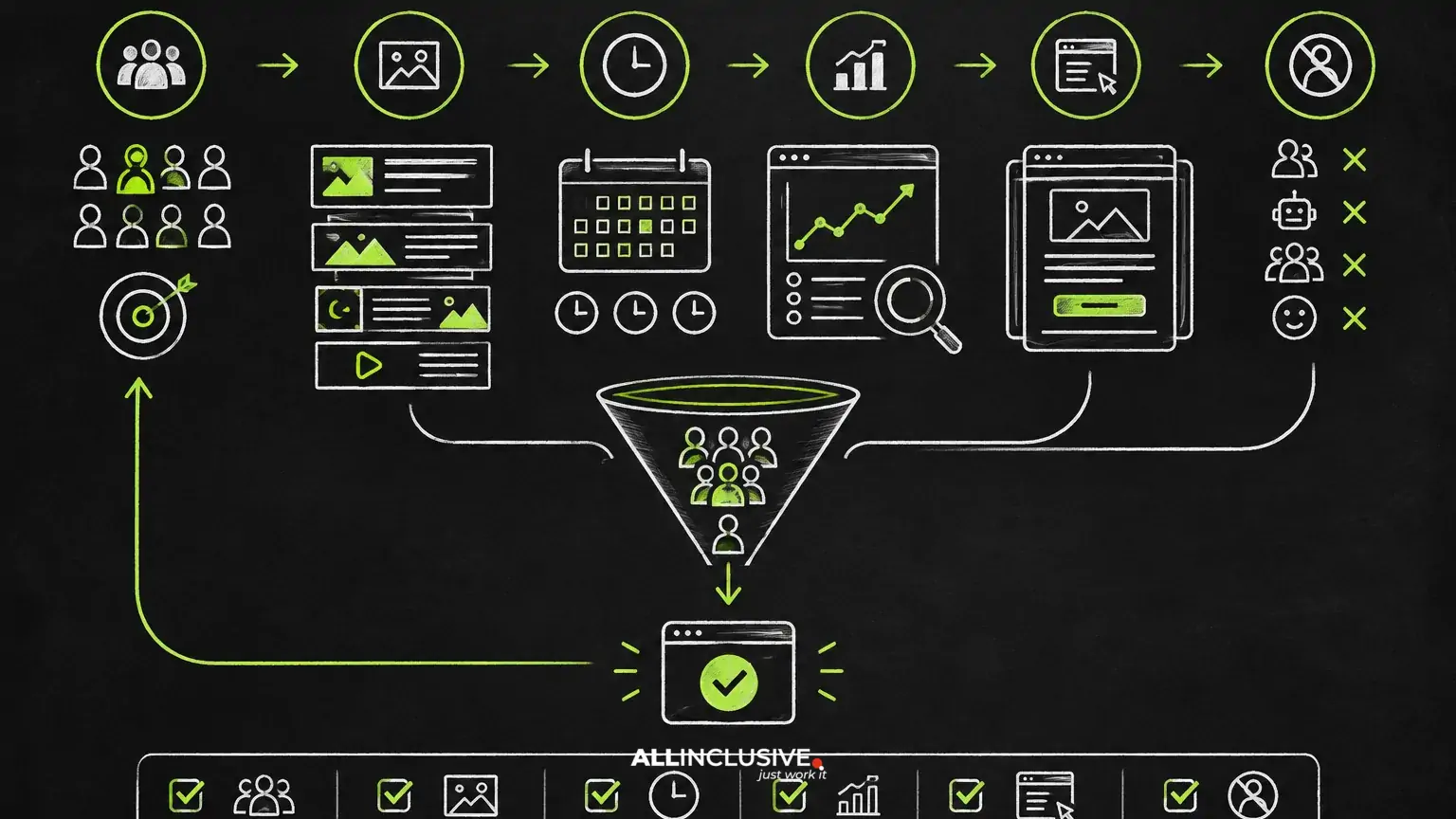
Remarketing works best when it reflects what a prospect has already done—not simply the fact that a tracking audience exists. The strongest remarketing tactics use behavioral context to decide who should see an ad, what message should follow, when the message should stop, and how success should be measured.
That means moving beyond one broad “all visitors” audience. A product viewer, a pricing-page visitor, a form starter, and a recent customer have different levels of intent and should not receive the same sequence. The tactics below provide a practical way to recapture demand while protecting budget, relevance, and user experience.
1. Segment audiences by meaningful behavior
Start with actions that indicate different levels of intent. Useful segments may include:
- People who viewed a category or solution page
- People who visited pricing, comparison, or implementation pages
- People who started but did not complete a form
- People who downloaded content without requesting a conversation
- People who added a product to a cart or began checkout
- Existing customers who may be eligible for expansion or replenishment
Keep the segments tied to a business decision. If two audiences receive the same message, bid treatment, and exclusions, they may not need to be separate operationally.
2. Build recency windows around the buying cycle
A visit yesterday often means something different from a visit three months ago. Create recency groups that match the typical time between consideration and action in your market. Shorter windows can support direct-response messaging; longer windows may call for education, proof, or a new reason to return.
Do not assume that a longer membership window is automatically better. If intent decays quickly, extending the audience can dilute spend and make creative feel disconnected from the original interaction.
3. Exclude people who already converted
Conversion exclusions are one of the simplest ways to improve relevance. Remove completed buyers, submitted leads, booked meetings, or other meaningful converters from acquisition-oriented remarketing campaigns when the next message is not relevant to them.
Then decide whether converters belong in a separate lifecycle program. A customer may be excluded from a prospecting sequence but included in onboarding, cross-sell, renewal, or replenishment campaigns.
4. Use sequential messaging instead of repeating one ad
Remarketing should often develop an argument over time:
- Reintroduce the solution and connect it to the original need.
- Address a likely barrier, such as implementation effort, fit, or risk.
- Provide evidence through a case study, demonstration, comparison, or expert explanation.
- Present a clear next step appropriate to the audience’s intent.
Sequence logic does not have to be complicated. Even a small set of creative themes, paired with recency rules and exclusions, can be more useful than showing the same generic ad indefinitely.
5. Match the call to action to intent
A low-intent content reader may need another useful resource, while a pricing-page visitor may be ready for a consultation or product comparison. Align the call to action with the evidence available.
Useful actions can include returning to a relevant page, viewing a demonstration, using a calculator, downloading a technical resource, requesting a quote, or completing a purchase. The goal is not to force every audience into the bottom-of-funnel action immediately.
6. Create separate creative for high-intent visitors
High-intent audiences deserve more specific creative. Someone who visited a service detail page may respond to a message about implementation, scope, or outcomes. Someone who viewed several product variants may need help choosing between options.
Specificity should come from the prospect’s interaction, not from implying that the advertiser knows sensitive personal details. Keep the message useful, credible, and easy to understand outside the original page context.
7. Retarget problem-aware visitors with education
Not every visitor is ready for a commercial offer. Prospects who read an educational article or visited an early-stage resource may benefit from an explainer, checklist, webinar, guide, or comparison framework.
This tactic is particularly useful when the sales cycle is long or the category requires internal consensus. Educational remarketing can help prospects make progress without treating every interaction as an immediate sales signal.
8. Use proof to reduce perceived risk
When a prospect has shown interest but has not acted, uncertainty may be the obstacle. Test proof-oriented assets such as:
- Relevant customer stories
- Product demonstrations
- Implementation explanations
- Security or technical documentation
- Independent validation, where it is accurate and permitted
- Clear answers to common objections
Choose proof based on the likely barrier. A procurement concern requires different evidence from a usability concern.
9. Separate abandoned-cart recovery from general browsing
Cart and checkout audiences usually represent a different opportunity from ordinary product visitors. They may justify a shorter recency window, more direct creative, and careful coordination with email or onsite recovery.
Do not assume that a discount is necessary. First test reminders, product benefits, delivery information, support availability, or a return to the saved cart. If an incentive is used, establish eligibility and margin rules before launching it.
10. Use product or content context in creative
Contextual relevance can improve the usefulness of an ad. Ecommerce advertisers may organize audiences by product category, price band, or viewed item. B2B advertisers may align creative with the solution area, industry problem, or content topic that generated the visit.
This approach requires reliable event and catalog data. If the underlying signals are incomplete, use broader but still truthful creative rather than exposing inaccurate product or service details.
For a deeper discussion of feeds, audiences, and creative coordination, see our guide to dynamic remarketing.
11. Adjust landing pages for returning visitors
Sending every remarketing click to the homepage creates unnecessary friction. Return visitors may need a landing page that continues the conversation, answers objections, preserves selected products, or makes the next action clearer.
Before changing the page, identify the audience’s likely question. A visitor returning from a proof-focused ad should find proof. A visitor responding to an implementation message should find practical details and a clear path to evaluation.
12. Control frequency and creative fatigue
Repeated exposure can waste budget and damage perception, especially when the audience is small. Monitor delivery and performance by audience, placement, creative, and recency where reporting allows.
Use practical controls:
- Set a reasonable exposure policy for small, high-intent audiences.
- Rotate genuinely different messages, not only minor design variations.
- Shorten membership windows when intent or relevance declines quickly.
- Pause creative that is receiving attention but no meaningful downstream action.
Frequency is not inherently negative. The right level depends on the buying cycle, audience size, message value, and conversion opportunity.
13. Build exclusion logic before scaling spend
Exclusions protect both efficiency and user experience. Common exclusions include recent converters, active customers in prospect campaigns, employees, test traffic, unqualified geographies, and audiences already assigned to a higher-priority sequence.
Document which audience owns each person when multiple campaigns could target the same user. Without an agreed hierarchy, campaigns can compete for the same impression and deliver contradictory messages.
14. Coordinate remarketing with search and other channels
Remarketing is not isolated from the rest of the media plan. A returning visitor may search for the brand, click an email, view a social ad, or return directly. Decide how remarketing supports those channels rather than evaluating it only as a last-click source.
For a platform-specific framework covering lists, structure, and bidding considerations, see this PPC remarketing strategy guide. For broader planning, use the remarketing strategy pillar as the central reference point and explore our paid media resources for related acquisition and measurement guidance.
15. Measure incremental business value, not only clicks
Remarketing clicks and conversions can be useful diagnostic signals, but they do not automatically prove that advertising created incremental demand. Returning visitors may have converted through another path without the ad.
Use a measurement approach appropriate to your volume and operating maturity. Compare performance across audiences, recency windows, creative themes, and landing pages. Where feasible, use holdouts or other controlled comparisons. At minimum, review assisted behavior, conversion quality, sales progression, repeat purchase, and cancellation or return patterns—not only platform-reported conversions.
How to prioritize these remarketing tactics
If your current program is broad and repetitive, begin with the highest-leverage foundations:
- Audit event quality and conversion definitions.
- Separate converters and high-intent audiences from general visitors.
- Introduce recency windows that reflect the buying cycle.
- Develop two or three distinct creative messages.
- Align each message with a landing page and next action.
- Review frequency, overlap, and downstream conversion quality.
Once the basics are reliable, add sequencing, product or content context, lifecycle audiences, and controlled tests. The goal is not to create the largest possible audience structure. It is to make each impression more relevant and each measurement decision more trustworthy.
Remarketing Tactics: What to Prioritize
Effective remarketing recaptures demand by responding to intent with useful next steps. Segment behavior, respect recency, exclude people who have moved to a different lifecycle stage, and use creative that addresses the prospect’s likely question. Then measure whether the program improves business outcomes—not merely whether it generates another click.