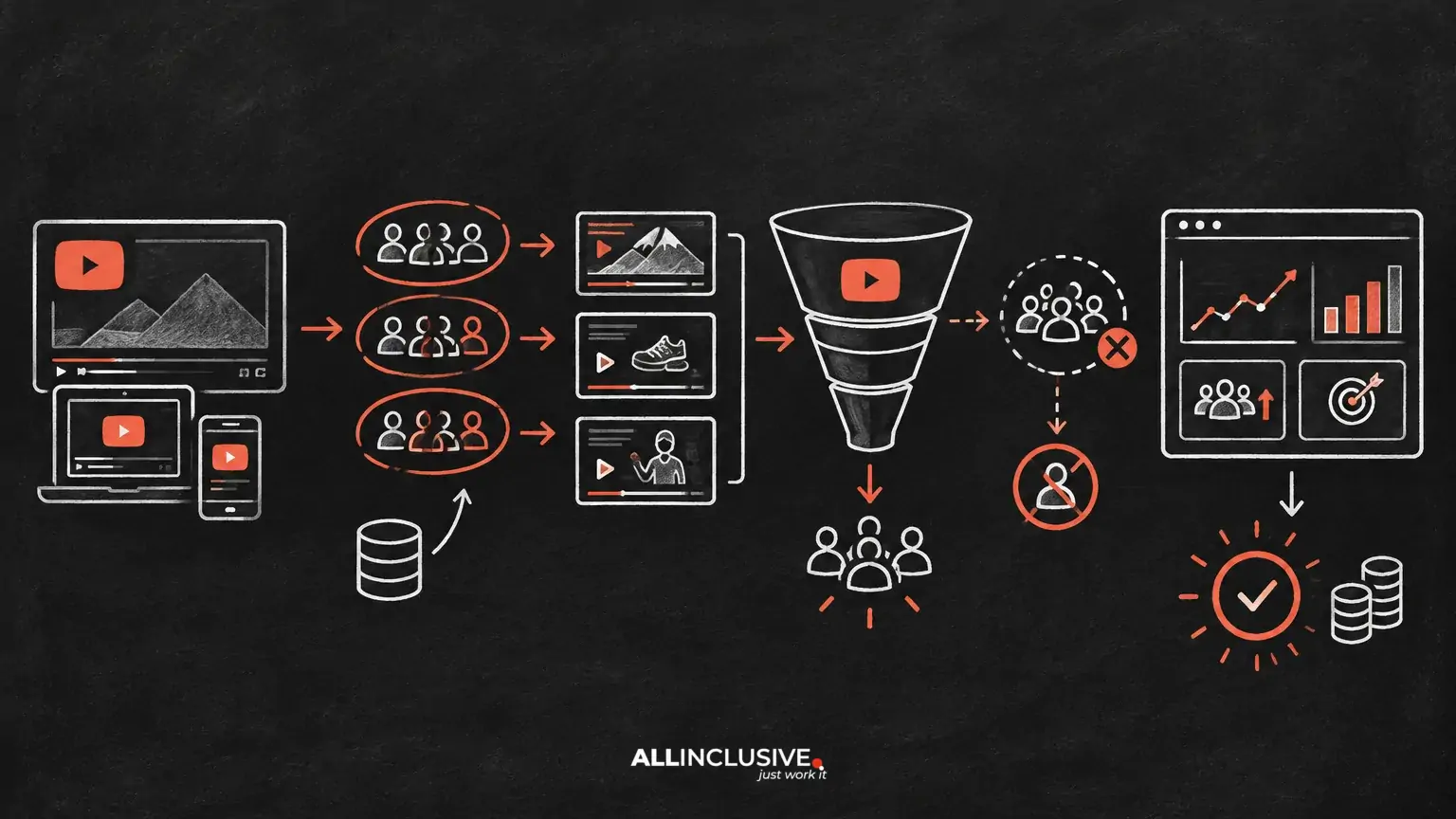
Remarketing for healthcare can help organizations stay relevant after a prospective patient, caregiver or referral partner visits a website. But healthcare audiences require more restraint than a typical ecommerce or lead-generation campaign. The strategy must account for sensitive topics, consent requirements, platform policies, internal review and the risk that an ad could reveal more than a person intended to share.
The strongest approach is not to follow every visitor with increasingly specific creative. It is to build privacy-conscious audience groups, limit what can be inferred from behavior, use context-appropriate messages and measure outcomes at an aggregate level. This guide explains how to do that while keeping strategy separate from the mechanics of any one advertising platform.
What makes healthcare remarketing different?
Healthcare marketing sits at the intersection of commercial performance and personal sensitivity. A visit to a service page may indicate research, but it may also reflect a caregiver’s question, a student’s interest, an employer’s planning needs or a patient looking for general education. Treating every visit as a confirmed condition or treatment need creates unnecessary privacy and brand risk.
Healthcare organizations should therefore avoid audience definitions or creative that appear to identify an individual’s diagnosis, treatment, medication, procedure or other sensitive circumstance. Audience strategy should be based on a defensible business purpose and reviewed against applicable privacy obligations, consent choices, advertising-platform requirements and organizational policy.
This does not make remarketing impossible. It changes the design brief. The campaign should answer four questions:
- What relationship does the visitor have with the organization? For example, an education seeker, appointment prospect, existing patient or professional referral source.
- What useful next step is appropriate? A general guide, service overview, scheduling pathway or contact option may be more suitable than a condition-specific prompt.
- What data is necessary? If a segment cannot be justified without relying on sensitive inference, it should be redesigned or excluded.
- How will success be evaluated safely? Measurement should favor aggregate conversion and quality signals rather than unnecessary person-level detail.
Start with privacy-safe audience architecture
Audience design is the most important control in a healthcare remarketing program. Begin with broad, purpose-based groups rather than building a detailed behavioral profile of each visitor.
1. Separate informational and action-oriented visitors
An educational article visitor may need more context, while someone who reached a general scheduling page may be closer to taking action. These groups can receive different journeys without naming or implying a medical condition.
Useful distinctions may include:
- Visitors to general education content
- Visitors to service or location overview pages
- Visitors who began but did not complete a general contact or scheduling pathway
- Visitors who downloaded a non-sensitive resource where appropriate consent exists
- Visitors who completed a desired action and should be suppressed from acquisition remarketing
Use short retention windows where the user’s intent is likely to change quickly, and longer windows only when the message remains appropriate over time. The correct window depends on the service, buying cycle and consent framework—not on a universal benchmark.
2. Avoid sensitive inference
Do not make the ad copy, audience name or targeting logic appear to confirm a person’s health status. A campaign labeled internally around a particular condition may also create governance risk if the underlying audience is built from visits to condition-specific pages. Involve privacy, legal or compliance stakeholders when the intended use of data is unclear.
Safer alternatives include general service categories, broad educational intent, geographic availability where appropriate, and first-party interactions that the individual knowingly initiated. Even then, review whether the resulting experience could feel intrusive when seen by someone else using the device.
3. Define suppression audiences early
Suppression is as important as inclusion. Consider excluding people who have already completed a form, booked an appointment, contacted a call center or entered an existing-patient workflow. Suppress employees, internal traffic and low-quality activity where practical. Also create exclusions for people who should not receive a particular message because of timing, service availability or operational capacity.
Build the message around the next safe step
Healthcare remarketing creative should be useful without sounding as though the organization knows why someone visited. A neutral message such as “Explore care options and what to expect” is generally less intrusive than copy that refers to a presumed condition or personal circumstance.
Match the message to the visitor’s stage:
- Early research: Offer clear educational content, provider information, service explanations or questions to consider before contacting the organization.
- Evaluation: Explain access, locations, preparation, accepted insurance where applicable, provider credentials and what the first interaction involves.
- Action: Provide a direct route to a general scheduling, contact or consultation pathway, provided the action is appropriate for the audience and available operationally.
- Post-conversion: Remove acquisition pressure and consider a separate, consented communications journey managed through the organization’s appropriate patient or customer systems.
Creative should also account for shared devices and public environments. Avoid language that could embarrass or expose the viewer if another person sees the ad. Landing pages deserve the same review: the page should not make an unsupported assumption about the visitor or force them into a path that does not fit their needs.
Choose channels based on control, not reach alone
Platform selection should follow the organization’s privacy, consent and measurement requirements. Search, display, social, video, programmatic and first-party channels each provide different levels of audience control and reporting. Platform mechanics change, so validate current eligibility, consent, data-use terms and policy requirements before activation.
Use a channel when you can clearly answer:
- What source creates the audience?
- What consent signal or lawful basis governs its use?
- Can the audience be excluded or paused reliably?
- What controls exist for placements, geography, frequency and creative?
- Can performance be measured without collecting unnecessary personal information?
- What happens if the platform changes an audience, attribution or reporting feature?
In some cases, broad contextual campaigns may be preferable to behavioral remarketing. Contextual placement can reach people engaging with relevant topics without relying on a prior visit to the organization’s site. It is not a universal replacement, but it can reduce the need to use sensitive behavioral signals.
Measurement: connect marketing signals to business quality
Healthcare measurement should be designed around useful aggregate outcomes. A click or form submission may be an early signal, but it does not automatically represent a qualified opportunity or completed care journey.
Recommended measurement layers
- Delivery: Reach, impressions, frequency, spend and placement quality.
- Engagement: Clicks, landing-page engagement and completion of non-sensitive micro-conversions.
- Lead actions: Form submissions, calls, appointment requests or other defined contact actions, measured in aggregate and subject to the organization’s data governance.
- Operational quality: Contactability, valid inquiries, scheduling completion or other downstream indicators available through approved systems.
- Business outcome: A qualified consultation, service-line opportunity or other outcome that the organization can connect responsibly to marketing activity.
Do not force every outcome into a single attributed number. Compare remarketing with prospecting, organic, direct and other relevant channels using consistent definitions. Attribution is directional, especially when browsers, consent choices, walled-garden reporting and delayed decisions limit visibility.
Set a measurement hierarchy before launch. For example, a campaign may optimize toward a general appointment-request event while reporting separately on qualified inquiries and completed appointments when those downstream signals can be shared lawfully and securely. Keep personally identifiable information out of advertising-platform events unless the applicable governance and platform terms explicitly support the use.
Frequency, timing and fatigue controls
High frequency is particularly risky in healthcare because repetition can feel like surveillance rather than assistance. Set conservative initial frequency controls where the channel supports them, then review reach, frequency, negative feedback, assisted conversions and operational quality together.
Use recency to manage intent. A recent visitor to a general scheduling page may merit a shorter, more practical follow-up window. Someone who read an educational article may need a slower sequence that emphasizes information rather than urgency. Stop or change the message when the person converts, when the service is no longer available, or when continued exposure is no longer useful.
Seasonality and capacity matter too. If appointment availability is limited, increasing remarketing spend may create demand the organization cannot serve. Media plans should be coordinated with call-center staffing, provider availability, locations, service-line priorities and landing-page readiness.
Implementation workflow for a compliant campaign
- Document the use case. State the audience purpose, business objective, intended action and why remarketing is appropriate.
- Map data sources. Identify pixels, tags, customer lists, analytics events, consent signals and any offline connections. Remove data that is not necessary.
- Classify risk. Flag pages, events and audiences that could reveal or imply sensitive health information. Route uncertain cases for review.
- Build broad segments. Use service-stage and content-intent distinctions that do not depend on diagnosing the individual.
- Create exclusions. Suppress converters, internal users, unsuitable geographies, unavailable services and audiences requiring a different communications process.
- Draft neutral creative. Make the value proposition clear without implying knowledge of a private circumstance.
- Review the destination. Confirm that the page, form, consent language, accessibility and scheduling workflow match the ad.
- Test measurement. Verify event firing, consent behavior, deduplication, reporting permissions and downstream reconciliation before scaling.
- Launch with limits. Start with controlled budgets, conservative exposure and an agreed review cadence.
- Monitor and document. Record changes, approvals, exclusions, incidents, audience behavior and decisions to pause or expand.
Common failure modes
Overly specific retargeting
Calling out a condition, procedure or presumed need can make the ad feel invasive and may create compliance concerns. Use a broader service or education frame instead.
Optimizing only to cheap conversions
A low-cost form fill is not necessarily a useful inquiry. Add quality checks and operational feedback before increasing spend.
Ignoring conversion suppression
Continuing acquisition ads after a person has completed an appointment request wastes budget and can create a poor experience. Test suppression logic as part of launch QA.
Relying on a platform’s default settings
Defaults may not reflect the organization’s consent model, geographic scope, sensitive-content policy or business capacity. Treat them as starting points, not governance.
Assuming measurement is exact
Reporting gaps are normal. Use multiple signals, consistent definitions and transparent caveats rather than presenting modeled or platform-reported results as a complete view of patient acquisition.
How to evaluate a healthcare remarketing program
Before expanding, ask whether the campaign is improving the next step without introducing disproportionate risk. A sound review considers audience eligibility, consent, creative tone, exposure, placement quality, landing-page experience, conversion quality and operational capacity.
If the answer is unclear, an audit can be more valuable than additional spend. Review the campaign structure, audience sources, exclusions, tracking and landing pages before changing bids or budgets. For broader planning, see our remarketing strategy guide. For a focused diagnostic, use the remarketing campaign audit checklist. If the question is primarily allocation, the remarketing budget guide provides a separate framework.
Remarketing for Healthcare: Key Decision Point
Effective healthcare remarketing is not about making audiences as specific as possible. It is about using the least sensitive data needed to deliver a useful next step, with clear exclusions, restrained messaging, controlled exposure and measurement that respects uncertainty. Organizations that align media, privacy, creative, analytics and operations can make remarketing a helpful continuation of the user journey rather than a reminder that feels intrusive.
For additional paid-media planning context, visit our paid media resource hub.