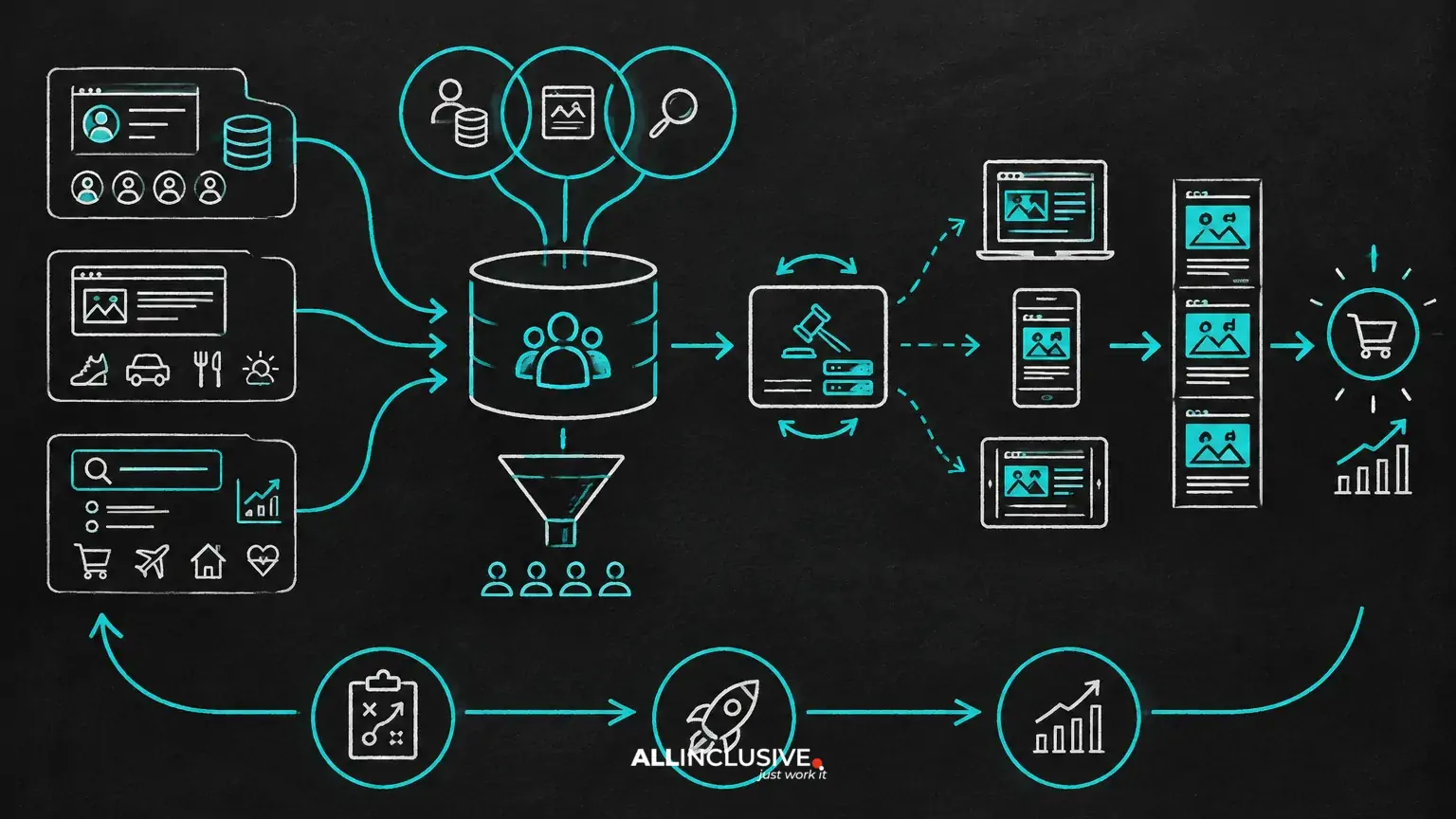
Programmatic supply path optimization is the process of choosing the most efficient route from an advertiser’s buying platform to a publisher’s inventory. The goal is not simply to find the lowest bid or remove every intermediary. It is to understand how each auction path affects total cost, media quality, reach, transparency, and performance—and then shift spend toward routes that create the strongest business case.
A supply path can include a demand-side platform, one or more supply-side platforms, exchanges, resellers, auctions, identity or measurement services, and the publisher itself. Multiple paths may reach the same impression, but they are rarely identical. They can differ in fees, auction mechanics, duplication, data quality, latency, fraud exposure, inventory access, and reporting.
Effective optimization combines commercial analysis with media-quality controls. It should answer three questions: What are we paying for? What inventory are we actually receiving? And which route produces the best outcome for the campaign?
What supply path optimization means
Supply path optimization, often abbreviated SPO, is a structured approach to evaluating and prioritizing programmatic routes. Buyers examine how inventory moves through the ecosystem and decide which sellers, exchanges, publishers, and transaction types deserve budget.
The work typically includes:
- Mapping the supply routes used by a campaign or account.
- Identifying duplicate access to the same publisher or impression.
- Reviewing media, technology, data, verification, and service costs.
- Assessing inventory quality, transparency, viewability, fraud risk, and suitability.
- Comparing performance by path after controlling for meaningful differences in audience, placement, device, geography, and optimization strategy.
- Testing preferred routes without sacrificing reach or useful supply diversity.
SPO is therefore broader than fee reduction. A cheaper route can be a poor choice if it reduces unique reach, loses valuable publisher relationships, weakens measurement, or introduces low-quality inventory. Conversely, a route with higher apparent costs may be justified when it provides differentiated access, stronger controls, or better outcomes.
Why supply paths become inefficient
Programmatic buying often grows incrementally. New exchanges, private marketplaces, data partners, managed-service layers, and publisher relationships are added for legitimate reasons. Over time, however, the buying architecture can become difficult to explain.
Common sources of inefficiency include:
- Duplicate exchange access: Several supply-side platforms may offer access to the same publisher inventory.
- Reseller layers: Inventory can pass through intermediaries without a clear incremental benefit.
- Broad default buying: Campaigns may allow large pools of supply when a narrower set would meet the objective.
- Unclear fee structures: Reporting may show media cost without making every technology or service charge easy to reconcile.
- Fragmented private marketplace deals: Similar inventory may be purchased through multiple deals with different pricing, targeting, or auction rules.
- Legacy allowlists and integrations: Supply can remain active because it was once useful, not because it is still competitive.
- Optimization toward incomplete signals: A platform may favor low-cost impressions or short-term click metrics without accounting for quality or incrementality.
These conditions do not automatically mean a path is wasteful. They indicate that the path deserves review.
How to evaluate a programmatic supply path
1. Map the route and the ownership
Begin with a supply-path inventory for each major buying platform, market, format, and campaign objective. Capture the DSP, exchange or SSP, seller, publisher domain or app, deal identifier where applicable, auction type, device environment, and buying method.
Use available seller and publisher transparency signals to understand whether the seller is authorized to represent the inventory and whether the route is direct, reseller-based, or unclear. The objective is not to assume that direct always means better. It is to make the route visible enough to compare alternatives.
2. Separate media cost from total cost
A reported CPM may not represent the full cost of reaching an impression. Depending on the commercial arrangement, total cost can include platform fees, exchange or seller fees, audience or data charges, verification, measurement, creative services, and agency or managed-service costs.
Build a cost view that distinguishes:
- Bid or media spend.
- Known technology and data charges.
- Service or management costs.
- Verification and measurement costs.
- Working-media share, where it can be calculated reliably.
Do not force false precision when contracts or platform reporting do not expose every component. Document what is known, what is estimated, and what cannot be reconciled. A transparent range is more useful than an invented exact fee.
3. Examine duplication and incremental reach
Multiple paths may compete for the same impression. This can increase auction pressure and create redundant spend without producing additional reach. At the same time, removing a path too aggressively can eliminate unique publishers, audiences, formats, or geographies.
Compare paths using reach, frequency, unique supply, win rate, clearing price, and delivery stability where those measures are available. Look for evidence that a route adds something distinct. Its value might be incremental reach, access to a particular publisher group, stronger connected-TV inventory, a premium deal, or a better measurement environment.
4. Assess media quality, not just price
Quality should be evaluated against the campaign’s purpose. Relevant dimensions may include viewability, invalid-traffic controls, brand suitability, placement transparency, content environment, app or site quality, ad experience, completion behavior for video, and landing-page performance.
These metrics need context. A path with strong click-through rate may be receiving a different audience or placement mix. A path with a higher CPM may deliver more viewable or more valuable impressions. Compare like with like wherever possible, and avoid treating any single quality metric as a complete verdict.
For a broader discussion of controls and transaction quality, see programmatic brand safety.
5. Review transparency and operational usability
A technically attractive route can still create operational problems if reporting is delayed, seller identities are unclear, deal terms are difficult to validate, or troubleshooting depends on several parties. Evaluate the quality and consistency of log-level, impression-level, placement, and cost reporting available to the buying team.
Also consider how easily a path can be governed. Can buyers apply exclusions, inspect domains or apps, reconcile spend, and explain delivery to stakeholders? A route that cannot be monitored effectively may create risk even when its headline economics appear favorable.
A practical supply path optimization framework
Most teams can organize path decisions into four categories:
- Preferred: A route with clear ownership, acceptable economics, strong quality, and evidence of incremental value.
- Test: A route that may offer differentiated inventory or performance but needs controlled validation.
- Conditional: A route allowed only for a defined format, market, deal, publisher group, or campaign objective.
- Restricted: A route with insufficient transparency, weak quality, redundant access, or unresolved commercial concerns.
This classification should be documented in a buying policy rather than left to individual campaign settings. Include the reason for each decision, the evidence reviewed, the owner, and the next review date.
How to run an SPO test
A controlled test is more reliable than switching off a large group of sellers and attributing every subsequent change to supply path quality. Start with a defined hypothesis, such as: “Path A provides comparable qualified reach at a lower total cost than Path B,” or “Path C provides unique premium inventory that justifies its higher cost.”
Set the test parameters before launch:
- Campaign objective and primary success metric.
- Markets, formats, devices, audiences, and publishers included.
- Budget allocation and test duration.
- Allowed optimization settings and bid strategy.
- Quality and suitability thresholds.
- Measurement approach and rules for excluding materially different supply.
Keep the comparison fair. If one path receives a stronger audience, a different frequency cap, a preferred creative, or a different optimization window, the result may reflect setup rather than supply quality. Where randomized experimentation is not practical, use a carefully matched comparison and state its limitations.
Evaluate the test across a balanced scorecard: effective cost, qualified delivery, reach, frequency, quality, conversion or business outcomes, reporting completeness, and operational effort. The winning path is the one that best satisfies the campaign’s priorities—not necessarily the one with the lowest nominal CPM.
Questions to ask sellers and platform partners
Useful questions include:
- Which entities participate in this transaction, and what role does each play?
- Is the inventory direct, reseller-based, or available through multiple routes?
- What fees are included in the reported media cost, and which are billed separately?
- How is publisher or app authorization represented?
- What unique inventory, audience, or functionality does this path provide?
- Can the route support domain, app, placement, deal, and cost-level reporting?
- How are auctions conducted, and what controls are available to avoid unnecessary duplication?
- Which quality, fraud, suitability, and measurement partners are involved?
- What changes to inventory access or delivery should the buyer expect if the route is reduced?
Answers should be captured in a shared record. Supply-path decisions are easier to defend when procurement, media, analytics, brand, and finance teams are working from the same definitions.
Common SPO mistakes
Optimizing to the lowest CPM
A low CPM can reflect cheap inventory, lower competition, limited transparency, or a different audience mix. Compare total cost and outcome quality instead.
Assuming direct supply is automatically superior
Direct relationships can improve transparency or access, but “direct” does not guarantee stronger performance, lower fees, or better media quality. Validate the route against the campaign objective.
Removing too much supply at once
Large-scale reductions make it difficult to identify what changed. They can also reduce reach and create delivery pressure. Use staged tests and maintain a documented exception process.
Ignoring non-price value
A path may justify its cost through unique inventory, premium publisher access, stronger data governance, or better measurement. Those benefits should be stated and tested rather than assumed.
Confusing supply optimization with attribution
Supply-path analysis identifies where and how impressions were bought. Attribution evaluates how those impressions relate to outcomes. The two disciplines should inform each other but should not be treated as interchangeable. For measurement context, see programmatic attribution.
Building SPO into ongoing governance
Supply path optimization should be a recurring operating process, not a one-time cleanup. Review routes when budgets expand, new markets or formats are introduced, major platform integrations change, or performance and quality signals shift.
A useful governance rhythm includes a quarterly or campaign-cycle review of active paths, fee assumptions, duplicate supply, authorization signals, quality metrics, and exceptions. Larger advertisers may also maintain a supply-path scorecard and require documented approval for new sellers or exchanges.
Keep the work connected to the broader programmatic advertising strategy, including audience design, contextual buying, frequency management, measurement, and brand suitability. SPO cannot compensate for a weak campaign brief or unsuitable optimization goal.
Supply Path Optimization: Key Decision Point
Programmatic supply path optimization is a decision framework for buying better—not merely buying through fewer intermediaries. Map the route, separate total cost from media cost, identify duplication, test incremental value, and evaluate quality alongside price. When these decisions are documented and revisited, media teams gain a clearer view of where budget is going and why each route remains in the mix.
For the wider discipline that connects paid media planning, activation, measurement, and governance, explore paid media.