A programmatic rate card should help buyers understand what they are paying for, how costs are calculated and which charges sit outside the quoted media rate. In practice, a displayed CPM may represent only one layer of the transaction.
To evaluate a programmatic proposal properly, separate the inventory price from technology fees, audience or data charges, verification, creative services, measurement and any agency or managed-service costs. Then compare the resulting all-in effective CPM, not just the headline bid or publisher rate.
This guide explains the main components of a programmatic rate card, how to calculate total cost, which questions to ask vendors and how to build a rate-card review process that supports sound media decisions.
What a programmatic rate card usually includes
There is no universal format. A rate card may be issued by a publisher, supply-side platform, agency, managed-service provider or technology vendor. It may show gross media prices, net prices, estimated fees or a combination of these.
Common fields include:
- Inventory type: display, online video, connected TV, audio, native, digital out-of-home or another format.
- Buying method: open auction, private marketplace, preferred deal, guaranteed transaction or direct placement.
- Pricing unit: CPM, cost per completed view, cost per click, fixed fee or another agreed basis.
- Targeting: contextual, geographic, demographic, first-party, third-party or modeled audiences.
- Minimums: campaign, deal, impression, spend or commitment thresholds.
- Additional charges: data, verification, brand safety, measurement, creative production or service fees.
The most important question is not whether a rate card lists a CPM. It is whether the document makes clear what that CPM includes and what the buyer will pay in addition to it.
CPM: the starting point, not the final cost
CPM means cost per thousand impressions. It is commonly calculated as:
CPM = media spend ÷ impressions × 1,000
A quoted CPM can be useful for comparing similar inventory, but it does not by itself reveal the cost of reaching a qualified audience or delivering a measurable outcome. A lower CPM may come with more waste, weaker viewability, less predictable supply or additional fees.
When comparing rates, confirm whether the figure is:
- Gross or net of discounts and rebates.
- Inclusive or exclusive of DSP, SSP or ad-serving fees.
- Based on all served impressions or a qualified subset.
- Applicable to a specific deal, audience, geography, format or placement.
- Indicative or contractually committed.
For video, also clarify whether the rate is based on served impressions, completed views, viewable impressions or another delivery event. These are not interchangeable pricing units.
The cost layers behind programmatic media
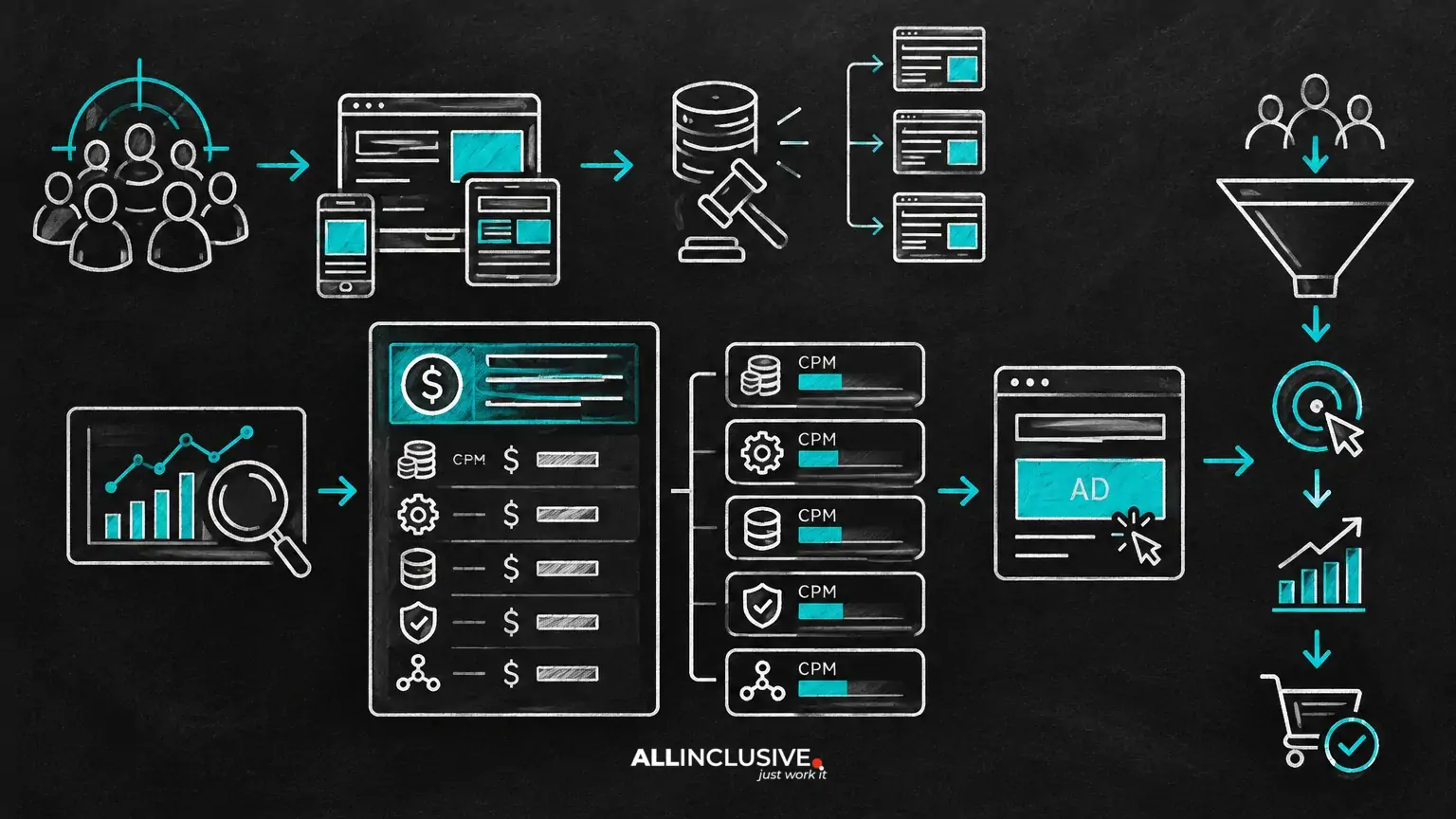
1. Inventory or clearing cost
The inventory cost is the amount associated with winning or securing an impression. In an auction, the effective price can vary by bid strategy, competition, audience, placement, device, geography and time of day. In a negotiated deal, pricing may be fixed or subject to delivery terms.
Ask whether the quoted rate reflects a floor, an expected average, a fixed commitment or a maximum. Also ask how underdelivery, makegoods and unused deal volume are handled.
2. DSP and technology fees
A demand-side platform may charge a percentage of media spend, a usage fee, a platform fee, or a combination. Some buying arrangements also involve ad-serving or creative-management charges.
The exact structure depends on the commercial agreement. Review whether technology fees are calculated on gross spend, net spend, impressions, managed-service fees or another base. A percentage fee should always be translated into a dollar amount at the planned spend level.
3. Supply-side and intermediary costs
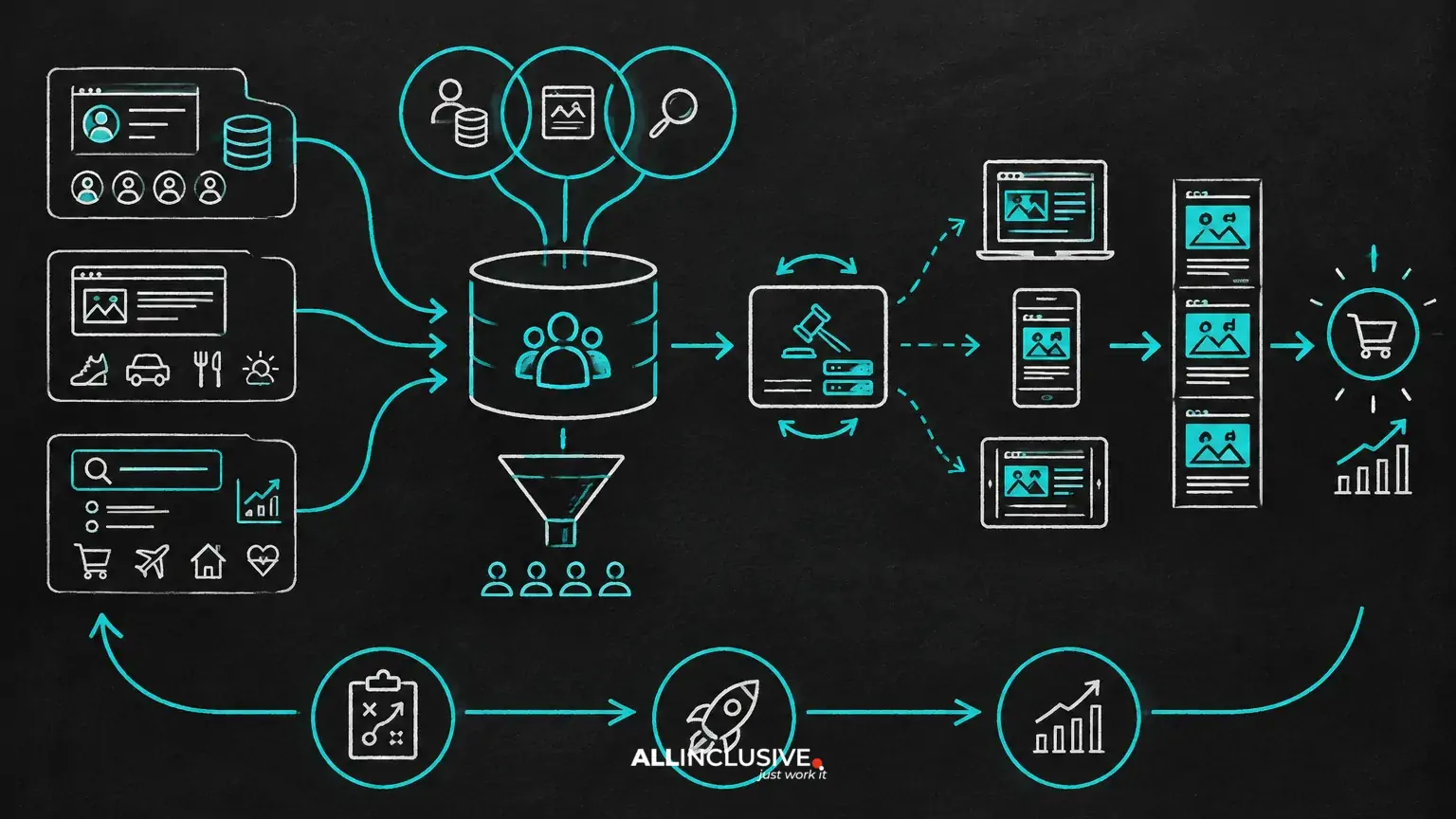
Programmatic transactions can pass through multiple technology layers. Buyers may not receive a separate invoice for every layer, but intermediary costs can still influence the clearing price or the economics of a deal.
This is why rate-card review should be paired with supply-path analysis. The goal is not simply to find the lowest nominal CPM, but to understand whether the path provides appropriate quality, transparency, reach and commercial efficiency. See our guide to programmatic supply path optimization for a deeper framework.
4. Audience and data fees
Audience targeting may add a data fee, either as a CPM surcharge or as a separate charge. The rate can differ by provider, audience type, geography, recency, activation method and contract terms.
Before approving a data fee, establish:
- Which audience signals are being used.
- Whether the fee applies to every impression or only targeted delivery.
- How the audience is refreshed and maintained.
- Whether overlap, scale and delivery constraints are visible.
- How performance will be evaluated against a contextual or first-party alternative.
A data surcharge is not automatically inefficient. It should, however, have a measurable role in the buying strategy.
5. Verification and measurement fees
Brand-safety, fraud, viewability, suitability and measurement services may be charged separately or bundled into a platform or agency fee. Confirm whether the quoted rate includes the required controls and whether reporting is available at the level needed for optimization.
Verification can change the number of impressions considered eligible or reportable. Therefore, compare both the nominal CPM and the cost of the impressions that meet the agreed quality criteria.
6. Agency and managed-service fees
An agency or managed-service provider may charge a percentage of media spend, a fixed monthly fee, a project fee or a hybrid structure. The fee may cover planning, activation, optimization, reporting, creative coordination and account management.
Do not treat a service fee as a hidden cost if it is clearly disclosed and tied to defined work. It becomes a commercial risk when the buyer cannot distinguish service fees from media and technology costs.
How to calculate an all-in effective CPM
Use a simple cost model before comparing proposals:
All-in cost = media cost + technology fees + data fees + verification and measurement fees + service fees + other agreed charges
Then calculate:
All-in effective CPM = all-in cost ÷ delivered impressions × 1,000
For a practical example, assume a proposal includes a quoted media CPM, a platform fee, a data surcharge and a fixed measurement charge. Do not compare the quoted CPM with another vendor’s all-inclusive CPM. Add every applicable cost to the same denominator, document assumptions and compare like for like.
For performance campaigns, add a second view:
- Cost per viewable impression.
- Cost per completed video view.
- Cost per qualified visit.
- Cost per conversion or incremental outcome, where measurement supports it.
These metrics should supplement, not replace, the contractual cost calculation. A rate card describes commercial terms; performance analysis evaluates whether those terms produced useful delivery.
Common hidden or overlooked costs
“Hidden” does not always mean intentionally concealed. Often, costs are omitted because the rate card covers only one component of a complex transaction. Review these items explicitly:
- Creative adaptation: resizing, versioning, dynamic creative or format-specific production.
- Ad serving: third-party tracking, impression counting or rich-media hosting charges.
- Data activation: audience licensing or onboarding costs.
- Verification: fraud, viewability, brand-safety or suitability measurement.
- Deal fees: private-marketplace or guaranteed-deal charges.
- Minimum commitments: spend, impression, term or platform minimums.
- Currency and tax: exchange-rate treatment, sales tax, VAT or other applicable charges.
- Cancellation and underdelivery: notice periods, fees, makegood terms and unused commitments.
- Reporting: custom dashboards, data exports or advanced measurement.
- Optimization constraints: fees or limits associated with changing audiences, inventory or creative.
How to compare two programmatic rate cards
Build a normalized comparison table. At minimum, include:
- Inventory and format.
- Geography, device and placement assumptions.
- Buying method and deal type.
- Quoted media rate and whether it is gross or net.
- Technology, data, verification and service fees.
- Expected volume and delivery conditions.
- Quality requirements, such as viewability or fraud thresholds.
- Measurement methodology and reporting access.
- Minimums, term, cancellation and underdelivery provisions.
- Estimated all-in CPM and relevant outcome-based metrics.
Do not normalize away meaningful differences. A curated deal, open-auction inventory and direct publisher placement may have different supply quality and controls. The purpose of the table is to make trade-offs visible, not to reduce every option to one number.
Questions to ask before approving a rate card
- What exactly is included in the quoted CPM?
- Which fees are charged by the platform, publisher, data provider, verification vendor and agency?
- Are fees calculated on gross or net media spend?
- Are rates fixed, estimated, tiered or subject to auction conditions?
- What volume assumptions support the quoted rate?
- What happens if delivery is below plan?
- Are there minimum spends, minimum terms or cancellation charges?
- Which impressions are included in reporting and billing?
- How are invalid traffic, viewability and brand-safety exclusions handled?
- Who owns the data, audiences, creative assets and reporting outputs?
- Can the buyer audit fees, supply paths and delivery?
Rate cards by buying environment
Open auction buying typically offers flexible access but variable clearing prices and supply quality. Private marketplaces may provide more defined inventory or publisher access, but they can include deal-specific terms and fees. Programmatic guaranteed arrangements may provide greater predictability, while requiring closer attention to commitments, delivery and makegoods.
Connected TV, audio, digital out-of-home, display and online video also have different measurement conventions and operational requirements. Do not assume that a CPM is comparable across formats simply because the unit is the same. Evaluate the audience, exposure opportunity, creative experience, supply quality and measurement standard together.
How rate-card discipline improves buying decisions
A strong review process begins before activation. Define the campaign objective, eligible inventory, audience requirements, measurement standard and acceptable fee structure. Then request a fully itemized commercial proposal.
During activation, monitor planned versus delivered spend, effective CPM, fees, reach, frequency, quality signals and outcome metrics. If the campaign is being evaluated for incrementality or attribution, align those methods with the buying terms rather than treating reporting as an afterthought. Our guide to programmatic attribution covers the distinctions between click-through, view-through and incremental measurement.
Finally, document approved assumptions in the insertion order or commercial agreement. A rate card is useful only when the agreed definitions survive handoff between planning, activation, finance and reporting teams.
Programmatic Rate Card: Decision Summary
A programmatic rate card is a starting point for commercial due diligence, not a complete picture of media value. The right comparison separates inventory cost from technology, data, verification and service fees; converts those components into an all-in effective CPM; and tests the result against quality and business objectives.
For broader context on how auctions, platforms, data and inventory fit together, explore our programmatic advertising resources. For a wider view of channel economics and planning, visit our paid media hub.