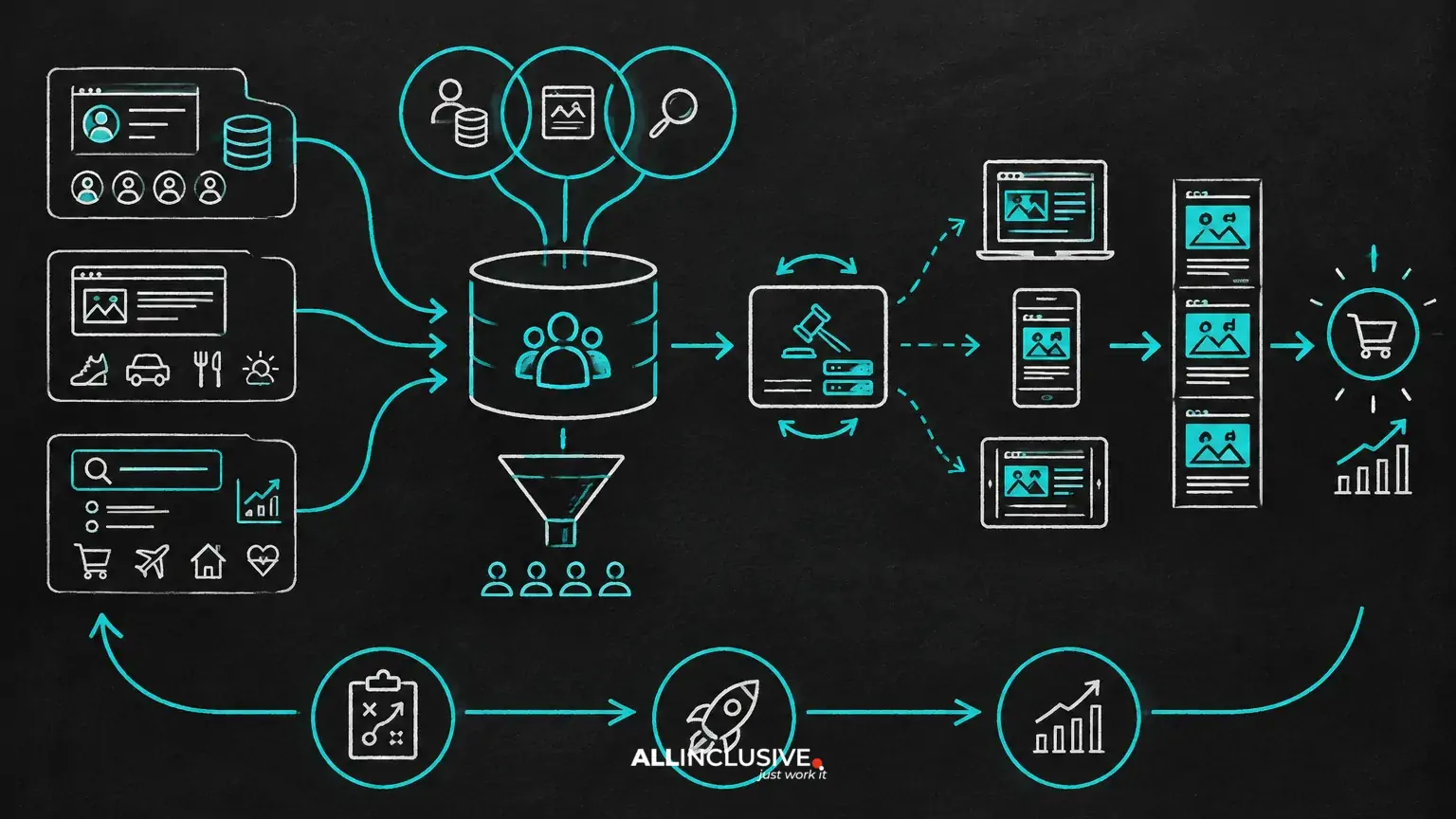
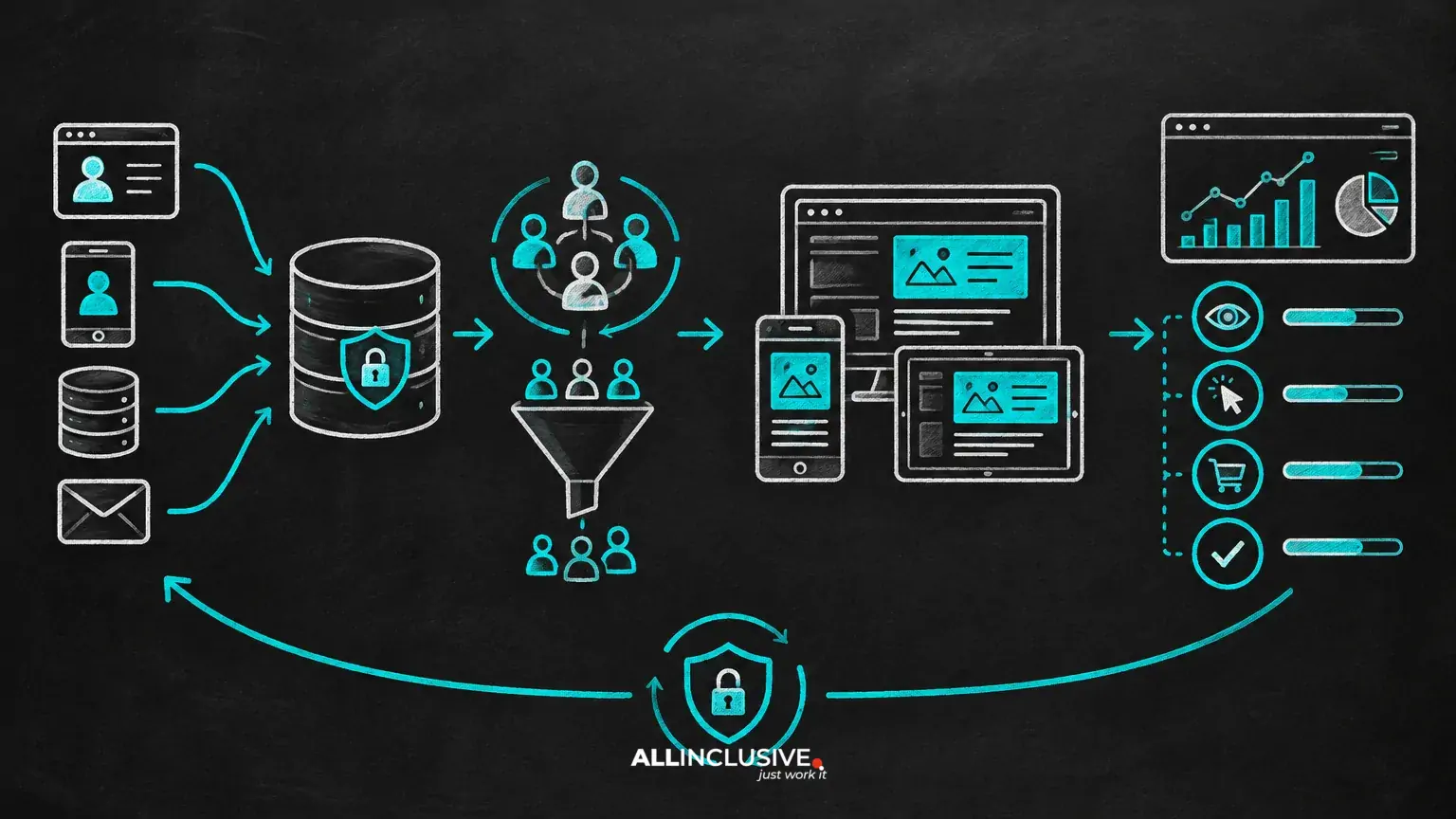
Omnichannel programmatic advertising connects multiple addressable media channels—such as display, online video, digital audio and connected TV—within one coordinated audience and measurement strategy. The goal is not to place the same ad everywhere. It is to create a deliberate sequence of exposures, messages and actions that reflects how people move across devices and media environments.
When planned well, an omnichannel approach can improve reach efficiency, reinforce brand messages and give marketers a more complete view of the customer journey. When planned poorly, it can produce duplicated reach, inconsistent creative, opaque reporting and unnecessary frequency.
What omnichannel programmatic means
Programmatic refers to the automated buying and selling of digital advertising inventory through technology platforms. Omnichannel adds a planning layer: campaigns are coordinated across more than one channel rather than managed as isolated buys.
A typical programmatic omnichannel campaign might combine:
- Display: efficient reach, retargeting and conversion-oriented placements.
- Online video: narrative-led creative in web and app environments.
- Digital audio: contextual and audience-based reach during listening occasions.
- Connected TV: premium, lean-back video inventory accessed through internet-connected television devices.
- Native or high-impact formats: additional opportunities for context, consideration or action.
The defining feature is coordination. Marketers establish shared objectives, audience rules, creative logic, frequency principles and measurement before activating individual channels.
Why coordinate channels instead of buying them separately?
Consumers do not experience a brand through a reporting interface. They may see a video on a streaming service, hear an audio message during a commute and later encounter a display ad while researching a product. If each channel is optimized independently, the campaign may overexpose some people while missing others.
Cross-channel planning can address four common problems:
- Fragmented reach: separate buys may target overlapping audiences without a clear view of total exposure.
- Inconsistent messaging: creative may communicate different benefits or calls to action at each stage.
- Weak sequencing: users can receive lower-funnel ads before they have received enough information to act.
- Incomplete measurement: channel reports may credit impressions or conversions without showing how exposures worked together.
Coordination does not guarantee incremental performance. It creates the conditions for better decisions, provided identity, inventory, creative and measurement limitations are understood.
Start with the business objective and audience role
An omnichannel plan should begin with the business outcome, not with a list of available formats. Define what the campaign must accomplish and how media will contribute.
Useful objectives include:
- Increasing qualified reach among a defined market.
- Building awareness for a new category or product.
- Generating consideration actions such as site visits, content engagement or lead starts.
- Driving sales or other measurable conversions.
- Reactivating known customers while controlling waste.
Next, divide the audience by role rather than treating every user identically. For example, a business-to-business campaign may distinguish between net-new accounts, engaged site visitors, known prospects and existing customers. Each group can receive a different channel mix, message and exclusion rule.
Audience definitions should also state what is known and what is inferred. First-party lists, consented customer data and contextual signals may support different uses from modeled or platform-derived audiences. A sound plan documents these distinctions before activation.
Assign each channel a job
Channel selection should reflect the role a medium can perform, its available inventory and the quality of evidence required to evaluate it. A simple planning framework is to assign one primary job and one secondary job to each channel.
Display
Display can support broad reach, site engagement, retargeting and direct-response activity. Its flexibility makes it useful for testing messages and landing-page paths, but its results should be evaluated with attention to viewability, placement quality, invalid traffic and post-click behavior.
Online video
Video is suited to demonstrating a product, explaining a problem or building memory through sight, sound and motion. Shorter assets may support reminders or retargeting, while longer assets can carry more context. Completion metrics are useful diagnostics, but they do not independently prove attention or business impact.
Digital audio
Audio can extend reach into listening occasions where screen-based formats are less relevant. Script clarity, pronunciation, pacing and a strong audio cue matter more than simply adapting display copy into a spoken format. Measurement should account for the difference between an audio exposure and an on-site interaction.
Connected TV
CTV can provide premium video reach in a television environment, but inventory, targeting, identity and reporting vary by supply path. Treat CTV as a distinct channel with its own delivery and measurement considerations rather than assuming it behaves exactly like web video. For a deeper overview, see programmatic CTV advertising.
Build a coordinated customer journey
Sequencing does not require a rigid linear funnel. It requires a clear rationale for what should happen after an exposure or action. One practical structure is:
- Introduce: use video, CTV, audio or high-reach display to establish the problem, category or brand.
- Explain: deliver proof points, product education, comparisons or relevant content to engaged audiences.
- Prompt: use stronger calls to action for users who have shown meaningful intent.
- Retain: adapt messaging for customers, open opportunities or users who converted.
Define meaningful signals carefully. A completed video may be a useful audience input, but a product-page visit, form start or account-level engagement may indicate stronger intent. Avoid treating every impression or low-friction interaction as evidence that the user is ready for a conversion message.
Sequencing also depends on technical feasibility. Cross-device recognition is imperfect, opt-outs and consent choices limit addressability, and some inventory may not support the same audience or frequency controls. Plan fallback logic rather than assuming every user can be identified consistently across channels.
Control reach, frequency and exclusions
Frequency management is one of the strongest reasons to coordinate programmatic buying. However, a frequency setting inside one buying platform may not represent total exposure across every platform, publisher, device or household. Reporting should clearly distinguish controlled frequency from estimated or channel-level frequency.
Establish rules for:
- Maximum exposure by channel and campaign period.
- Priority between prospecting, retargeting and customer audiences.
- Exclusion after conversion or a defined business action.
- Suppression of low-quality placements, unsuitable content and invalid traffic.
- Minimum audience or delivery thresholds required for optimization.
Frequency should be interpreted alongside creative wear-out, audience size and purchase cycle. A low frequency may be insufficient for a complex product; a high frequency may be wasteful when the audience is narrow or the message is repetitive.
Make creative work across channels
Omnichannel does not mean using one asset in every environment. It means maintaining a consistent strategic idea while adapting execution to the channel.
Use a creative system with shared:
- Brand identifiers and value proposition.
- Audience problem or use case.
- Proof point and call to action.
- Message hierarchy across the journey.
- Tracking conventions and landing-page destination.
Then adapt for the environment. CTV and online video may need a clear opening and audio-off considerations where relevant. Audio requires immediate verbal identification and simple language. Display needs legibility, concise copy and a visible action. Creative testing should isolate meaningful variables—such as proposition, opening, proof or call to action—rather than rotating arbitrary versions without a learning plan.
Design measurement before launch
Measurement should match the objective and the evidence available. A useful framework separates delivery, engagement, outcomes and incrementality.
Delivery and media quality
- Reach and frequency, with definitions documented.
- Impressions, completed views or listen-through measures where relevant.
- Viewability and attention proxies used cautiously.
- Placement, supply-path and invalid-traffic quality.
- Spend, pacing and auction dynamics.
Engagement and response
- Site visits, engaged sessions or content interactions.
- Video completion or audio completion diagnostics.
- Qualified form starts, calls or other defined intent events.
- Post-exposure behavior by audience and channel.
Business outcomes
- Qualified pipeline, revenue or purchases.
- Customer acquisition cost or cost per qualified action.
- Conversion quality, not just conversion volume.
- Retention, repeat purchase or account progression where applicable.
Last-touch reporting can undervalue upper-funnel channels, while impression-based attribution can overstate their contribution. Use attribution as a diagnostic rather than a complete answer. Where practical, complement platform reporting with holdouts, geo-based tests, conversion-lift studies or other incrementality methods appropriate to the campaign and available data. For measurement pitfalls, review programmatic advertising ROI: metrics, attribution and common traps.
Set up an operational workflow
A coordinated campaign needs clear ownership across planning, buying, creative, analytics and compliance. Before launch, document:
- The objective, conversion definition and decision thresholds.
- Audience sources, consent requirements, lookback windows and exclusions.
- Channel roles, budget guardrails and supply criteria.
- Creative versions, approval status, landing pages and tracking parameters.
- Reporting dimensions, data refresh timing and reconciliation rules.
- Optimization actions that may be taken without additional approval.
During delivery, separate diagnosis from reaction. A weak early conversion rate may reflect conversion lag, insufficient volume, tracking loss or an actual media problem. Review delivery and quality signals first, then audience and creative behavior, before making major budget changes.
A structured programmatic campaign audit can help identify recurring issues in inventory, targeting, measurement and governance.
Omnichannel Programmatic Advertising: Mistakes to Watch For
- Calling a multi-channel buy omnichannel: several channels do not become coordinated without shared planning and controls.
- Optimizing every channel to the same KPI: channel roles differ, so diagnostics and success criteria may differ too.
- Assuming universal identity resolution: cross-device and cross-platform matching is incomplete and subject to privacy constraints.
- Using identical creative everywhere: consistency is strategic; execution must fit the environment.
- Comparing platform metrics without definitions: completion, reach, engagement and conversion events may not be directly equivalent.
- Over-targeting: narrow audiences can increase repetition, limit scale and make results less stable.
- Ignoring supply quality: automation does not remove the need for placement, publisher and inventory controls.
Omnichannel Programmatic Advertising: Pre-Launch Checklist
Before activation, confirm that the team can answer yes to these questions:
- Is there one documented business objective and a clear conversion definition?
- Does each channel have a specific job?
- Are audience sources, exclusions and consent requirements documented?
- Can the team explain how frequency will be monitored and where control is limited?
- Does each channel have suitable creative and a relevant destination?
- Are platform, analytics and business outcomes reconciled through agreed definitions?
- Is there a test or learning plan beyond last-touch attribution?
- Are optimization rules, owners and escalation paths clear?
Omnichannel Programmatic Advertising: What to Prioritize
Omnichannel programmatic advertising is a planning discipline, not simply a collection of automated media formats. Its value comes from connecting audience strategy, channel roles, creative, frequency, supply quality and measurement around a shared business objective.
Start with the customer and the outcome, assign each channel a defensible role, document technical limitations and evaluate the combined plan with more than platform-reported conversions. That approach gives marketers a stronger basis for deciding where programmatic investment is genuinely contributing—and where it needs to change.
For broader context on channel planning and paid acquisition, explore Allinclusive’s paid media resources and the programmatic advertising pillar.