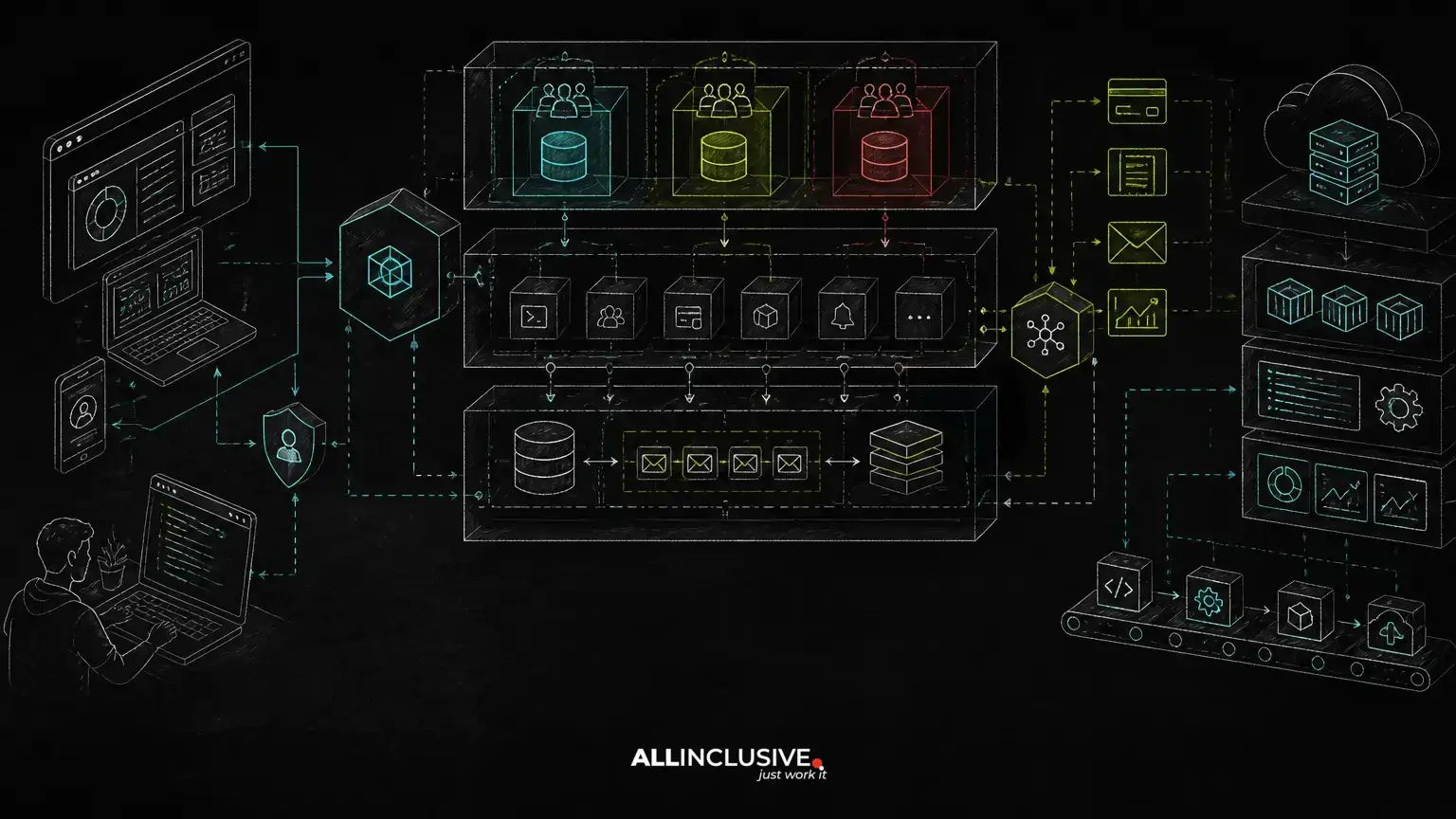
Laravel SaaS development works best when the application is treated as a multi-tenant product, not as a collection of screens with billing added later. Early decisions about tenant boundaries, domain logic, data ownership, authentication, background work and deployment shape how safely the product can evolve.
Laravel provides a productive foundation for building this kind of software, but the framework does not decide the most important product architecture questions for you. Teams still need to determine how tenants are represented, where authorization is enforced, which work runs asynchronously, how billing affects access and how the codebase will be tested and upgraded over time.
This article focuses on those decisions. It is intended for product owners, technical leaders and engineering teams planning a custom SaaS platform with Laravel and PHP.
Start with the SaaS domain model, not the UI
A SaaS product usually has several business concepts that are easy to blur together during an early build:
- Users are people who authenticate.
- Organizations or tenants own data and subscriptions.
- Memberships describe which users belong to which tenants.
- Roles and permissions describe what members may do.
- Plans and entitlements describe which product capabilities are available.
These concepts should be modeled explicitly. Treating a user as the tenant, for example, can create unnecessary redesign when teams, delegated administration or account switching become product requirements. Likewise, storing a simple plan name on a user record may not be sufficient when subscriptions, trials, seats, invoices or historical access decisions matter.
A useful early exercise is to map the core workflows in business terms: who owns a record, who may change it, which events trigger side effects and which actions require an active entitlement. Those rules belong in the application domain rather than being scattered across controllers and templates.
Choose a tenancy model that matches isolation requirements
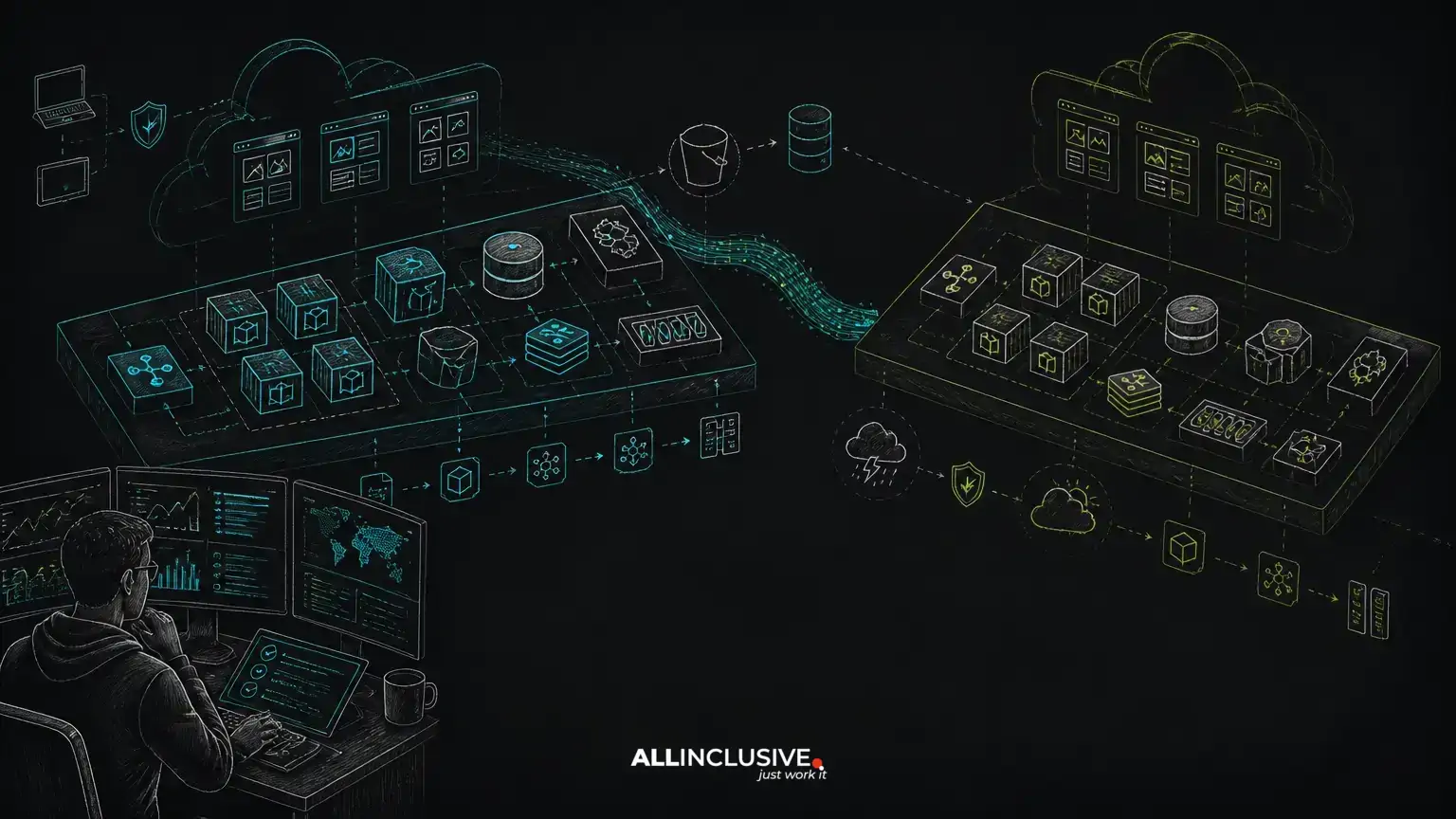
Laravel SaaS applications commonly use one of three broad data arrangements:
- Shared database and shared tables: tenant ownership is represented by a tenant identifier on relevant records.
- Shared database with tenant-specific schemas or connections: application data is separated more strongly while infrastructure remains related.
- Separate database per tenant: each tenant receives its own database boundary, often with additional provisioning and operational work.
A shared-table approach can be practical for many products, but it requires disciplined tenant scoping. Queries, policies, jobs, exports, reports and administrative tools all need a reliable way to identify the active tenant. A missed scope can become a data exposure risk, not merely a bug.
Stronger database separation may simplify certain isolation or residency requirements, but it increases the complexity of provisioning, migrations, backups, monitoring and support. It should be selected because the product requires that boundary, not because it sounds more enterprise-ready.
Document the tenancy decision early, including how the application resolves the current tenant, how cross-tenant administration works, whether records can move between tenants and how background jobs retain tenant context.
Keep business rules outside controllers
Laravel controllers are useful orchestration points, but they are a poor long-term home for every rule in a SaaS product. Controllers that validate input, authorize an action, calculate pricing, update several models, send notifications and dispatch jobs become difficult to test and change.
Organize the application around meaningful business operations. Depending on the product, this may involve actions, services, domain objects, policies and event handlers. The exact pattern matters less than the boundary: business decisions should be represented in code that can be exercised without requiring a full browser request.
For example, “invite a member,” “change a subscription,” and “approve a workflow” may each involve multiple records and side effects. A well-defined application operation can make those transitions explicit, coordinate transactions and provide a stable place for authorization and tests.
Eloquent remains valuable for persistence and relationships, but models should not become an unstructured dumping ground for every workflow. Keep data mapping, business decisions and external integrations understandable as separate responsibilities.
Design authorization around tenant context and actions
Authentication answers who the user is. Authorization answers what that user may do within a specific tenant and workflow. SaaS applications need both, and they often need them at multiple levels.
Consider a team administrator who may manage members but cannot change billing, a project manager who can edit project records but not export all tenant data, and a support operator who can assist across tenants through a controlled administrative workflow. These are not merely UI visibility rules. The server must enforce them when requests arrive through web forms, APIs, queued jobs or internal tools.
Use policies, gates or a comparable authorization structure consistently. Check both the user’s relationship to the tenant and the requested action. Avoid relying on a tenant identifier supplied by the client without verifying that the authenticated principal can act within that tenant.
Authentication architecture also depends on product shape. A browser-first application, a mobile client, third-party integrations and a public developer API may require different token and session strategies. The trade-offs between Laravel Sanctum and Passport are discussed in Laravel Sanctum vs Passport.
Separate product entitlements from payment-provider state
Billing is more than a checkout screen. A SaaS platform needs a durable answer to questions such as:
- Which tenant is subscribed?
- Which plan or commercial arrangement applies?
- Which capabilities are included?
- What happens during a trial, grace period, cancellation or failed renewal?
- Which historical records must remain available after access changes?
Payment-provider events are external inputs and may arrive late, be retried or require reconciliation. Your application should not make every authorization decision by querying the provider in real time. Instead, maintain an internal representation of subscription and entitlement state, update it through verified events and provide an operational path for resolving discrepancies.
Keep plan definitions and feature entitlements distinct where possible. A plan may change commercially while an entitlement represents the actual product capability. This separation helps when introducing add-ons, usage limits, seat-based access or grandfathered agreements.
Use queues for reliable background work
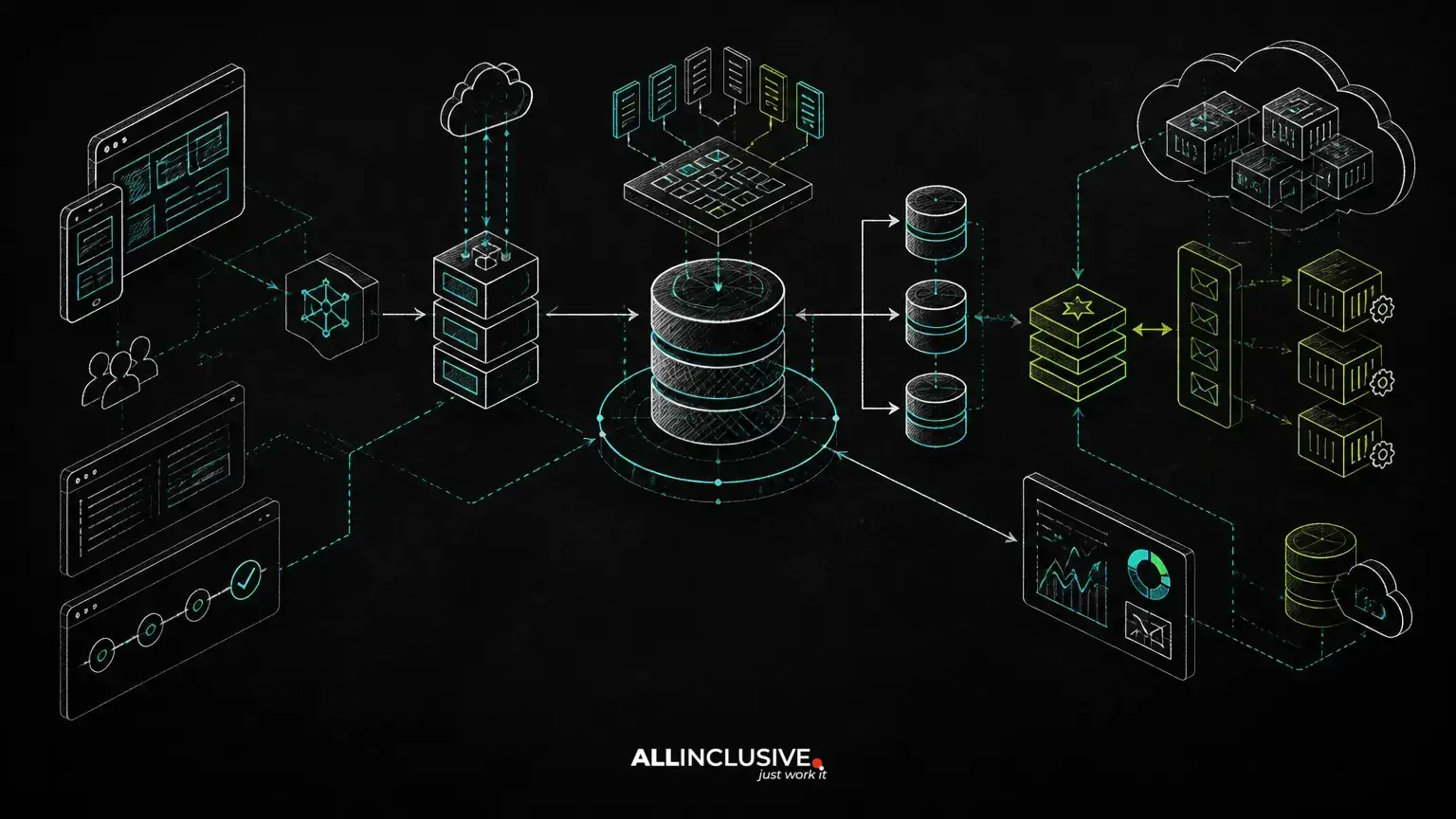
SaaS products often perform work that should not block a user request: sending invitations, generating exports, processing imports, synchronizing external systems, producing reports and dispatching notifications. Laravel queues can provide the execution model, but reliable background processing requires more than moving code into a job class.
Jobs should be designed for retries and partial failure. Define what happens if a third-party service is unavailable, a record changes before a job runs or the same event is delivered more than once. Where appropriate, use idempotency keys, unique job constraints, transactional outbox patterns or explicit status records.
Tenant context must travel safely with the job. A queued export that accidentally executes against the wrong tenant is a serious isolation failure. Jobs should carry stable identifiers and resolve authorization and data scope on the worker side rather than trusting stale request state.
Design APIs as product contracts
Even when the first interface is a Laravel-rendered web application, APIs may later support mobile clients, integrations, partner workflows or internal automation. That does not mean every internal method needs to become a public endpoint. It does mean API boundaries deserve deliberate design.
Define resource ownership, authentication, authorization, validation, pagination, filtering, error formats and versioning expectations. Avoid exposing database structure directly when the product domain requires a more stable contract. API responses should reflect what consumers need, not every column available in an Eloquent model.
For a deeper treatment of backend contract design, see Laravel API development. If the platform also requires a sophisticated administrative interface, the choice between Laravel Nova and Filament can affect delivery speed, customization and long-term ownership; the trade-offs are covered in Laravel Nova vs Filament.
Make data access safe before optimizing it
Eloquent makes common data access readable, but SaaS scale introduces risks such as unbounded lists, accidental N+1 queries, expensive reports and tenant filters applied inconsistently. Establish data-access conventions early.
- Use explicit tenant scoping for tenant-owned records.
- Paginate user-facing collections and define sensible limits.
- Load relationships intentionally rather than relying on incidental access.
- Move reporting workloads to suitable read models, aggregates or asynchronous processes when needed.
- Index fields used frequently for tenant filtering, lookup and ordering.
Caching can reduce repeated work, but cached data needs a clear ownership and invalidation strategy. A tenant-specific cache key should not be interchangeable with a global key, and permission-sensitive data should not be cached without considering changes to membership or entitlements.
Build security and testing into the architecture
Security in a SaaS application is distributed across data modeling, request handling, authorization, secrets management, dependency maintenance, file handling, logging and deployment. A secure design makes the dangerous paths visible and testable.
Tests should cover more than successful controller responses. Include authorization boundaries, tenant isolation, subscription transitions, webhook verification, retry behavior, import validation and permission changes. These tests protect the rules that are most expensive to rediscover after launch.
Use realistic test data that represents multiple tenants and roles. A test suite that only exercises one organization can miss cross-tenant query mistakes. Automated checks should run as part of the delivery process, while production monitoring should make failed jobs, unusual error rates and integration discrepancies observable.
Plan deployment, upgrades and maintainability from the first release
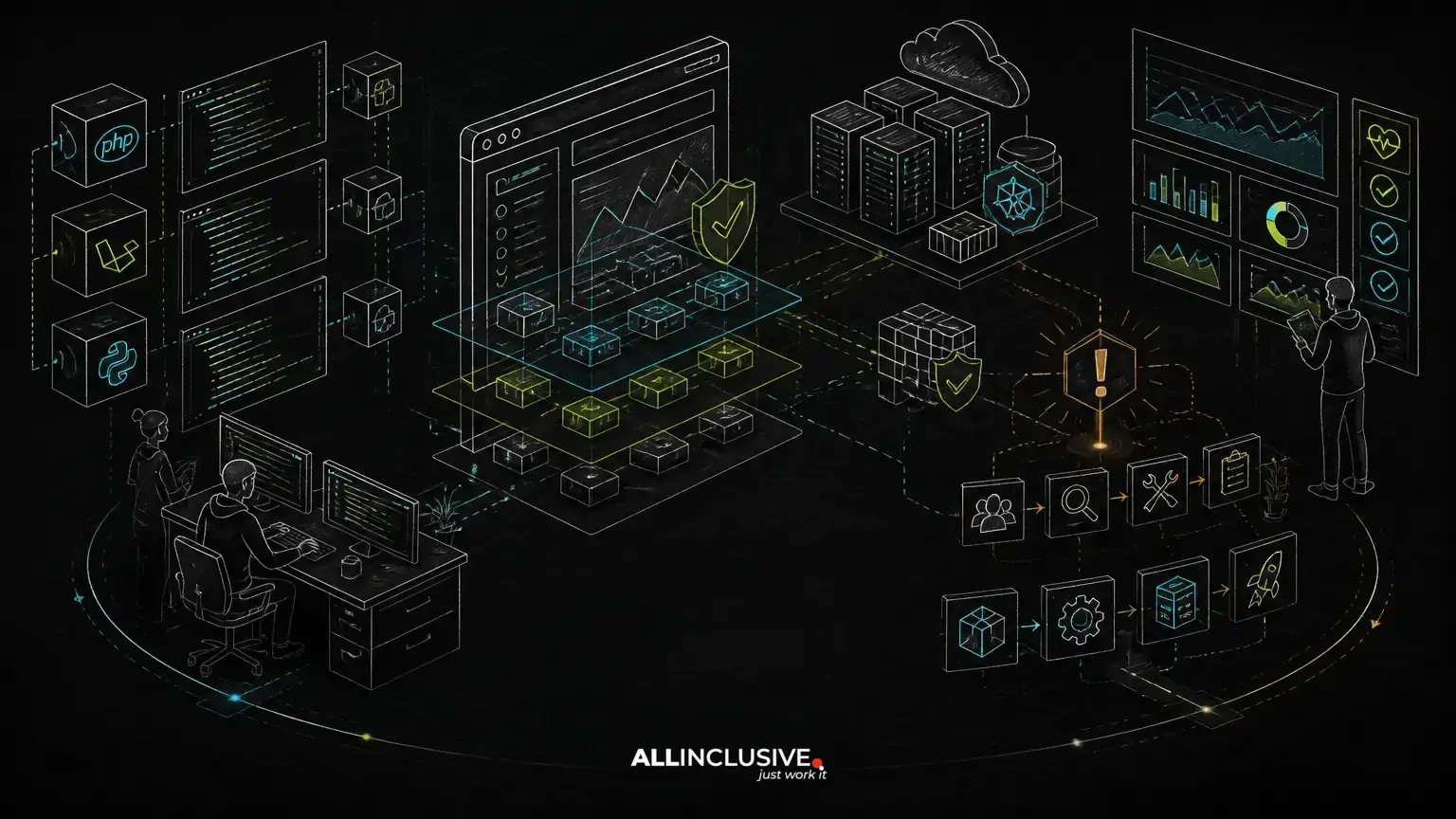
A production Laravel application needs an operational model: configuration management, database migration procedures, queue workers, scheduled tasks, backups, log collection, health checks and rollback planning. These concerns should be designed alongside the first release rather than treated as a handoff to be solved later.
Framework and package upgrades are easier when the application has clear boundaries, current tests and limited reliance on undocumented behavior. Avoid unnecessary customization of vendor code and record important architectural decisions so future engineers understand why a tenancy, billing or deployment approach was selected.
Maintainability is a business concern. A codebase that is understandable allows the product team to respond to customer needs without turning every change into a risky rewrite. For ongoing operational support, see software support and maintenance.
Architecture questions to resolve before implementation accelerates
- What is the tenant, and which records belong to it?
- Which users can belong to multiple tenants?
- Where are authorization decisions enforced?
- Which product capabilities are entitlements rather than simple UI options?
- How will billing events update internal access state?
- Which workflows require queues, retries or idempotency?
- Which API contracts must remain stable for external consumers?
- How will tenant isolation be tested automatically?
- How will migrations, workers, scheduled tasks and rollbacks operate in production?
- What parts of the system are likely to change, and where should the architecture preserve flexibility?
Laravel can support a wide range of SaaS products, from focused workflow tools to complex business platforms. The strongest implementations use the framework as a foundation for clear domain boundaries, reliable data ownership and testable application behavior. If you are evaluating a custom platform or need senior engineering guidance, explore Laravel development services and the broader custom software development practice.