Laravel maintenance services are most valuable when an application is already business-critical but still needs to evolve. Ongoing ownership should cover more than fixing visible bugs: it should keep the Laravel and PHP stack secure, observable, supportable and ready for the next product release.
For a custom application, that usually means a continuous operating model spanning dependency updates, infrastructure monitoring, incident response, performance work, technical debt and release management. The right scope depends on the codebase, hosting environment, risk tolerance and roadmap—not simply on the number of support hours purchased.
Teams evaluating an external partner should look for evidence that the provider can inherit an unfamiliar system, establish operational visibility, make controlled changes and preserve product knowledge over time. That is different from an ad hoc bug-fixing arrangement.
What Laravel maintenance should own after launch
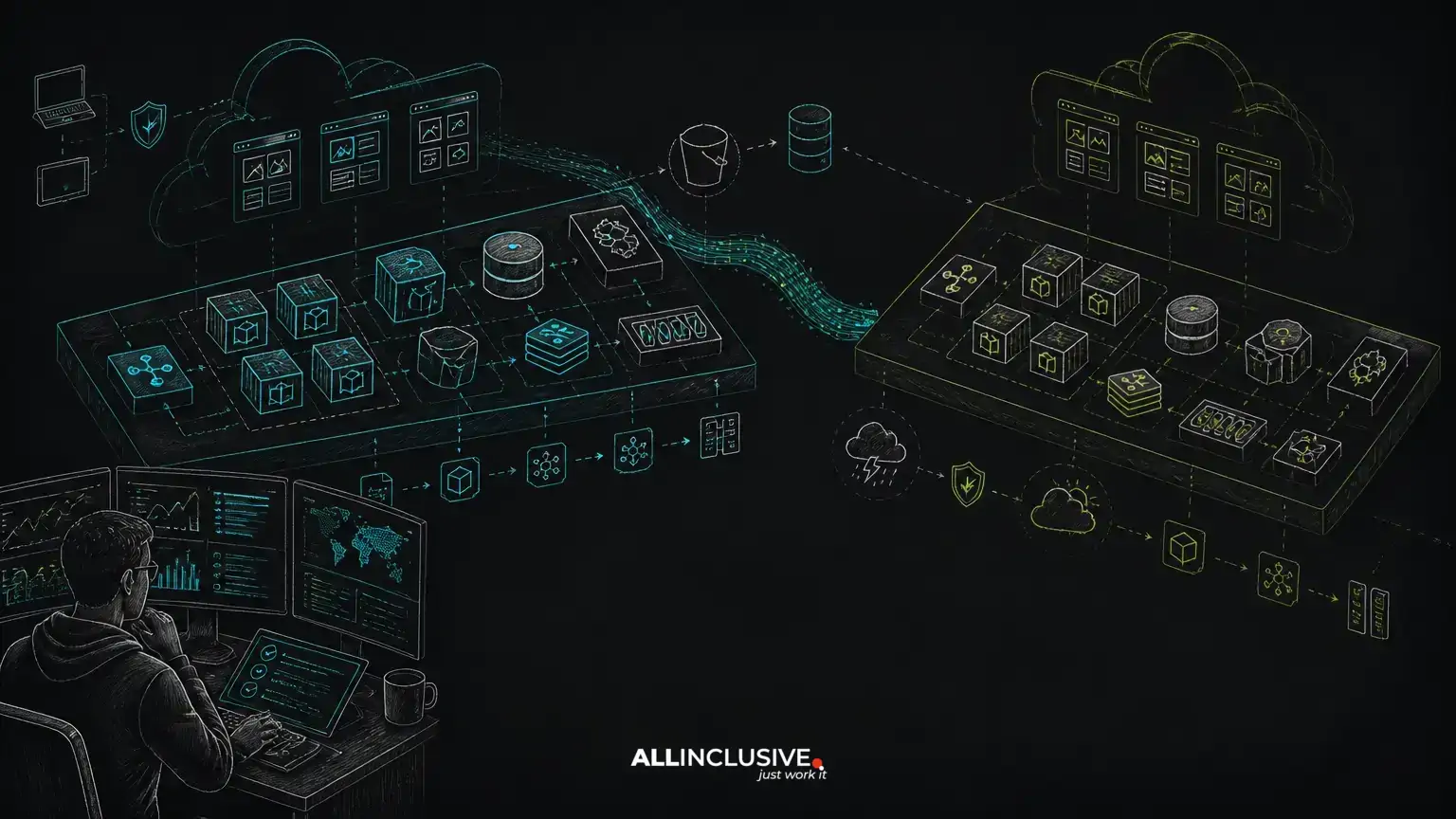
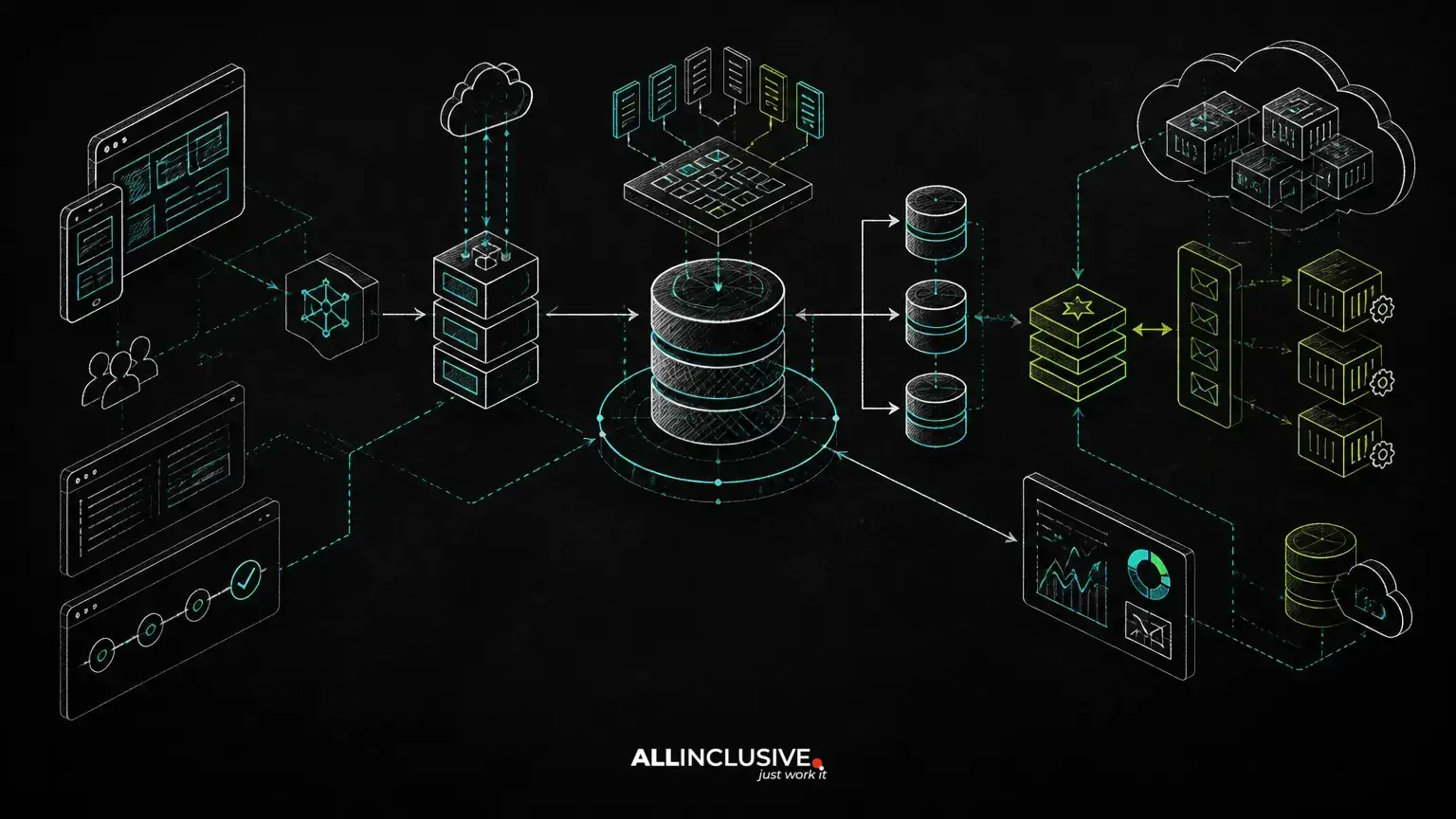
A mature Laravel application typically has several connected layers: application code, PHP and Laravel dependencies, databases, queues, scheduled jobs, storage, third-party integrations and deployment infrastructure. A maintenance program should define ownership across those layers.
- Application health: errors, failed jobs, queue backlogs, scheduled-task failures, unusual response behavior and broken user workflows.
- Security: vulnerability review, supported runtime versions, access controls, secret handling, dependency updates and remediation of application-level findings.
- Change delivery: code review, automated testing, staging validation, database migration planning and rollback procedures.
- Operational response: triage, severity classification, communication, containment, root-cause analysis and follow-up actions.
- Product continuity: retained context about architecture, business rules, integrations and the reasons behind earlier decisions.
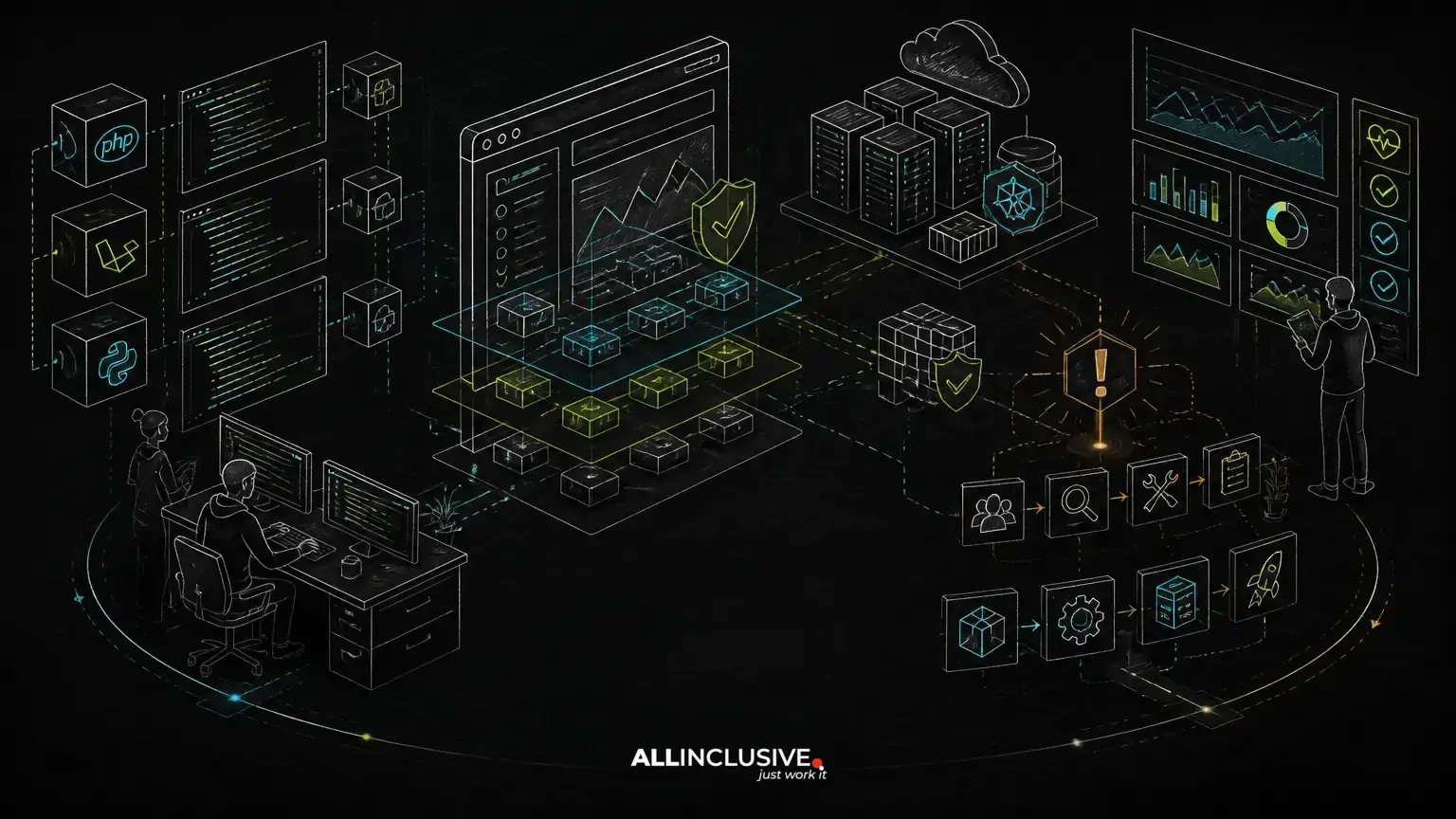
This ownership model also applies when Laravel is part of a broader PHP or Python system—for example, a Laravel API connected to Python data processing, external services or separate worker processes. The maintenance boundary should follow the actual architecture rather than the framework name.
Monitoring Laravel applications beyond uptime
Uptime alone does not show whether an application is healthy. A site can return a successful HTTP response while queues are stalled, payments are failing, scheduled reports are missing or database latency is degrading key workflows.
Useful monitoring normally combines infrastructure, application and business signals:
- HTTP errors, latency patterns and resource saturation
- Queue depth, failed jobs and worker availability
- Scheduled command completion and expected output
- Database connection pressure, slow queries and storage growth
- External integration failures, timeouts and authentication errors
- Important workflow events, such as order, notification or billing failures
Alerts need ownership and sensible thresholds. An alert that fires without a defined response path becomes noise; an alert that only reports a problem after users notice it is too late. Monitoring should therefore be paired with runbooks describing what to inspect, how to limit impact and when to escalate.
Security patches and dependency management
Laravel maintenance includes keeping the application’s dependency graph under control. That graph may contain Laravel packages, PHP extensions, JavaScript tooling, operating-system packages, database clients and services maintained outside the application repository.
Updates should be handled as an engineering process rather than applied blindly in production. A practical sequence is to inventory dependencies, identify security and compatibility impact, update in a controlled branch, run relevant tests, validate in a production-like environment and release with a rollback plan.
Security work also extends beyond package versions. Maintenance reviews may need to examine authorization rules, authentication flows, uploaded files, secrets, logging, administrative access and exposed endpoints. A package can be current while an application-level permission defect remains unresolved.
For a deeper treatment of this area, see security patch management for custom web applications. The key operational question is not whether every update can be installed immediately; it is whether risks are identified, prioritized, documented and addressed within an agreed timeframe.
Laravel and PHP upgrades without destabilizing production
Framework and runtime upgrades often touch application behavior indirectly. Deprecated APIs, changed defaults, package constraints, queue behavior, database drivers and deployment images can all affect production even when the feature code appears unchanged.
A responsible upgrade plan starts with an inventory:
- Record the current Laravel, PHP, package, database and hosting versions.
- Identify unsupported or end-of-life components and their replacement paths.
- Review custom integrations, scheduled tasks, queues and authentication flows.
- Strengthen tests around high-value workflows before changing versions.
- Upgrade incrementally where practical, separating unrelated refactoring from compatibility work.
- Validate migrations, background processing, observability and rollback behavior in staging.
Separating upgrade work from feature work makes failures easier to diagnose. It also gives product leaders a clearer view of why engineering capacity is being used and which risks the work removes.
Incident response and maintenance SLAs
Support agreements should describe how incidents are handled, not merely promise general availability. Severity definitions should reflect business impact. A widespread login failure, a delayed internal report and a cosmetic administrative defect should not enter the same response queue.
An effective operating agreement commonly clarifies:
- What counts as an incident, request, defect or planned maintenance task
- How severity is assigned and who can change that classification
- Target response and update intervals for each severity level
- Communication channels and escalation contacts
- Whether remediation, root-cause analysis and preventive work are included
- How planned releases and emergency changes are approved
Response time is only one part of service quality. A team that acknowledges an incident quickly but lacks access, context or deployment discipline may still take too long to restore the workflow. Review software maintenance SLAs and severity levels when defining the commercial and operational boundaries of support.
Performance maintenance as data and usage grow
Performance problems often emerge gradually. A query that was acceptable with a small dataset may become expensive as records accumulate. A queue design that worked at low volume may create delays when several workflows compete for workers. Repeated API calls, unbounded exports and inefficient rendering can produce similar symptoms.
Performance maintenance should begin with evidence from logs, traces, database analysis and infrastructure metrics. Possible remedies include query changes, indexing, pagination, caching, queue separation, batch processing, payload reduction or infrastructure adjustments. Each has trade-offs: caching can create invalidation problems, indexes increase write overhead, and moving work to queues changes user feedback and failure handling.
Performance work should be connected to a user or business workflow. “The application is slow” is difficult to act on; “invoice exports time out for large accounts” gives the team a measurable path to investigation. See web application performance maintenance for a broader view of this discipline.
Inherited Laravel codebases and technical debt
Taking over a Laravel application requires discovery before major change. Documentation may be incomplete, tests may cover only selected paths, and deployment knowledge may live with one former contractor or employee. A maintenance partner should make those risks visible rather than assuming the repository tells the whole story.
An initial assessment can map:
- Application modules, domains and critical user journeys
- Deployment, environments, secrets and access dependencies
- Database structure, migrations, scheduled work and queues
- Third-party integrations and failure behavior
- Test coverage, static analysis and release practices
- Known technical debt and areas where change is unusually risky
Not every weakness requires immediate refactoring. Stabilization may be the right first step: document the deployment path, add monitoring, protect a critical workflow with tests and remove the most urgent security risk. Refactoring can then be scheduled alongside roadmap work. If the system is a legacy PHP application with deeper structural constraints, the team may need to compare incremental modernization with a bounded rebuild rather than defaulting to a rewrite.
Release management for continuous improvement
Maintenance and product development should share a release discipline. Small, reviewable changes are easier to test and reverse than large batches that combine framework upgrades, database changes and new features.
A dependable release process may include a protected main branch, automated checks, staging validation, database migration review, feature flags where appropriate, deployment observability and a documented rollback or forward-fix strategy. Database changes deserve particular care because code rollback does not automatically reverse data changes.
Roadmap continuity improves when maintenance findings become actionable product work. For example, repeated support incidents may justify a workflow redesign; a fragile integration may need an adapter boundary; growing technical debt may require a focused hardening cycle. This connects operational evidence to investment decisions instead of treating maintenance as an isolated cost center.
How to evaluate Laravel maintenance services
During commercial evaluation, ask prospective providers to explain how they would operate your application, not only which technologies they use. Useful questions include:
- How do you assess an inherited Laravel or PHP codebase before accepting support ownership?
- Which application, infrastructure and business signals would you monitor?
- How are security updates prioritized when compatibility risk is uncertain?
- What access, documentation and escalation paths are required?
- How do you distinguish incidents, defects, requests and roadmap work?
- What testing and deployment controls protect production?
- How are technical-debt findings recorded and connected to future releases?
- Can the team support adjacent Python services or integration workers when the architecture requires it?
The answers should reveal a repeatable operating model, clear accountability and an ability to balance urgent reliability work with planned improvement.
Building a maintenance partnership around the roadmap
The strongest maintenance arrangement is neither passive ticket handling nor an unlimited promise to change everything immediately. It combines agreed service expectations with technical stewardship: monitoring that leads to action, security work that is prioritized, upgrades that are tested, incidents that produce learning and roadmap changes that remain deliverable.
Allinclusive supports custom software ownership across development and ongoing engineering operations. Learn more about support and maintenance for custom applications, or explore broader custom software development services when the system needs substantial extension or modernization. For teams that need sustained product capacity, dedicated product teams can provide continuity across maintenance, delivery and technical planning.