Google Ads for SaaS works best when campaigns reflect how software buyers actually evaluate products. A self-serve product may need a fast path to a free trial or product signup. An enterprise platform may need qualified demo requests, account-level targeting and more patient measurement. Treating both journeys as the same conversion problem usually creates noisy data, weak landing-page alignment and inefficient budget allocation.
The core strategy is to connect three decisions: which search intent to buy, which conversion path to offer and which downstream business outcome to optimize toward. The most useful account structure is not necessarily the one with the most campaigns. It is the one that makes intent, economics and lead quality visible.
Start with the SaaS buying motion
Before building campaigns, define how prospects move from search to revenue. SaaS buying motions commonly fall into three broad groups:
- Self-serve: Users can understand value, start a trial or subscribe without sales involvement.
- Sales-assisted: Prospects request a demo, consultation or pricing conversation before buying.
- Product-led with sales expansion: Users begin with a trial or free plan, then become qualified for upgrade or sales outreach.
These motions can coexist, but they should not be judged by the same immediate conversion. A trial may be an appropriate primary conversion for a low-friction product, while an enterprise platform may treat a completed demo form as an initial signal and qualified opportunity as the more meaningful business outcome.
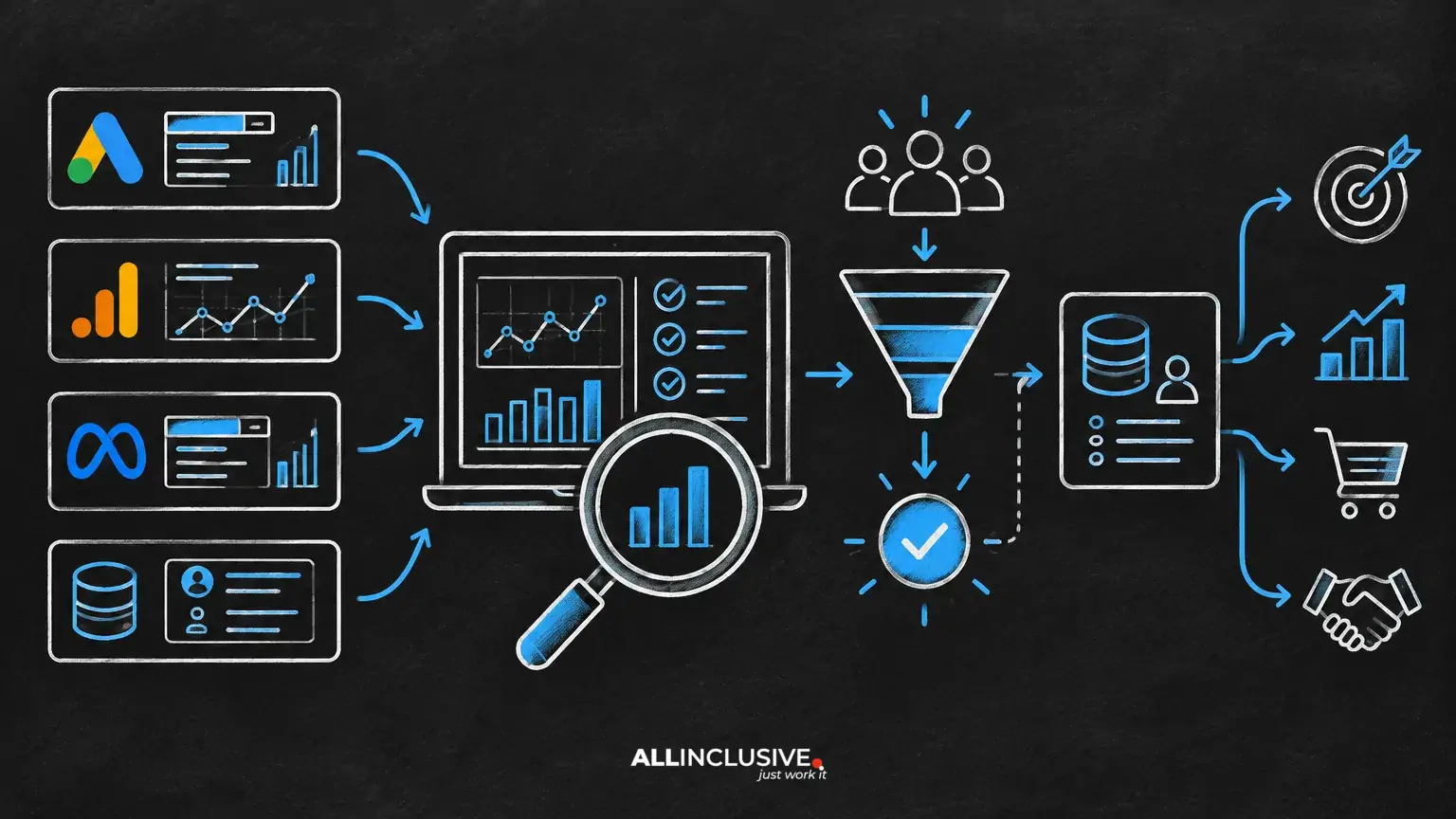
Document the economic path before setting targets. At minimum, map:
- The search intent you want to capture.
- The landing page and offer shown after the click.
- The first conversion event.
- The qualification or activation event that follows.
- The revenue event that ultimately validates the acquisition.
This prevents a common failure mode: optimizing aggressively for inexpensive form fills or trial starts that never activate, qualify or progress.
Build campaigns around intent, not every possible keyword variation
Keyword research for SaaS should identify the language used by buyers at different stages. A practical grouping might include:
- Category searches: Queries such as “project management software” or “subscription billing platform.”
- Problem-oriented searches: Queries describing an operational problem the product solves.
- Solution and feature searches: Searches for capabilities such as workflow automation, audit logs or API integrations.
- Commercial evaluation searches: Queries including “pricing,” “demo,” “software,” “platform,” “free trial” or “alternatives.”
- Competitive and comparison searches: Searches referencing another provider or comparing product categories.
- Brand searches: Searches for the company, product or branded feature names.
These groups do not automatically require separate campaigns. Separate them when they need different budgets, landing pages, bidding logic, reporting or exclusions. If two keyword groups have the same audience, offer and optimization goal, combining them may produce a clearer and more stable account.
For a deeper view of non-brand demand capture, see our guide to Google Ads non-brand campaigns. The SaaS-specific difference is that broad category demand often needs stronger qualification than a simple lead-generation account.
Prioritize high-intent search before expanding reach
High-intent terms are not defined only by words such as “buy” or “demo.” Intent depends on the relationship between the query, the product’s buying motion and the landing-page promise. For example, “enterprise expense management platform pricing” may be highly commercial for one SaaS company, while “expense report template” may be informational and poorly suited to a demo-focused campaign.
Use a staged approach:
- Begin with close commercial relevance. Capture searches that clearly describe the category, solution or evaluation task your product supports.
- Review search terms regularly. Identify irrelevant meanings, low-value use cases and audiences that repeatedly fail qualification.
- Add exclusions deliberately. Terms related to jobs, training, definitions, templates, free alternatives or unsupported use cases may require exclusion depending on the product.
- Expand only when measurement is trustworthy. Broader discovery can be useful, but it should not obscure whether qualified demand is being generated.
Do not assume that every high-volume category term deserves priority. A narrower query that reflects a specific business problem may produce fewer clicks but better activation or sales progression.
Separate trial and demo paths
Trials and demos serve different buyer needs. A trial asks the user to experience value independently. A demo asks the business to invest time with a representative. Sending both audiences to the same generic homepage creates unnecessary friction and makes performance harder to interpret.
When to use a trial path
A trial path is usually appropriate when the product can demonstrate meaningful value quickly, onboarding is relatively clear and users do not need substantial configuration before activation. The landing page should explain what happens after signup, what the user can accomplish first and whether payment details are required.
Measure more than the signup. Useful follow-up events may include account creation completion, first project or workspace setup, key feature adoption, invitation of additional users and progression to a paid plan. The exact events depend on the product, but the principle is consistent: a trial is a means to activation, not the final business result.
When to use a demo path
A demo path is better suited to products with complex implementation, multiple stakeholders, security requirements, significant contract value or a consultative sales process. The page should qualify without becoming unnecessarily difficult to complete. Explain who the product is for, what the conversation covers and what information helps the sales team respond appropriately.
Track the progression from submitted form to accepted lead, qualified opportunity and revenue where possible. If the ad platform receives only raw form submissions, it may learn to favor volume rather than commercial quality.
Match ad copy to the query and conversion path
Strong SaaS ads make the next step obvious. They should connect the searched problem to a credible product benefit and set expectations for the conversion.
For trial-focused traffic, emphasize the experience the user can begin, such as evaluating a workflow or testing a product capability. For demo-focused traffic, emphasize fit, implementation, use cases or expert guidance. Avoid claiming outcomes that require proof or depend heavily on the customer’s situation.
Build message variations around:
- The target user or business function.
- The specific problem or workflow.
- A differentiating capability that matters to that audience.
- The required next step, such as starting a trial or booking a consultation.
- Trust and qualification information, when it is accurate and supportable.
Ad-to-page consistency matters more than clever wording. If the ad promises pricing information, the landing page should make pricing or the pricing process easy to find. If the ad focuses on a particular integration, the page should explain that integration rather than redirecting visitors to a broad product overview.
Design landing pages for evaluation, not just conversion
SaaS prospects often need more context than a single headline and form. The right page length depends on complexity, but most effective pages answer a consistent set of questions:
- What does the product help the visitor do?
- Who is it designed for?
- Why is it relevant to the searched problem?
- What happens after a trial signup or demo request?
- How does it work with the visitor’s existing tools or processes?
- What evidence supports the product’s claims?
- What limitations, requirements or implementation considerations should be understood?
Use the landing page to pre-qualify responsibly. If the product is designed for a certain company size, technical environment or use case, say so. Clear qualification may reduce superficial conversion volume while improving the commercial value of responses.
Measure the funnel beyond cost per lead
Cost per click and cost per conversion are useful diagnostics, but they are incomplete SaaS metrics. A stronger measurement framework connects advertising to product and sales outcomes.
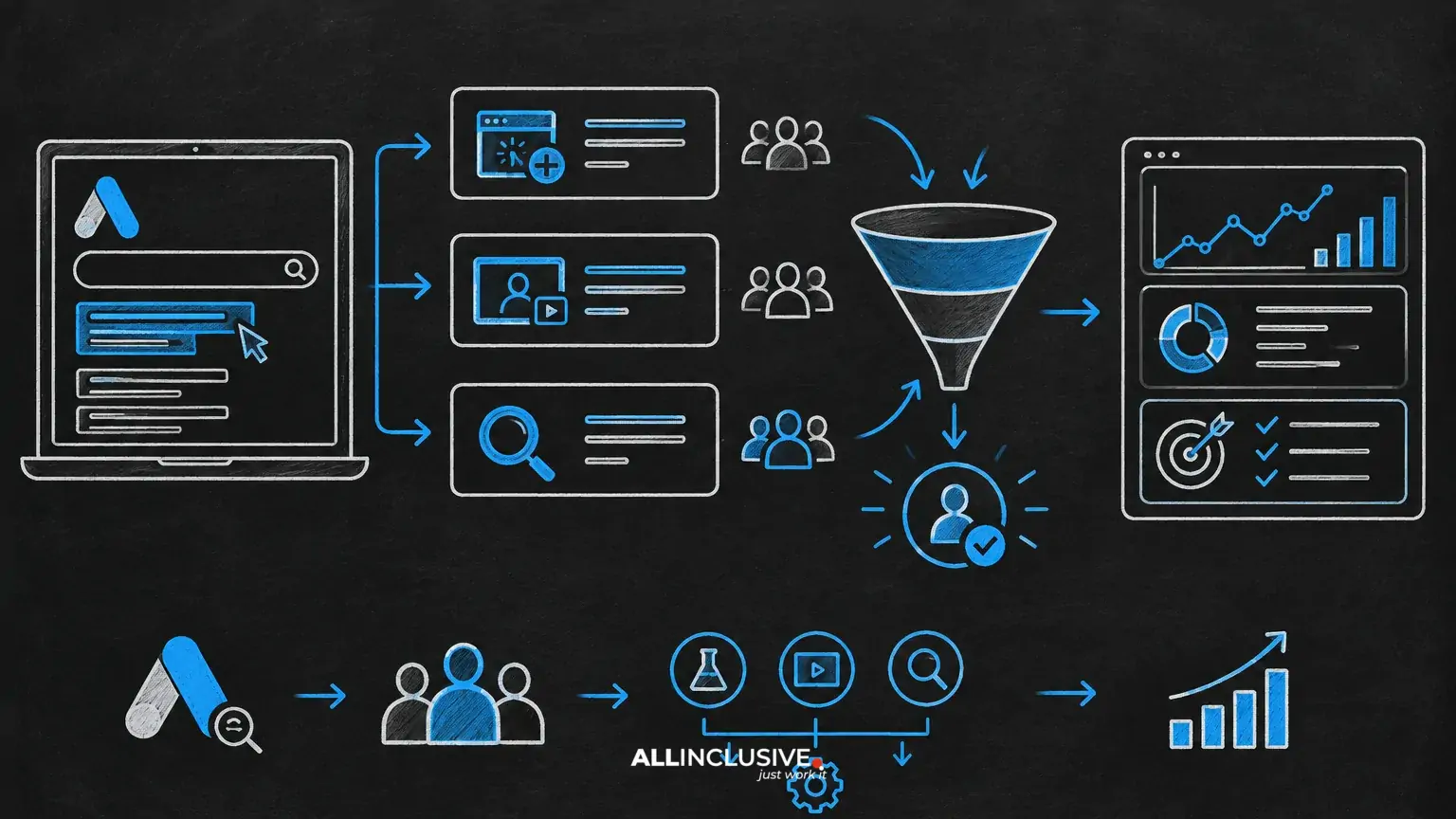
Consider reporting by campaign, query theme, landing page and conversion path across stages such as:
- Qualified click or engaged visit.
- Trial start or demo request.
- Activation or accepted lead.
- Qualified opportunity.
- Closed-won customer or paid expansion.
The appropriate optimization event depends on volume, data quality and sales-cycle length. If revenue data is sparse, use a reliable intermediate event while maintaining a separate view of downstream quality. Avoid changing the primary goal frequently in response to short-term fluctuations; first check tracking, lead routing, sales follow-up and qualification definitions.
For broader B2B measurement considerations, read our Google Ads for B2B guide. SaaS advertisers often share the same pipeline challenge, but they must also account for product activation and expansion behavior.
Use a practical budget and bidding framework
Budget allocation should follow commercial opportunity and evidence, not simply search volume. Protect coverage for the highest-intent themes first, then fund controlled testing for category, problem and competitive searches.
Review each segment using four questions:
- Is the traffic relevant to the product and target market?
- Does the landing page offer an appropriate next step?
- Are conversions activating or progressing?
- Can the business afford to acquire customers through this path?
Bid strategy is a platform implementation choice, while the strategic decision is what outcome the account should value. Do not use automation as a substitute for clean conversion definitions. Before relying on automated optimization, confirm that primary events are deduplicated, materially relevant and recorded consistently.
Consider separating campaigns when different audiences have meaningfully different economics. Enterprise terms, self-serve category terms and branded searches may deserve distinct budgets and reporting because their expected value and competitive context can differ.
Account for international and enterprise complexity
International SaaS campaigns require more than translating keywords. Search behavior, pricing expectations, sales coverage, compliance considerations and product availability may vary by market. Build market-specific landing-page and qualification logic where differences are material.
For enterprise audiences, consider how users search versus how buying groups evaluate. The initial click may come from a practitioner, while approval depends on security, procurement, finance or executive stakeholders. Ads and landing pages should support the first user without pretending that one conversion proves organizational readiness.
A launch checklist for Google Ads for SaaS
- Define the product’s self-serve, sales-assisted or hybrid buying motion.
- Map trial, activation, demo, qualification and revenue events.
- Group keywords by commercial intent and business relevance.
- Separate brand, non-brand, competitor and high-intent themes when reporting or budgets require it.
- Create distinct trial and demo landing experiences where the journeys differ.
- Write ads that match the query, product promise and next step.
- Install exclusions for irrelevant audiences and use cases.
- Validate analytics, CRM handoff and lead-status feedback before scaling.
- Review search terms and downstream quality on a defined schedule.
- Expand reach only after the account can distinguish useful demand from cheap activity.
Google Ads can be a strong acquisition channel for SaaS, but performance depends on the system around the campaigns. The winning structure is the one that makes intent visible, gives each prospect an appropriate evaluation path and connects media decisions to activation, pipeline and revenue. Start with high-intent demand, measure the next meaningful business event and expand carefully as the evidence improves.
For context on how search fits into a broader acquisition program, explore our paid search strategy resources and the Allinclusive paid media hub.