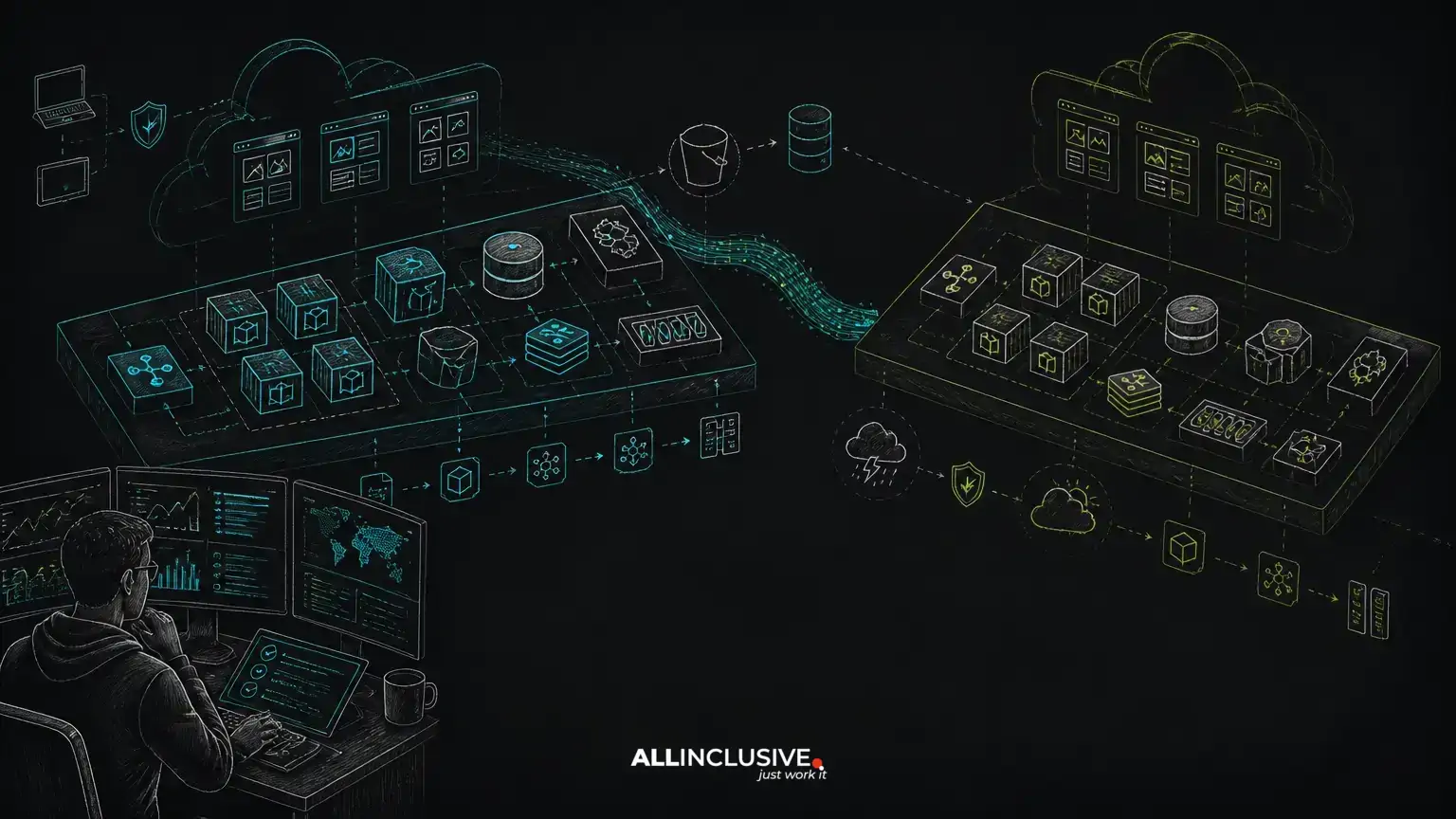
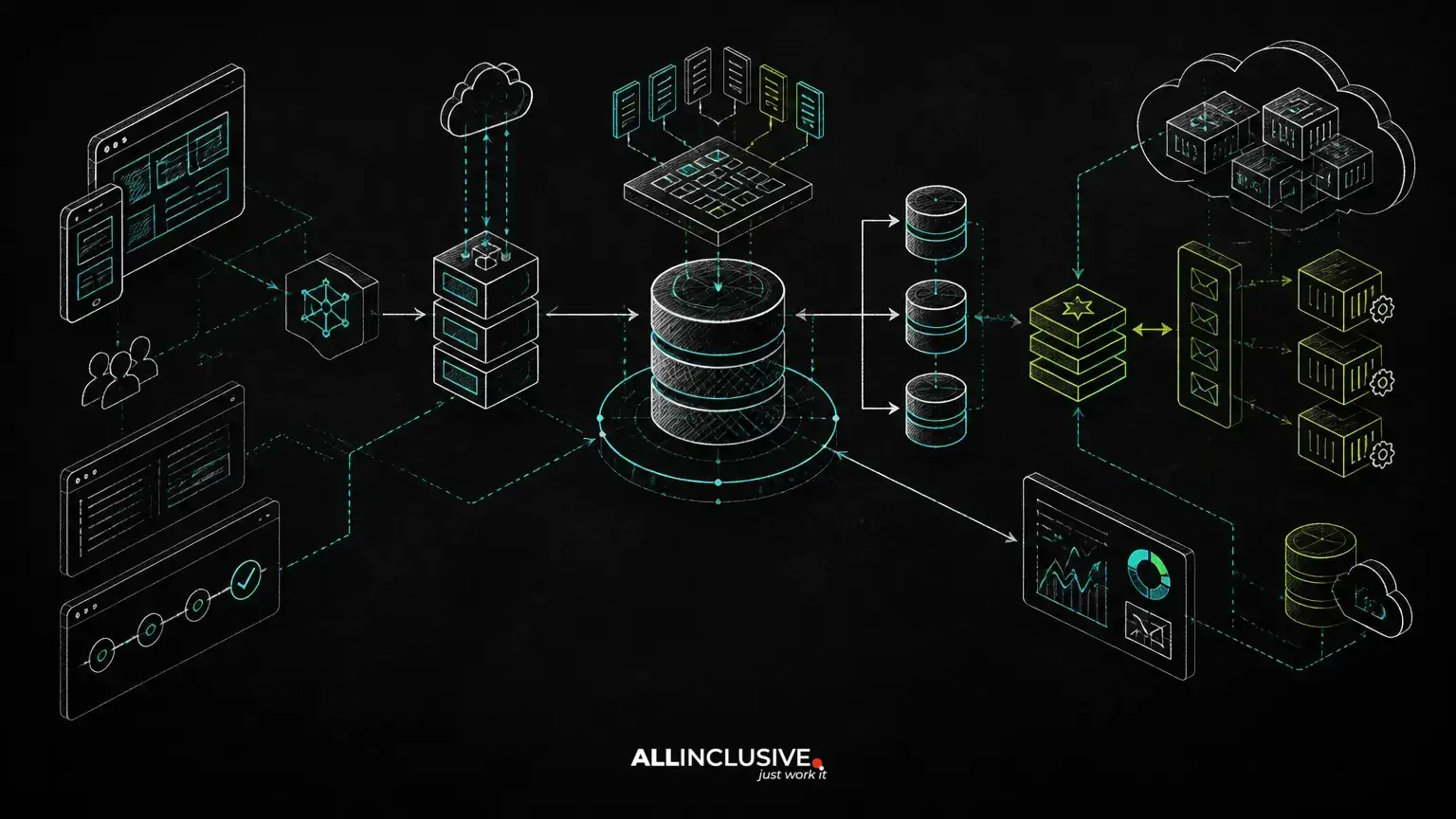
A dedicated product team for SaaS is usually the better fit when a product needs continuous discovery, delivery and technical stewardship rather than a sequence of disconnected project handoffs. The model gives a stable cross-functional group ongoing responsibility for a product area, allowing engineers, product specialists and designers to retain context as priorities change.
That does not make dedicated teams universally superior. Project outsourcing can work well for a clearly bounded deliverable, staff augmentation can solve a short-term capacity gap, and in-house hiring may be the right long-term investment for a strategically central capability. The useful question is whether your SaaS product needs an accountable team that can make and implement decisions over time.
This guide compares those models and explains how ownership, team composition, onboarding, communication and delivery cadence affect the outcome. It also considers how a Serbia-based product engineering partner with Laravel, PHP, Python and AI capabilities can support continuous product development without turning the relationship into opaque outsourcing.
Why SaaS products often outgrow project handoffs
A project handoff assumes that value can be defined, built and accepted within a relatively stable scope. SaaS products rarely remain that stable. Customer feedback changes priorities, integrations introduce operational constraints, usage reveals workflow problems, and compliance or security needs may alter the technical plan.
When each phase is assigned to a different vendor or team, the product owner repeatedly pays for context transfer. New contributors must reconstruct business rules, deployment practices, architectural decisions and unresolved risks. The visible cost is onboarding time; the less visible cost is slower judgment and a greater chance of inconsistent implementation.
Continuous delivery does not mean releasing unfinished work without control. It means maintaining a repeatable flow from validated product need to implementation, testing, deployment and observation. A stable team can improve that flow because it learns the product’s constraints instead of rediscovering them for every statement of work.
What continuous product ownership actually includes
A dedicated team should not be defined only by the number of developers assigned. Its value comes from continuity of responsibility across several activities:
- Product context: understanding users, business rules, priorities and the reason behind a feature.
- Technical ownership: maintaining architecture, code quality, testing strategy, observability and operational knowledge.
- Delivery responsibility: converting prioritized work into usable increments and surfacing risks early.
- Feedback integration: using support signals, analytics, stakeholder review and production behavior to refine future work.
- Knowledge continuity: keeping decisions and system understanding available beyond individual tickets or releases.
Ownership does not mean the external team makes every business decision. The SaaS company should retain authority over product strategy, commercial priorities and risk tolerance. The team should have enough autonomy to propose technical options, clarify scope and execute agreed priorities without waiting for approval on every implementation detail.
When a dedicated product team for SaaS is a strong fit
The model is particularly useful when several of the following conditions apply:
- The product has an active roadmap rather than one final delivery milestone.
- Requirements are expected to evolve as customers use new functionality.
- The system needs ongoing maintenance, modernization or integration work.
- Technical decisions require knowledge of existing code and operational constraints.
- The company needs senior capability faster than it can hire and assemble internally.
- Product, engineering and design decisions must stay closely connected.
For example, a SaaS platform built with Laravel and PHP may need steady feature delivery while gradually improving domain boundaries, test coverage and queue reliability. A Python service may support data processing or automation alongside the main application. An AI feature may begin as a prototype but require later work on evaluation, permissions, monitoring and human review. These are not isolated projects if they share product workflows and operational ownership.
A dedicated team is less suitable when the scope is genuinely fixed, acceptance criteria are stable and the buyer has little need for post-launch continuity. In that case, a defined project engagement may create clearer commercial boundaries.
How the model compares with other delivery options
Dedicated team versus project outsourcing
Project outsourcing is organized around a defined outcome, timeline or scope. It can simplify procurement and make a discrete deliverable easier to evaluate. The trade-off is that the team may optimize for contractual completion rather than long-term product health unless maintenance and ownership are explicitly included.
A dedicated team is organized around sustained product responsibility. It is better suited to changing priorities, iterative discovery and accumulated technical context. It requires more active product management from the client because the work queue and priorities continue to evolve.
Dedicated team versus staff augmentation
Staff augmentation adds individuals to an existing client-led team. This can be effective when architecture, product management, code review and delivery processes are already in place. It becomes less effective when the client lacks the internal capacity to coordinate the added contributors.
A dedicated product team brings a broader operating unit, potentially including engineering, quality assurance, product management or design. The buyer still needs an accountable product counterpart, but does not have to build every delivery function internally.
Dedicated team versus in-house hiring
In-house hiring offers direct employment, organizational continuity and deep internal alignment. It also requires recruiting, management capacity, compensation planning and time to build a complete team. A dedicated external team can provide access to established collaboration patterns and senior specialists while the company develops its longer-term hiring strategy.
The decision should account for more than salary comparison. Consider time to staff the team, management overhead, knowledge retention, geographic coverage, specialist availability and the strategic importance of owning the capability internally. A more detailed comparison appears in Dedicated Development Team vs In-House Hiring.
Team composition should follow product risk, not a template
A small SaaS product may need a product owner, one or more full-stack engineers and access to quality assurance and design expertise. A more complex platform may require separate frontend and backend strengths, dedicated QA automation, DevOps support, data expertise or an AI engineer.
The key is not to fill every possible role from day one. It is to cover the decisions that create the greatest product and operational risk. Ask:
- Who converts business priorities into testable outcomes?
- Who owns architecture and technical trade-offs?
- Who validates workflows from the user’s perspective?
- Who can investigate production incidents and deployment risks?
- Which specialist skills are needed continuously, and which can be shared or introduced at specific stages?
Team seniority matters as much as headcount. Senior contributors should be able to reduce ambiguity, identify dependencies and explain trade-offs—not simply complete tickets. For a deeper role-by-role discussion, see Dedicated Product Team Composition.
Onboarding is a product-risk exercise
Onboarding should establish enough shared understanding for the team to make safe decisions. A useful process typically covers:
- Business orientation: users, revenue model, key workflows, support themes and near-term objectives.
- System orientation: repositories, environments, deployment path, integrations, data model and known constraints.
- Delivery orientation: backlog structure, definition of ready, definition of done, review practices and release controls.
- Risk orientation: security-sensitive areas, fragile dependencies, technical debt, incident history and regulatory considerations.
- Working agreement: meeting cadence, decision rights, escalation paths, documentation standards and communication channels.
Do not treat documentation as a substitute for working sessions. Architecture diagrams, runbooks and decision records are useful, but the team also needs to trace a real change through the codebase, test suite and deployment process. A controlled first increment often reveals more than a long presentation.
For practical onboarding considerations, see Onboarding an External Development Team Without Losing a Month.
Communication should expose decisions, not create meeting volume
Distributed teams need deliberate communication, but more meetings do not automatically create more alignment. A workable operating rhythm might include:
- A product and engineering planning session tied to the next meaningful increment.
- Short team coordination for blockers and dependencies.
- Regular stakeholder reviews using working software rather than status language alone.
- Written decision records for architectural, scope and risk choices.
- A predictable escalation route for production or customer-impacting issues.
Transparency is strongest when stakeholders can see what was planned, what changed, why it changed and what remains uncertain. Useful reporting connects delivery activity to outcomes such as a completed user workflow, reduced operational risk or improved maintainability. It should not be limited to counting tickets.
Design the delivery cadence around learning
A sustainable cadence balances speed with control. Each cycle should be small enough to review and large enough to produce a meaningful product increment. The exact duration matters less than whether the team can repeatedly:
- Clarify the problem and acceptance conditions.
- Identify technical dependencies and operational risks.
- Build and test the change.
- Demonstrate the result to relevant stakeholders.
- Release, observe and incorporate feedback.
Continuous delivery can include staged releases, feature flags, automated tests, manual approval points or limited user exposure. The appropriate controls depend on the product’s risk profile. A billing change, an internal workflow adjustment and an AI-assisted recommendation feature should not necessarily follow the same release path.
Common failure modes in dedicated team engagements
Calling a group dedicated without granting ownership
If the team is constantly reassigned, receives work from multiple competing managers or has no stable product direction, it is functioning more like pooled staff augmentation. Define who sets priorities and how conflicts are resolved.
Measuring activity instead of product progress
Ticket counts and hours can obscure blocked work, rework and unresolved quality issues. Pair delivery measures with product and technical signals appropriate to the context, such as completed outcomes, escaped defects, deployment reliability or aging maintenance work.
Leaving architecture implicit
Fast feature work can accumulate coupling, duplicated logic and unclear boundaries. Reserve capacity for refactoring, tests, observability and dependency upgrades. A dedicated team should make technical debt visible rather than hiding it inside estimates.
Expecting the partner to own strategy
An external team can challenge assumptions and contribute product insight, but the client remains responsible for market priorities, customer commitments and business risk. Without an engaged product owner, the team may deliver efficiently in the wrong direction.
Questions to ask before selecting the model
- Will the product roadmap remain active after the first release?
- How much domain and codebase context must contributors retain?
- Which decisions should remain with the client, and which can the team make independently?
- Is there an internal product owner available every week?
- What quality, security and release controls are required?
- How will technical debt and maintenance compete with new feature work?
- What happens if priorities change substantially?
- How will knowledge be documented and continuity preserved if a team member changes?
A partner should be able to explain its staffing model, seniority, communication practices, replacement process and approach to technical ownership in concrete terms. For teams evaluating a broader custom software engagement, Allinclusive web development services provide a starting point for discussing product engineering needs across application development and ongoing delivery.
Choosing a partner for long-term SaaS delivery
Location is only one selection criterion, but a Serbia-based product engineering model can offer access to experienced technical talent within a European delivery context and compatible working hours for many international teams. The more important questions concern how the team works: whether it communicates clearly, documents decisions, challenges weak assumptions and remains accountable for maintainable software.
Look for demonstrated capability in the technologies your product actually uses. Laravel and PHP may suit a mature web application; Python may support services, automation or data workflows; AI capability may be relevant when intelligent features need production-grade evaluation and operational controls. Technology expertise should serve the product architecture, not dictate it.
Before committing, agree on the initial product area, decision rights, communication cadence, success criteria and transition expectations. You can discuss those requirements with Allinclusive before defining the team structure.
A dedicated product team for SaaS is most valuable when continuity changes the quality of decisions. If your product requires an evolving roadmap, shared technical context and regular learning from real users, continuous delivery may outperform a chain of project handoffs. If the scope is fixed or the internal team already owns the operating model, another engagement structure may be more efficient. The right choice is the one that matches the product’s uncertainty, ownership needs and risk profile.