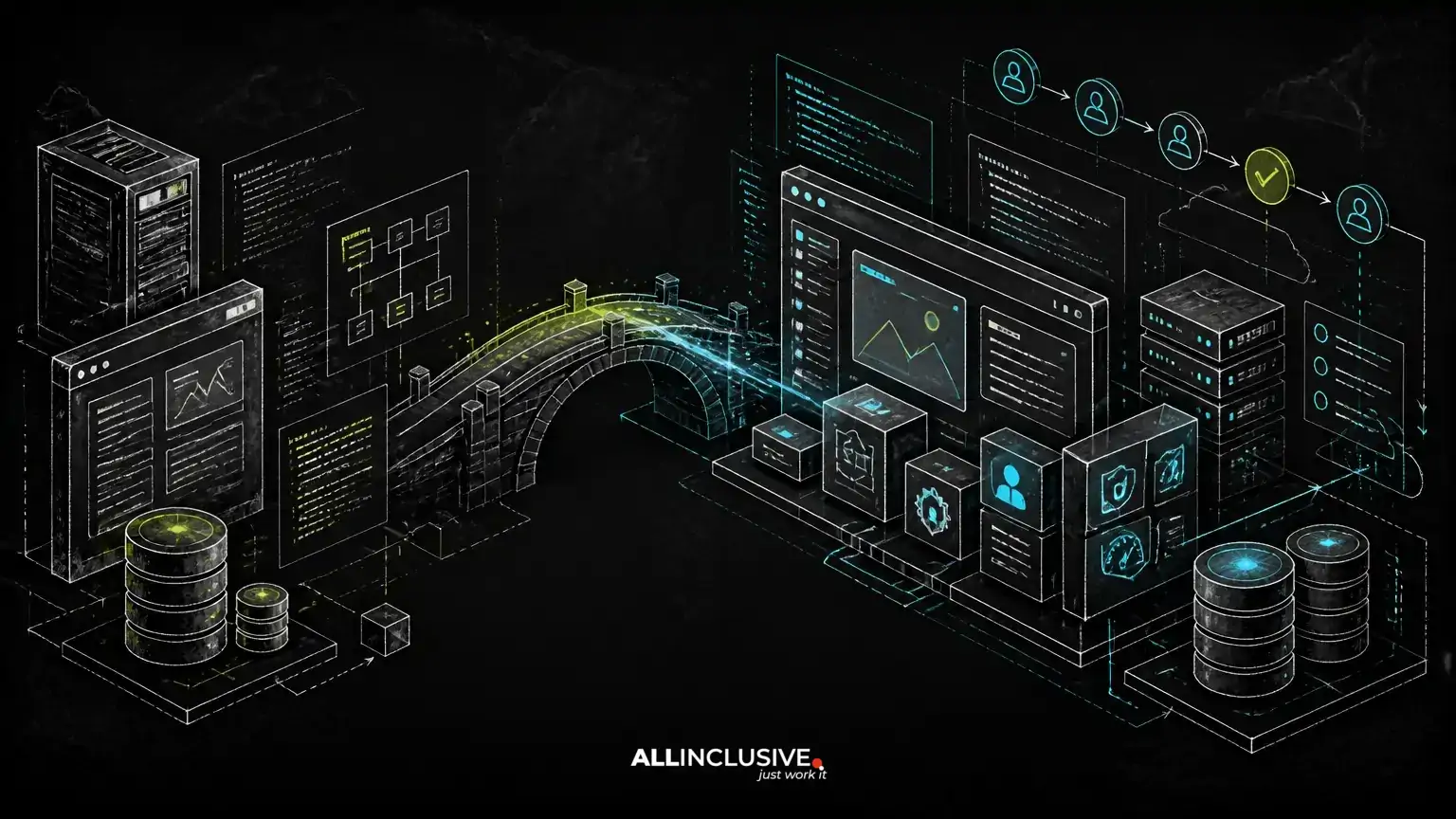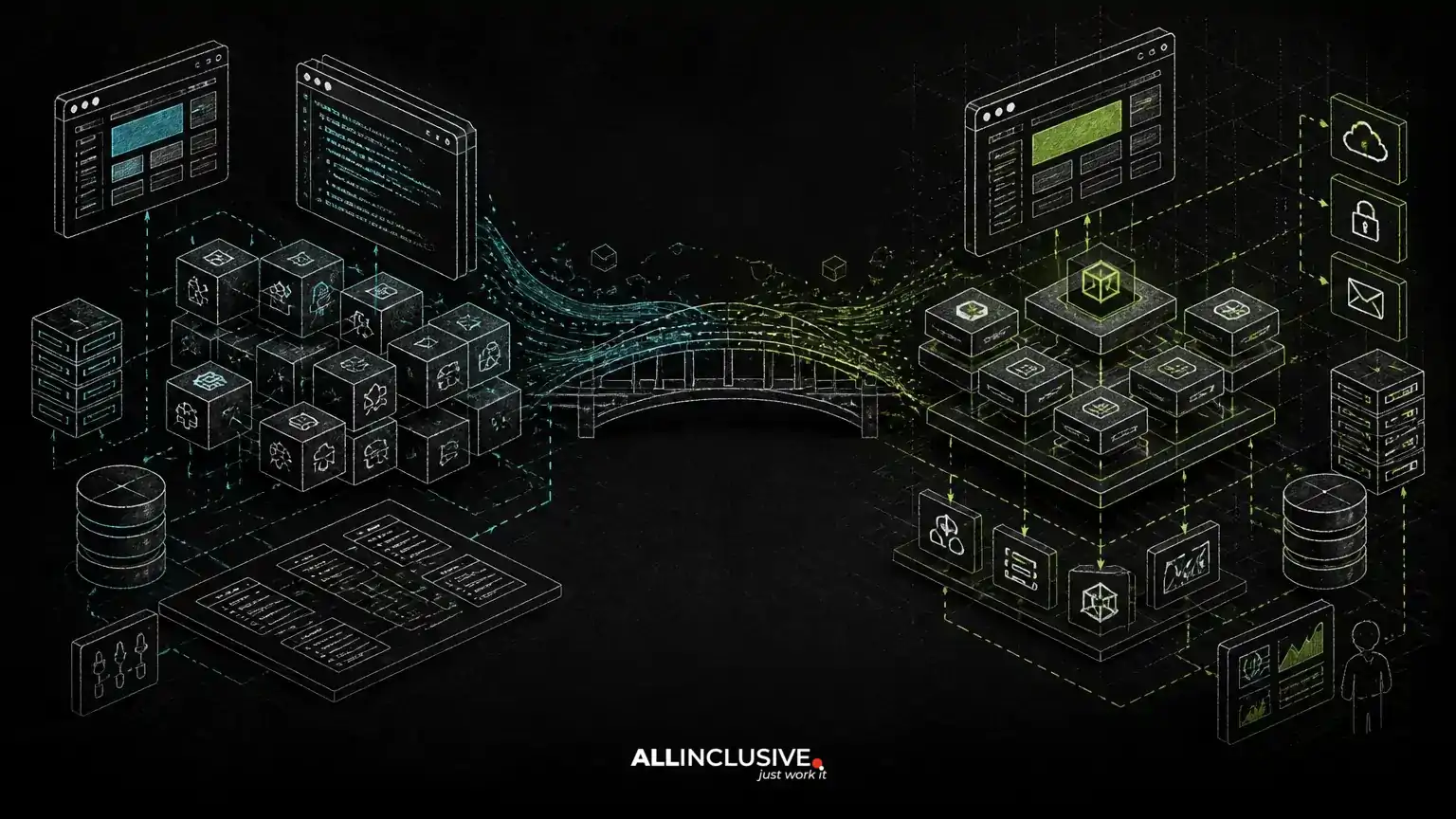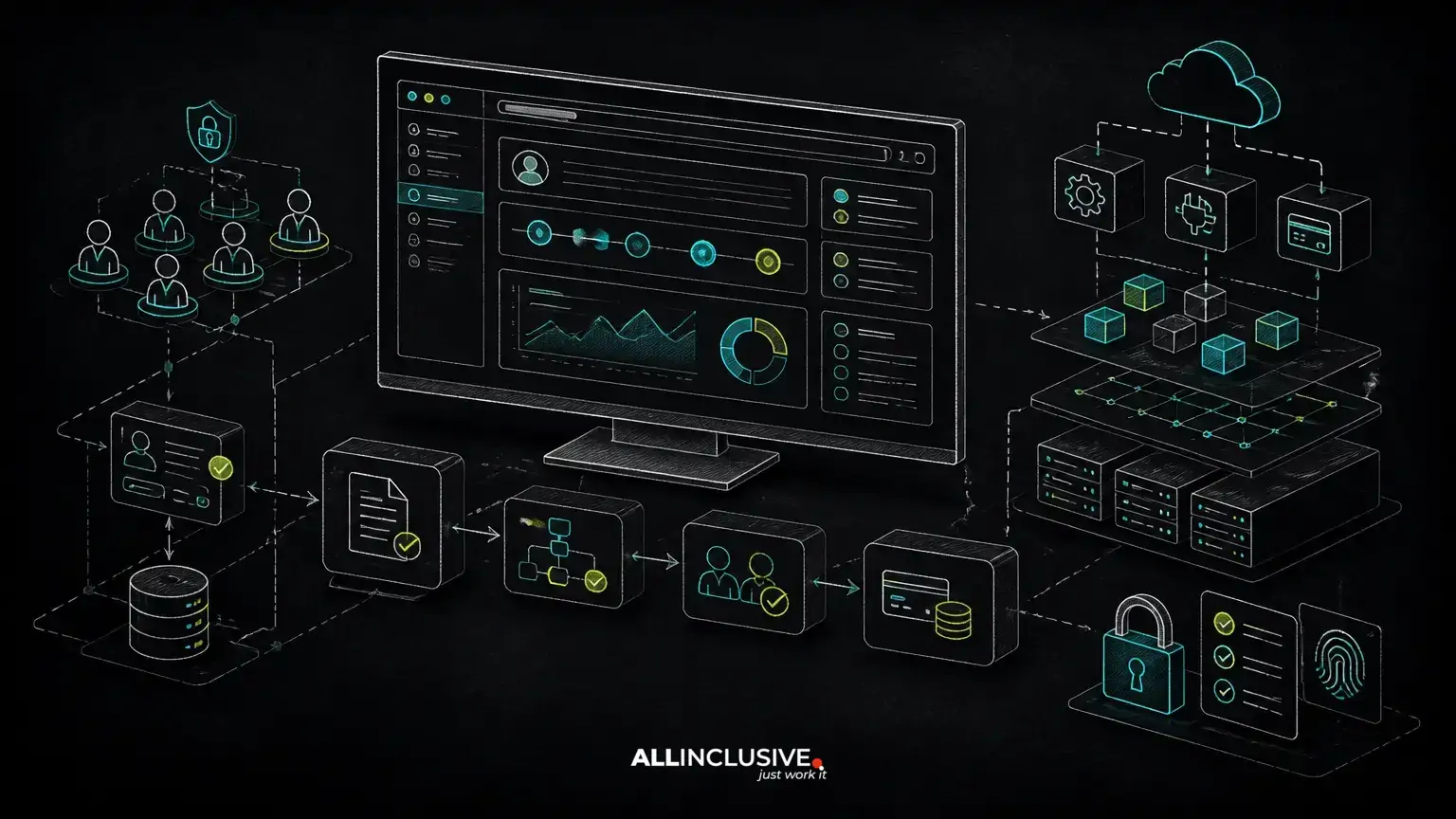
The right dedicated product team composition is not a fixed list of job titles. It is a set of complementary capabilities with clear ownership across product decisions, user experience, engineering, quality and operations.
A small product may need a product manager, designer and several engineers. A regulated platform, AI-enabled workflow or high-volume SaaS product may also require dedicated quality, infrastructure, data or security expertise. The goal is not to maximize headcount. It is to cover the decisions and risks that determine whether the product can be delivered, operated and improved over time. A related decision for dedicated product team composition is covered in dedicated product squad size.
This model differs from project outsourcing, where a vendor is often organized around a defined scope and handoff. It also differs from staff augmentation, where individual specialists join an existing structure but product ownership remains elsewhere. A dedicated team is intended to preserve context and work continuously toward product outcomes. The dedicated product team model clarifies how continuous ownership, role structure, and accountability distinguish this arrangement from other delivery models.
Allinclusive supports this kind of cross-functional product engineering from Serbia, with capabilities spanning custom software, Laravel and PHP applications, Python services and selected AI use cases. The appropriate composition depends on your roadmap, architecture and internal ownership—not on a standard staffing template.
Start with ownership, not job titles
Before deciding how many developers or which specialists to hire, identify the ownership areas the team must cover:
- Product direction: which users and business outcomes take priority?
- Delivery decisions: who turns priorities into technical and design work?
- System integrity: who owns architecture, maintainability and technical risk?
- User experience: who validates workflows, interaction design and accessibility?
- Quality: who establishes confidence before changes reach users?
- Operations: who monitors releases, incidents, environments and recovery?
One person can cover several areas in an early-stage product, but the responsibilities should still be explicit. Ambiguous ownership creates delays even when the team appears fully staffed. A developer may be waiting for product clarification, a designer may be working from assumptions, or an operations issue may remain unresolved because everyone believes someone else owns it.
Core roles in a dedicated product team
Product manager or product owner
This role maintains the connection between user needs, business priorities and delivery decisions. It should own the product backlog, clarify acceptance criteria, sequence work and make trade-offs visible.
The product role does not need to write every requirement as a detailed specification. It does need to provide enough context for the team to make good decisions without repeatedly reopening the same questions. In a dedicated external team, a client-side product owner is often especially valuable because that person can supply business context and approve priorities quickly.
Tech lead or solution architect
The tech lead protects the coherence of the system as features accumulate. Responsibilities may include architecture decisions, technical discovery, dependency management, code review standards and risk escalation.
This role is not necessarily a full-time architect. In a smaller team, a senior engineer may lead architecture while contributing code. The important distinction is that architectural ownership is assigned rather than left to emerge through isolated implementation decisions.
Product designer
A designer helps the team understand the user workflow before engineering effort is committed. Depending on the product, this can include discovery, information architecture, interaction design, visual design, prototyping and design-system maintenance.
Design involvement is particularly important for custom-made software with complex roles, permissions or operational workflows. A technically correct feature can still create support costs if users cannot understand it or complete their work efficiently.
Software engineers
Engineers implement product behavior, integrate external systems and maintain the codebase. The required mix depends on architecture. A Laravel or PHP product may need strong application and API engineering, while a Python-based data or AI service may require different expertise around pipelines, evaluation and deployment.
Senior engineers should be involved in discovery and estimation, not only assigned after requirements are finalized. Their early input can expose integration constraints, migration risks or simpler implementation paths before those issues become expensive.
Quality engineer
Quality should be treated as a team responsibility, with a quality engineer adding structure where the product’s risk justifies it. This may include test strategy, exploratory testing, regression coverage, integration testing and release readiness.
For a small product, engineers may own automated tests and a shared checklist may be sufficient. As workflows, integrations and release frequency grow, dedicated quality ownership helps prevent testing from becoming a final-stage bottleneck.
DevOps or platform specialist
Operational ownership becomes more important when the product requires multiple environments, frequent releases, background jobs, observability, automated deployments or meaningful availability expectations.
A platform specialist can be full-time, part-time or shared, depending on operational complexity. The key is to define who manages deployment workflows, environment configuration, monitoring, backups, access and incident response. Leaving these responsibilities implicit increases operational risk.
When specialist roles should be added
Additional roles should be introduced because the product has a specific risk or capability gap, not because a larger team appears more professional.
- Data or analytics engineer: useful when product decisions depend on reliable event collection, reporting or data transformations.
- AI or machine-learning engineer: appropriate when the product includes model integration, retrieval, evaluation, data preparation or production monitoring.
- Security specialist: valuable for sensitive data, complex access models, compliance obligations or high-impact threat scenarios.
- Technical writer or documentation specialist: useful for developer platforms, enterprise administration and products with substantial operational documentation.
- Business analyst: helpful when domain rules, integrations or stakeholder groups are numerous and difficult to translate directly into backlog items.
These responsibilities can be shared or brought in during specific phases. For example, an AI feature may need an engineer to validate production behavior and evaluation criteria even if the core product team remains application-focused. A PHP or Laravel team may need infrastructure expertise during a deployment redesign without requiring a permanent platform role.
How seniority changes the team’s effectiveness
Seniority is not simply a pricing variable. It affects how much ambiguity the team can absorb, how quickly risks are identified and how much direction is required from the client.
A senior-led team can often make stronger architectural and delivery decisions with less supervision. Mid-level engineers can execute substantial work while benefiting from clear standards and review. Junior engineers may contribute effectively when the product has stable patterns, accessible mentorship and well-defined tasks.
A common failure mode is to assemble a team that has enough implementation capacity but insufficient decision-making experience. The result may be rapid feature output followed by increasing rework, inconsistent architecture or a growing maintenance burden. Another failure mode is overloading one senior engineer with architecture, mentoring, delivery coordination and production support until that person becomes the system’s only point of continuity.
Ask how decisions will be made when requirements are incomplete, an integration behaves unexpectedly or a release introduces a regression. Those answers reveal more about effective seniority than a list of years of experience.
Choose composition according to the product stage
Discovery and validation
Early work usually benefits from a product owner, designer and senior technical lead, with engineering support sized to the questions being investigated. The objective is to validate workflows, architecture assumptions and a realistic first release—not to build every planned capability.
Initial product build
A balanced build team often combines product ownership, design, senior engineering leadership and enough implementation capacity to maintain a predictable delivery cadence. Quality and operations should be included in the working process even if they are not yet full-time roles.
Growth and continuous delivery
As the product grows, separate ownership may become necessary for quality, platform operations, analytics or domain areas. Teams may also split by product capability, but the split should preserve end-to-end accountability rather than create a queue of handoffs.
Modernization or platform transition
Legacy work often needs different composition from greenfield development. The team may require engineers who understand the existing PHP or Laravel codebase, someone to map operational dependencies, and product leadership capable of sequencing stabilization, refactoring, migration and new functionality. Rebuilding everything is not automatically safer than improving the current system incrementally.
Communication and onboarding are part of team design
An external dedicated team cannot be effective if it spends its first weeks reconstructing undocumented context. Onboarding should cover the product strategy, users, domain rules, existing architecture, deployment process, environments, known defects, decision history and access requirements.
Communication should distinguish between decision-making and status reporting. A useful operating model commonly includes regular backlog refinement, planning, demonstrations, retrospectives and technical reviews, with written decisions for choices that affect architecture or scope.
Time-zone overlap matters, but it is not a substitute for clear ownership. A Serbia-based team can work effectively with international product organizations when communication windows, escalation paths and expected response times are agreed in advance. The objective is continuity of context, not constant meetings.
Dedicated team trade-offs versus other models
Project outsourcing can be suitable when the scope is bounded, acceptance criteria are stable and the client expects a defined delivery followed by handoff. It becomes less suitable when priorities will change as users provide feedback.
Staff augmentation gives an organization flexible access to individual skills. It can work well when the client already has product management, architecture and delivery processes. It places more coordination responsibility on the internal team.
In-house hiring offers direct employment relationships and deep internal integration, but recruitment, onboarding and retention take time. It may be the right long-term choice when product knowledge is a core organizational capability and the company can sustain the required team.
A dedicated product team is often useful when the company needs ongoing product ownership and engineering capacity without immediately building every role internally. The trade-off is that the client still needs an engaged product counterpart and must invest in shared context, governance and communication.
For a broader comparison of operating models, see this guide to dedicated development teams versus in-house hiring. The right choice depends on how much product direction, technical leadership and operational responsibility your organization can provide.
A composition checklist for product leaders
- List the product decisions and operational responsibilities that must be covered.
- Identify which responsibilities can be combined safely at the current stage.
- Assign clear ownership for product, architecture, design, quality and operations.
- Match seniority to ambiguity, technical risk and the amount of client-side guidance available.
- Define how discovery, planning, review, release and incident communication will work.
- Document the systems, domain rules and decisions required for onboarding.
- Review the composition as the product moves from validation to growth or modernization.
For guidance on structuring an external engineering model, explore dedicated product teams or review the wider software development capability overview. If you already understand the product risks and need to discuss a possible team shape, you can contact Allinclusive.