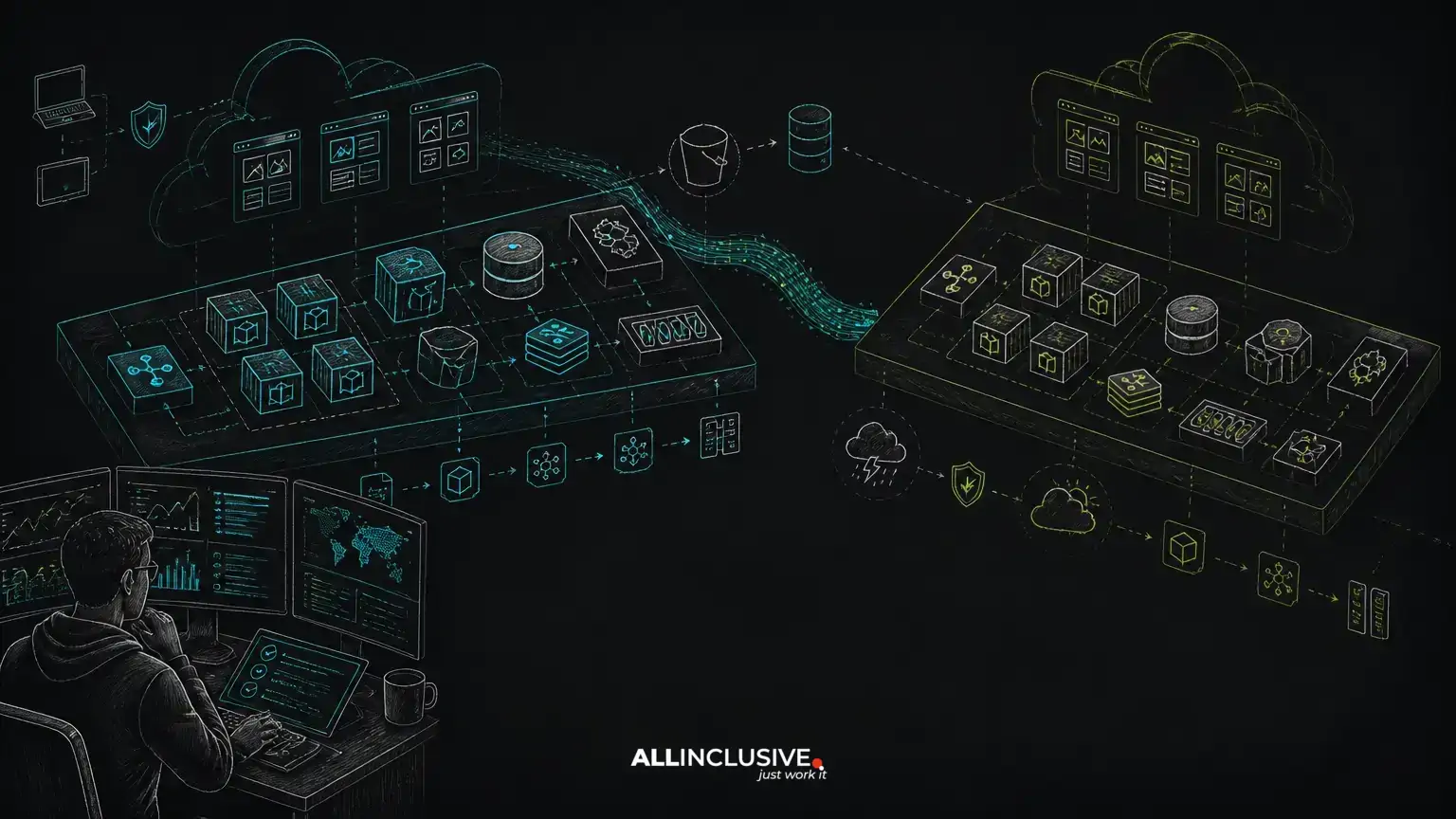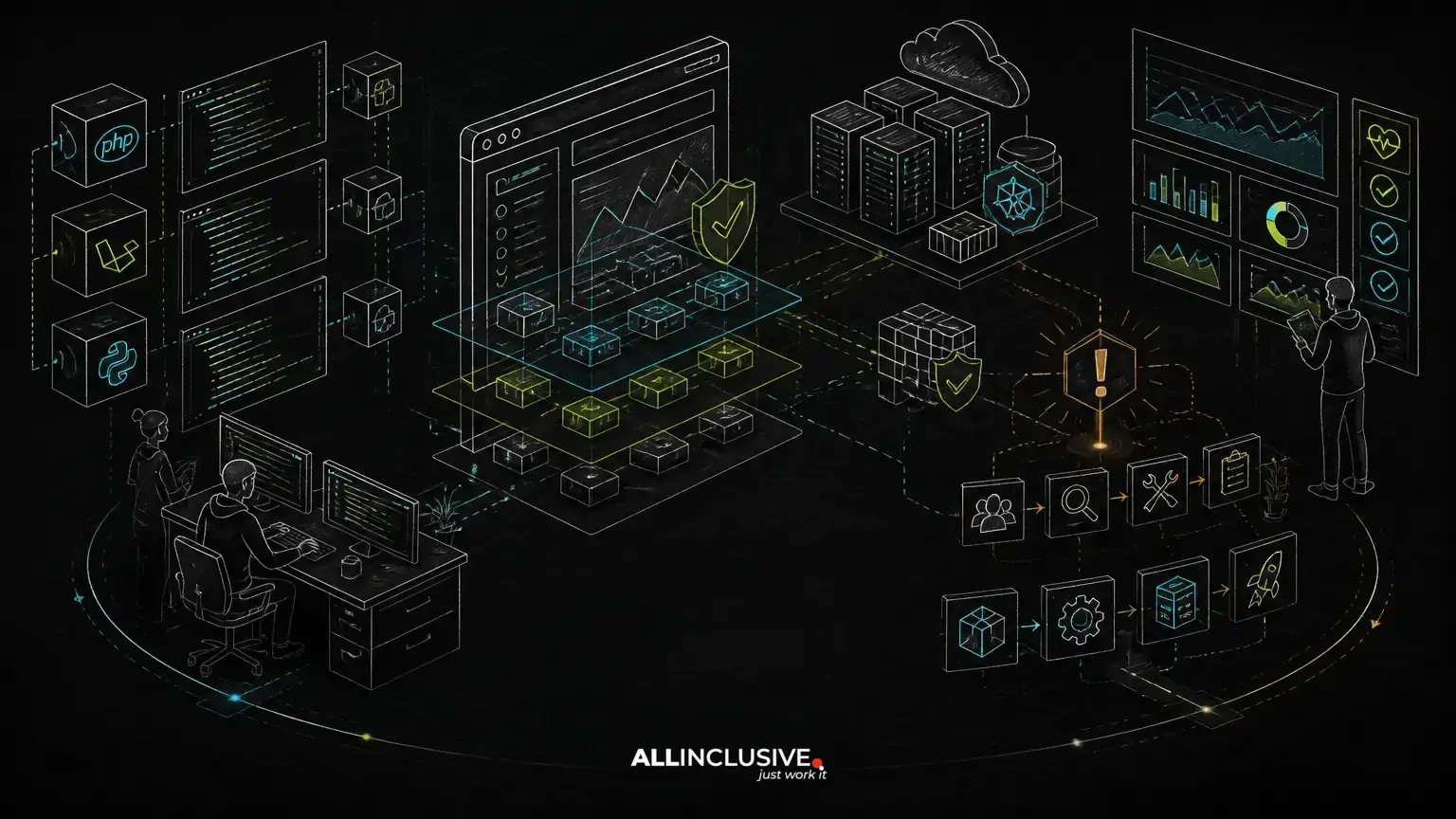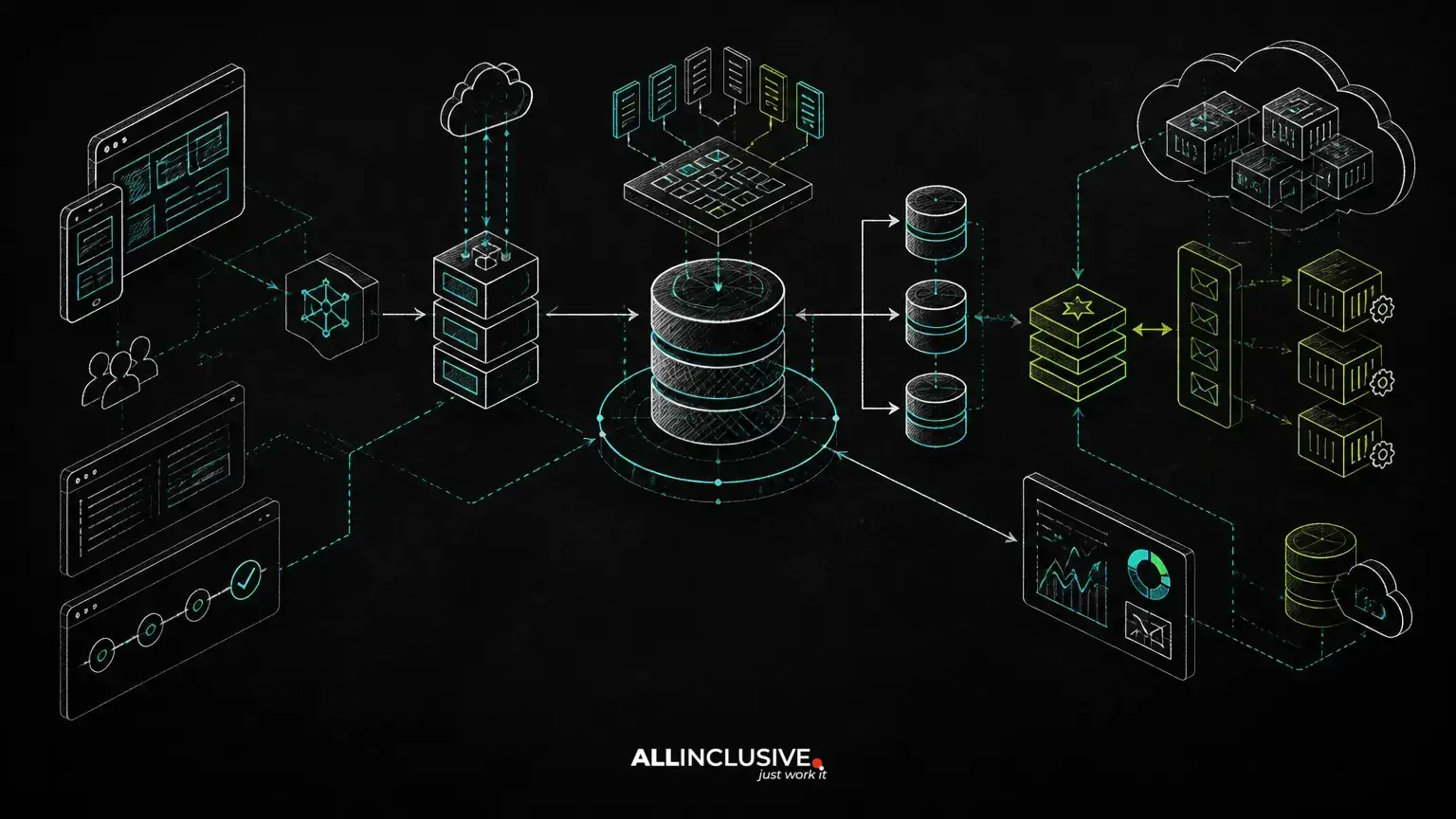
Onboarding an external development team does not need to consume an entire delivery cycle. The fastest transitions are designed as operational handoffs: the team receives the context, access, decision rights and first bounded outcome required to contribute safely.
The goal is not to explain every historical decision before work begins. It is to establish enough shared understanding to make the next product decision, change the codebase, validate the result and learn where deeper discovery is necessary.
This matters most when the external team is joining an active product rather than starting from a blank repository. Existing architecture, deployment processes, customer commitments and undocumented business rules all create delivery risk. A structured onboarding plan reduces that risk without pretending that every unknown can be eliminated in advance.
Start with ownership, not introductions
The first onboarding question should be: who owns which decisions? A team can have strong engineers and still move slowly if product, technical and operational responsibilities are ambiguous.
Before kickoff, document the following:
- Product ownership: who prioritizes the roadmap, clarifies user needs and accepts completed work.
- Technical ownership: who approves architectural changes, manages technical debt decisions and maintains engineering standards.
- Operational ownership: who controls environments, releases, monitoring, incident response and production access.
- Communication ownership: who consolidates questions and ensures decisions are recorded.
- Approval boundaries: which decisions the external team can make independently and which require client approval.
These boundaries should be explicit even when the external team is expected to operate as a product partner. A dedicated team can own delivery of a workstream, but that does not automatically transfer business accountability or production authority.
This operating model is different from handing over a fixed specification to a project vendor. It is also different from adding individual specialists to an existing department. A dedicated product team needs a shared delivery mandate, not only a list of tickets. The distinctions are explored further in dedicated team vs project outsourcing and dedicated team vs staff augmentation.
Prepare an access and context pack before kickoff
Many onboarding delays have little to do with engineering complexity. The team cannot inspect the application, reproduce a bug, deploy to a safe environment or understand the roadmap because the required access and documentation arrive one request at a time.
Prepare a controlled access pack that covers:
- Source-code repositories and branching conventions
- Issue tracker, product documentation and design files
- Development, staging and other non-production environments
- Dependency, package and infrastructure configuration
- Logging, monitoring and error-tracking tools
- Deployment pipelines and release runbooks
- Database schemas, seed data and data-handling constraints
- Authentication, authorization and role models
- Support history, known defects and current incidents
- Product analytics and the definitions used for important events
Access should follow least-privilege principles. An external team may need broad visibility into application behavior without receiving unrestricted production credentials. Separate read, development, staging and production permissions, use organization-approved secret management and define how access is revoked when responsibilities change.
The context pack should also state what is intentionally unknown. For example, if the team has not yet confirmed how a legacy integration is used by customers, label that as an investigation item rather than allowing an assumption to become an undocumented requirement.
Give the team a map of the product and codebase
New engineers need two maps: a product map and a technical map. The product map explains who uses the system, what workflows matter and where business risk is concentrated. The technical map explains how those workflows are implemented and operated.
A useful product map includes:
- Primary user groups and their highest-value workflows
- Revenue-generating, compliance-sensitive or operationally critical paths
- Current roadmap priorities and deadlines with real business consequences
- Known customer pain points and support themes
- Decisions that are still open rather than already settled
A useful technical map includes:
- Application boundaries and major modules
- Data ownership, important entities and integration points
- Background jobs, queues, scheduled tasks and external services
- Build, test, deployment and rollback paths
- Known hotspots such as fragile modules, slow queries or unclear ownership
Keep this material concise. A diagram showing the request path, data stores and external dependencies is often more useful than a long architectural essay. The team should be able to use the map during implementation and update it when its understanding improves.
Use a bounded first delivery instead of a training exercise
The first task should be meaningful but contained. Avoid assigning either a trivial setup ticket that reveals nothing about the product or a strategically critical feature that requires months of discovery.
Good first deliveries usually have these properties:
- A clear user or operational outcome
- A limited number of system boundaries
- Existing acceptance criteria that can be refined with the team
- A safe test and staging path
- Enough architectural exposure to reveal how the product really works
For example, a team joining a Laravel application might begin with a small workflow improvement that crosses routing, domain logic, persistence, authorization and automated tests. The objective is not to prove that Laravel is suitable; it is to expose conventions, review standards and deployment behavior through a real change.
In a Python service, a bounded first delivery might involve an API or background-processing path with clear input, output and failure handling. In an AI-enabled product, the first slice should also make the boundary between prototype behavior and production requirements visible. That includes evaluation criteria, data handling, fallback behavior, observability and human review where appropriate.
Define completion beyond “code merged.” A useful first-delivery checklist may include tests, documentation of changed assumptions, staging validation, release notes, monitoring considerations and a short review of what the team learned.
Make the communication system explicit
External teams lose time when communication is frequent but unstructured. Establish a small set of recurring forums, each with a defined purpose.
- Roadmap or product review: confirm priorities, user outcomes and scope decisions.
- Delivery planning: select work, identify dependencies and expose risk.
- Engineering review: discuss architecture, technical debt and implementation trade-offs.
- Async daily updates: report progress, decisions needed and blockers without turning status into theater.
- Retrospective: improve the working model based on observed friction.
Use one source of truth for decisions. A message thread may be useful for discussion, but the resulting decision should be recorded with its rationale, owner and date. This prevents the external team from repeatedly asking the same question and protects the product from relying on individual memory.
Time-zone differences require additional discipline. Define response expectations by urgency, schedule overlap for decisions that genuinely need live discussion and avoid using meetings to compensate for missing documentation. A Serbia-based product engineering team can work effectively with international clients when ownership, overlap and escalation rules are agreed before delivery pressure increases.
Inspect delivery practices before scaling the team
Do not add more people to an onboarding problem. First determine whether the initial team can make a safe change from discovery through release.
Review the following after the first delivery:
- How quickly the team identified the correct code path
- Whether acceptance criteria exposed business rules or left major ambiguity
- How code review handled maintainability and security concerns
- Whether tests covered behavior rather than only implementation details
- How deployment, rollback and monitoring were addressed
- Which questions required client input and whether those decisions were captured
- What work remained blocked by access, environment or ownership gaps
This review is more informative than measuring activity alone. A high ticket count can conceal rework, weak validation or an accumulation of decisions waiting for approval.
Once the operating model works, the team can expand into a broader product stream. Depending on the product, that may include PHP and Laravel application work, Python services, data workflows or carefully governed AI capabilities. The technology choice should follow the product’s architecture and operational constraints rather than the team’s desire to demonstrate a particular tool.
Plan continuity from the first week
Continuity is one of the principal benefits of a dedicated product team, but it does not happen automatically. Capture knowledge in the normal flow of delivery instead of relying on a final handover document that may never reflect the current system.
Useful continuity practices include:
- Pairing or structured review for unfamiliar domains
- Short architecture decision records for consequential changes
- Runbooks for release, rollback, support and common operational failures
- Tests that express important business behavior
- Rotating ownership of critical components so knowledge does not sit with one person
- Regular review of dependencies, technical debt and unsupported assumptions
Continuity also requires a plan for personnel changes. Ask how the team handles vacation, illness, role transitions and changes in product priority. A delivery model that depends on one irreplaceable engineer has hidden operational risk, regardless of whether that engineer is internal or external.
Use a focused onboarding checklist
Before the team begins its first production-bound work, confirm:
- The product goal and first delivery outcome are written down.
- Product, technical and operational owners are named.
- Repositories, environments, documentation and observability access are ready.
- Security, data-handling and production-access constraints are understood.
- The architecture and highest-risk workflows have been mapped.
- Open questions are assigned to owners with target decision dates.
- The communication cadence and decision log are established.
- The first delivery has acceptance criteria and a safe validation path.
- Release, rollback and support responsibilities are clear.
- The team has a mechanism for capturing knowledge and improving the process.
If several answers are “not yet,” do not delay every engineering activity. Separate blockers from discovery work. The team can often begin repository exploration, test improvement, documentation or a low-risk vertical slice while higher-risk access and product decisions are resolved.
Choose an onboarding model that matches the engagement
Onboarding should reflect the reason you engaged an external team. A custom product build may need a deeper discovery phase because the architecture is still forming. A mature SaaS product may need faster access to operational context and stricter release controls. A modernization effort may begin with stabilization and observability before feature development.
That is why team composition, seniority and onboarding cannot be separated from the delivery model. A product squad with product, engineering and quality ownership will onboard differently from a narrow specialist group. The trade-offs are outlined in dedicated product team composition, while the broader choice between external continuity and internal hiring is covered in dedicated team vs in-house hiring.
For organizations evaluating a Serbia-based product engineering model, the relevant question is not simply whether engineers can join quickly. It is whether the team can take accountable ownership of a product stream, communicate transparently, work across the required stack and improve its understanding as delivery progresses. Allinclusive’s dedicated product teams approach is designed around that operating model.
Review the broader software development services context when you need to align team structure with application modernization, web development or AI-enabled product work. If the next step is to discuss your codebase, roadmap and onboarding constraints, you can contact Allinclusive with the specific context the team would need to become productive.