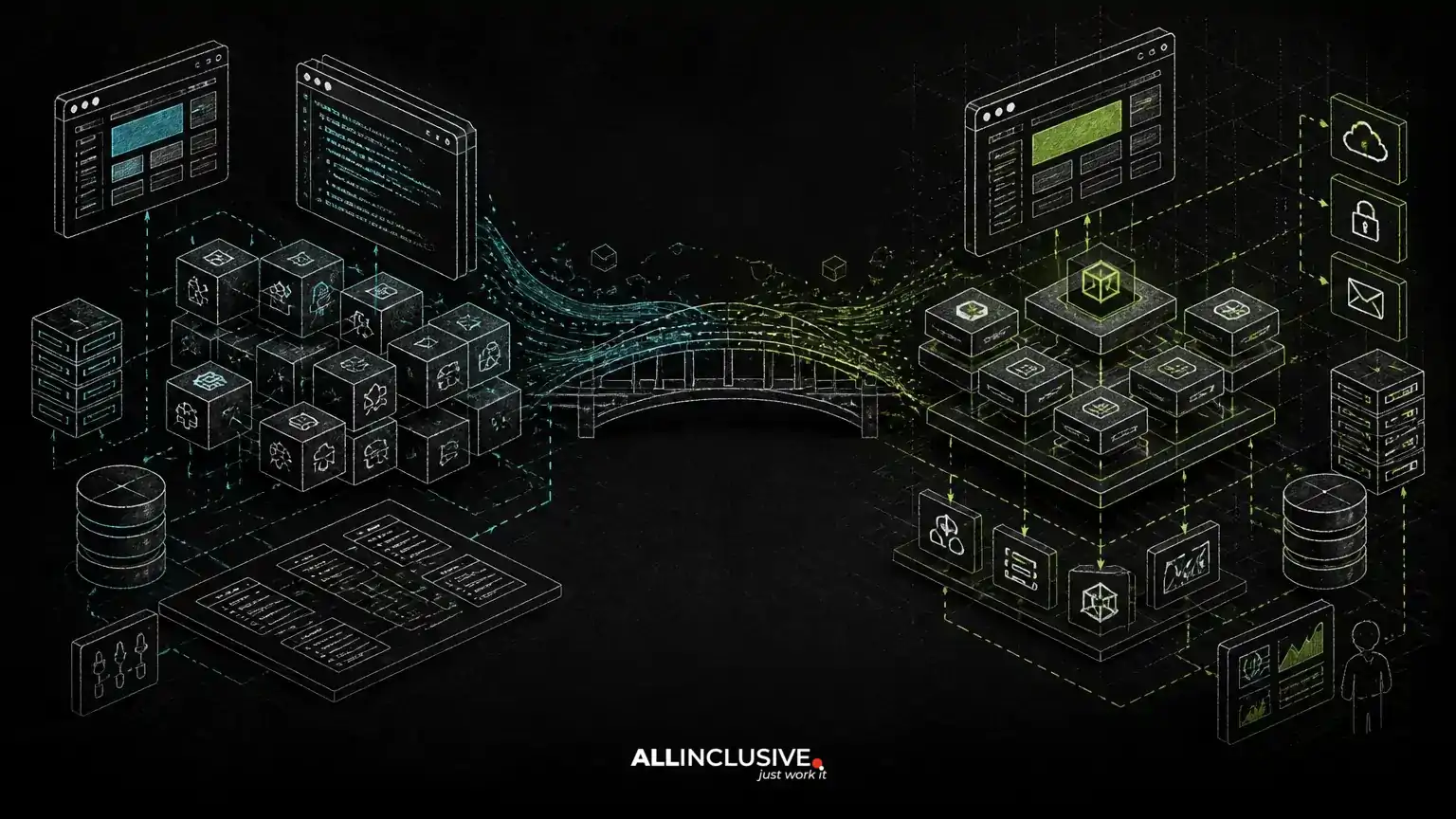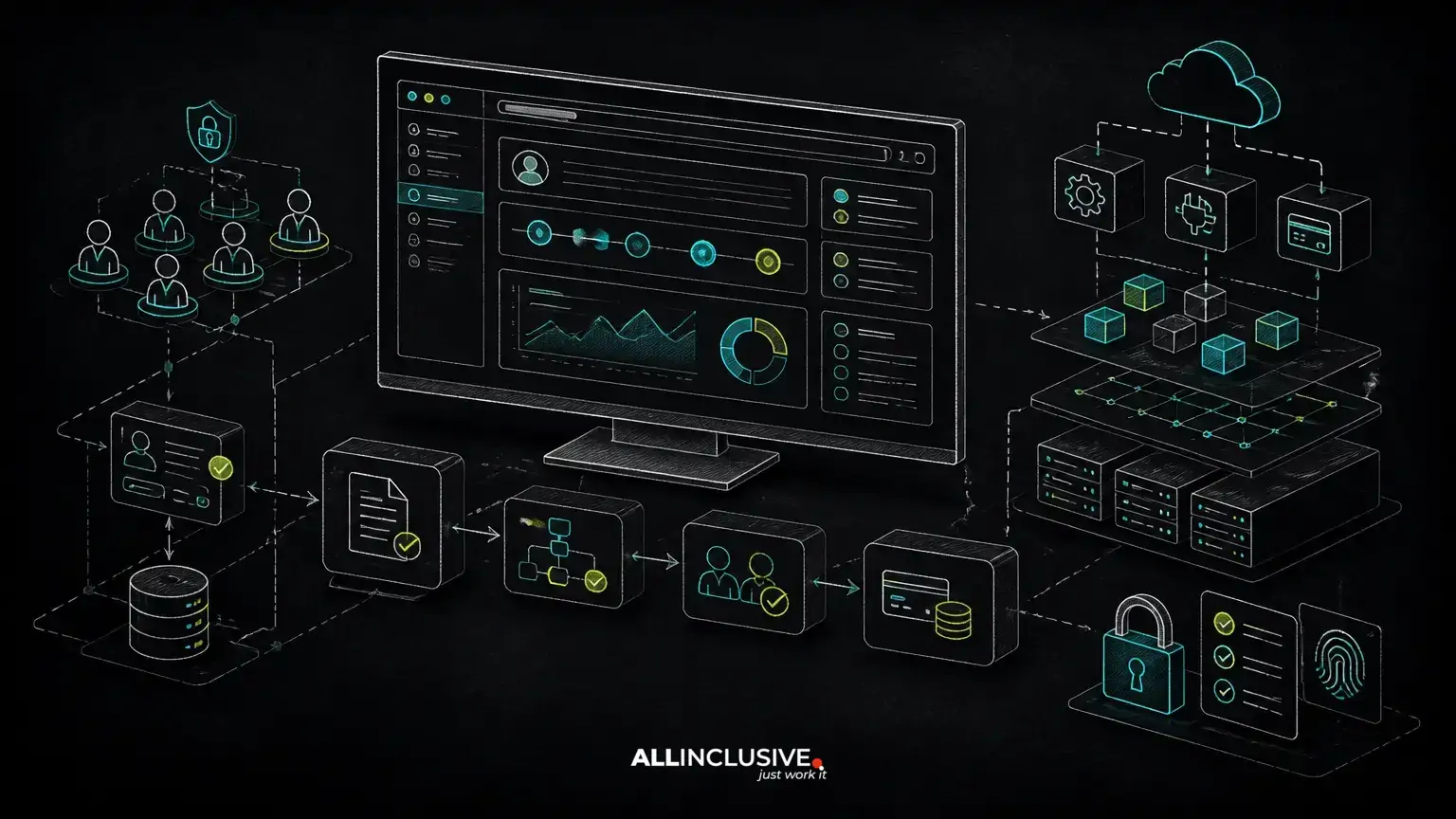
When comparing a dedicated team vs staff augmentation, the central question is not simply how many engineers you need. It is who owns delivery decisions, how work is coordinated, and whether the team is expected to build product capability or fill a short-term capacity gap.
Staff augmentation adds individual specialists to an existing organization. Your product team usually retains responsibility for planning, architecture, prioritization, coordination and quality decisions. A dedicated product team is assembled around a product or roadmap and operates with shared responsibility for delivery, typically including engineering, quality assurance and product or delivery leadership.
Neither model is universally better. Staff augmentation can be efficient when your internal team has strong management and needs specific skills. A dedicated team is often better suited to custom software with a continuing roadmap, evolving requirements and a need for cross-functional ownership. This article compares the operational differences that affect speed, maintainability, risk and long-term cost.
Staff augmentation adds capacity; a dedicated team adds an operating unit
In a staff augmentation arrangement, the supplier provides one or more professionals who work inside your existing delivery structure. They may join your ceremonies, use your tools and follow your technical standards, but the client generally owns the surrounding operating system.
A dedicated team is designed as a coherent unit. Its members have defined responsibilities, established communication patterns and a shared understanding of the product. The team may still work with your product owner, CTO or internal stakeholders, but it carries more responsibility for turning goals into an executable delivery plan.
The distinction matters because an individual developer can increase throughput only when someone else can provide sufficiently clear requirements, review work, resolve dependencies and make timely decisions. If those responsibilities are already covered internally, augmentation can work well. If they are the bottleneck, adding another engineer may increase coordination rather than reduce it.
Ownership is the clearest operational difference
Ownership should be defined before a contract is signed. It includes more than writing code. It covers backlog interpretation, technical trade-offs, test strategy, release readiness, documentation, incident learning and the long-term condition of the codebase.
With staff augmentation, ownership commonly remains with the client:
- The internal product organization prioritizes work.
- Client engineering leadership makes architectural decisions.
- Client managers coordinate dependencies and performance.
- The augmented specialist contributes within an existing process.
With a dedicated team, responsibilities can be distributed across the team and client rather than concentrated in one internal manager. The client still needs to set business direction and approve important product decisions, while the team can own technical execution, estimation, delivery coordination and quality practices.
This does not mean a dedicated team should operate without oversight. Effective ownership is explicit. A responsibility matrix should identify who approves scope, who makes architecture decisions, who manages production access, who accepts completed work and who handles incidents. Ambiguity at these boundaries is a common source of delay in both models.
Team composition changes the economics of coordination
Staff augmentation is often organized by role: one backend developer, a frontend engineer or a QA specialist. That can be the right shape for a mature team with established architecture and a well-maintained backlog.
A dedicated team is usually composed around the work required to move a product forward. Depending on scope, it may include:
- A delivery or product lead to coordinate priorities and decisions.
- Backend and frontend engineers for application behavior and integrations.
- A QA engineer responsible for risk-based verification and regression coverage.
- A UX or product design capability when workflows require discovery and validation.
- DevOps or platform expertise when deployment, observability and infrastructure are part of the roadmap.
The correct composition is not the largest possible team. It is the smallest group that can make meaningful progress without creating avoidable handoffs. For example, a Laravel application with a stable design system may need stronger backend and QA coverage rather than a full-time designer. A Python data product or AI-enabled workflow may require additional attention to data contracts, evaluation, monitoring and human review.
Role definitions should also account for seniority. A team containing several implementers but no person capable of resolving architecture or product ambiguity may appear cost-efficient while leaving the client to perform the most difficult work.
Onboarding differs because context is distributed differently
Augmented specialists typically need access to repositories, environments, documentation, communication channels and a clear description of their assigned work. The client team supplies much of the context through existing ceremonies and technical leadership.
A dedicated team needs a broader product and operating orientation. Onboarding should cover:
- The product strategy, users and business constraints.
- Current architecture, deployment flow and key dependencies.
- Domain terminology and the workflows most important to users.
- Existing defects, operational risks and technical debt.
- Decision rights, escalation paths and communication expectations.
- Definition of ready, definition of done and release practices.
The additional onboarding effort is not overhead to hide. It is an investment in reducing repeated clarification and preventing local technical decisions from conflicting with product goals. Teams working on custom-made software are particularly dependent on domain context because the product often contains business rules that cannot be inferred from a ticket title.
For a deeper treatment of the first weeks, see how to onboard an external development team without losing a month.
Communication and delivery cadence reveal the real model
In staff augmentation, communication is often optimized for integration with the client’s existing process. The specialist attends stand-ups, planning and reviews, while internal leaders decide what those meetings accomplish.
A dedicated team needs a cadence that supports both execution and product-level decisions. Useful practices may include:
- Short delivery cycles with demonstrable increments.
- Regular backlog refinement that includes technical and product perspectives.
- Architecture discussions for decisions with material operational consequences.
- Release reviews that examine user impact, not only completed tickets.
- Retrospectives that result in specific process or engineering changes.
The goal is not to add meetings. It is to ensure that unresolved decisions do not remain hidden inside implementation work. A team that reports activity without showing working software, test evidence or operational readiness can create a false sense of progress regardless of the engagement model.
Continuity and knowledge retention require deliberate design
Both models carry continuity risk. An augmented engineer may leave with valuable repository and domain knowledge. A dedicated team may also experience turnover, especially if responsibilities are concentrated in one person or documentation is treated as an afterthought.
Continuity improves when the engagement includes:
- Shared ownership of critical components rather than single-person knowledge.
- Architecture records for decisions that future engineers must understand.
- Automated tests around important business behavior.
- Environment and deployment documentation that can be used by another qualified engineer.
- Code review practices that transfer context instead of merely checking syntax.
- Planned transition procedures for role changes or eventual internalization.
A dedicated team can provide stronger continuity than isolated augmentation when it remains stable and cross-functional. However, continuity is an operating practice, not an automatic property of a contract label.
How the models affect technical quality and maintainability
Staff augmentation tends to perform well when the technical direction is already coherent. The engineer can work within established conventions, build pipelines and review standards. The risk increases when the client lacks time to review work or when the augmented specialist is asked to make product-wide decisions without adequate context.
A dedicated team can take broader responsibility for maintainability, but only if quality is included in delivery expectations. That means considering automated testing, observability, dependency management, security review and deployment rollback as part of normal engineering work rather than optional cleanup.
Technology choice should follow the product and the team’s operating context. Laravel and PHP may be appropriate for a business application where rapid, maintainable web delivery is important. Python may fit a service, data workflow or AI integration that depends on a broader ecosystem. AI features add another layer of responsibility: prototypes need to become production workflows with evaluation criteria, failure handling, data governance and human escalation where appropriate.
In either model, the key question is not whether a supplier lists a technology. It is whether the team can explain how that technology will be tested, deployed, monitored and maintained within the product’s constraints.
When staff augmentation is the better fit
Staff augmentation is often a practical choice when most of the following conditions apply:
- Your internal product and engineering leaders can prioritize and review work.
- The architecture and development process are already established.
- You need a specific capability for a defined period.
- The backlog is sufficiently clear for an individual contributor to start productively.
- You want direct control over day-to-day assignment and team integration.
- The main constraint is capacity rather than product or delivery leadership.
Examples include adding a senior PHP engineer during a migration, bringing in Python expertise for a data integration, or increasing QA capacity before a planned release. The engagement can remain focused because the client team supplies the broader context.
When a dedicated team is the better fit
A dedicated product team is more compelling when:
- The roadmap will evolve as users, stakeholders and technical findings provide new information.
- Your internal organization needs a partner that can cover multiple delivery disciplines.
- Cross-functional coordination is a larger risk than raw coding capacity.
- The product requires ongoing iteration rather than a single defined handoff.
- You need continuity across discovery, implementation, release and improvement.
- There is no internal team available to manage every delivery function.
This model is especially relevant when building or extending custom software that combines application development, integrations and operational workflows. A Serbia-based product engineering model can provide a nearshore collaboration structure while keeping communication, responsibilities and delivery evidence explicit. The important selection criterion is not geography alone, but whether the team can operate transparently across time zones, decisions and technical boundaries.
Questions to ask before choosing between the models
- Who owns the roadmap? If the answer is entirely internal, augmentation may be sufficient. If you need shared execution ownership, define the dedicated-team structure.
- Who makes architecture decisions? Establish decision rights for application structure, infrastructure, data and third-party services.
- What is missing: people or coordination? Adding specialists will not solve an unclear product direction or slow approval process.
- What must remain stable for the next year? Identify critical knowledge, responsibilities and components that cannot depend on one contributor.
- How will progress be demonstrated? Agree on working increments, quality evidence, release criteria and reporting.
- What happens when priorities change? A product roadmap needs a mechanism for reprioritization without turning every change into a renegotiation.
- How will the engagement end or change? Plan for scaling, internal hiring, handover and replacement of key roles.
Use the operating problem—not the label—to choose
The difference between a dedicated team vs staff augmentation is ultimately a difference in operating responsibility. Staff augmentation is a strong option when your organization can provide product leadership, technical direction and coordination but needs more hands. A dedicated team is better aligned with a continuing roadmap when you need a stable, cross-functional unit to share responsibility for turning product goals into maintainable software.
Before selecting a model, document the work required, the decisions that must be made, the capabilities already available internally and the risks that cannot be left ambiguous. Then evaluate prospective partners against those requirements, including team composition, seniority, communication, continuity and technical quality.
For broader software delivery support, explore Allinclusive development services. If you have a roadmap and want to discuss which operating model fits it, contact the Allinclusive team.
For related comparisons, read dedicated team vs project outsourcing and dedicated development team vs in-house hiring. You can also review the dedicated product teams approach when assessing a longer-term product engineering partnership.