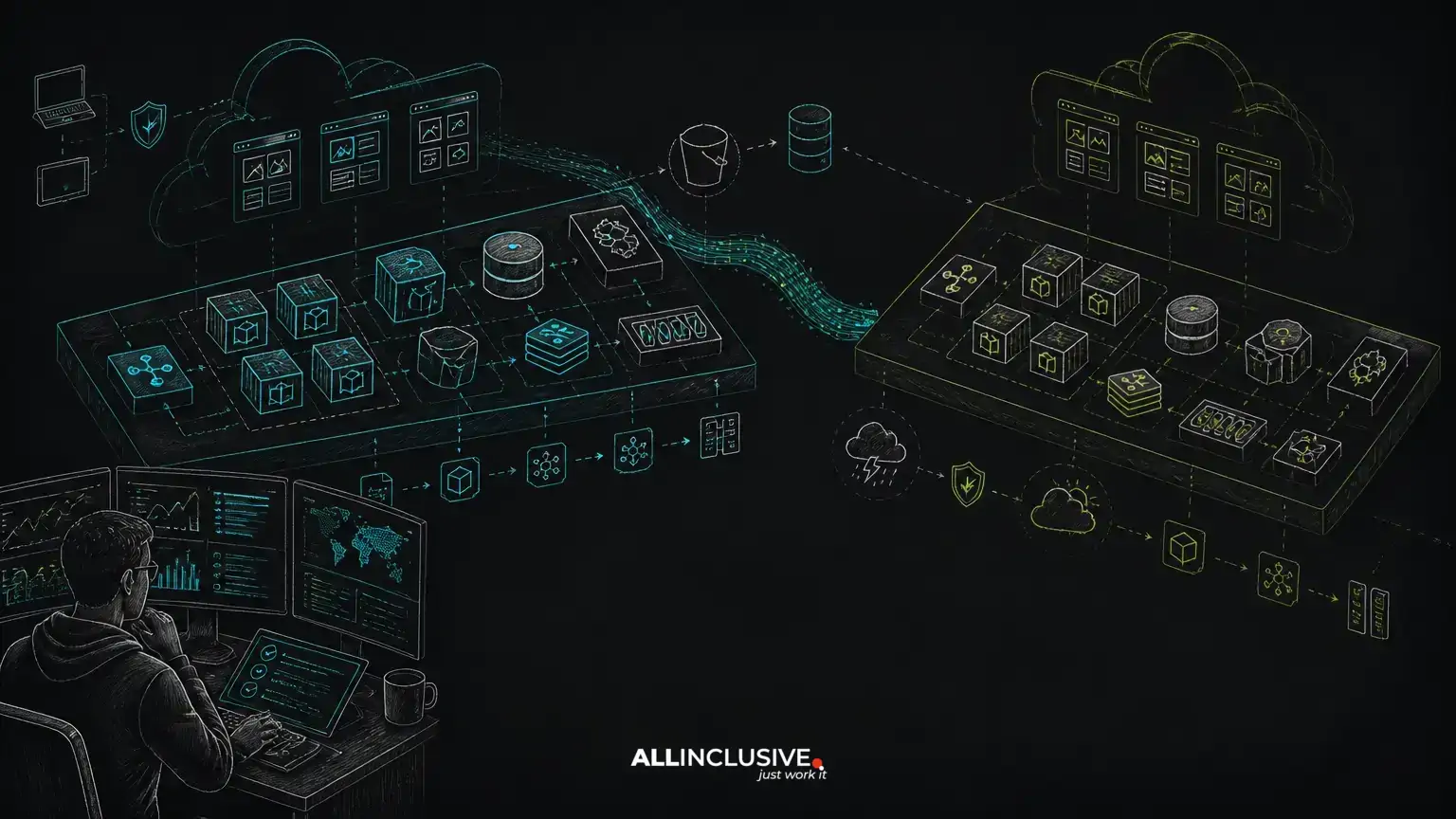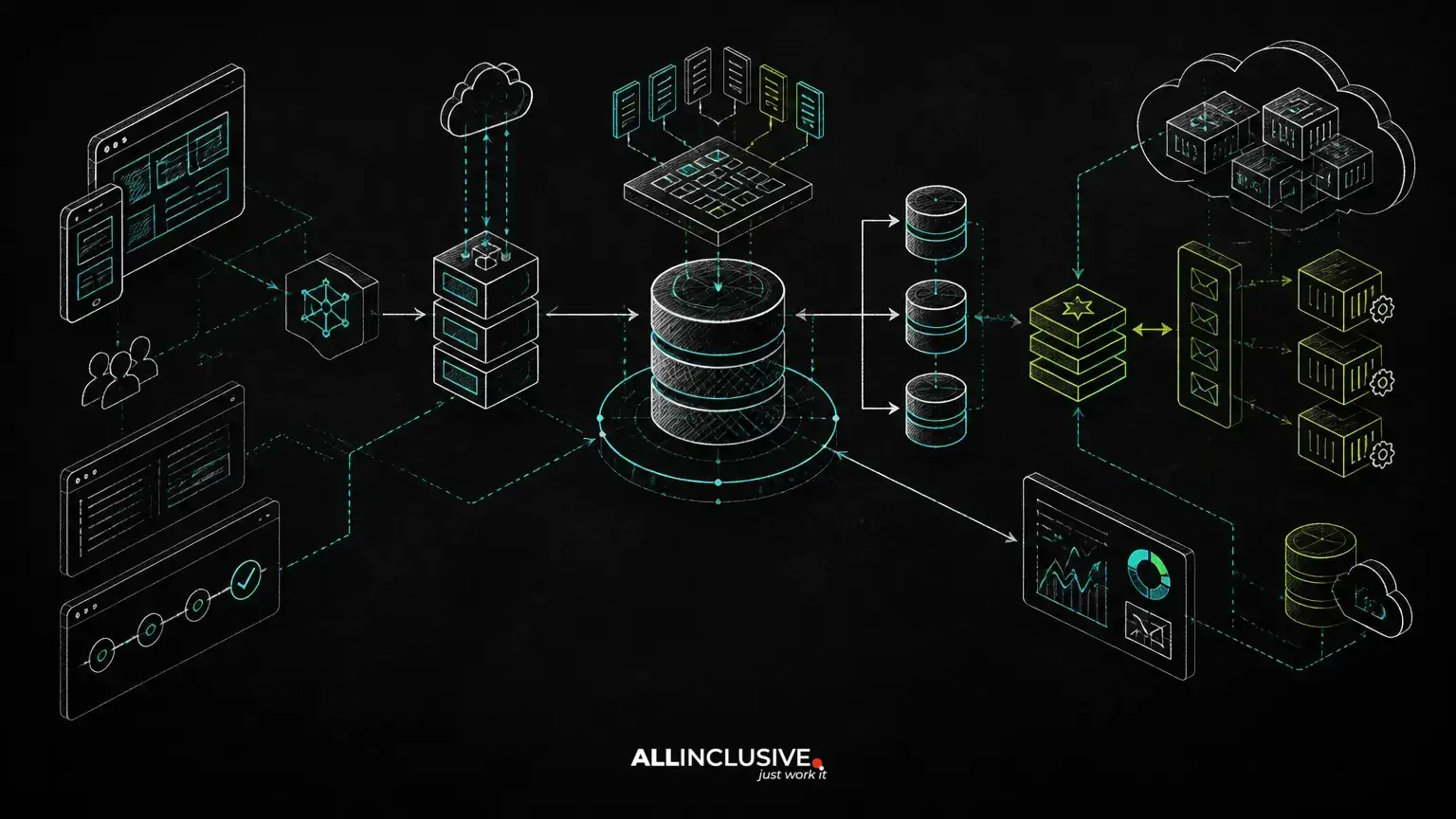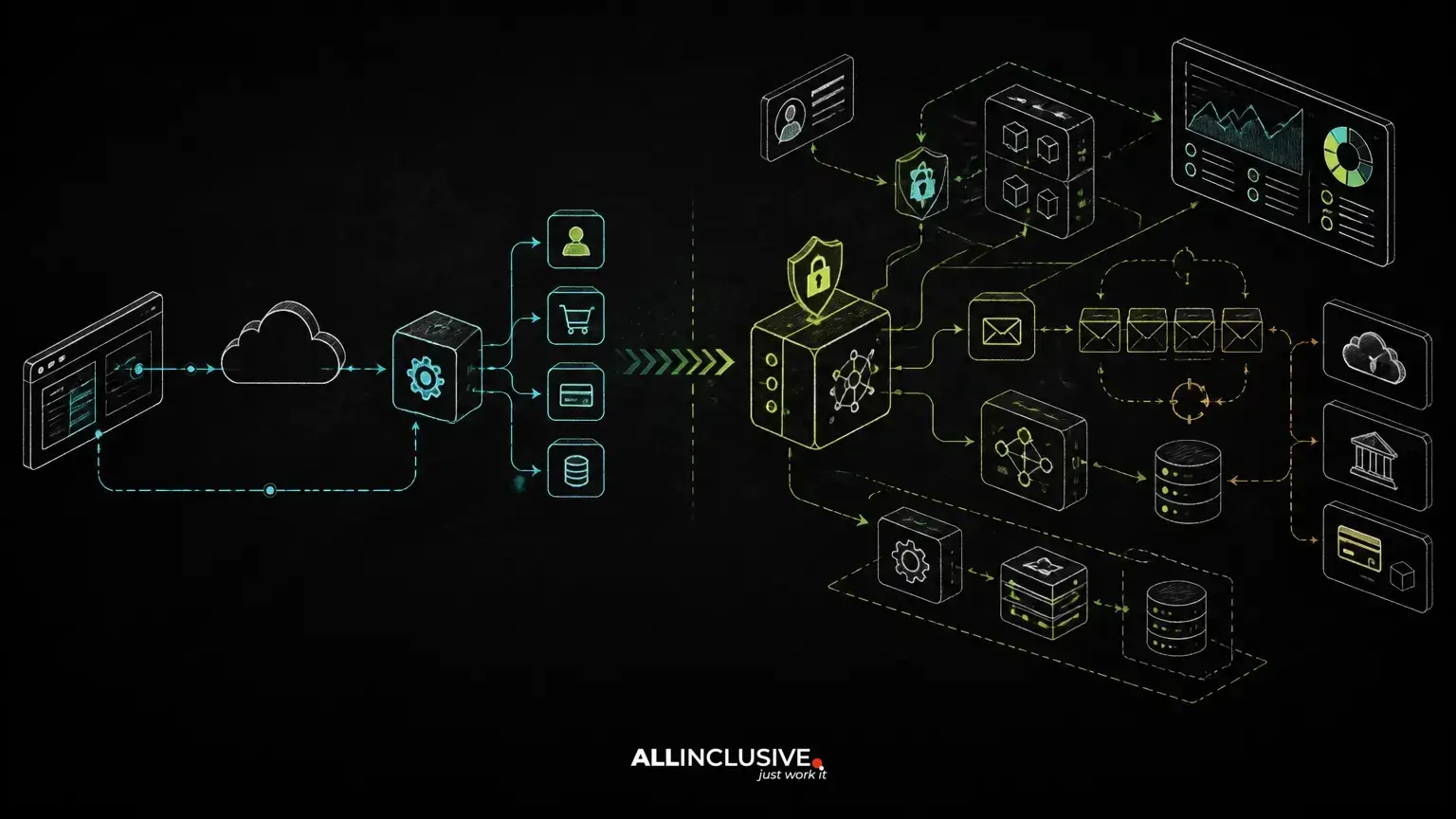
API development cost is shaped by far more than the number of endpoints in a specification. A small-looking integration can become expensive when it must handle OAuth, webhooks, retries, duplicate events, rate limits, partial failures, reconciliation and long-term versioning. Another decision connected with api development cost is covered in custom software development.
The most useful way to estimate an API is to evaluate its responsibilities. A read-only internal service with stable data and one trusted consumer is usually simpler than a public or business-critical integration that moves money, changes customer records or coordinates several external systems. The difference is not merely coding time; it is the amount of failure handling, security, testing and operational ownership the system requires.
This guide explains the main api development cost drivers and the questions product and technical teams should answer before requesting a quote or approving a scope.
What determines API development cost?
A dependable estimate usually considers six connected areas:
- Business scope: the workflows, resources and rules the API must support.
- Data complexity: the number of systems, transformations and ownership boundaries involved.
- Security: authentication, authorization, sensitive data handling and audit requirements.
- Reliability: retries, idempotency, queues, reconciliation and recovery from partial failure.
- Delivery quality: contract design, validation, automated testing and documentation.
- Operations: monitoring, alerting, deployment, support and future version management.
An estimate that counts only routes and controllers can understate the work substantially. The expensive part is often ensuring that the API behaves predictably when users, external providers or networks behave unpredictably.
Scope: endpoints are only the visible part
Two APIs with the same endpoint count can have very different scopes. A simple customer lookup may require a query, validation and a structured response. An order endpoint may need inventory checks, payment authorization, tax calculation, fulfillment updates and notifications across multiple services.
For each workflow, define more than the successful response. Document:
- Who can call the operation and on whose behalf.
- Which fields are required, optional or immutable.
- What happens when a related record does not exist.
- Whether the operation is synchronous or can complete asynchronously.
- Which side effects occur and which system owns the resulting state.
- What the consumer should do after a timeout or ambiguous response.
Business rules also affect cost. Approval states, tax or billing logic, permissions, multi-tenant isolation and data retention create more implementation and test paths than straightforward create, read, update and delete operations.
Integration boundaries and data transformation
An API connected to one system is not automatically simple. Complexity increases when systems use different identifiers, field formats, time zones, status names or definitions of completion. A payment provider may report a transaction as authorized, captured, failed or disputed, while an internal order system uses its own lifecycle.
Integration work should establish a clear source of truth for each important field and event. It may require mapping layers, normalization, conflict rules and a reconciliation process for records that diverge. These decisions protect maintainability but add design, development and testing effort.
Reliable integrations also distinguish between a request being accepted and a business action being completed. Queues and background workers may be appropriate when an external provider is slow, a workflow has several steps or the user should not wait for every downstream operation.
Authentication, authorization and API security
Security is a cost driver because it combines implementation with policy, testing and ongoing operations. Common choices include API keys, signed requests, service credentials, OAuth and token-based access. The right method depends on whether the API is internal, partner-facing, public or acting on behalf of individual users.
Authentication answers who is calling. Authorization answers what that caller may do. A sound design may require resource-level permissions, tenant boundaries, role checks, scopes and protection against object-level authorization errors. Sensitive values also need appropriate storage, transmission, logging and retention controls.
Security scope may include rate limiting, input validation, secret rotation, audit events, abuse detection and review of third-party permissions. These are not decorative additions: a weak authorization model can create operational and legal exposure even when the API functions correctly.
For a broader implementation checklist, see the API security checklist for custom web applications.
Webhooks, idempotency and duplicate events
Webhooks reduce polling but introduce delivery uncertainty. Providers may send an event more than once, deliver events out of order or retry after your endpoint has already processed the request. Your receiver must verify the event, record an event identifier where available and process it safely.
Idempotency means repeating the same operation does not create an unintended second effect. For example, a retry of a payment or order request should not create two charges or two fulfillment records. Idempotency keys, unique constraints and durable processing records can help, but the correct design depends on the business operation and the provider’s contract.
Webhook implementations commonly need:
- Signature or authenticity verification.
- Fast acknowledgment separated from longer processing.
- Duplicate detection and an event-processing record.
- Retry handling with bounded backoff.
- Dead-letter or manual-review paths for persistent failures.
- Reconciliation against the provider when events are missing or ambiguous.
These requirements often make an integration significantly more involved than a collection of synchronous API calls.
Retries, rate limits and failure states
Retries are useful only when applied selectively. Retrying a temporary network failure may be appropriate; retrying an invalid request or a non-idempotent operation without protection can make the incident worse. A reliable design classifies errors and defines behavior for each category.
Consider at least:
- Client errors: invalid input, missing permissions or an expired token.
- Transient errors: temporary unavailability, network interruption or throttling.
- Business errors: insufficient funds, invalid state transitions or duplicate records.
- Unknown outcomes: a timeout after the remote system may have accepted the request.
External rate limits also affect architecture. A queue, concurrency control, caching strategy or scheduled synchronization may be needed. The cost includes not only implementation but also deciding how users see delayed, failed or pending work.
Contracts, validation and versioning
An API contract should define paths, methods, request and response schemas, authentication expectations, error formats and lifecycle rules. Contract-first design can expose ambiguity before implementation, while generated documentation and consumer tests can reduce misunderstandings between teams.
Validation should occur at the boundary, but it should not replace domain rules deeper in the application. Clear error responses help consumers correct requests without exposing internal details. Consistent status handling and error codes also reduce support effort.
Versioning is a product decision as much as a technical one. Teams should decide how breaking changes are identified, how long older consumers are supported and how deprecation is communicated. Supporting multiple versions can increase testing, documentation and operational costs, especially when external clients cannot be upgraded quickly.
API style is another architectural variable. The choice between REST and GraphQL depends on consumer needs, data relationships, caching, authorization and operational preferences. See REST vs GraphQL decision criteria for a focused comparison.
Laravel or Python: choosing implementation responsibility
Laravel can be a strong fit when the API belongs to a broader PHP application that already contains authentication, business workflows, administrative tools, database models and queued jobs. Keeping related responsibilities together may reduce integration overhead and simplify ownership.
Python can be a strong fit when the service benefits from a focused service boundary, Python-based data processing or an existing Python platform. A framework such as FastAPI can support typed request models and explicit service interfaces, but the framework does not remove the need for authentication, persistence, background processing, observability or deployment design.
The decision should follow responsibility rather than fashion. Ask where the domain model lives, which team will operate the service, how data access is organized, whether the API is part of a monolith or a separate service and what capabilities are likely to be added later. A comparison of the two approaches is available in Laravel API vs FastAPI.
Testing and observability are part of the estimate
API testing should cover more than successful requests. Useful coverage includes schema validation, authorization boundaries, state transitions, duplicate delivery, retries, timeout behavior, rate limits, malformed payloads and downstream outages.
Observability makes those behaviors diagnosable in production. Depending on the system, this may include structured logs, correlation identifiers, metrics for latency and error classes, traces across services, queue visibility and alerts for failed webhook processing or reconciliation gaps.
Without this foundation, a team may spend less during initial development but more during incidents and support. Operational visibility is particularly important when an API controls billing, fulfillment, user access or other workflows where a silent failure can remain hidden.
A practical API cost-estimation checklist
Before requesting an estimate, prepare answers to these questions:
- Who are the consumers, and are they internal, partner or public?
- Which workflows must the API support, including failure and pending states?
- Which system owns each important piece of data?
- What authentication, authorization and audit requirements apply?
- Are webhooks required, and how will duplicate or missing events be handled?
- Which operations need idempotency?
- What are the external provider’s rate limits, retry rules and version policies?
- Will work run synchronously, through queues or through scheduled reconciliation?
- How will contracts, documentation and backwards compatibility be managed?
- Who will monitor, maintain and support the integration after launch?
This information produces a more credible scope than a request for a fixed number of endpoints. It also exposes decisions that could otherwise surface late, when changing the architecture is more disruptive.
Plan for ownership, not just launch
The total cost of an API includes its ownership model. Credentials expire, third-party contracts change, consumers request new fields and business rules evolve. Maintenance may involve dependency updates, security reviews, provider changes, incident response, data repair and version deprecation.
For teams planning a custom application or integration, web development services can provide the surrounding application context needed to evaluate the API as part of a larger product. Ongoing reliability also depends on a defined support and maintenance approach, including monitoring and a process for addressing failures.
API development cost is therefore best treated as a scope and risk question. A simple API can remain simple when its data boundaries, contract and ownership are clear. A business-critical integration deserves investment in authentication, validation, idempotency, retries, queues, reconciliation, versioning and observability. Estimating those responsibilities explicitly leads to better delivery decisions and fewer expensive surprises after release.
For teams evaluating architecture and implementation options, explore API development services and engineering capabilities.