AI security and privacy require more than choosing a reputable model provider. An LLM-powered application can expose sensitive information through prompts, retrieved documents, tool calls, logs, generated responses or poorly defined permissions. Production design must treat the model as one component inside a controlled software system—not as a trusted data boundary.
The strongest approach combines data minimization, explicit authorization, tenant isolation, secure retrieval, constrained tools, redacted observability and continuous evaluation. Whether Python owns model orchestration or Laravel owns product workflows, the application should decide what the model may see, what it may do and when a person must review the result.
Why LLM applications create distinct security and privacy risks
Traditional web applications usually execute deterministic business logic against defined inputs. LLM applications introduce probabilistic behavior and often connect that behavior to untrusted content, private records and external actions. That combination creates several overlapping risk areas:
- Data exposure: confidential text may enter prompts, retrieval indexes, traces, error reports or provider-side processing paths.
- Unauthorized disclosure: a response may combine records that the requesting user is not entitled to view.
- Prompt injection: instructions embedded in a webpage, document, email or support ticket may attempt to override system rules.
- Unsafe tool use: an agent may call APIs, send messages or modify records with inadequate authorization or confirmation.
- Model uncertainty: a plausible answer can be incorrect, incomplete or based on the wrong source.
- Operational leakage: verbose logs, debugging payloads and retained conversation history may become a shadow data store.
These risks are connected. A retrieval pipeline can have excellent search quality but still leak data if access control is applied only in the user interface. An agent can be useful but unsafe if its tools accept natural-language instructions without server-side checks.
Define the application’s data boundaries before selecting a model
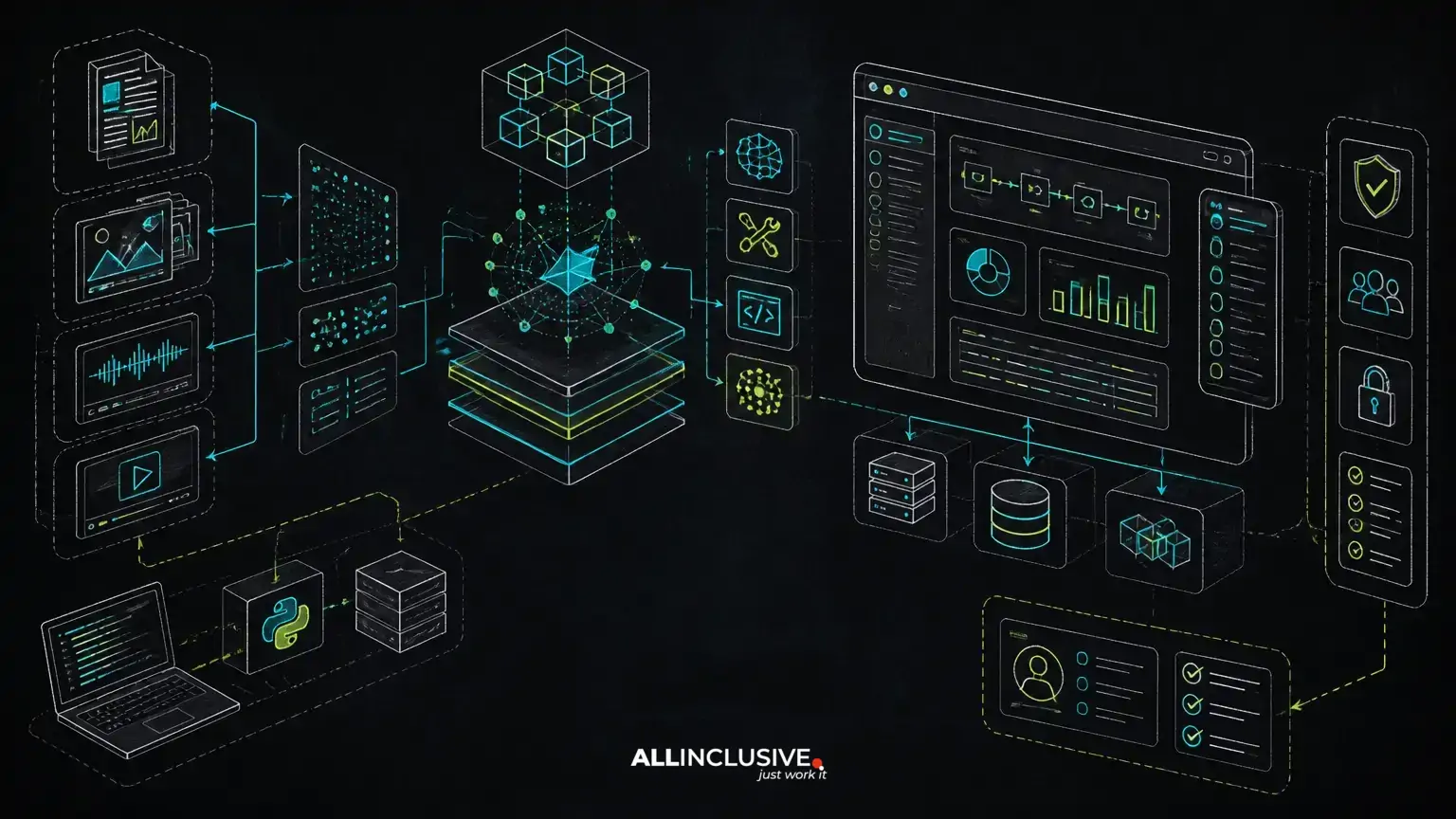
Security decisions should begin with data classification and flow mapping. Identify what enters the system, where it is transformed, which services receive it and how long each copy is retained. Include more than the visible chat message:
- User prompts, uploaded files and conversation history
- Retrieved passages, document metadata and embeddings
- System instructions, tool schemas and agent state
- Provider requests and responses
- Application logs, traces, evaluation samples and support exports
Classify fields according to the business context. Public content, internal operational data, personal information, financial details, health information and credentials should not be handled as if they have the same acceptable processing path. In many systems, the safest design is to avoid sending identifying data to the model at all. Replace it with an internal reference, retrieve the protected value only in application code and keep the model’s context narrowly scoped.
Data-flow documentation should also record retention and deletion behavior. Deleting a source document does not automatically remove every derived chunk, embedding, cache entry, trace or evaluation artifact. A production privacy design needs a deletion process that follows data across primary storage and derived stores.
Separate authorization from model reasoning
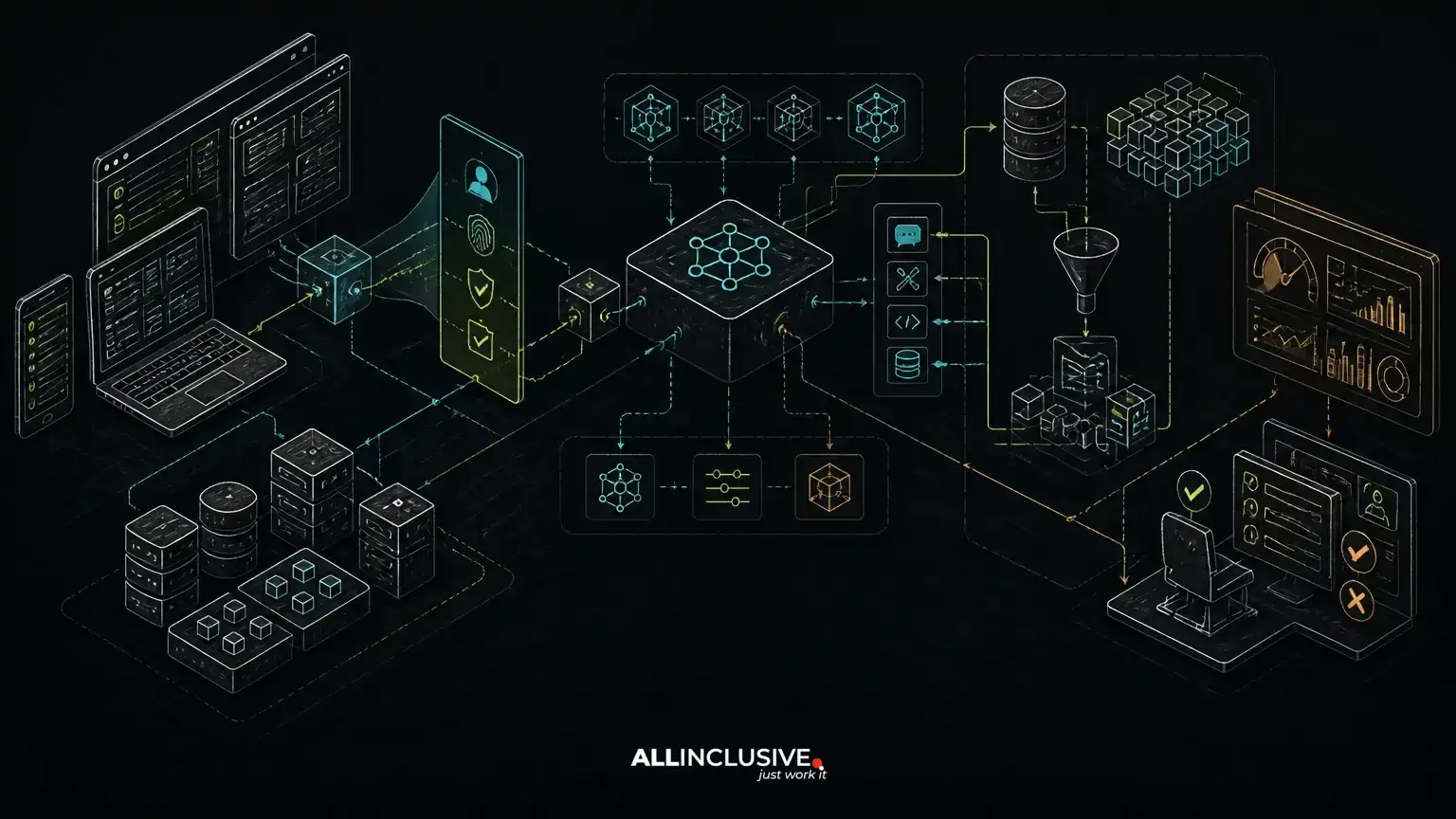
An LLM should never be the authority that decides whether a user may access a record. Authorization belongs in deterministic application code and should run before retrieval, tool execution and sensitive response assembly.
For retrieval-augmented generation, attach access metadata to indexed content and enforce it at query time. A useful permission model may combine tenant, team, document, role and purpose constraints. The retrieval service should receive the authenticated subject and apply those constraints before passages reach the model. Filtering after generation is not a reliable substitute: the model may already have used restricted content in its reasoning or may reveal it indirectly.
The same principle applies to agents. A tool such as refund_order, export_customers or update_case should enforce authorization on the server side, validate arguments, record the actor and apply business rules independently of the model’s explanation. High-impact operations should require confirmation or human approval rather than relying on an instruction such as “be careful.”
Build RAG pipelines that protect source data
Retrieval-augmented generation can reduce unsupported answers by grounding responses in approved sources, but it creates a second security surface. Documents are transformed into chunks and embeddings, then made searchable through infrastructure that may have different access controls from the original system.
Secure RAG design typically includes:
- Ingestion controls: validate file types, scan uploads, reject unexpected content and preserve source ownership metadata.
- Permission-aware indexing: store tenant and authorization attributes with each chunk or searchable record.
- Query-time filtering: apply the requesting user’s permissions before similarity search results are returned.
- Reranking with boundaries intact: ensure a reranker cannot reintroduce documents excluded by the initial authorization filter.
- Source citations: show users which approved records support an answer when the workflow requires verification.
- Deletion propagation: remove or invalidate chunks, embeddings and caches when a source is deleted or access changes.
Embedding vectors are not automatically anonymous simply because they are numerical. They are derived from source content and should be governed as potentially sensitive data. Avoid treating a vector database as an isolated technical detail; include it in access reviews, backups, retention policies and incident response planning.
For a deeper treatment of retrieval architecture, see RAG development patterns for search, reranking and citations.
Defend against prompt injection without pretending prompts are a security boundary
System prompts can establish behavior and context, but they are not a substitute for authorization. An attacker may place instructions in a document that tells the model to ignore prior rules, reveal hidden context or call a tool. Even benign content can contain conflicting instructions.
Reduce the impact of prompt injection by separating data from instructions, labeling retrieved content as untrusted and limiting the actions available to the model. Do not place secrets in prompts. Do not rely on the model to distinguish trusted policy from hostile text. Validate structured outputs against a schema, reject unexpected tool arguments and use allowlists for destinations, operations and records.
For workflows involving external actions, use staged execution:
- The model proposes an action using a constrained schema.
- Application code validates identity, permissions, business rules and risk conditions.
- The system requests user confirmation or human review when the action is consequential.
- A server-side worker executes the approved operation and records an audit event.
This pattern preserves the productivity benefits of natural-language interaction while keeping authority in code that can be tested and audited.
Protect privacy across providers, logs and conversation history
Provider selection is only one part of privacy engineering. Review the actual data sent to each service, contractual processing terms, retention settings available to the account, regional requirements and the organization’s incident procedures. These details can change by product, account configuration and deployment model, so they should be verified for the specific integration rather than assumed.
Application-level controls remain necessary even when a provider offers enterprise privacy features. Redact or tokenize sensitive fields before requests leave the application. Keep API keys and credentials in a secret manager, not in prompts, source code or client-side bundles. Separate production conversations from development data, and use fabricated or carefully minimized datasets for testing.
Logging requires particular discipline. A useful trace may need request identifiers, model choice, latency, token counts, retrieval identifiers and tool outcomes—but not necessarily the full prompt and response. Establish field-level redaction, access controls, retention limits and a process for handling deletion requests. Observability should help diagnose failures without creating an uncontrolled copy of customer data. The article on AI observability, monitoring, cost and quality covers the operational side of this design.
Use evaluations to detect security and privacy regressions
Testing an LLM feature only with a few successful conversations is insufficient. Production evaluation should include adversarial and privacy-focused cases alongside quality tests.
- Ask whether the system refuses requests for another tenant’s data.
- Test documents containing instruction-like text and hidden prompt-injection attempts.
- Verify that citations and answers use only authorized sources.
- Check that sensitive fields are absent from logs and provider payloads where they should be.
- Test malformed tool arguments, repeated actions and requests that exceed user permissions.
- Measure whether fallback behavior is safe when retrieval, the model or a downstream API fails.
Keep evaluation cases versioned and associate results with changes to prompts, retrieval settings, models, policies and application code. Quality and security can move in opposite directions: a broader retrieval configuration may improve answer completeness while increasing exposure risk. Teams need both dimensions visible before release.
Design fallbacks and human review around risk
Not every AI feature needs the same level of control. A low-risk drafting assistant may return a suggestion for user editing. A system that approves payments, changes legal records or communicates with customers needs stronger safeguards.
Define risk tiers based on the data involved, the potential impact of an error and whether the action is reversible. High-risk workflows can route uncertain cases to a reviewer, require citations, limit the model to recommendation mode or disable automation when confidence and evidence checks fail. Human review should be a real workflow with assigned responsibility, sufficient context and an audit trail—not an informal expectation that someone will notice a bad answer.
Fallbacks should fail closed where appropriate. If permission checks, retrieval filters or required policy services are unavailable, returning no sensitive result is safer than using an unfiltered cache. If a model provider is unavailable, route only to a preapproved alternative with compatible privacy controls, or provide a non-AI workflow rather than silently changing data handling assumptions.
Choose an architecture that makes ownership clear
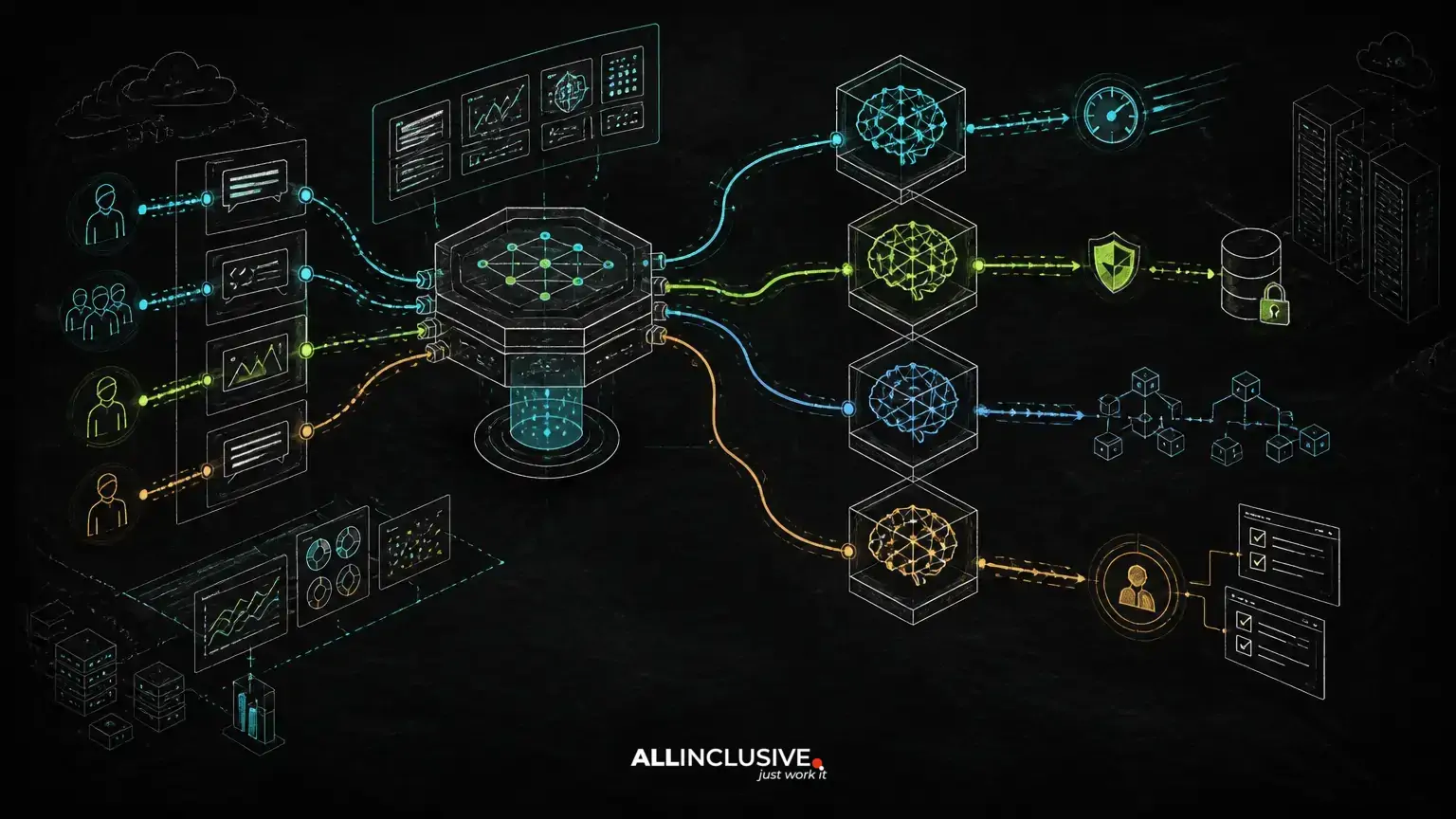
Many production products use an application layer such as Laravel for authentication, workflows, billing, permissions and user-facing operations, while Python services handle model orchestration, retrieval, evaluation or data processing. This split can work well when responsibilities are explicit.
The application layer should remain the source of truth for identity, authorization and business state. The AI service should receive the minimum context needed, return structured results and avoid becoming an unofficial database of customer records. Service-to-service authentication, request validation, correlation IDs and consistent audit events are essential across the boundary.
Teams building or extending these systems can review Laravel and Python AI architecture patterns and safe MCP server development for AI tools. The right architecture is less about placing every AI component in one language and more about preserving clear ownership of data, permissions and side effects.
A production checklist for AI security and privacy
- Map prompts, documents, embeddings, tool calls, logs, caches and derived data.
- Classify sensitive fields and minimize or tokenize them before model processing.
- Apply authorization before retrieval and independently before every tool action.
- Preserve tenant and source permissions through chunking, reranking and caching.
- Treat retrieved content as untrusted input and test prompt-injection scenarios.
- Constrain outputs and tool arguments with schemas, allowlists and server-side validation.
- Redact observability data and define retention and deletion procedures.
- Evaluate privacy, authorization, refusal, retrieval and fallback behavior before release.
- Use human approval for high-impact or irreversible actions.
- Document provider, model, routing and data-processing assumptions so they can be reviewed when the system changes.
Secure LLM software is not created by adding a privacy notice after the prototype works. It is created by limiting data exposure, keeping authorization deterministic, making model actions observable and designing failure paths deliberately. Organizations planning a custom AI product can explore AI development services and production architecture support, alongside broader custom software development guidance.