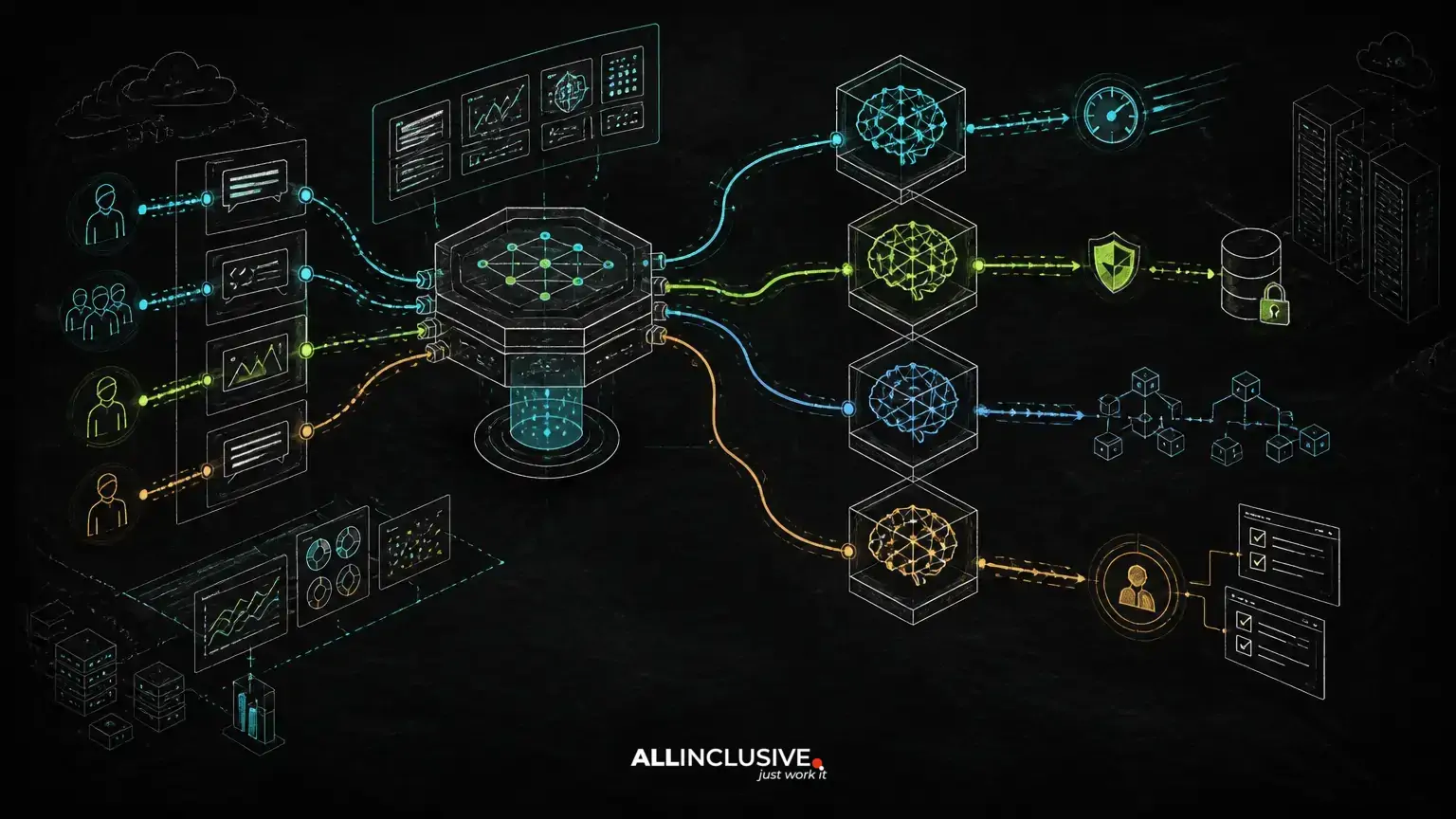
Multi-model AI routing is the practice of selecting different language models for different requests instead of sending every prompt to one provider or model. A production router can consider task type, required quality, response time, token cost, privacy policy, context length, tool requirements and current model health before choosing a path.
That distinction matters because an LLM application is not a single use case. A short classification request, a customer-facing answer grounded in private documents, a structured extraction job and an agent action may need different capabilities. One model can support all of them, but using it everywhere may increase cost, latency, operational risk or review burden without improving the user outcome. Another decision connected with multi model ai routing is covered in ai sales automation.
For teams building production AI software, routing is an application-architecture decision. It belongs alongside retrieval, permissions, evaluation, observability and human review—not as a last-minute prompt optimization.
Why a single LLM becomes a production constraint
A single-model design is often sensible for an early prototype. It reduces integration work and makes initial evaluation easier. The limitations appear when the application serves multiple workflows or when its operational requirements become explicit.
- Quality varies by task: a model that writes fluent responses may not be the best choice for strict JSON extraction, code generation, multilingual support or long-context synthesis.
- Latency requirements differ: an interactive classification or autocomplete feature may need a faster path than a complex research response.
- Costs are uneven: routing every request to a larger model can make high-volume, low-complexity workloads unnecessarily expensive.
- Privacy policies differ: sensitive records may require a provider, deployment mode or self-hosted route that is not appropriate for general content.
- Availability is not uniform: rate limits, outages, regional restrictions and provider changes can affect a single-model dependency.
The answer is not automatically to add as many models as possible. Every additional model introduces configuration, evaluation, monitoring and failure-handling work. The goal is controlled specialization, not model collecting.
What a multi-model router should decide
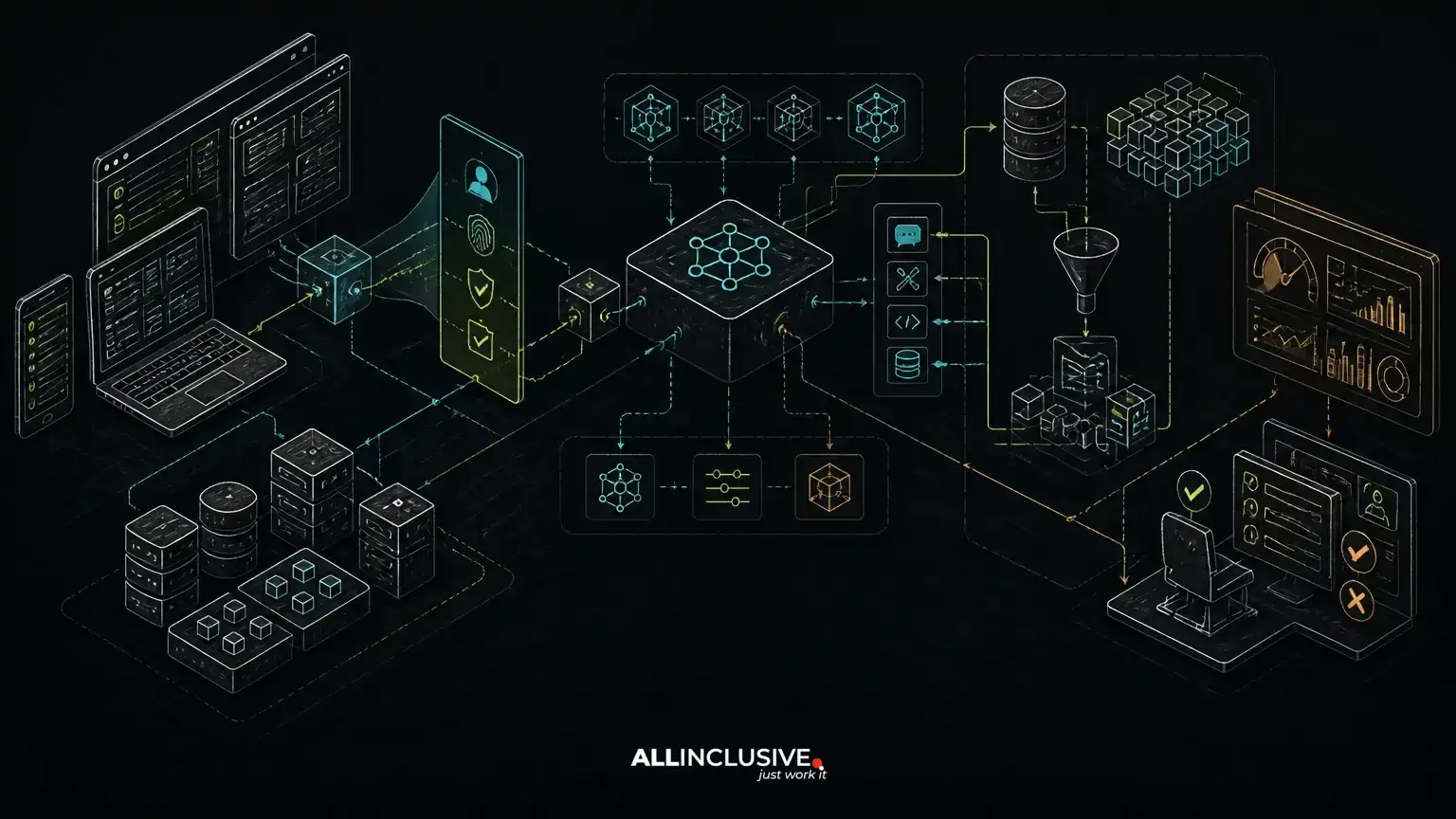
A router receives a request and produces a model-selection decision, often with an execution policy. That policy can include the selected model, maximum tokens, temperature or equivalent controls, retrieval settings, tool permissions, timeout, retry rules and whether human review is required.
Useful routing signals include:
- Workflow and task type: classification, extraction, summarization, conversational response, reasoning, code generation or agent planning.
- Risk level: internal drafting can follow a different route from regulated communications, financial decisions or actions that change business records.
- Input characteristics: language, document length, number of retrieved passages, attachment type and whether the request contains sensitive data.
- Output contract: free text, citations, structured fields, tool calls or a response that must pass schema validation.
- Service conditions: current latency, provider availability, rate limits and recent error rates.
- Business constraints: budget, tenant-level policy, geographic processing requirements and escalation rules.
Simple systems can use deterministic rules. For example, an application may send invoice extraction to a model tested for structured output, route low-risk classification to a faster model and reserve a stronger model for ambiguous cases. More advanced systems can use a lightweight classifier or policy engine to estimate complexity, but that classifier also needs evaluation.
Common routing patterns for LLM applications
Task-based routing
Task-based routing maps known workflows to approved models. It is usually the easiest pattern to explain and operate because the decision is visible in application code or configuration. It works well when product workflows are stable, such as document intake, support drafting and internal search.
The weakness is that a coarse task label can hide meaningful variation. A “support response” may be simple for one request and require multi-document retrieval, policy checking and escalation for another. Add secondary signals such as risk, context size and confidence rather than relying on one category.
Complexity or confidence routing
A fast or lower-cost model handles straightforward requests, while difficult or uncertain cases are escalated. Signals can include classification confidence, schema-validation failures, retrieval quality, disagreement between models or a rule such as “escalate when the answer affects a customer record.”
Confidence is not the same as correctness. A model can express high confidence in an incorrect answer, so escalation logic should be tied to measurable evaluation signals and business rules. When uncertainty cannot be estimated reliably, deterministic triggers and human review are safer than a decorative confidence score.
Fallback routing
Fallbacks address operational failure rather than task specialization. If a provider times out, returns a temporary error or becomes unavailable, the system can retry within a controlled limit or use an approved alternative. Fallbacks should preserve privacy and output requirements; switching to any available model is not a valid resilience strategy if the replacement cannot process the data lawfully or produce a usable response.
Parallel or consensus routing
Some high-risk workflows send a request to multiple models and compare outputs. This can help identify disagreement or improve review queues, but it multiplies token usage, latency and data exposure. It should be reserved for workflows where the additional assurance is worth the operational cost, with an explicit policy for resolving disagreement.
Routing must include retrieval, tools and permissions
Model selection cannot be separated from the rest of the AI architecture. A model that performs well with a small prompt may fail when the application adds retrieved documents, tool descriptions or conversation history.
In a retrieval-augmented generation system, the router may choose retrieval settings before it chooses a model. A narrow query might use a lightweight embedding and retrieval path, while a complex policy question may require broader retrieval, reranking and citation checks. The selected model should receive only the context it is authorized to see, and the application should enforce tenant and user permissions outside the model.
Tool-using agents add another constraint. A model may be capable of planning an action but not approved to execute it. Routing should account for tool availability, action risk, approval requirements and whether the workflow is read-only. A lower-cost model may draft a proposed action while a separate policy layer and human reviewer control execution.
For workflows involving external systems, define ownership clearly: the model proposes, application code validates, permission checks authorize and the tool layer executes. This separation makes failures easier to investigate than allowing a model to control business operations directly.
Designing a router that can be evaluated
A routing policy is only useful if the team can determine whether it improves the system. Build an evaluation set that represents actual workflow variation, including easy cases, ambiguous cases, long context, unsupported requests, policy-sensitive inputs and adversarial or malformed data.
Evaluate both model outputs and routing decisions. Relevant measures may include:
- task accuracy or extraction correctness;
- schema validity and citation or grounding quality;
- tool-call correctness and unauthorized-action rate;
- latency by workflow and route;
- token and provider cost by workflow;
- fallback frequency, timeout rate and error recovery;
- human-review rate and reviewer agreement;
- privacy-policy compliance and data handling behavior.
Offline evaluation should be followed by monitored production evaluation. Store route decisions, model versions, prompt or policy versions, retrieval metadata and outcome signals in a way that respects privacy requirements. Without this information, a routing change can appear cheaper while quietly increasing corrections, escalations or support workload.
For a deeper treatment of measurement, see AI evaluation frameworks. The routing article should complement that work: evaluations measure whether the policy works, while the router applies the policy in the live system.
Observability and failure handling for production routing
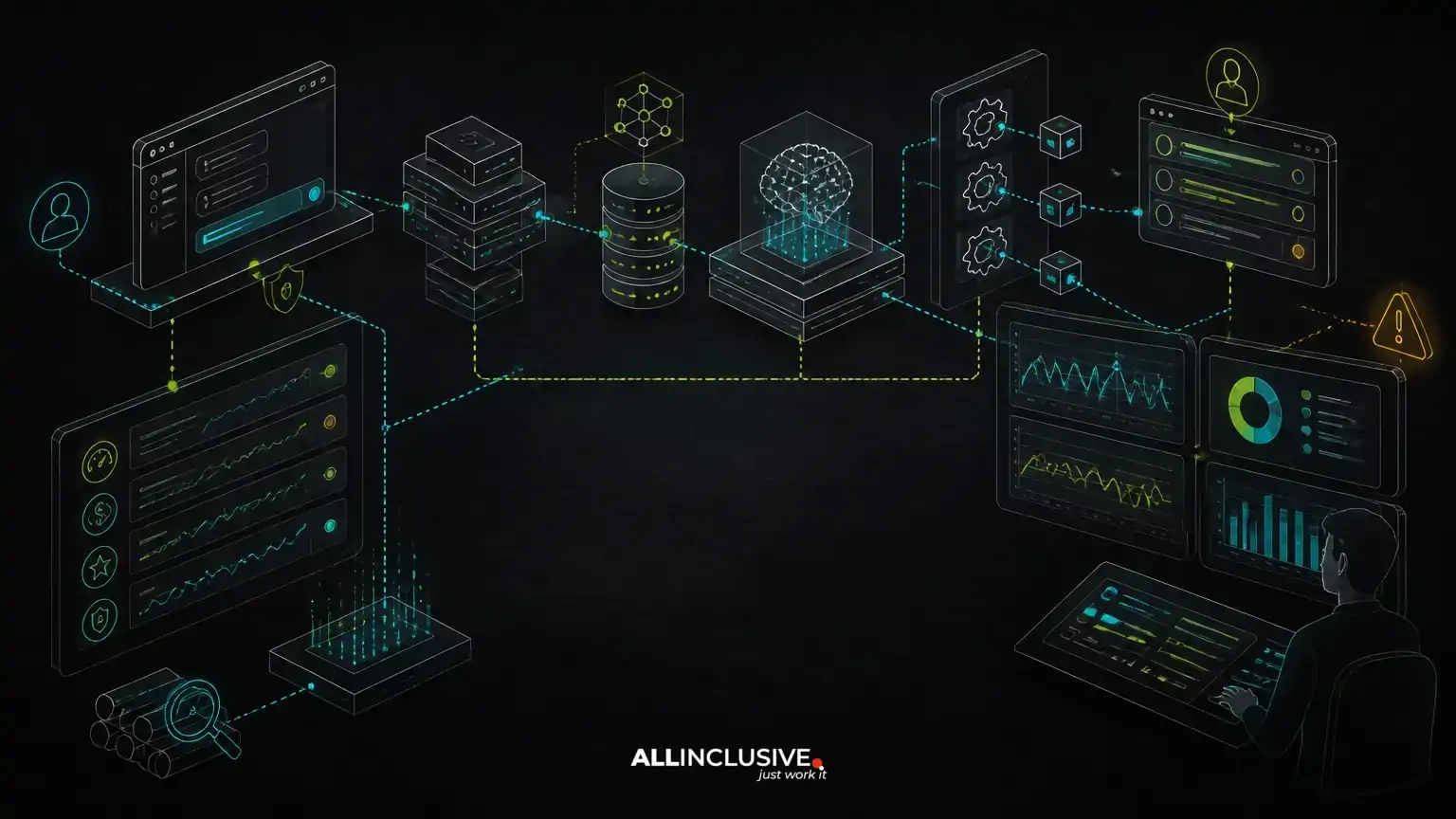
Logging “model response failed” is not enough. A useful trace should show why a route was selected, which policy version made the decision, what context was supplied, whether retrieval succeeded, which tools were available, how long each stage took and whether a fallback or human review was triggered.
Redact or tokenize sensitive content where possible, and define retention rules before enabling detailed traces. Observability data can itself contain customer information, prompts, documents or tool results.
Operational safeguards should include bounded retries, timeouts, circuit breakers, rate-limit handling and idempotency for actions that can change state. A fallback that repeats a payment, creates a duplicate ticket or sends a second customer message is worse than a visible failure. For write operations, persist an action proposal and require application-level confirmation before execution.
A model router should fail into a known workflow: retry safely, use an approved fallback, queue the request, or ask for human review. It should not fail into an untracked guess.
Where Python and Laravel fit in a routing architecture
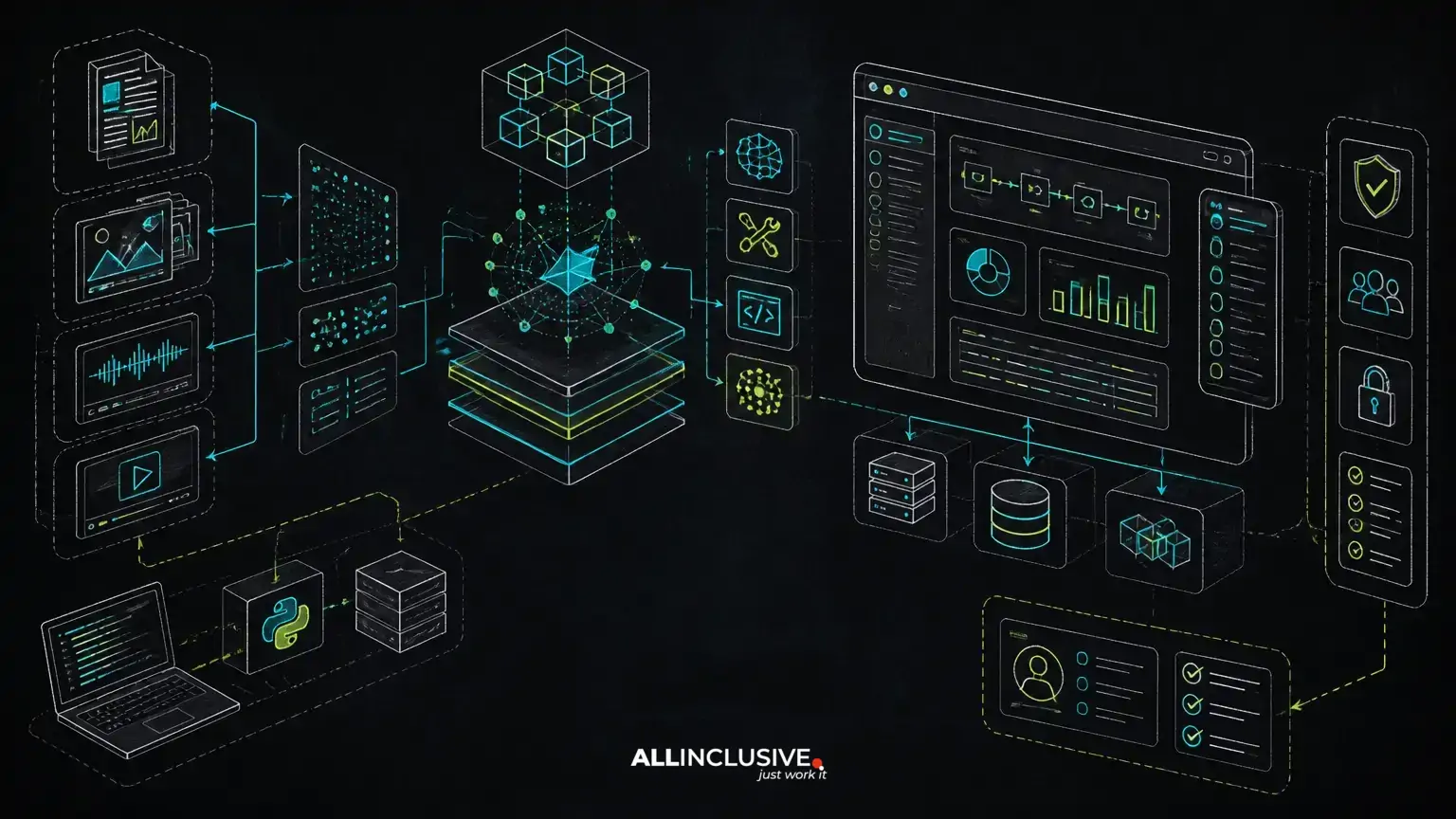
Many teams separate AI workloads from product workflows. A Python service can own model adapters, retrieval, embeddings, reranking, evaluation workers and routing policy execution. Laravel or another application layer can own authentication, tenant boundaries, billing, workflow state, user interfaces, notifications and audit records.
This split is not mandatory, but it can clarify responsibilities. The application should pass a well-defined request to the AI service and receive a versioned result with status, citations, structured fields, proposed actions and review requirements. The AI service should not bypass application permissions or write directly to core business tables without an intentional contract.
For teams building the surrounding product, Python development can support model and data workloads, while a web application architecture can provide the authenticated workflow where users review, approve and correct AI output. The right boundary depends on deployment, ownership and operational needs rather than language preference alone.
When multi-model routing is worth the added complexity
Routing is a strong candidate when the application has materially different task classes, meaningful privacy or latency constraints, large volume variation, multiple approved providers or a business need for resilience. It is also useful when evaluation shows that no single model meets the required quality and operating constraints across all workflows.
Keep a single model when the product has one narrow task, volumes are modest, requirements are stable and the team cannot yet support additional evaluation and monitoring. A simple architecture with strong prompt, retrieval and review controls is preferable to a complex router that nobody can explain.
Before implementation, document:
- the workflows and risk levels the system supports;
- the quality, latency, privacy and cost requirements for each workflow;
- the approved models and prohibited data paths;
- the evaluation set and acceptance criteria;
- fallback, escalation and human-review behavior;
- the owner for model changes, policy changes and incident response.
Multi-model AI routing is ultimately a way to make model choice explicit. It can reduce unnecessary spend, improve task fit and provide safer failure paths, but only when the surrounding software treats routing as a governed production capability. The valuable design is not “many models”; it is a measurable policy that selects an appropriate model, supplies authorized context, validates the result and gives people control when automation is not reliable enough.
For broader guidance on designing production AI systems and custom software, explore AI development and the development hub.