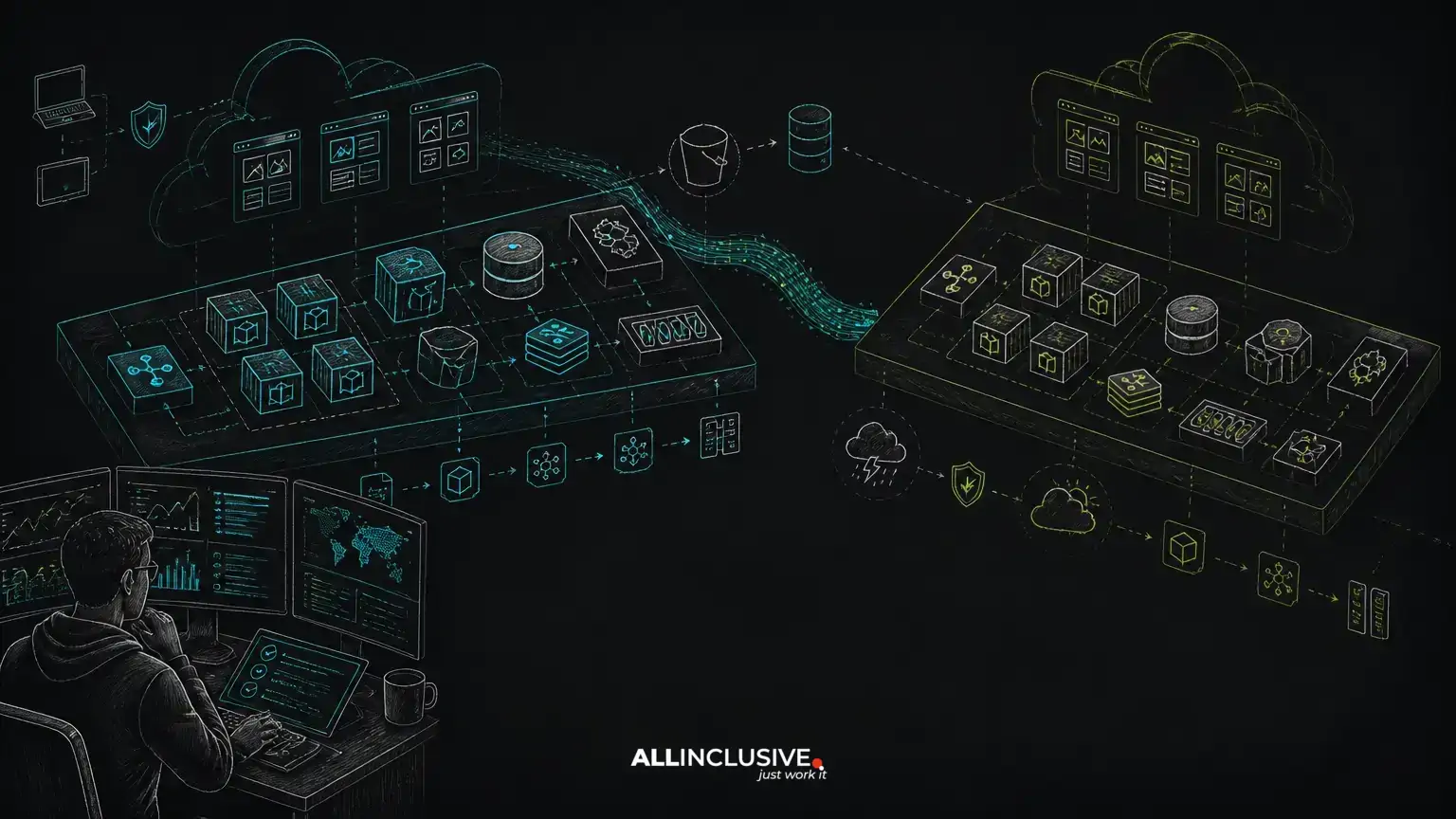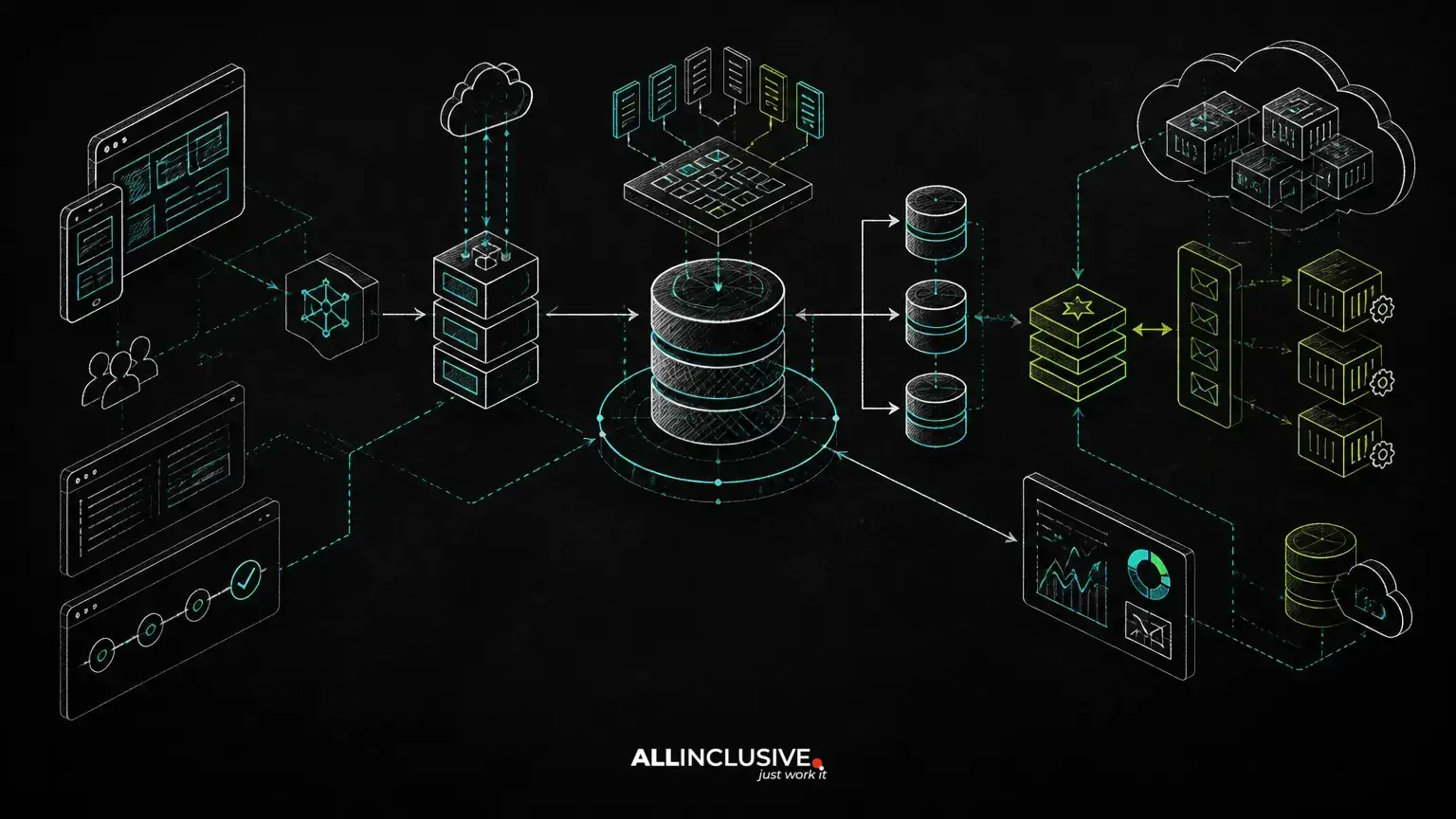
An AI evaluation framework is the system you use to determine whether an AI feature is good enough for a defined job, user group and risk level. It combines representative test cases, measurable criteria, automated checks, human review and production monitoring. For teams evaluating ai evaluation framework, this implementation detail is expanded in custom software development.
This matters because a convincing demo can still fail in production. A retrieval system may cite irrelevant passages, an agent may select the wrong tool, and a response that sounds fluent may be incomplete or unsafe. Production evaluation measures more than whether an answer looks impressive: it tests correctness, relevance, permissions, reliability, latency, cost and the business workflow around the model. For teams evaluating ai evaluation framework, this implementation detail is expanded in ai sales automation.
The objective is not to find a single universal score. It is to create evidence for release decisions, regression detection and continuous improvement.
What an AI evaluation framework should measure
Start by defining what “quality” means for the specific feature. A customer-support assistant, document-processing pipeline and internal research agent need different evaluation criteria.
- Task correctness: Did the system produce the right answer, classification, extraction or action?
- Groundedness: Is the response supported by the approved source material rather than invented?
- Relevance: Did the system address the user’s request without unnecessary or distracting content?
- Completeness: Did it include the required fields, caveats, citations or workflow steps?
- Safety and policy compliance: Did it avoid disallowed content, unsafe actions and unauthorized disclosure?
- Permission correctness: Did retrieval and tool use respect the user’s access rights?
- Operational performance: Did the request meet acceptable latency, availability and cost thresholds?
- User and workflow outcomes: Did the feature help a person complete the intended task with appropriate review?
These dimensions should be tied to acceptance criteria. “The assistant should be helpful” is difficult to test. “The assistant must return the current policy, cite the source section and refuse requests outside the user’s role” is testable.
Build an evaluation dataset from real work
The quality of an evaluation is constrained by the quality of its test cases. A small collection of ideal prompts will not reveal how a system behaves with ambiguity, incomplete context or adversarial input.
Build an initial dataset from several sources:
- Representative requests from the intended workflow, with sensitive information removed or appropriately protected.
- Expert-authored cases covering common, rare and high-impact scenarios.
- Historical support tickets, documents or business records where the expected result can be established.
- Known failure cases from prototypes, pilots and production logs.
- Adversarial cases involving prompt injection, conflicting instructions, malformed input and attempts to access restricted information.
Each case should have more than a prompt. Record the expected answer characteristics, authoritative sources, allowed actions, prohibited actions and acceptable alternatives. For extraction tasks, define the expected schema and how missing or ambiguous fields should be handled. For an agent, define which tools it may call and what constitutes a safe stopping point.
Keep evaluation data separate from the prompts used to tune the system. A training or development set helps engineers iterate; a held-out set provides a more credible signal when deciding whether a change improved behavior.
Evaluate each layer of an LLM or RAG system
End-to-end scores are useful, but they do not explain why a system failed. Evaluate the major stages separately so the team can identify whether the problem is in retrieval, prompting, model selection, tool execution or application logic.
Retrieval and embeddings
For a retrieval-augmented generation system, test whether the relevant documents are retrieved for each query. Measure retrieval quality using criteria such as whether the correct source appears in the returned set, whether high-priority passages rank appropriately and whether access filters are applied correctly.
Embedding choices, chunk boundaries, metadata, query rewriting and indexing freshness can all affect results. If retrieval is weak, changing the generation model may only mask the underlying issue. Reranking can improve ordering, but it adds processing time and cost and should be evaluated against the actual workload.
Generation and grounded responses
Generation tests should check factual accuracy, source support, format compliance and refusal behavior. A response can be factually plausible while still failing because it omits a required condition or uses information outside the permitted knowledge base.
Automated model-based grading can help assess open-ended responses, but it should not be treated as ground truth. Define grading rubrics, validate them with human reviewers and use deterministic checks where possible. For example, code can verify required JSON fields, citation presence, permitted labels and numeric ranges more reliably than a language model judge.
Agents, tools and workflows
Agent evaluation must cover decisions, not just final text. Test whether the agent selects the correct tool, supplies valid arguments, observes tool errors, avoids unnecessary calls and requests human approval before consequential actions.
For example, an invoice assistant might be allowed to extract data automatically but require approval before changing a payment record. The evaluation should test both the normal path and boundaries: missing fields, duplicate records, conflicting instructions, unavailable services and a user without the required permission.
Agent systems often need trace-level evaluation. A correct final answer can conceal an inefficient or risky sequence of calls, while a failed final answer may result from a temporary dependency failure rather than a reasoning problem.
Combine automated checks with human review
Automated evaluations provide speed and repeatability. They are valuable for regression testing every time a team changes a prompt, model, retrieval index, tool schema or application workflow. They are less reliable for nuanced judgments such as tone, ambiguity, business appropriateness and whether an answer is useful to a specific role.
Human review should use a defined rubric rather than an informal impression. Ask reviewers to score clear dimensions and record failure categories. Useful labels might include unsupported claim, missing requirement, wrong source, unsafe action, unauthorized disclosure, poor refusal, formatting error and unnecessary escalation.
Reviewers should also be able to mark a case as ambiguous or not judgeable. Forcing a binary pass or fail when the reference answer is incomplete can create misleading metrics. Periodically compare reviewers’ interpretations and revise the rubric when disagreements expose unclear requirements.
Human review is especially important for high-impact decisions, external communications, financial actions, regulated information and workflows where errors are costly to reverse. The right result may be a controlled handoff rather than full automation.
Set release gates instead of chasing one score
An evaluation framework becomes operational when it defines what blocks release. A weighted average can hide a serious failure: excellent general relevance does not compensate for a permission leak or an unauthorized tool call.
Use separate gates for critical risks and broader quality. A release policy might require:
- No unauthorized retrieval or tool execution in security-sensitive cases.
- Minimum groundedness and correctness levels for approved test categories.
- Valid structured output for every case where downstream software depends on a schema.
- Explicit escalation or refusal for defined high-risk scenarios.
- Latency and cost within the product’s operational budget.
- No material regression against the previous production version without documented approval.
Thresholds should reflect the consequence of failure, not an arbitrary desire for a high score. A low-risk drafting assistant and an agent that changes customer records should not share the same release standard.
Track production behavior with observability
Pre-release tests cannot represent every real request. Production observability closes the gap by showing what users ask, where systems fail and how performance changes over time.
Capture useful trace information while respecting privacy and retention requirements. Depending on the feature, this may include model and prompt versions, retrieval results, citation identifiers, tool calls, validation outcomes, latency by stage, token usage, fallback events and human-review decisions. Avoid collecting more user content than the team needs, and apply access controls, redaction and retention policies to evaluation data.
Monitor both technical and product signals. A model may maintain response quality while becoming too expensive because prompts grew longer. Retrieval may remain accurate while index freshness declines. A workflow may show a stable error rate but generate more human escalations after a policy change.
Production traces should feed a reviewed failure queue. Remove or protect sensitive data, categorize the failure, add representative cases to the evaluation set and test the proposed fix against both the new case and the existing regression suite.
Account for model routing, fallbacks and cost
Many production systems use more than one model or processing path. A smaller model may handle classification, a stronger model may handle difficult requests and deterministic application code may handle validation. A fallback may activate when a provider is unavailable or when the primary response fails a quality check.
Evaluate the routing policy as part of the system. Test whether requests are assigned to the right path, whether fallback behavior preserves permissions and context, and whether retries create duplicate actions. Measure cost and latency by route rather than reporting only an average.
Model changes also require regression testing. A new model can improve writing quality while changing tool-call syntax, refusal behavior, context handling or output consistency. Treat model, prompt, retrieval configuration and tool schema as versioned components of the application.
For a broader discussion of routing decisions, see multi-model AI routing.
Design the evaluation architecture around the application
AI evaluation should connect to the product’s existing software architecture rather than exist as an isolated notebook. A common arrangement is a Python service for model orchestration, retrieval, evaluation jobs and data processing, with Laravel or another application layer managing authentication, business workflows, permissions, user interfaces and durable records.
The boundary should be explicit. The application layer can pass a scoped request and user authorization context to the AI service. The AI service can return structured results, citations, confidence indicators, proposed actions and review requirements. The application—not the model—should enforce final authorization and commit consequential changes.
This architecture supports independent testing and clearer ownership. Python may be appropriate for AI workloads and evaluation pipelines, while a Laravel-based product can own workflow state, administration and approval screens. The best split depends on existing systems, team skills, deployment constraints and the level of control required.
For the broader engineering context, explore Python development and web development.
Use an evaluation plan before expanding the feature
- Define the job: Specify the user, workflow, permitted actions and unacceptable failures.
- Map the system: Identify the model, prompts, retrieval path, tools, validators, fallbacks and human checkpoints.
- Create representative cases: Include normal, ambiguous, edge, adversarial and permission-sensitive examples.
- Choose measurement methods: Use deterministic checks, reference comparisons, model-assisted grading and human review where each is appropriate.
- Set release gates: Separate critical safety and authorization requirements from broader quality targets.
- Instrument production: Trace versions, retrieval, tool calls, latency, cost and review outcomes with privacy controls.
- Feed failures back: Convert meaningful production failures into protected regression cases.
A disciplined evaluation process makes AI behavior visible enough to manage. It does not eliminate uncertainty, and it cannot replace product judgment or human accountability. It does give engineering and product teams a shared way to decide whether a system is improving, where risk remains and whether automation should expand.
Teams planning a custom AI capability can review the broader AI development perspective, including how evaluation, observability, privacy and human review fit into a production delivery plan.