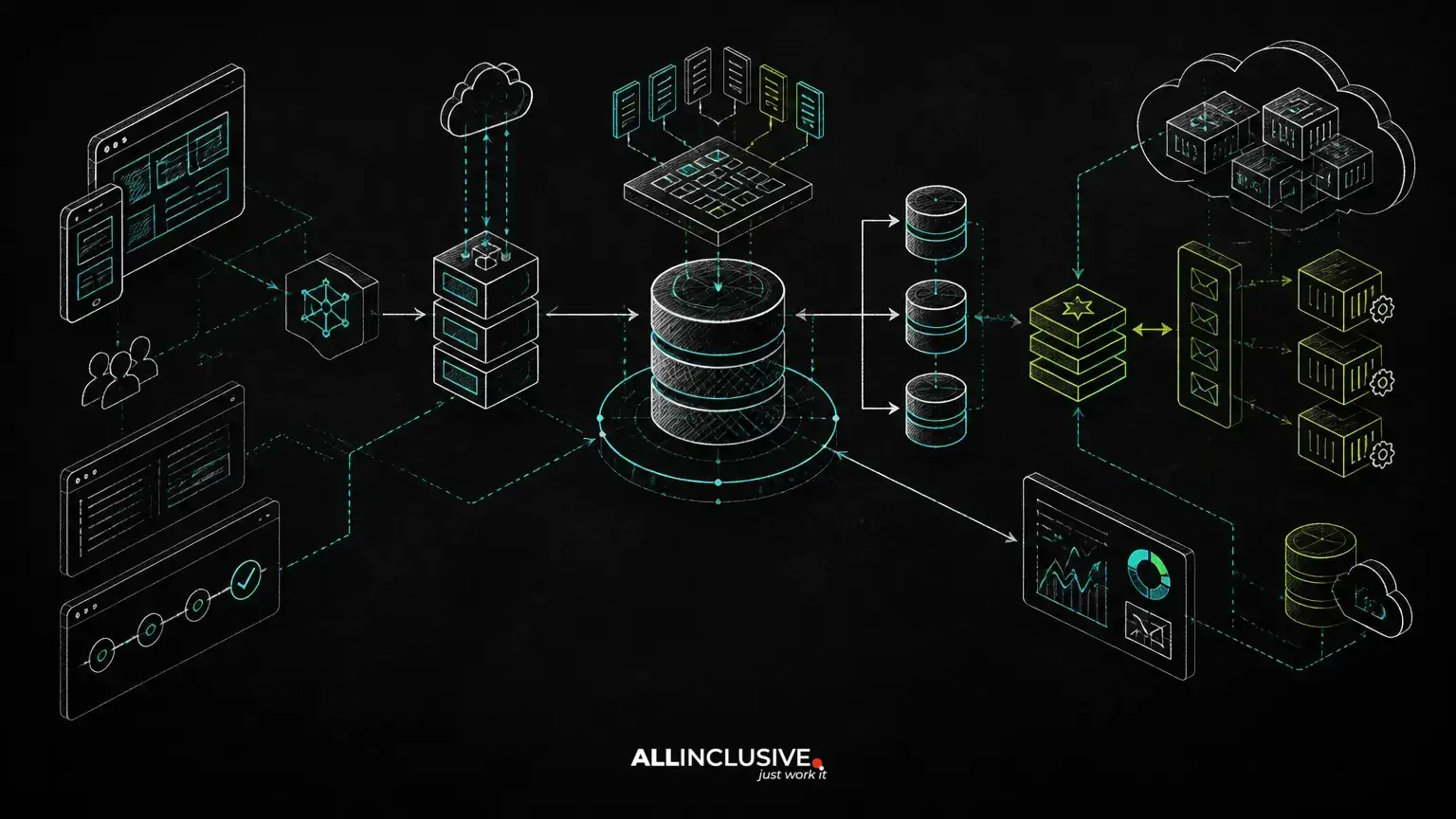
Choosing between a PHP agency and freelancer is less about finding the lowest initial quote and more about matching delivery capacity to the risk of the application. A freelancer may be the right choice for a contained feature, a short engagement or a system with clear ownership and limited operational complexity. An agency is usually better suited to custom PHP systems that require multiple disciplines, modernization planning, ongoing support or continuity beyond one individual.
The right decision depends on the application’s business logic, dependencies, database behavior, security exposure, performance requirements and expected lifespan. A useful comparison should also distinguish whether the work is stabilization, refactoring, upgrading, migration or a rebuild. Those are different engineering assignments, even when they are all described as “PHP development.”
PHP agency vs freelancer: the core trade-off
A freelancer typically offers a direct relationship with the person doing the work. That can reduce communication overhead and make a small project efficient. The trade-off is concentration of knowledge: architecture, deployment, debugging history and operational decisions may all reside with one person.
A PHP agency provides a team structure rather than a single contributor. Depending on the engagement, that may include backend engineering, project coordination, quality assurance, infrastructure or security review. The trade-off is usually greater process and a higher minimum engagement, but with more resilience when requirements change or a specialist is needed.
- Choose a freelancer when: the scope is narrow, the application is familiar, decision-making is fast and the business can tolerate dependence on one contributor.
- Choose an agency when: the system is business-critical, legacy dependencies are unclear, several specialties are required or ongoing continuity matters.
- Use a hybrid model when: an internal technical owner can manage a freelancer or agency and the work has well-defined boundaries.
Cost is more than the initial development quote
Freelancers can be cost-effective because the delivery structure is smaller. For a well-specified task, direct access to an experienced PHP developer may avoid unnecessary coordination. However, the apparent saving can disappear if the engagement requires undocumented investigation, emergency availability, extensive testing or knowledge transfer at the end.
Agency engagements may include discovery, project management, code review, testing and release planning. Those activities add visible cost, but they can reduce the chance that a change introduces a regression or that an undocumented dependency delays delivery. The relevant comparison is total cost of ownership, not only the first estimate.
Before comparing proposals, ask each provider to identify:
- what is included in discovery and technical assessment;
- how existing business rules will be documented and tested;
- whether quality assurance, deployment and rollback planning are included;
- how third-party dependencies and hosting responsibilities are handled;
- what support is available after release; and
- which assumptions could change the scope.
For additional context, the factors that influence scope and long-term spend are covered in custom PHP development cost.
Continuity and the single-person dependency
Continuity is one of the clearest differences between a PHP agency and freelancer. A freelancer may know the system deeply, but availability can change because of other commitments, illness, holidays or a decision to stop supporting a technology. That is not a criticism of freelancers; it is a structural dependency that should be managed explicitly.
An agency can distribute knowledge across more than one engineer and maintain a documented handoff process. That does not automatically make an agency reliable. Buyers should verify how the team handles staff changes, whether source code and deployment credentials remain under the client’s control, and how urgent issues are escalated.
Useful continuity controls include:
- repository ownership held by the client;
- documented local, staging and production environments;
- repeatable deployment instructions;
- an inventory of scheduled jobs, integrations and credentials;
- tests around high-risk business workflows; and
- a defined transition and knowledge-transfer process.
Technical risk in custom and legacy PHP systems
Many PHP applications are not difficult because of PHP syntax. They are difficult because years of business decisions are embedded in controllers, templates, database queries, scheduled jobs and third-party integrations. Replacing a developer without understanding those rules can disrupt billing, inventory, permissions, reporting or customer workflows.
A provider should first determine what kind of intervention is justified:
Stabilize
Stabilization addresses urgent operational risk without changing the system’s fundamental design. Typical work may include fixing deployment failures, adding monitoring, correcting vulnerable dependencies, improving backups or isolating a recurring production fault.
Refactor
Refactoring improves internal structure while preserving externally observable behavior. It may involve separating responsibilities, introducing tests around critical paths or replacing fragile database access patterns. The objective is safer change, not a wholesale rewrite.
Upgrade
An upgrade moves the runtime, language version, packages or supporting infrastructure forward. It requires dependency analysis and regression testing because compatibility changes can affect authentication, data handling, extensions and integrations.
Migrate
Migration moves the application to a different framework, hosting model, database configuration or architectural boundary. A Laravel migration may be justified when the existing codebase would benefit from standardized conventions and the migration can preserve business behavior without creating disproportionate risk.
Rebuild
A rebuild replaces substantial parts of the application. It may be appropriate when the current architecture prevents required capabilities or cannot be secured and maintained economically. It also carries the highest risk of losing undocumented rules, edge cases and historical data behavior.
A careful comparison of these options is available in refactor vs rewrite decisions for PHP applications.
When a freelancer is the better fit
A freelancer can be an excellent choice when the work is bounded and the technical context is accessible. Examples include a defined API endpoint, a focused administrative feature, a targeted bug fix or a small integration with documented requirements.
The model works best when the buyer can provide:
- a clear acceptance definition;
- access to a technical decision-maker;
- a test or staging environment;
- reasonable documentation of integrations and data rules; and
- time for review, acceptance testing and handover.
For a freelancer, ask how the work will be tested, who can respond during an incident, what happens if the engagement ends and whether another engineer could take over from the delivered documentation.
When an agency is the better fit
An agency is often more suitable when the PHP system is revenue-critical, operationally complex or undergoing modernization. The need may extend beyond coding into architecture, security review, database analysis, release management and support.
Agency capacity is particularly valuable when:
- the application has several legacy integrations;
- multiple teams or stakeholders must coordinate delivery;
- the system needs a staged modernization plan;
- production changes require testing and rollback procedures;
- the business needs ongoing maintenance coverage; or
- the roadmap includes custom software beyond one isolated feature.
When evaluating providers, use the criteria in choosing a PHP development company rather than relying on portfolio presentation alone.
Security, performance and database behavior
Security and performance should be evaluated against the actual application, not assumed from the provider’s label. A capable contributor in either model should be able to explain how authentication, authorization, input handling, secrets, dependency updates, logging and backups will be assessed.
Performance work also requires diagnosis. Slow response times may originate in inefficient queries, missing or unsuitable indexes, external services, session handling, excessive rendering or infrastructure constraints. Rewriting code before identifying the bottleneck can increase cost without improving the user workflow.
Database behavior deserves special attention during modernization. A change that appears harmless in application code may alter transaction boundaries, sorting, null handling, time zones, reporting results or the order in which related records are processed. Protecting business logic means testing representative data and high-value workflows, not merely confirming that pages load.
How Laravel fits into the decision
Laravel can provide useful conventions and an established structure for routing, application organization, validation, queues, testing and other common concerns. That does not mean every custom PHP system should be moved to Laravel.
A migration is more defensible when the existing code is difficult to extend, the team needs consistent conventions, the target architecture has been defined and critical behavior can be tested. It is less defensible when the proposal treats framework adoption as a substitute for understanding the database, integrations or business rules.
Whether the work remains custom PHP or moves toward Laravel, the sequence should be based on risk: inventory dependencies, capture behavior, establish tests around critical workflows, then change one boundary at a time where practical. The article on custom PHP versus Laravel provides a focused framework comparison.
A practical selection checklist
- Classify the work. Is it stabilization, refactoring, an upgrade, migration or rebuild?
- Measure dependency risk. Identify integrations, extensions, scheduled jobs, hosting assumptions and database coupling.
- Protect business logic. Document workflows, exceptions, permissions and data transformations before changing them.
- Evaluate continuity. Confirm repository ownership, documentation, handover and support arrangements.
- Compare delivery controls. Review testing, code review, staging, release and rollback practices.
- Separate urgent from strategic work. Fix operational exposure first, then plan structural improvements.
- Define success operationally. Tie acceptance to user workflows, maintainability, security findings and release confidence.
Choosing the delivery model
The best choice is not universally an agency or universally a freelancer. A freelancer may deliver a contained PHP change efficiently when the system and scope are understood. An agency earns its additional structure when the application needs broader engineering coverage, continuity or a controlled modernization path.
For organizations assessing custom software, the broader development services context can help frame the engagement around product goals, technical risk and ownership. For ongoing operational needs, review PHP support and maintenance options before the project begins rather than treating support as an afterthought.
The strongest proposal—regardless of provider type—will explain what is known, what remains uncertain, how existing behavior will be preserved and how the business can safely operate the system after delivery.