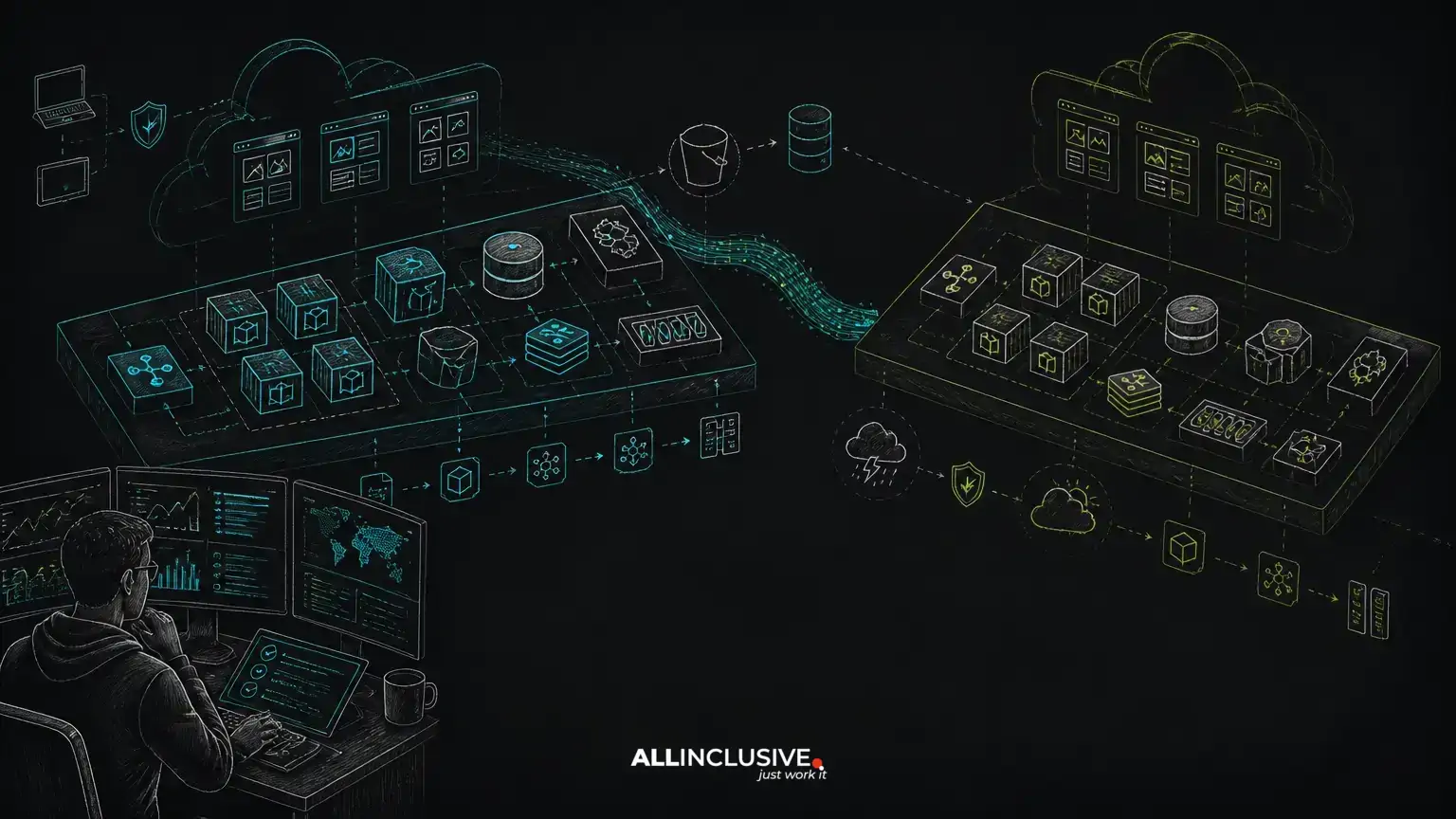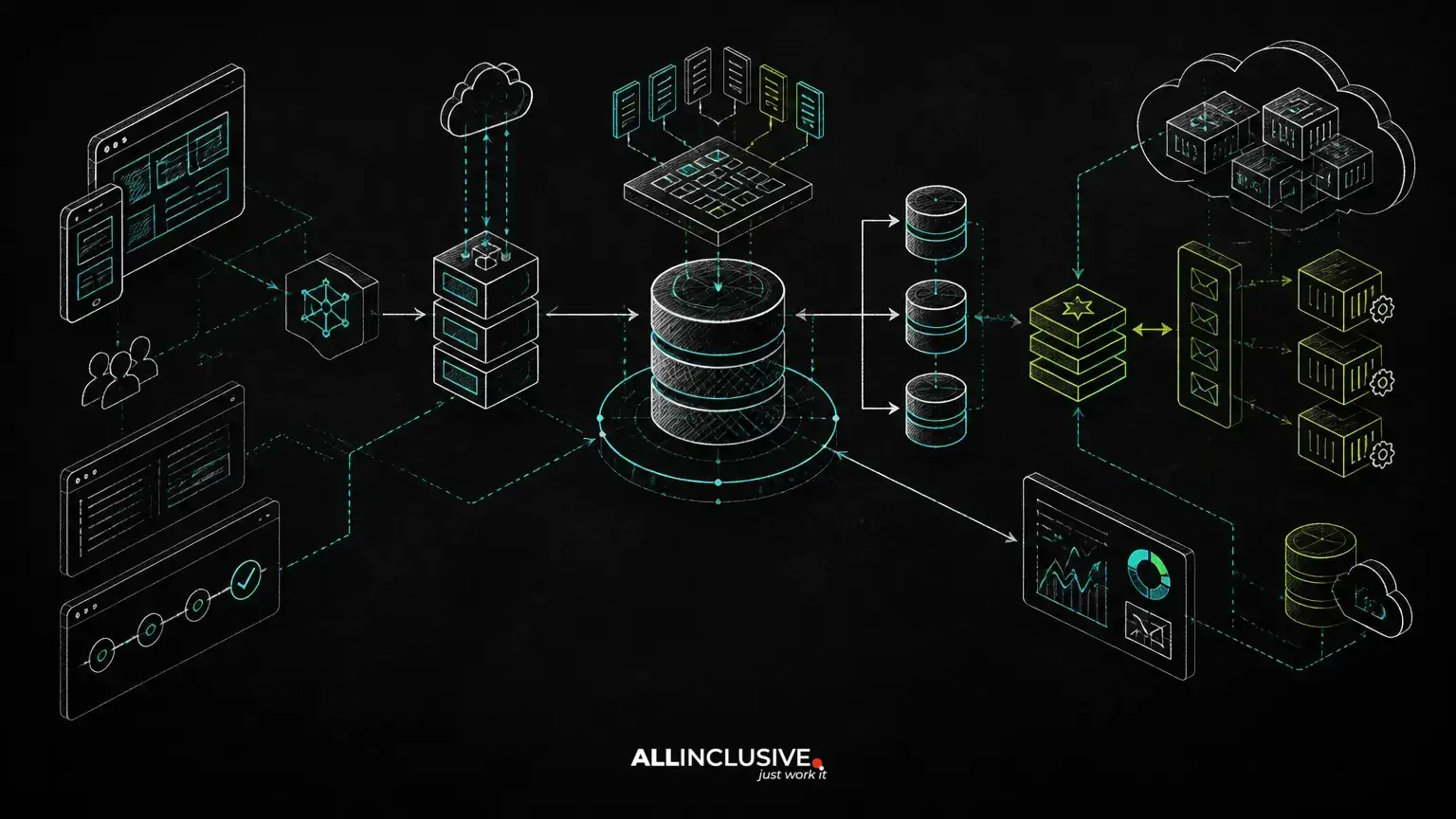
Custom PHP development cost is driven by the system you need to build or change—not by PHP alone. Scope, business rules, integrations, data quality, architecture, security requirements and the condition of an existing codebase all affect the effort. A small internal workflow may be straightforward, while a revenue-critical application with legacy dependencies can require extensive discovery before implementation begins.
For buyers comparing proposals, the useful question is not simply “What does custom PHP development cost?” It is: Which technical and business variables are included in the estimate, and what risks remain unpriced? This article explains the main cost factors and shows how to distinguish stabilization, refactoring, upgrading, migration and rebuilding before selecting an approach.
PHP can support custom-made business software, APIs, administrative systems and customer-facing applications. The right architecture depends on the workflow, ownership model and operational constraints. A practical overview of the broader PHP development capability can help establish that context, while this guide focuses specifically on cost and decision-making.
What determines custom PHP development cost?
Most estimates are shaped by several connected dimensions. Treating them separately helps buyers identify what is genuinely required and what may be optional.
1. Functional scope and business-rule complexity
A feature count is an incomplete measure of effort. A simple form, for example, may become more complex when it includes approval paths, role-based permissions, audit history, notifications, document generation, exceptions and integrations.
Business rules are especially important in custom systems. They may be distributed across PHP code, database triggers, scheduled jobs, configuration files and undocumented operational procedures. Reconstructing those rules takes time, but skipping that work can produce software that appears complete while changing how the business actually operates.
A stronger scope definition identifies:
- Primary user roles and workflows
- Rules, exceptions and approval states
- Required integrations and data exchanges
- Reporting, audit and retention requirements
- Administrative tools and operational controls
- Nonfunctional requirements such as availability, response time and access control
2. New build versus existing-system work
New development provides more freedom over architecture, but it still requires discovery, domain modeling, testing and deployment design. Existing applications add another layer: the team must understand what is already there before safely changing it.
Legacy PHP systems may contain outdated dependencies, mixed presentation and business logic, inconsistent database behavior, undocumented endpoints or assumptions embedded in operational processes. The cost is therefore influenced by the condition of the system as much as by the requested feature list.
An estimate should make clear whether it includes codebase assessment, dependency review, database analysis, test coverage improvements and release planning. If these activities are excluded, the initial figure may not represent the full modernization effort.
3. Integrations and data movement
Integrating with payment providers, CRMs, ERP systems, identity platforms, shipping services or external APIs introduces dependency and testing work. The effort depends on the quality of documentation, authentication model, error behavior, rate limits, webhooks and data-mapping rules.
Data migration can be a separate cost driver. Moving records is not only a matter of exporting and importing tables. Teams may need to deduplicate data, preserve identifiers, reconcile historical states, transform formats and validate results with business users.
4. Architecture and deployment requirements
A PHP application can be deployed in many ways, from a relatively simple hosted environment to a distributed platform with queues, caching, background workers, multiple environments and automated release controls. Each architectural choice can improve a specific quality attribute while adding operational complexity.
Relevant questions include:
- Does the application need synchronous and asynchronous processing?
- How will sessions, files, secrets and configuration be managed?
- Will the system require caching, search, queues or scheduled jobs?
- How are development, staging and production environments separated?
- What monitoring, logging, backup and rollback capabilities are required?
Architecture should follow actual workload and risk. Adding infrastructure that the application does not need can increase ownership cost without improving outcomes.
Modernization choices that change the estimate
When an existing PHP application is involved, the most important cost decision is often not which framework to use. It is which type of intervention is justified.
Stabilize
Stabilization addresses immediate operational risk. Typical work may include fixing deployment failures, correcting security issues, improving backups, identifying critical errors, documenting runtime dependencies and adding basic monitoring.
This is often appropriate when the system is business-critical but poorly understood. Stabilization does not necessarily improve the architecture, but it creates safer conditions for later work.
Refactor
Refactoring improves internal structure while preserving the application’s observable behavior. Examples include separating business logic from presentation code, reducing duplication, introducing clearer service boundaries and improving testability.
Refactoring can control risk when the domain logic is valuable but the code has become difficult to change. It requires discipline: changing structure and behavior simultaneously makes it harder to determine whether a defect came from the modernization or the original system.
For a more detailed decision framework, see refactor versus rewrite for an aging PHP application.
Upgrade
Upgrading may involve PHP runtime versions, libraries, frameworks, extensions, build tooling or deployment environments. It can improve security supportability and compatibility, but an upgrade is not automatically a modernization.
Older applications may rely on deprecated behavior, implicit type conversions, outdated database drivers or packages that no longer work together. The effort depends on dependency inventory, automated tests, runtime compatibility and the ability to verify business-critical workflows.
Migrate
Migration moves an application or selected capabilities to a different framework, hosting model or architecture. A Laravel migration may be justified when the team needs a more consistent application structure, established conventions, easier onboarding or framework-supported capabilities that reduce recurring maintenance effort.
However, introducing Laravel is not a substitute for understanding the existing domain. A migration that reproduces unclear business logic in a new framework can transfer the same problems while adding migration cost.
The decision should consider the value of preserving existing behavior, the availability of tests, the age and quality of dependencies, the team’s skills and the expected lifetime of the system. The trade-offs between a custom approach and Laravel are discussed in custom PHP versus Laravel.
Rebuild
A rebuild replaces the application or a substantial part of it. This can be the right choice when the existing architecture prevents required capabilities, security controls or operational improvements. It can also be appropriate when the business process itself has changed so significantly that preserving the old structure creates more risk than starting over.
Rebuilds carry a common failure mode: teams underestimate the amount of business knowledge encoded in the old system. A replacement must account for edge cases, reports, historical data, permissions and integrations—not only the visible user interface.
Business logic preservation is a cost and risk issue
Legacy modernization is safest when business logic is treated as an asset to discover and preserve selectively. The code may be difficult to maintain, but it can still contain rules that users and downstream systems depend on.
A careful assessment may combine code review, database analysis, workflow observation, stakeholder interviews, production-log review and characterization tests. These tests document current behavior before changes are made, including behavior that may seem unusual but is operationally significant.
This approach affects cost in the short term because discovery and validation are explicit. It can reduce avoidable rework by preventing a replacement system from silently changing billing, permissions, inventory, reporting or approval behavior.
Security and performance requirements
Security
Security work should be scoped as part of the application rather than added as a final checklist. Cost drivers may include authentication and authorization design, session handling, input validation, file-upload controls, secrets management, audit logging, dependency maintenance and protection of sensitive data.
Legacy systems may require additional investigation because security assumptions are often distributed across application code, web-server configuration and third-party packages. Remediation priorities should reflect exposure and business impact rather than treating every issue as equally urgent.
Performance
Performance requirements become meaningful when tied to user workflows and operating conditions. The relevant questions may include how many concurrent users are expected, which operations are slow, whether reports compete with transactional workloads and how external services affect response time.
Potential solutions include query improvement, indexing, caching, pagination, queue-based processing and application-level redesign. These should follow measurement and profiling. Premature optimization can increase complexity without addressing the actual bottleneck.
Maintenance is part of the total cost
Initial delivery is only one component of ownership cost. A maintainable PHP system also requires a plan for dependency updates, security fixes, backups, monitoring, incident response, documentation, environment management and future enhancements.
Maintenance cost is affected by code clarity, automated tests, deployment repeatability, observability and team continuity. A low initial estimate may become expensive if every change requires manual production work or depends on one person’s undocumented knowledge.
Support arrangements should define response expectations, included activities, release responsibilities and what counts as new development. The support and maintenance service overview provides a useful basis for evaluating these responsibilities.
How to compare custom PHP proposals
When reviewing proposals, compare assumptions and deliverables rather than headline totals. Ask each provider to explain:
- What discovery and technical assessment are included
- Which workflows, integrations and data sets are in scope
- Whether testing includes business-rule and regression coverage
- How security, performance and deployment are addressed
- Which modernization path is recommended and why
- What risks, exclusions and dependencies could change the estimate
- How ownership, documentation and knowledge transfer will work
- What post-launch support is available
A phased plan can make uncertainty easier to manage. For example, an assessment may produce a dependency inventory, architecture findings, risk register, prioritized roadmap and implementation estimate before a larger modernization commitment is made.
Decision checklist for buyers
Before requesting or approving an estimate, document:
- The business outcome the application must support
- Critical workflows and rules that cannot change accidentally
- Current PHP, framework, database and hosting dependencies
- Known security, reliability and performance problems
- Required integrations and data migration constraints
- Expected users, workload patterns and operational responsibilities
- Whether the preferred intervention is stabilization, refactoring, upgrading, migration or rebuilding
- How success will be verified after release
For broader software delivery and architecture considerations, explore custom software development. A focused PHP assessment can then translate these requirements into a realistic sequence of technical work.
What ultimately determines custom PHP development cost
Custom PHP development cost is best understood as the cost of achieving a reliable business outcome under defined technical constraints. Scope matters, but so do legacy dependencies, hidden business rules, database behavior, security requirements, integrations, deployment design and future ownership.
The most defensible estimate distinguishes what is known from what still needs investigation. It also explains why the recommended path is to stabilize, refactor, upgrade, migrate or rebuild. That clarity helps buyers protect business logic, control modernization risk and invest in a PHP system that remains maintainable after the initial release.