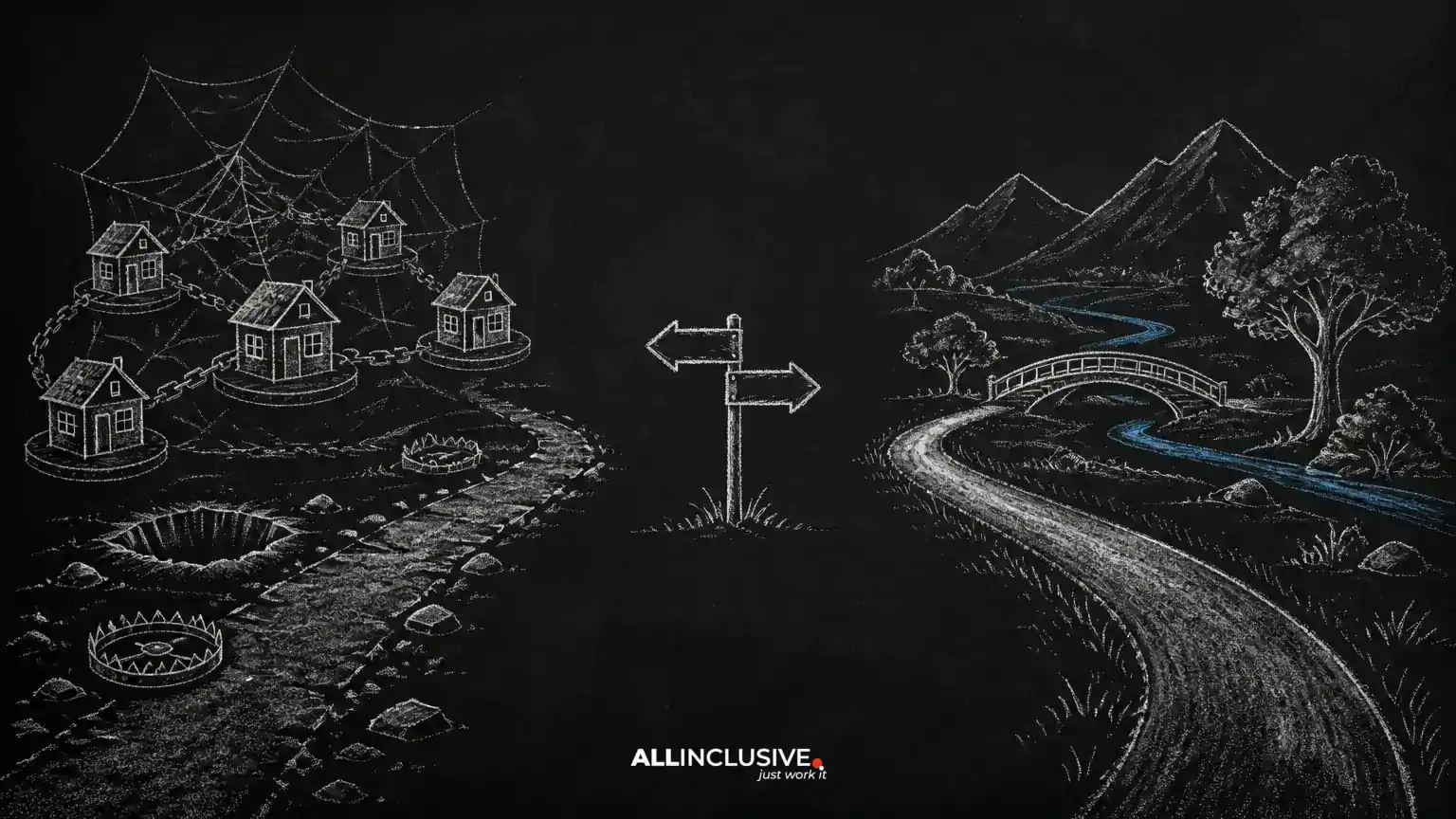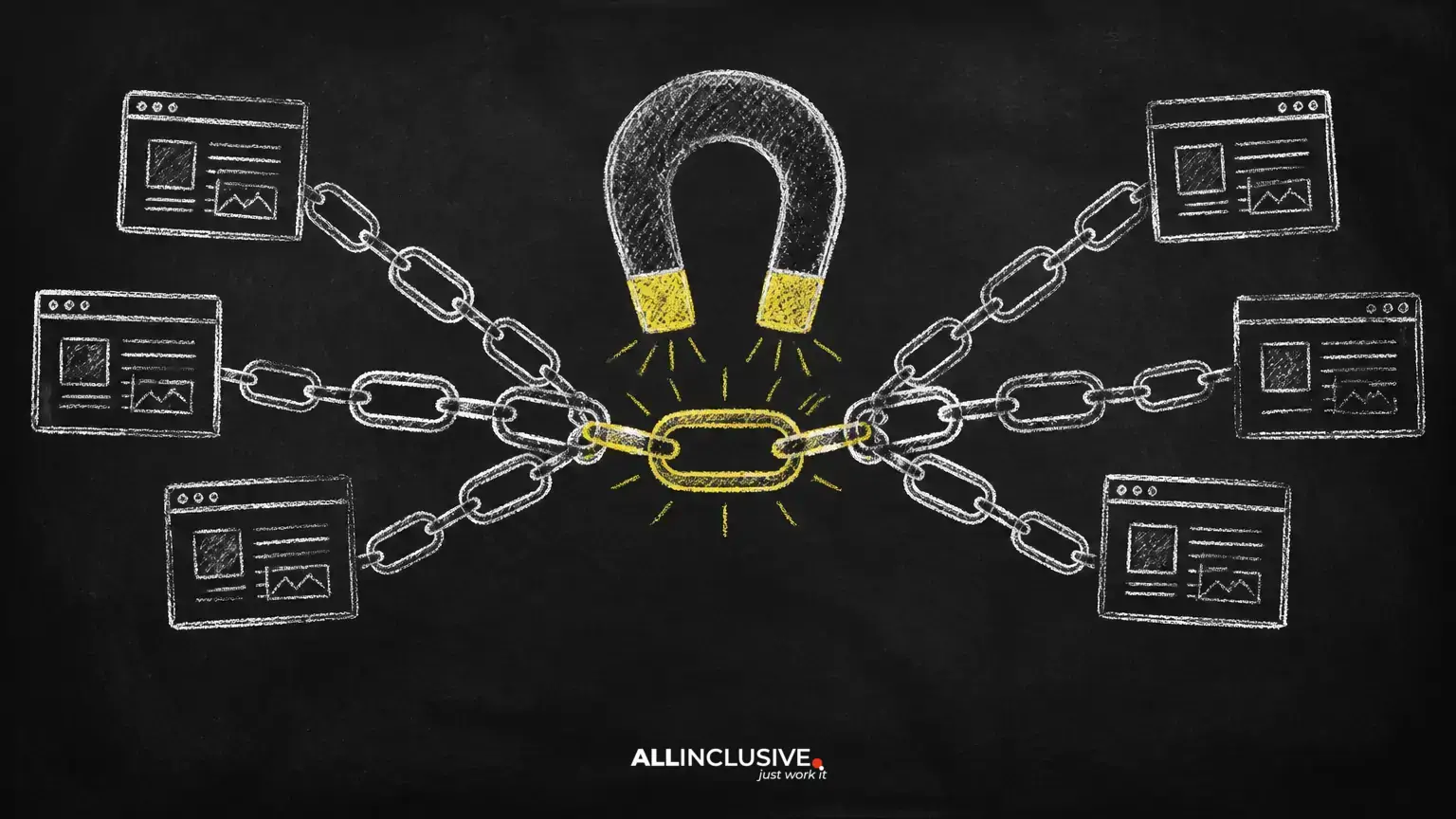
Backlinks are links from another website to a page on your site. They can help people discover useful resources, support your site’s credibility, and contribute to a broader search visibility strategy. But acquiring links is not a numbers game. A large collection of irrelevant, manipulative, or paid links can create risk without improving the experience for users.
The most durable approach is to earn links because another publisher believes your page helps its audience. That means choosing a relevant topic, publishing something genuinely useful, and promoting it to people who have a sensible reason to reference it.
This guide explains how to build backlinks systematically, how to assess opportunities, and which shortcuts to avoid. For the broader role of links in organic search, see Allinclusive’s link-building services.
What makes a backlink valuable?
A useful backlink has more to do with context than with a single authority metric. Before pursuing an opportunity, consider:
- Topical relevance: The linking page and its audience should have a reasonable connection to your subject.
- Editorial purpose: The link should help readers understand, verify, or act on information.
- Page quality: The referring page should be maintained, readable, and useful rather than a thin list created solely for links.
- Natural placement: A link surrounded by relevant context is generally more meaningful than one buried in an unrelated footer or author profile.
- Audience fit: Even a link with limited search value can be worthwhile if it sends genuinely interested visitors.
Do not treat any third-party score as a final verdict. Review the actual page, its purpose, its audience, and whether you would want a prospective customer to visit it.
1. Create a resource people can cite
The strongest link-building asset is often a page that makes someone else’s work easier. Examples include an original explanation, a practical template, a glossary, a comparison framework, a calculator, a well-organized checklist, or a carefully documented piece of research.
Start with a specific audience and a clear use case. Ask what a journalist, educator, industry writer, community manager, or business owner would need to reference. Then make the page easy to trust and use:
- Explain the scope and limitations of the information.
- Show how conclusions were reached when you present original analysis.
- Use clear headings, examples, tables, and concise definitions.
- Include a visible publication or update date only when you can maintain it accurately.
- Make important claims traceable to authoritative sources.
A longer page is not automatically a better asset. Depth should mean completeness, clarity, and usefulness—not repetition.
2. Use digital PR without manufacturing claims
Digital PR connects a publishable idea with the people who may cover or cite it. A campaign might be based on original analysis, a subject-matter expert’s explanation, a timely but well-supported resource, or a visual that clarifies a complex issue.
Build a small outreach package before contacting anyone:
- Write a one-sentence description of the news or insight.
- Identify the audience affected by it.
- Prepare the underlying methodology, source notes, or expert credentials.
- Create a concise image or data summary where it genuinely improves understanding.
- List publications and writers whose existing coverage makes the topic relevant.
Personalize the pitch around the recipient’s beat. Do not send the same mass email to unrelated publishers, and do not imply that coverage is guaranteed. Accuracy and relevance matter more than a dramatic headline.
3. Find and reclaim unlinked mentions
Organizations are sometimes mentioned without a link. These references can appear in articles, event pages, partner announcements, interviews, directories, or reviews. Search for your organization name, product names, senior experts, and common spelling variations.
When you find a relevant mention, verify that a link would improve the reader’s experience. Then send a short request that identifies the page, explains which destination would be useful, and gives the publisher an easy choice. A request is more persuasive when it helps correct attribution or gives readers a direct path to supporting information.
Do not demand a link or ask publishers to alter independent opinions. The goal is to make an accurate reference more useful, not to control coverage.
4. Repair broken links with a genuine replacement
Broken-link outreach works best when your page is a close, useful substitute—not merely a page you want to promote. Look for relevant pages that contain dead links, outdated destinations, or resources that have moved. Confirm the issue yourself, then check whether your existing content satisfies the same need.
If it does, contact the site owner with:
- The page containing the broken link.
- The anchor text or section where the issue appears.
- A brief explanation of the problem.
- Your replacement URL and a description of why it fits.
If no suitable replacement exists, do not create a thin article simply to pursue the link. A helpful alternative may be to notify the publisher without requesting your own page as the replacement.
5. Reconnect with partners, suppliers, and associations
Legitimate business relationships can reveal natural link opportunities. Depending on the organization and its editorial standards, possibilities may include a supplier’s retailer directory, a partner profile, a professional association member page, an event speaker page, or a local business directory.
Only pursue listings that accurately represent the relationship. Avoid joining low-quality directories solely for SEO, creating fake partnerships, or paying for inclusion in a page that exists primarily to sell links. If a listing requires payment, assess it as a marketing decision first and seek appropriate disclosure; do not assume payment makes a link an SEO benefit.
6. Analyze competitor links for ideas, not duplication
A competitor backlink review can uncover publications, communities, resource pages, and topics that are relevant to your market. Treat the output as a prospecting list, not a checklist of links to copy.
For each potential referring page, ask:
- Why did the publisher link to the competitor?
- Does the page serve the same audience as your business?
- Can you offer a materially better, more specific, or more current resource?
- Is there a legitimate editorial reason to contact the publisher?
Prioritize prospects that have a clear content fit. A competitor link does not prove that the site accepts submissions or that your page deserves a link.
7. Contribute expertise where it genuinely helps
Interviews, expert commentary, webinars, podcasts, community discussions, and guest contributions can build awareness and relationships. They should not be treated as link containers.
Choose opportunities where you can add firsthand knowledge or a defensible professional perspective. Follow the publisher’s guidelines, disclose relevant relationships, and link only to pages that support the discussion. A small number of useful contributions is more sustainable than publishing shallow guest posts across unrelated sites.
8. Promote linkable content after publication
Publishing a strong page does not guarantee that people will find it. Build promotion into the editorial process:
- Identify likely readers and publishers before creating the asset.
- Notify relevant partners or experts when you feature their work accurately.
- Share the page through channels where the intended audience already participates.
- Contact a limited set of highly relevant publishers with a specific reason the resource may help their readers.
- Review performance and improve the asset when users reveal unanswered questions.
Promotion should be proportionate to the value of the page. Avoid automated blasts, repeated follow-ups, and promises about rankings.
9. Audit your link profile and protect quality
Regularly review new referring domains, destination pages, anchor text, and suspicious patterns. A sudden influx of irrelevant links may result from scraping, spam, or automated activity rather than your own work. Keep records of legitimate outreach and partnerships so you can distinguish planned activity from noise.
Do not respond to unsolicited threats demanding payment to remove links. Document the messages, investigate whether there is a real issue, and consult qualified SEO or legal professionals when the situation is material. Link cleanup should be evidence-based, not driven by fear of every unfamiliar domain.
What to avoid when building backlinks
- Buying links intended to manipulate search rankings.
- Large-scale exchanges or automated placements with little editorial value.
- Private networks created primarily to pass ranking signals.
- Irrelevant guest-post campaigns published for links alone.
- Comment, forum, or directory spam.
- Exact-match anchor text repeated unnaturally.
- Creating pages whose only purpose is to attract or redirect links.
These approaches can also damage your brand. A link strategy should improve how people discover and evaluate your work, not merely produce a report full of referring domains.
A simple backlink workflow
For a manageable process, use this sequence:
- Set the audience goal: Decide who should discover the page and what action or understanding it should support.
- Build the asset: Publish the clearest, most useful version you can maintain.
- Map prospects: Find relevant publishers, partners, resource pages, and existing mentions.
- Qualify carefully: Remove pages that are irrelevant, deceptive, or clearly built to sell links.
- Contact selectively: Explain the fit and make the request easy to evaluate.
- Measure outcomes: Track referral visits, qualified inquiries, coverage quality, and relationships—not just link totals.
Link building works best as part of a complete search strategy that also addresses technical accessibility, content quality, internal linking, and conversion paths. Review the broader SEO services guide for how these pieces fit together.
Conclusion
To get better backlinks, create pages that deserve citation, identify publishers with a genuine audience fit, and make respectful requests supported by a clear reason to link. Use competitor research, unlinked mentions, broken-link discovery, partnerships, and digital PR to find opportunities—but evaluate each one on its actual value to readers.
There is no reliable shortcut around usefulness and editorial judgment. A smaller set of relevant, earned links can support discovery and reputation far better than a large volume of artificial placements.