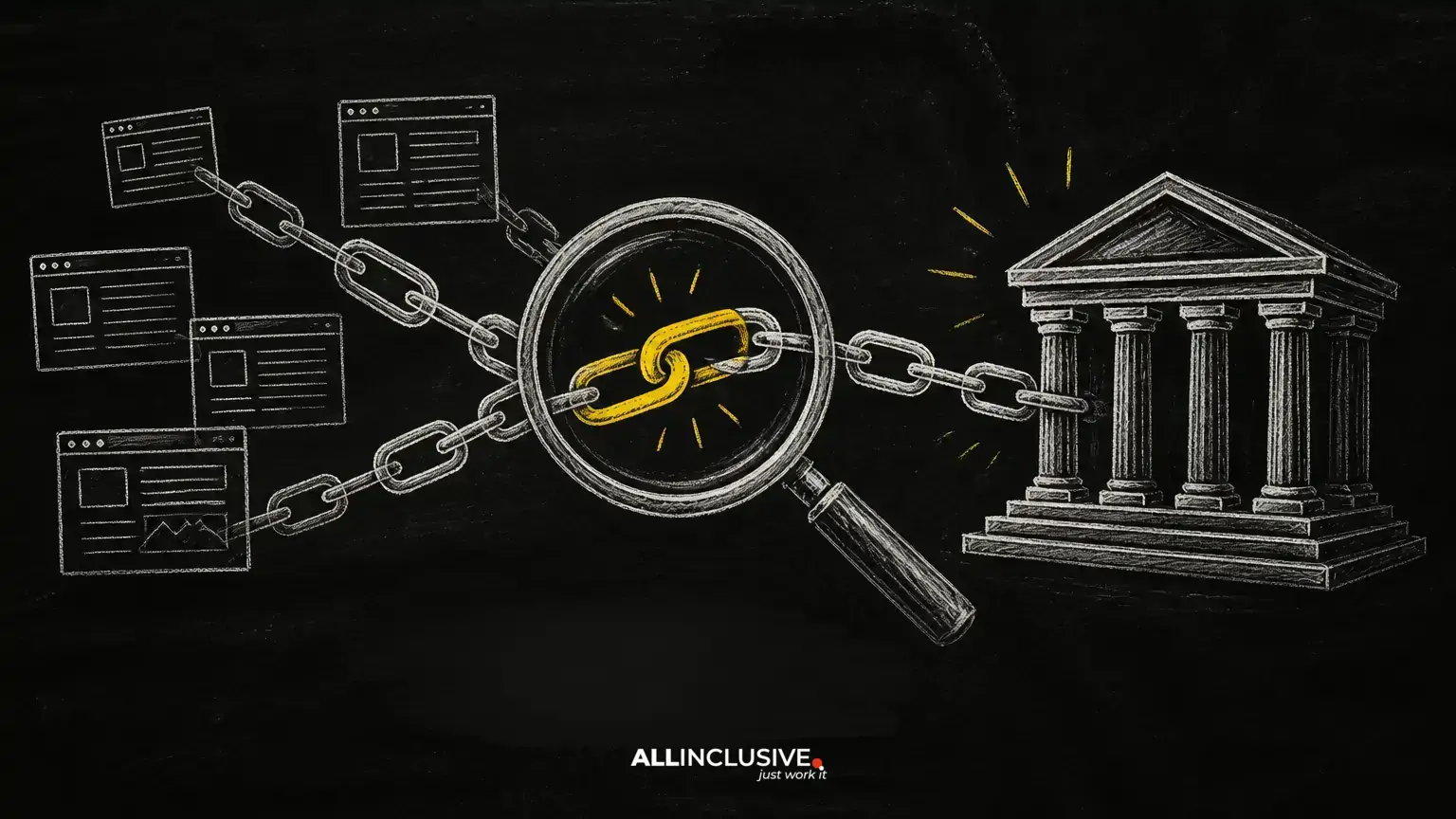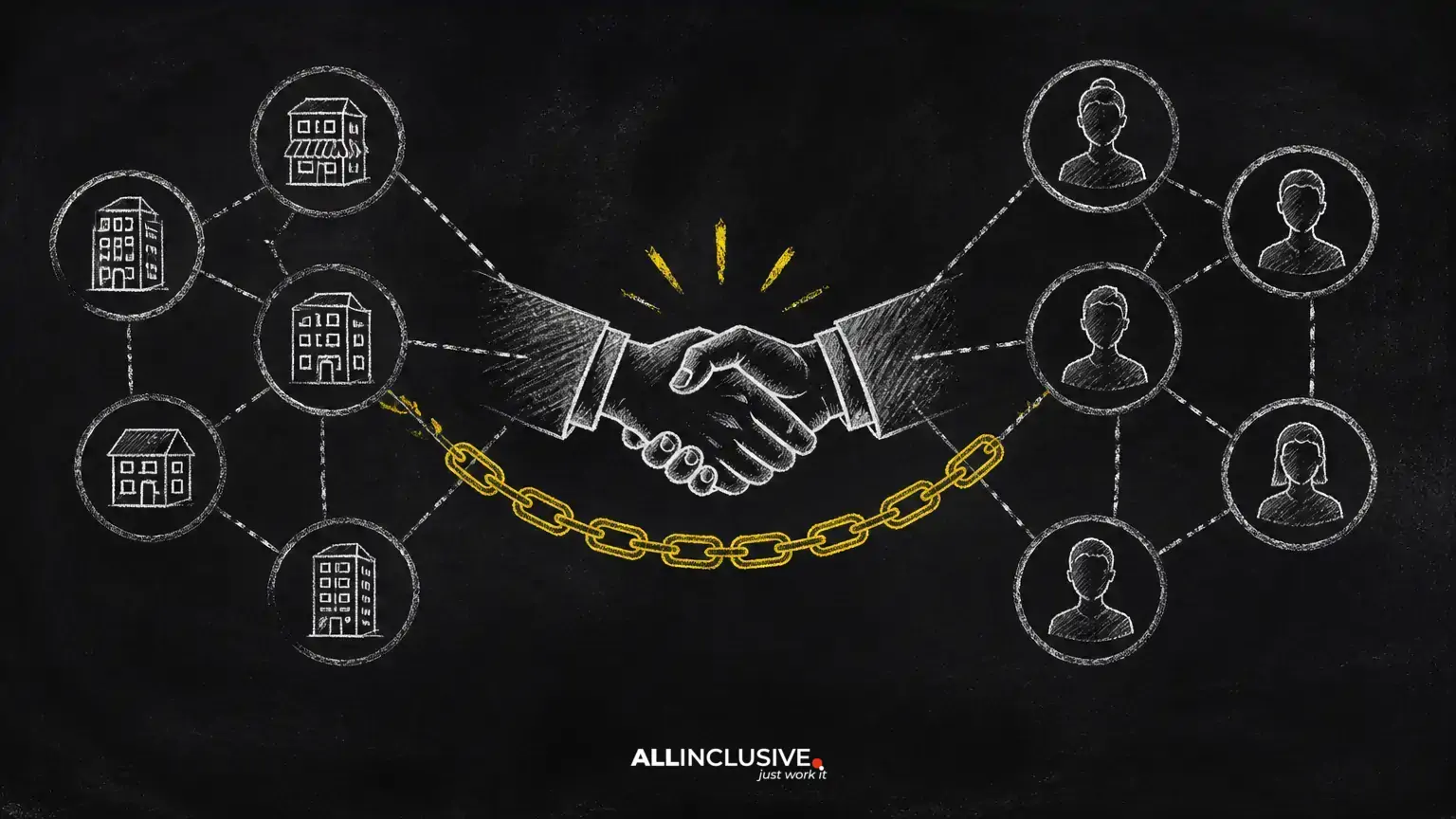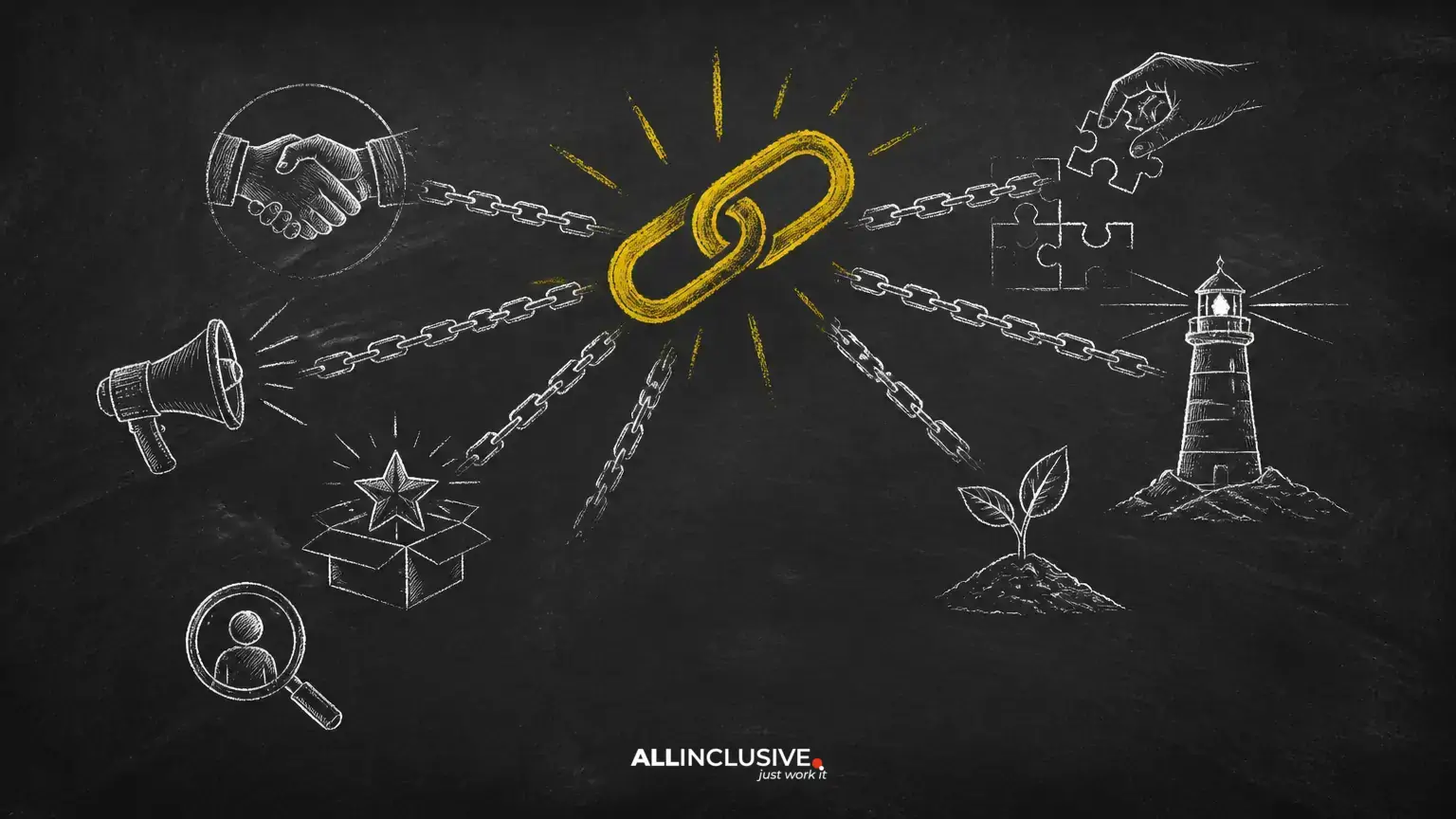
Link building is the practice of earning links from other websites to pages on your own site. A link can help people discover useful information, send qualified referral traffic, and provide context about the relationships between websites and topics. It is not, however, a shortcut to rankings or a reason to pursue every available backlink.
The strongest link-building programs begin with something genuinely worth referencing: original research, a practical guide, a useful tool, a compelling story, or a page that solves a specific problem. Outreach then helps the right people discover that resource. For a broader view of how this work fits into search strategy, see our SEO services.
What makes a backlink valuable?
A backlink is most useful when it is placed in relevant editorial context and helps the receiving audience. Before evaluating a potential link, ask:
- Does the referring website serve an audience that could benefit from this page?
- Would the link make sense to a reader without an SEO objective?
- Is the page maintained, accessible, and focused on a real topic?
- Does the surrounding content provide meaningful context?
- Would you still want the referral if search engines did not count it?
There is no universal number that defines a “good” link. Relevance, placement, editorial judgment, destination quality, and the relationship between the two pages matter more than a single third-party score.
Eight ethical link-building strategies
1. Create a reference-worthy resource
Start by publishing something that deserves to be cited. A resource may be a detailed process guide, glossary, comparison framework, original dataset, calculator, checklist, template, or explanation of a difficult concept. Its purpose should be to help readers, not merely to create a URL for outreach.
Study the questions your customers ask, the points where existing guidance is unclear, and the information publishers repeatedly need to explain. Then make your page more useful through clear definitions, transparent methodology, examples, visuals, or practical steps. Avoid simply making an existing article longer; improve its usefulness and distinctiveness.
2. Use a content gap to guide outreach
Competitor research can reveal sites that discuss your subject but do not yet reference your most useful resource. Treat this as a prospecting signal, not proof that a link is owed to you.
Review the actual page that might link. Identify the passage where your resource would help readers, and explain that specific connection in your outreach. A concise, personalized message is more credible than a generic request sent to a large list of unrelated domains.
3. Recover broken or outdated references
Web pages change, move, or disappear. When a relevant page contains a dead link or points to information that is no longer accurate, you may be able to offer a current replacement.
- Find a broken or outdated reference on a relevant page.
- Confirm that your page genuinely covers the same subject.
- Improve your page if it lacks important context or current information.
- Contact the publisher with the page location and a precise replacement suggestion.
Do not manufacture a replacement solely to obtain a link. If your page is not a close match, the helpful action may be to explain the issue without requesting anything.
4. Reclaim links that should point to your site
Audit important pages for links that return errors, lead to redirects with an unintended destination, or point to an old URL after a site migration. Check whether the original linking page is still relevant and whether a corrected destination would improve its reader experience.
Prioritize meaningful referring pages rather than attempting to restore every historical link. A clean redirect and a clear replacement page may solve the technical problem, but the publisher may still need to update the visible hyperlink.
5. Turn legitimate brand mentions into useful references
Organizations are sometimes mentioned without a link. A mention can be a reasonable outreach opportunity when the publisher has already chosen to discuss your organization and a link would help readers verify details or learn more.
Keep the request modest. Suggest the most relevant page, explain why it adds value, and accept that the publisher may prefer to leave the mention unlinked. Do not treat social posts, directory listings, or every casual mention as a guaranteed backlink opportunity.
6. Earn links through digital PR
Digital PR connects a credible story with the journalists, editors, researchers, and communities that may care about it. Potential stories include original findings, a meaningful organizational development, a clear response to a public issue, expert commentary, or a useful analysis of a trend.
Build the story around evidence and audience relevance. Prepare a concise summary, supporting details, a suitable spokesperson, and a page where readers can learn more. Pitch selectively to people who cover the topic. A press release distributed indiscriminately is not a substitute for newsworthiness, and paid placements should be clearly distinguished from earned editorial coverage.
7. Contribute expertise to relevant publications and podcasts
Expert commentary, interviews, webinars, and podcasts can introduce your knowledge to a new audience. The resulting page may include a biography or reference link, but the primary value is the contribution itself.
Choose opportunities where you can offer specific experience or a useful point of view. Review the publication’s audience and editorial standards before agreeing. Avoid arrangements that require thin content, keyword-stuffed author bios, or links inserted solely for ranking purposes. A relevant, naturally placed reference is preferable to several forced links.
8. Build relationships instead of exchanging links
Partnerships, professional associations, local organizations, suppliers, and community groups can create legitimate opportunities for collaboration. Examples include co-produced resources, event pages, sponsorship disclosures, case studies, interviews, and educational materials.
Do not make reciprocal linking the central transaction. Large-scale or overly predictable link exchanges can create poor user experiences and may appear manipulative. Collaborate because the project benefits both audiences; let linking follow naturally from the work.
How to prioritize link-building opportunities
A simple evaluation framework can keep outreach focused. Score each opportunity against four questions:
- Audience fit: Is the publisher’s audience relevant to your page?
- Editorial fit: Would the proposed link improve a specific article or resource?
- Page quality: Is the site maintained and useful to readers?
- Effort and risk: Is the opportunity worth pursuing without questionable payment, automation, or reciprocal demands?
Begin with a small group of high-fit prospects. Record the page contacted, the proposed destination, the reason for relevance, the date, and the outcome. This makes follow-up organized without turning outreach into mass automation.
Outreach practices that protect quality
Write to a person about a page, not to a metric about a domain. Mention the relevant passage, explain the reader benefit, and make the request easy to understand. Keep the message brief. One thoughtful follow-up may be appropriate; repeated messages after a clear refusal are not.
Never use fabricated personalization, deceptive identities, automated comments, hidden links, hacked pages, or payment arrangements disguised as editorial recommendations. Paid advertising and sponsorship can be legitimate, but they should be disclosed and handled according to the publisher’s requirements and applicable rules.
How to measure progress
Link counts alone do not show whether a campaign is working. Track a balanced set of indicators:
- Relevant referring pages earned over time
- Referral visits and engagement from those pages
- Coverage or mentions from appropriate publications
- Improvement in the usefulness and visibility of target resources
- Qualified inquiries or assisted conversions where measurement is available
- Technical recovery of important lost or broken links
Search visibility can change for many reasons, so avoid claiming that any single link caused a ranking change without reliable evidence. Review results over a meaningful period and use findings to improve the content and prospect selection.
Common link-building mistakes
- Chasing volume: A large number of irrelevant links can consume resources and create risk.
- Using one anchor text repeatedly: Links should use natural language chosen by the publisher.
- Promoting weak pages: Outreach cannot compensate for an unclear or unhelpful destination.
- Ignoring relevance: A high-profile site is not automatically a good fit.
- Relying on old tactics: Automated submissions, private link networks, and paid links intended to manipulate rankings are poor foundations.
- Failing to maintain assets: A resource that becomes inaccurate will attract fewer legitimate references.
Conclusion
Ethical link building is a publishing and relationship-building discipline. Create resources that deserve attention, find pages where they genuinely help, and communicate with relevant publishers respectfully. Broken-link recovery, mention reclamation, digital PR, expert contributions, and collaborative projects can all work when reader value comes first.
For a sustainable program, combine link acquisition with strong technical foundations, useful content, and clear measurement. The goal is not to collect links indiscriminately; it is to become a source that other people are comfortable recommending.
For related guidance, see Link Building.