
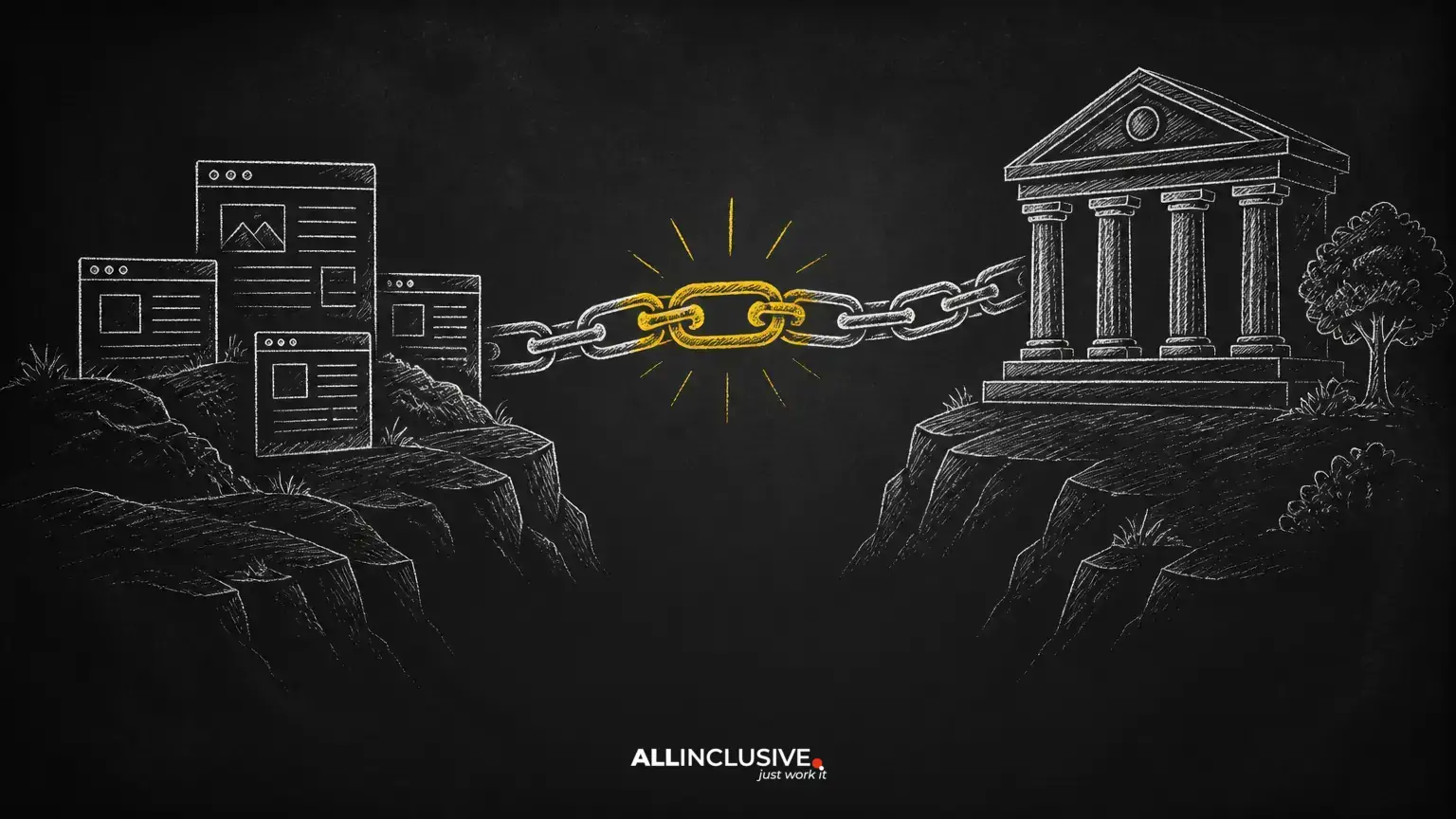
Link building is the process of earning links from other websites to pages on your own site. Done well, it can help people discover useful resources, support your site’s authority, and create referral traffic. Done poorly, it can waste budget, damage trust, and leave a backlink profile filled with irrelevant or manipulative placements.
The durable approach is simple: create something worth citing, identify audiences that would benefit from it, and promote it in a way that respects publishers and readers. This guide explains how to build that process without relying on outdated promises or shortcuts.
What makes a backlink valuable?
A backlink is not valuable merely because it exists. Its usefulness depends on context, relevance, editorial judgment, and the quality of the page where it appears.
- Topical relevance: The linking page and linked resource address related subjects or serve a logical audience.
- Editorial context: The link supports a claim, recommendation, example, or next step for readers.
- Human usefulness: Visitors could reasonably click the link to learn more or complete a task.
- Site quality: The referring website demonstrates genuine purpose, maintained content, and a credible audience.
- Natural placement: The link fits the surrounding copy instead of appearing forced or stuffed with keywords.
These qualities cannot be reduced to one universal score. Third-party metrics can help organize research, but they should not replace human review.
Start with goals, not a list of websites
Before contacting anyone, define what link building should accomplish. A campaign may support several goals, but each opportunity should connect to a measurable business or audience need.
Common link building goals
- Increase qualified referral visits to a useful resource.
- Make an important page easier for relevant audiences to discover.
- Build relationships with journalists, experts, publishers, or complementary businesses.
- Strengthen a topic cluster by connecting supporting resources.
- Promote original research, tools, templates, or explainers that others may cite.
Avoid treating a target number of links as the main definition of success. A smaller set of relevant links can be more useful than a large collection of low-context placements.
Choose pages that deserve links
Link acquisition is easier when the destination offers a clear reason to visit. A generic sales page may be appropriate for some editorial references, but educational and linkable assets often provide a stronger starting point.
Potential linkable assets
- Original research based on a clearly explained method.
- Practical calculators, checklists, templates, or interactive tools.
- Detailed guides that answer a recurring professional question.
- Glossaries that clarify specialized terminology.
- Case examples that document a process without overstating results.
- Curated resource pages with meaningful commentary and selection criteria.
- Data visualizations or downloadable resources that are easy to cite.
Make the asset genuinely useful before beginning outreach. Check accuracy, update obvious gaps, explain limitations, and ensure the page works well on mobile devices. A publisher is more likely to reference a resource that improves their article rather than one that simply asks for exposure.
Find relevant link opportunities
Research should identify audiences and editorial situations, not just domains with attractive metrics. Build an opportunity list around the topic, the people served, and the reason a link could be helpful.
Useful prospect categories
- Articles that mention your subject but omit an important explanation or resource.
- Industry publications and expert communities that accept genuinely useful contributions.
- Organizations, associations, or educational resources with relevant references.
- Complementary businesses whose audiences overlap without being direct competitors.
- Journalists and editors covering a topic supported by your expertise or data.
- Resource pages where your asset fills a clear, documented gap.
Review each prospect manually. Ask whether the site has a coherent purpose, whether its content is maintained, and whether the proposed link would make sense to readers. Exclude pages that exist primarily to sell links, publish unrelated material, or host excessive low-quality contributions.
Create outreach that earns a response
Outreach works best when it is specific, brief, and centered on the recipient’s audience. Explain what you noticed, why the resource is relevant, and what readers would gain. Do not imply that a publisher owes you a link.
A practical outreach structure
- Use a clear, accurate subject line.
- Reference the specific page or topic you reviewed.
- Identify a genuine gap, outdated reference, or useful addition.
- Describe your resource in one or two precise sentences.
- Offer the link as an optional improvement, not a demand.
- Make it easy to decline and avoid repeated pressure.
Personalization should be meaningful rather than decorative. Mentioning a recipient’s name while sending an irrelevant mass pitch is not a relationship strategy. Keep a record of contacts, dates, responses, and any requested follow-up so communication remains organized and respectful.
Use content and digital PR responsibly
Content promotion and digital PR can attract links when they give publishers a timely, credible reason to reference your work. Strong campaigns usually begin with a clear point of interest: original findings, a useful expert perspective, a public-interest explanation, or a resource that helps readers act.
Present claims carefully. State the method, define terms, distinguish observations from conclusions, and avoid implying that a small sample proves a universal trend. If a topic is time-sensitive, verify details before publication and update the asset when the underlying information changes.
Guest contributions can also be useful when the publication is relevant and editorial standards are real. Write for the publication’s audience first. Avoid producing near-identical articles across many sites, inserting unnecessary commercial anchors, or accepting placements where the only apparent purpose is passing ranking value.
Understand anchor text and link attributes
Anchor text is the clickable wording of a link. It should describe the destination naturally and fit the sentence. Brand names, descriptive phrases, plain URLs, and occasionally generic wording can all be appropriate depending on context.
Do not control every anchor or repeatedly use exact-match commercial phrases. That pattern can make links look artificial and makes copy less useful for readers. The publisher should retain editorial control over wording and placement.
Some links may include attributes indicating that they are sponsored, user-generated, or otherwise not a standard editorial recommendation. These attributes support transparency. Never ask a publisher to misrepresent a paid placement as an independent editorial endorsement.
Audit link quality without overreacting
Review backlinks periodically, especially after a campaign, site migration, major content change, or unexpected traffic shift. A useful audit records the referring page, destination URL, context, anchor text, relevance, and relationship to the site.
Do not assume that every unfamiliar or low-metric link is harmful. The web is naturally messy, and many links have little practical impact. Prioritize clear patterns of manipulation, such as paid links intended to influence rankings, automated link schemes, or large-scale irrelevant placements. Investigate before taking action, and document decisions.
Measure outcomes that matter
Track more than the number of newly discovered backlinks. Depending on the campaign, useful measures may include:
- Qualified referral sessions and engaged visitors.
- Conversions or assisted conversions from referral traffic.
- Coverage by relevant publications or communities.
- Links earned to priority resources and supporting pages.
- Brand mentions and relationship development.
- Organic visibility for the broader topic, interpreted alongside other SEO work.
Attribution is imperfect. A link may contribute to discovery, trust, or referral traffic without producing an immediate ranking change. Treat link building as one part of a broader search strategy that also includes useful content, technical accessibility, internal linking, and a strong user experience. For a wider view of how these activities fit together, see Allinclusive SEO services.
A repeatable link building workflow
- Set the objective: Choose the audience, page, and outcome the campaign supports.
- Improve the destination: Make the resource accurate, distinctive, accessible, and easy to cite.
- Map the audience: Identify publishers, experts, organizations, and communities with a legitimate connection.
- Qualify prospects: Review relevance, editorial standards, site purpose, and likely reader value.
- Prepare a useful pitch: Explain the specific improvement your resource could provide.
- Follow up carefully: Send limited, respectful follow-ups and honor opt-outs.
- Record results: Track links, referrals, relationships, and lessons for future campaigns.
- Review quality: Remove weak prospects from future lists and refine the asset or message.
Common link building mistakes
- Buying large packages of links without evaluating relevance or editorial control.
- Sending the same pitch to hundreds of unrelated websites.
- Creating content solely because it appears likely to attract links.
- Focusing on domain metrics while ignoring real audience value.
- Using exact-match anchor text repeatedly.
- Promoting thin pages that do not answer a meaningful question.
- Assuming a link guarantees rankings, traffic, or revenue.
Ethical link building is not a shortcut around quality. It is a distribution and relationship process built around resources people can reasonably recommend.
Conclusion
The strongest link building strategy combines useful assets, relevant research, thoughtful outreach, and careful measurement. Start with a page that deserves attention, identify publishers whose readers would benefit, and offer a specific improvement rather than a generic request. Over time, this approach can earn links that support discovery, credibility, and qualified traffic while reducing dependence on fragile tactics. Explore the Allinclusive link building pillar for related guidance.