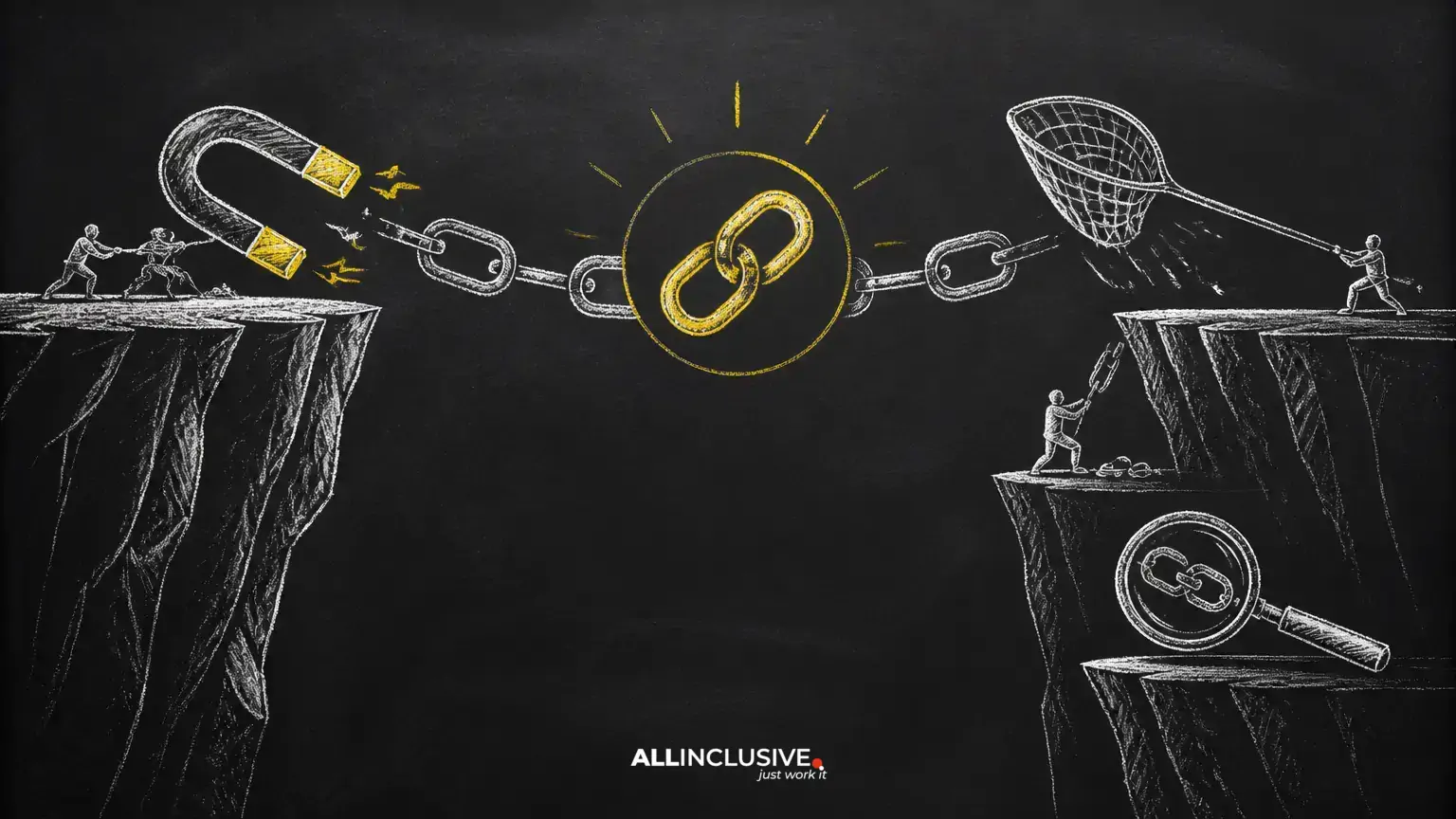
Link building works best when it supports something genuinely useful: a clear resource, original insight, helpful data, or a page that deserves to be recommended. The goal is not to accumulate links indiscriminately. It is to earn relevant references from sites whose audiences would benefit from your content.
A sustainable process also includes maintenance. Links can disappear, pages can move, and an unexpected pattern in your backlink profile may reveal a technical or reputational problem. The following nine practices provide a practical framework for research, outreach, recovery, and review.
1. Monitor new backlinks and referring domains
Begin with a baseline of the sites and pages that currently link to your website. Review new referring domains periodically, with the frequency determined by your publishing pace, campaign activity, and site size.
For each new link, record:
- The linking domain and specific page
- The page on your site receiving the link
- The surrounding topic and likely audience
- The link’s apparent purpose, such as editorial reference, partnership, directory listing, or user-generated mention
- Referral visits or assisted conversions when reliable analytics data is available
This review is not a contest based on raw link counts. A single relevant editorial reference may be more useful than many unrelated links. Look for patterns that explain why the link was earned and whether the same approach can produce more genuinely useful coverage.
2. Investigate lost links before replacing them
Lost links are not automatically a crisis. A publisher may have redesigned a page, removed an outdated reference, changed a URL, or replaced your resource with a newer one. First identify what changed and whether the original link was valuable enough to recover.
Prioritize links that came from relevant pages, previously sent qualified referral traffic, supported an important resource, or pointed to a URL that is still strategically important. Then check whether your destination page works and still fulfills the promise implied by the link.
A recovery message should be useful rather than demanding. Explain that the reference appears to have disappeared, provide the current URL, and suggest an updated destination only if it is a closer fit. If the publisher intentionally removed the reference, respect that decision.
3. Study competitors for patterns, not copy-and-paste targets
Competitor backlink research can reveal publications, associations, resource pages, podcasts, events, and communities that discuss your market. It does not prove that every site linking to a competitor will link to you, nor does it justify reproducing a competitor’s content.
Compare several businesses with similar audiences and business models. Separate opportunities into categories such as:
- Industry publications and specialist media
- Professional organizations and local groups
- Resource pages and educational references
- Partner, supplier, or customer stories
- Original research and data citations
- Unlinked brand or expert mentions
For every prospect, ask why the publisher would add your resource. If you cannot identify a clear audience benefit, remove the prospect from the list.
4. Create assets that are easy to reference
Linkable content usually solves a research or communication problem for someone else. Useful formats include original surveys, transparent methodology pages, practical calculators, comparison frameworks, glossaries, templates, maps, expert interviews, and well-maintained guides.
Before producing an asset, define its intended users and the claim it helps them support. Make important information easy to verify. Cite supplied evidence accurately, state limitations, and include a clear publication or update date when appropriate.
Promotion should be selective. Contact people and organizations that already publish on the topic and explain the specific section their readers may find useful. Avoid sending the same generic pitch to a large list of unrelated recipients.
5. Repair broken URLs and preserve useful equity
When a page with valuable inbound links is removed, determine whether a replacement exists. If the old URL has a close, useful successor, a permanent redirect may help visitors and preserve continuity. If no relevant replacement exists, do not redirect the URL to an unrelated page merely to capture traffic.
Use a simple decision process:
- Confirm that the old URL is genuinely retired or broken.
- Review the pages linking to it and the context of each reference.
- Identify the closest equivalent page, if one exists.
- Redirect only when the replacement serves substantially the same purpose.
- Update important internal links and test the redirect.
Redirects are a technical implementation, not a substitute for maintaining accurate information. Keep a record of changed URLs so future audits are easier.
6. Review anchor text for clarity and natural variation
Anchor text should help readers understand what they will find after clicking. Descriptive phrases, brand names, page titles, and natural language can all be appropriate depending on the sentence.
Do not treat an anchor-text distribution as a target ratio. External publishers choose their own wording, and a varied profile can occur naturally. The concern is a pattern of deliberately controlling many external links with repetitive, keyword-focused wording, particularly when the wording does not fit the surrounding content.
For links you control, revise anchors that are vague, misleading, or unnecessarily repetitive. Prioritize reader comprehension over forcing a phrase into the link.
7. Evaluate suspicious links without overreacting
Third-party tools may label links as toxic or risky, but those labels are signals for review rather than automatic proof of harm. A low-quality-looking link is not necessarily a penalty, and removing or disavowing links indiscriminately can create unnecessary work.
Investigate the context. Consider whether the page is indexed and legitimate, whether the link is editorial or clearly manipulative, whether the domain appears to be part of a scheme, and whether there is evidence of deliberate participation by your organization.
Prioritize prevention: avoid paid links that pass ranking signals, automated placement, private schemes, and large-scale exchanges intended to manipulate rankings. If a serious issue requires action, involve an experienced SEO professional and document the reasoning before contacting publishers or preparing any technical submission.
8. Track link quality with business context
A useful link-building report combines qualitative review with measurable outcomes. Record the number of relevant referring domains, pages earning links, referral visits, assisted conversions where attribution is dependable, outreach response rates, and the cost of producing or promoting each asset.
Authority metrics from software can help sort a large prospect list, but they are not universal measures of value. A smaller specialist publication may be more relevant than a large general site. Use metrics as prioritization aids, then verify topical fit, audience quality, editorial standards, and the actual placement.
9. Build a repeatable outreach and follow-up process
Good outreach is specific, restrained, and easy to evaluate. Maintain a prospect record containing the contact or editorial page, reason for relevance, suggested resource, date contacted, response, and next action.
A concise message can include:
- A genuine reference to the recipient’s page or publication
- The reader need your resource addresses
- A direct URL and a short explanation of what it contains
- A clear statement that inclusion is optional
Follow up once or twice only when appropriate, then close the record. Do not pressure editors, disguise advertising as editorial coverage, or offer compensation without understanding the applicable disclosure and link requirements.
How to make link building more sustainable
Set a monthly or quarterly review covering new links, lost links, broken destinations, promising content opportunities, and outreach outcomes. Tie each initiative to a documented audience need. This keeps the program focused on usefulness instead of chasing changing third-party scores.
Link building should also fit into a broader search strategy: strong technical foundations, clear internal linking, valuable content, and accurate measurement all affect whether earned attention turns into useful visits. Explore the Allinclusive link-building resources for the wider topic, and review the SEO services overview when you need to assess how link acquisition fits into a broader SEO plan.
Conclusion
The most durable backlinks are a byproduct of relevance, credibility, and promotion that respects publishers and readers. Monitor what you earn, recover what still deserves to exist, create resources worth citing, and evaluate risks in context. A disciplined process will usually produce a healthier and more useful backlink profile than a campaign built around volume alone.