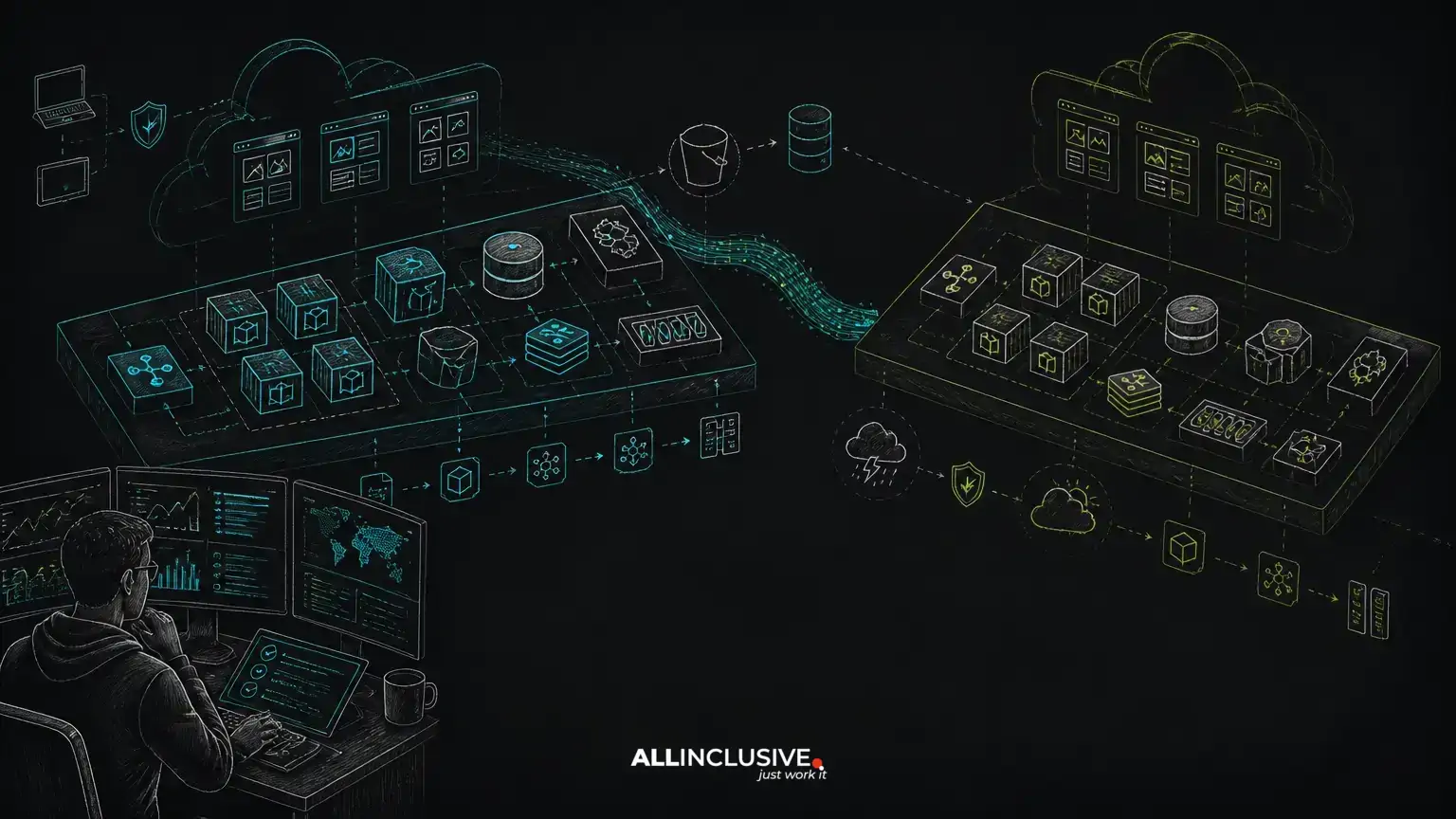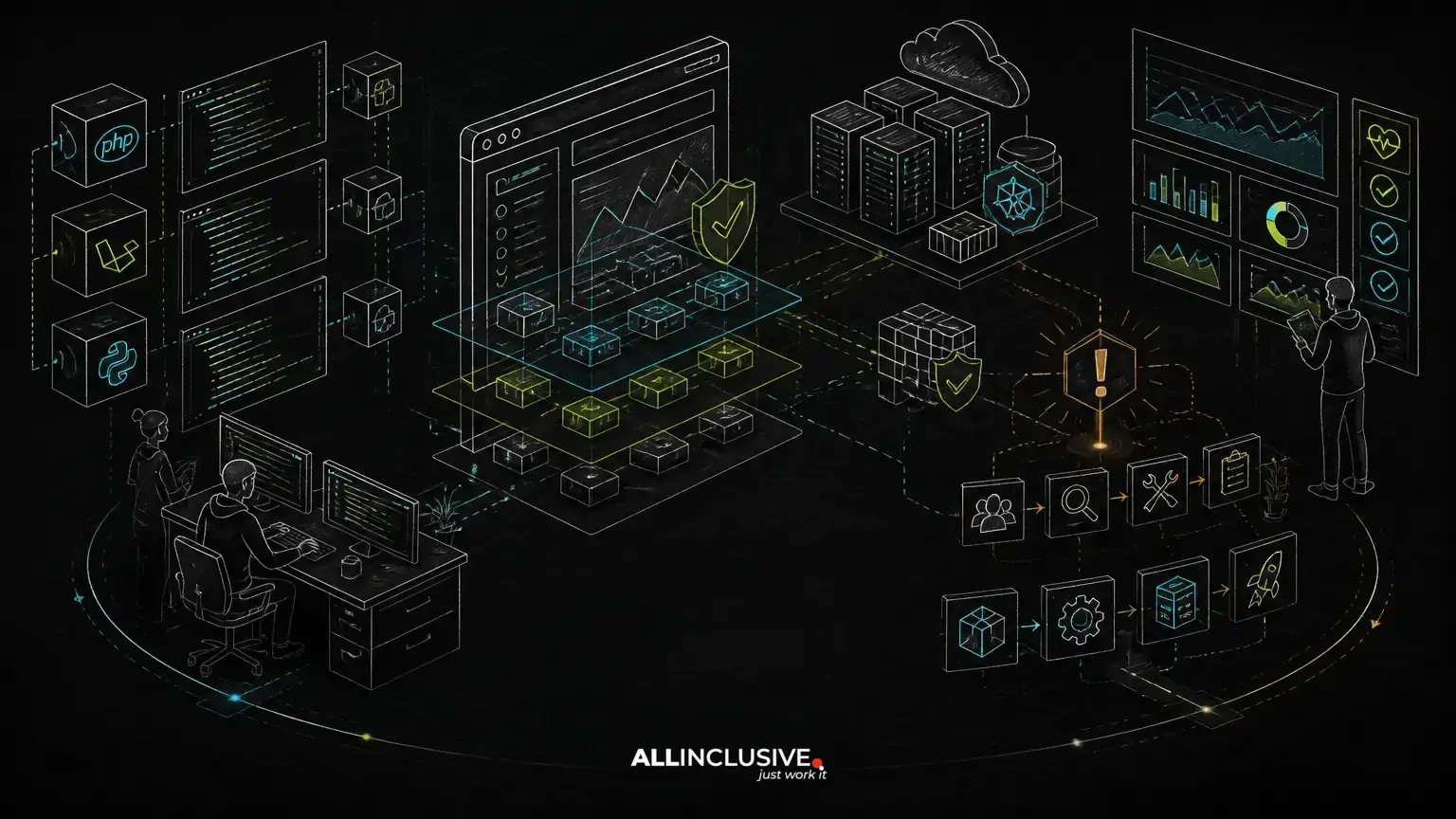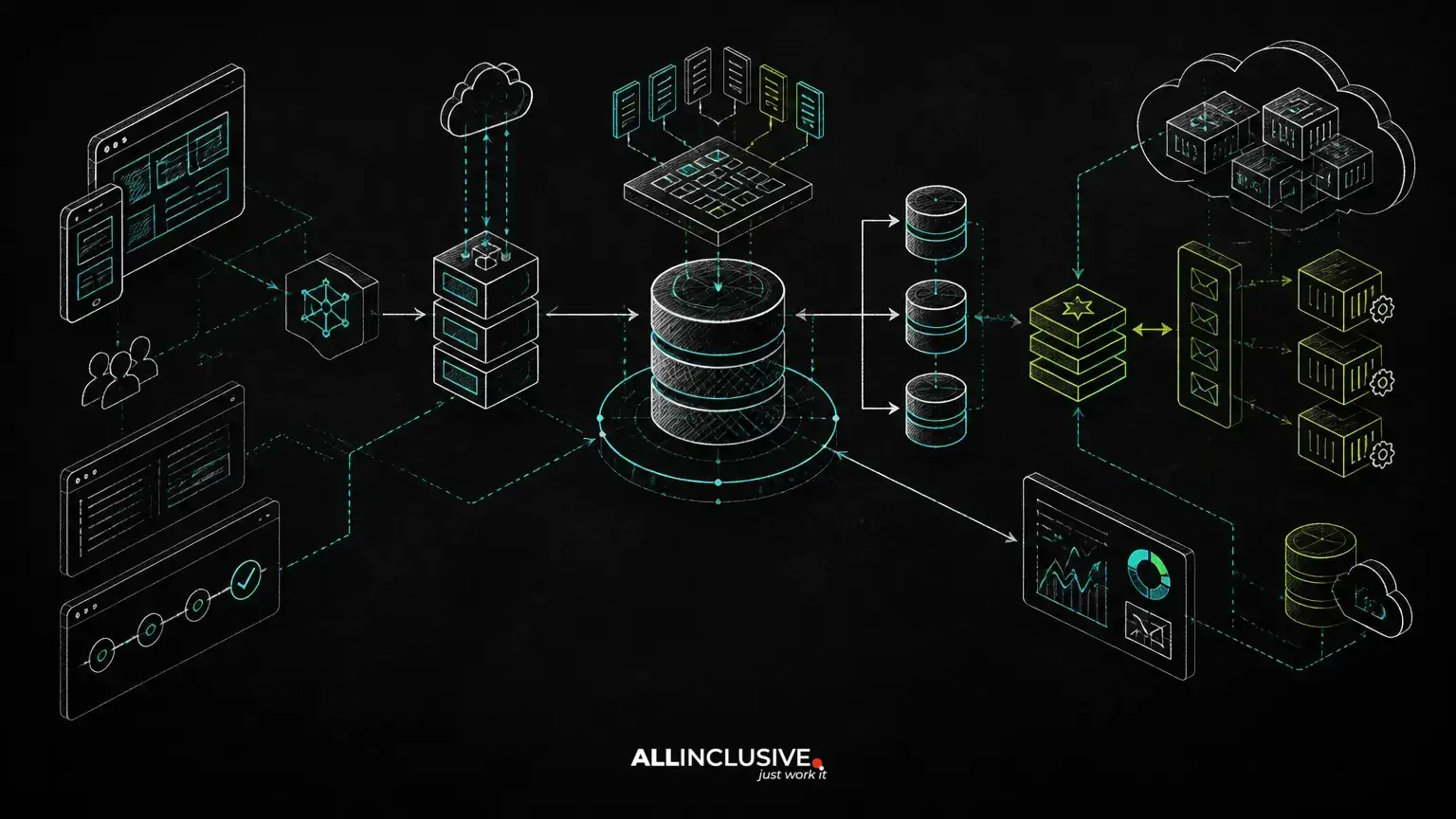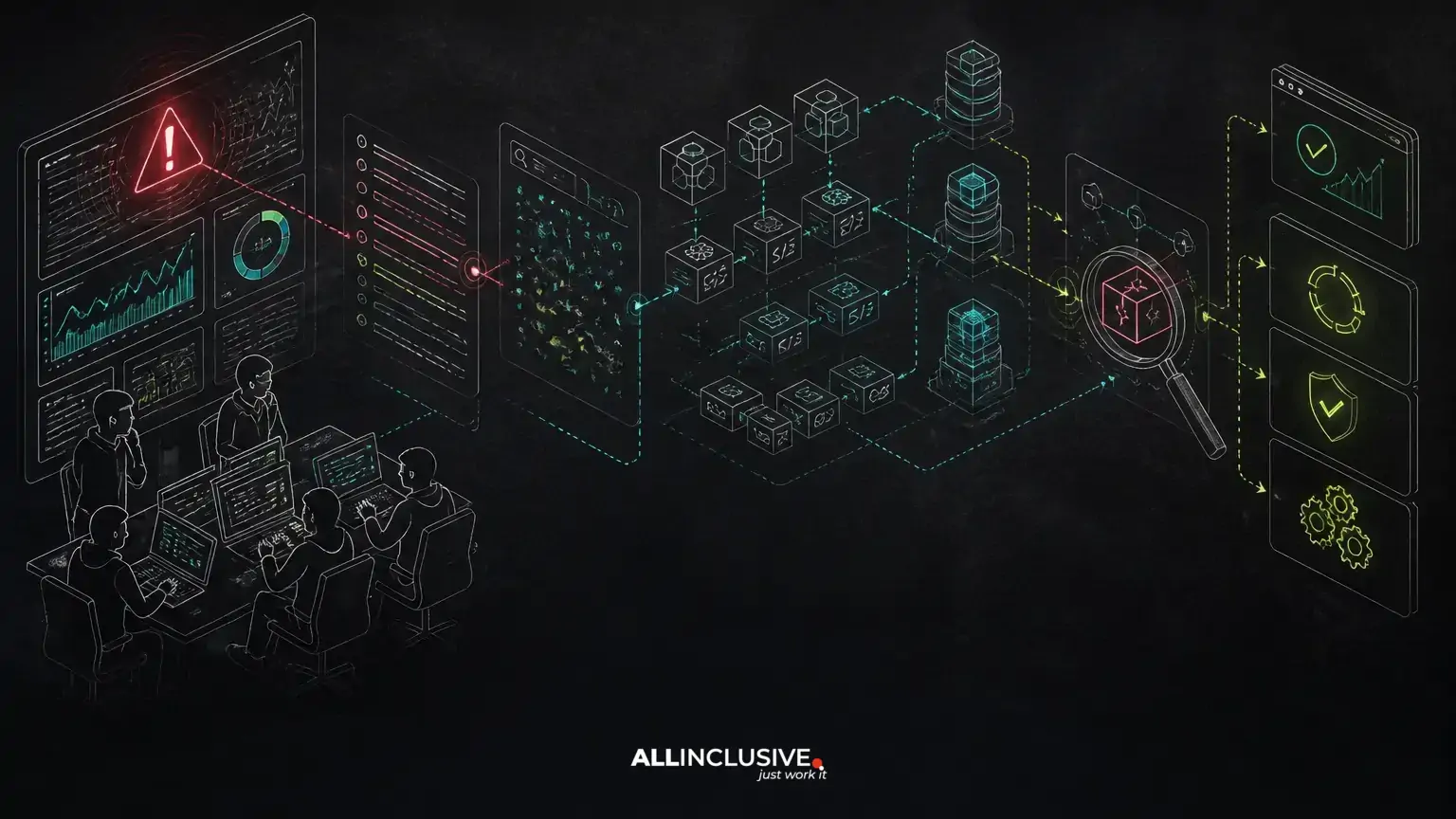
Web application incident response is the disciplined process of detecting, assessing, containing, recovering from and learning from a production failure or security event. The goal is not merely to restore service. A reliable response also protects evidence, clarifies ownership, communicates impact and reduces the chance of recurrence. For teams evaluating web application incident response, this implementation detail is expanded in custom software development.
For mature custom applications, incidents rarely fit a single category. A slow database query may appear to be a performance problem but originate in a dependency change. A failed deployment may expose an undocumented queue dependency. A security alert may require the same careful preservation of logs and timelines as an availability outage. Effective response connects monitoring, engineering judgment, release management and ongoing application ownership.
This guide outlines a practical path from the initial alert to a defensible root-cause analysis across Laravel, PHP and Python systems.
Define what counts as an incident before one occurs
Teams respond more consistently when they agree in advance on what requires incident treatment. An incident might include:
- A production application that is unavailable or materially degraded.
- Critical workflows failing, such as authentication, checkout, payments, file processing or customer administration.
- Data integrity concerns, including duplicate writes, missing records or incorrect state transitions.
- A suspected security event, such as unauthorized access, exposed credentials or unexpected privilege use.
- A deployment, infrastructure or dependency change that creates significant user impact.
Not every defect needs an incident commander or emergency process. The threshold should reflect business impact, not just technical severity. A minor administrative error may be urgent if it affects regulatory reporting, while a visible but isolated defect may be handled through normal support and release workflows.
Use impact and urgency to establish severity
Severity should be understandable to both technical and business stakeholders. Useful criteria include the number and type of users affected, the criticality of the workflow, data risk, revenue or operational disruption, and whether a workaround exists. Define escalation paths and communication expectations for each level before production pressure makes those decisions difficult.
Build an alert-to-action path
An alert is an observation, not a diagnosis. The first responder needs a repeatable sequence that turns a signal into a controlled investigation.
- Acknowledge the alert. Record who is investigating and when the response began. This prevents duplicate work and establishes the first point in the incident timeline.
- Confirm user impact. Check application health, representative workflows and recent support reports. Distinguish a real production issue from a monitoring fault or isolated client problem.
- Assign an initial severity. Use the agreed impact model, then revise it if evidence changes.
- Stabilize the situation. Pause a risky deployment, disable a problematic feature, roll back a compatible release or apply another reversible mitigation when appropriate.
- Capture evidence. Preserve relevant logs, traces, deployment identifiers, configuration changes, timestamps and affected request or job identifiers before rotating systems or changing state.
- Communicate clearly. State what is known, what is being tested, the current impact and the next update time. Avoid presenting an early hypothesis as fact.
This sequence separates containment from explanation. During an active incident, restoring a safe level of service is usually more important than proving the root cause immediately.
Separate symptoms from causes during triage
Production symptoms are often several steps removed from the underlying fault. A Laravel application may report timeouts because PHP workers are exhausted, while worker exhaustion is caused by slow external API calls. A Python service may return errors because a queue consumer cannot deserialize messages after a release. The visible error is important, but it is not necessarily the cause.
Organize investigation around a short set of questions:
- When did the impact begin, and does it align with a release, dependency update, configuration change or infrastructure event?
- Which routes, jobs, tenants, regions, roles or data states are affected?
- Is the failure consistent, intermittent, or dependent on load?
- What changed immediately before the first known symptom?
- What evidence would confirm or reject each leading hypothesis?
Useful signals include structured application logs, request and job identifiers, database metrics, queue depth, worker health, resource saturation, error rates, deployment records and external service responses. Monitoring should make these signals correlatable; otherwise responders spend valuable time manually reconstructing events from disconnected systems.
Account for asynchronous and scheduled work
Many incidents are not visible in the request that initiated them. A web request may enqueue a job that fails minutes later, or a scheduled command may create a backlog that affects users only after capacity is consumed. Review queues, schedulers, retries, dead-letter or failed-job storage, cron execution and idempotency behavior as part of triage.
Retries deserve particular care. They can recover from transient faults, but uncontrolled retries may amplify load, duplicate side effects or hide a persistent dependency failure. A response plan should identify which operations are safe to retry and which require reconciliation.
Containment choices for custom Laravel, PHP and Python applications
Containment should reduce harm while preserving a path to recovery. The appropriate action depends on the failure mode and the application’s architecture.
- Rollback: Revert to a known compatible application version when the release is the likely trigger and database or message changes remain compatible.
- Feature restriction: Temporarily disable a nonessential workflow or route while preserving core operations.
- Traffic control: Reduce load or isolate an unhealthy component when capacity or dependency pressure is the main problem.
- Configuration correction: Restore a known-good setting, secret reference, connection limit or timeout after validating the change.
- Data protection: Stop affected writes when continuing operation could create corruption or inconsistent business state.
Rollback is not automatically safe. A database migration may have changed schema state, a queue may contain messages from a newer version, or a dependency may have made an irreversible external request. Release management should document compatibility assumptions for code, schema, events and background workers.
Handle security-related incidents differently
When unauthorized access, credential exposure or suspicious data use is possible, responders must balance containment with evidence preservation. Do not casually delete logs, rotate systems without recording the action, or overwrite relevant artifacts before the investigation has established a timeline.
Security response may include restricting access, revoking exposed credentials, isolating affected components, reviewing authentication and authorization events, checking administrative actions, and determining whether data was accessed or changed. The correct notification and legal process depends on the organization, jurisdiction, contracts and nature of the event; engineering teams should involve the appropriate security, legal and privacy owners rather than making those decisions alone.
Move from recovery to root-cause analysis
Recovery means the service is operating within an acceptable range. Root-cause analysis asks why the incident was possible and why existing controls did not prevent or quickly detect it. A useful analysis is evidence-based and specific enough to produce changes.
Document:
- The timeline of alerts, user impact, actions, mitigations and recovery.
- The direct technical failure, such as a rejected database connection or incompatible package behavior.
- Contributing conditions, such as missing test coverage, undocumented coupling, insufficient capacity, unclear ownership or weak observability.
- Why detection, prevention or rollback controls did not work as intended.
- Corrective actions with owners, priority and a way to verify completion.
Avoid stopping at “human error” or “a bad deployment.” Those descriptions do not explain why the process allowed the error to reach production or why the deployment could not be safely reversed. The objective is not blame; it is a more resilient system and delivery process.
Turn findings into a prioritized action list
Corrective work should distinguish immediate safeguards from longer-term engineering improvements. An alert may need tuning today, while a deeper action could involve redesigning a transaction boundary, adding contract tests, removing undocumented coupling or replacing an unsupported dependency.
Prioritize actions by risk reduction and feasibility. Some work belongs in the next release; some should enter a technical debt roadmap; and some may justify architectural modernization. Track completion in the same system used for product and engineering planning so incident learning does not disappear after the retrospective.
Use maintenance ownership to reduce repeat incidents
Incident readiness depends on more than an on-call schedule. Teams need current runbooks, known service dependencies, supported runtime versions, tested backup and recovery procedures, access to deployment history, and a clear map of who owns each component. These are maintenance responsibilities, not optional documentation projects.
For inherited or long-lived systems, begin with an operational baseline: application and infrastructure inventory, monitoring coverage, dependency status, release process, known failure modes and unresolved security issues. A focused first-30-days plan for supporting an inherited codebase can expose ownership and documentation gaps before they become emergencies.
Routine application maintenance should also include dependency review, patch planning, database and queue health checks, log retention, access review, performance analysis and release verification. A practical application maintenance checklist helps turn these activities into repeatable operating work.
Make monitoring useful to responders
Monitoring should answer operational questions, not simply collect data. At minimum, responders should be able to determine whether users can complete critical workflows, whether errors are increasing, whether latency is concentrated in a component, and whether background work is keeping up.
Combine high-level service indicators with diagnostic detail. Synthetic checks can test important user paths, while logs and traces help locate failures. Database, queue, worker and external dependency signals provide context. Alert thresholds should be actionable and connected to documented response steps; noisy alerts train teams to ignore the very signals intended to protect them.
When external ownership improves response quality
Some organizations have product teams but lack the capacity to maintain every framework, dependency, integration and operational runbook. In that situation, ongoing support should be treated as engineering ownership rather than ticket-only help. The provider or internal team should understand the application’s architecture, release history, risk profile and roadmap.
Allinclusive supports custom software through web development and ongoing technical ownership, including Laravel, PHP and Python applications where monitoring, security updates, incident response and roadmap continuity need to work together. For sustained delivery and support capacity, a dedicated product team can provide continuity across operational issues and planned improvements.
The right ownership model depends on system criticality, internal skills, response expectations and the amount of architectural context that must be retained. The key is to make responsibility explicit before an incident tests it.
Connect incident response to the application roadmap
Recurring incidents often reveal roadmap priorities that ordinary feature planning obscures. A brittle integration, unsupported runtime, missing audit trail or fragile deployment process can create more operational risk than a visible backlog item. Product and engineering leaders should review incident trends alongside feature plans and decide where stabilization, refactoring, migration or rebuild work is justified.
Incident response is successful when it shortens the path from signal to safe action, preserves trust during disruption and produces engineering improvements that remain in place. For mature custom applications, that requires continuous ownership: monitoring that responders can use, releases that can be controlled, dependencies that are actively managed and technical debt that is addressed before it becomes the next outage.