PHP API development is most effective when the API is treated as a long-lived product boundary rather than a collection of endpoints. A maintainable PHP API should preserve business rules, expose predictable contracts, protect sensitive operations, and remain understandable as the application and team change.
That requires more than choosing a framework. Teams need to make deliberate decisions about domain logic, request validation, authentication, authorization, database behavior, error handling, observability and deployment. For a legacy system, the first question may not be how to build a new API, but whether to stabilize, refactor, upgrade, migrate or rebuild the existing application.
This article explains those decisions for custom PHP systems and modernization projects, including when a Laravel migration is justified and when preserving the current architecture is the lower-risk option.
Start with the business contract, not the endpoint list
An API represents capabilities that other software, internal teams or customers depend on. Before designing routes, identify the business actions and rules the API must preserve.
For example, an order API may expose an operation to approve an order, but approval could depend on inventory, payment status, user permissions, tax treatment and audit requirements. Moving the route into a new PHP service without understanding those dependencies can produce an API that looks clean while changing business behavior.
A useful discovery process maps:
- Business operations and their required inputs
- Rules that determine whether an operation is allowed
- Data that must be returned, hidden or transformed
- External systems and asynchronous processes involved
- Audit, reporting and compliance requirements
- Existing consumers, integrations and undocumented assumptions
This inventory helps separate the public API contract from the implementation behind it. It also makes modernization safer because the team can test whether business outcomes remain consistent during structural change.
Choose an architecture that keeps business logic visible
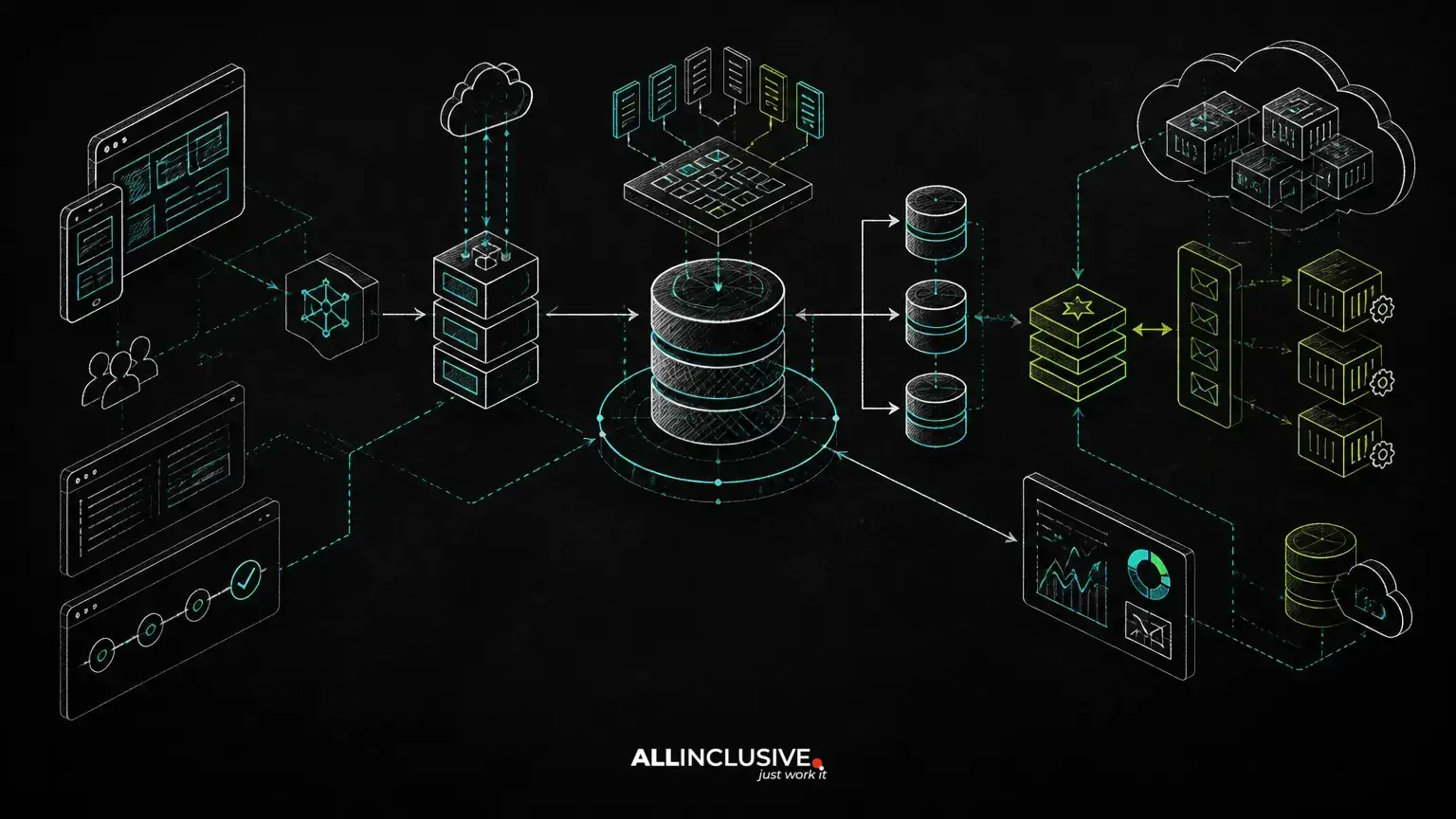
A small PHP API can begin with a simple layered structure, but the boundaries should still be explicit. A practical design commonly separates transport concerns from application behavior and persistence.
- HTTP layer: Routes requests, authenticates callers, validates input and formats responses.
- Application layer: Coordinates use cases such as creating an account, approving an order or issuing a refund.
- Domain layer: Holds important business rules and decisions that should not depend on HTTP details.
- Infrastructure layer: Handles databases, queues, external APIs, file storage and other technical services.
This does not require a large enterprise framework or a rigid architecture for every project. The goal is to prevent controllers, SQL queries and business rules from becoming inseparable. When those concerns are mixed, testing becomes harder and a future migration becomes more expensive.
For custom PHP systems, the right level of structure depends on the number of use cases, integrations, developers and expected changes. Overengineering can slow delivery, but under-structuring creates ownership risk when the original author leaves or requirements expand.
Design resource contracts for change
API consumers depend on more than URLs. They depend on field names, data types, validation behavior, status codes, pagination, error formats and the meaning of successful responses.
Define these decisions consistently. A successful mutation should make clear whether it returns the changed resource, an operation identifier or no body. Validation errors should identify the affected fields without exposing internal implementation details. Failure responses should distinguish invalid input, authentication failure, authorization failure, missing resources and temporary service problems.
Versioning is not a substitute for careful design. Before introducing a new version, determine whether a change is genuinely breaking. Adding an optional response field may be safe for many consumers, while renaming a field or changing its meaning is not. Contract tests and consumer communication are often more valuable than maintaining multiple versions indefinitely.
Pagination, filtering and sorting also need explicit limits. Unbounded queries can become a performance and availability problem as data grows. Use stable ordering, bounded page sizes and clear behavior for invalid or expired cursors where cursor pagination is appropriate.
Authentication identifies callers; authorization protects operations
Authentication establishes who or what is making a request. Authorization decides whether that caller may perform the requested operation. Treating those concerns as the same leads to weak access controls.
The appropriate authentication approach depends on the clients and trust boundaries. Browser-based applications, first-party mobile clients, partner integrations and machine-to-machine services may require different token handling and lifecycle policies. Credentials should not be placed in URLs, logged accidentally or stored in application code.
Authorization should be enforced close to the business operation, not only at the route level. A user may be allowed to view an account but not change its billing details. An administrator may have broader access, while a service account should be limited to the resources required for its integration.
Important controls include:
- Short, clearly defined credential lifetimes where appropriate
- Secure secret storage and rotation procedures
- Least-privilege roles or permissions
- Resource-level ownership checks
- Rate limits appropriate to the operation
- Audit records for sensitive actions
- Consistent handling of authentication and authorization failures
Security also includes input validation, output encoding where data is rendered, protection against injection, safe file handling, dependency maintenance and careful logging. A secure design should avoid returning stack traces, database details or secrets in production responses.
Control database behavior before optimizing PHP code
Many API performance problems originate in database access rather than PHP execution. A request that loads a list of customers and then queries related data one record at a time can create a query explosion. Large unfiltered result sets can exhaust memory or database connections.
Review each use case for:
- Query count and repeated queries
- Indexes supporting common filters and joins
- Transaction boundaries
- Locking and concurrent updates
- Read and write consistency requirements
- Slow queries and inefficient data transformations
- Archival or retention policies for growing tables
Transactions should protect business invariants, not simply wrap every request automatically. For example, reserving inventory and recording the related order state may need to succeed or fail together. External calls inside a database transaction can create long locks and unpredictable failure modes, so workflows may need an outbox, queue or compensating action instead.
Caching can reduce repeated work, but it introduces invalidation and consistency decisions. Cache only data whose freshness requirements are understood, and avoid using caching to hide an inefficient query that will continue to worsen as the dataset grows.
Make observability part of the API design
Production support is difficult when an API reports only that a request failed. Structured logs, correlation identifiers, relevant metrics and distributed tracing can help teams connect a client error to the application operation, database call or downstream service that caused it.
Track useful signals such as request volume, latency distribution, error categories, queue delays, database performance and authentication failures. Avoid logging tokens, passwords, payment information or unnecessary personal data. Observability must support diagnosis without creating a second security problem.
Operational ownership should also be documented. Teams need to know how deployments are rolled back, how configuration changes are managed, which dependencies are critical and who responds when an integration fails. These practices often determine the real maintenance cost of a PHP API.
Modernizing a legacy PHP API without losing business logic
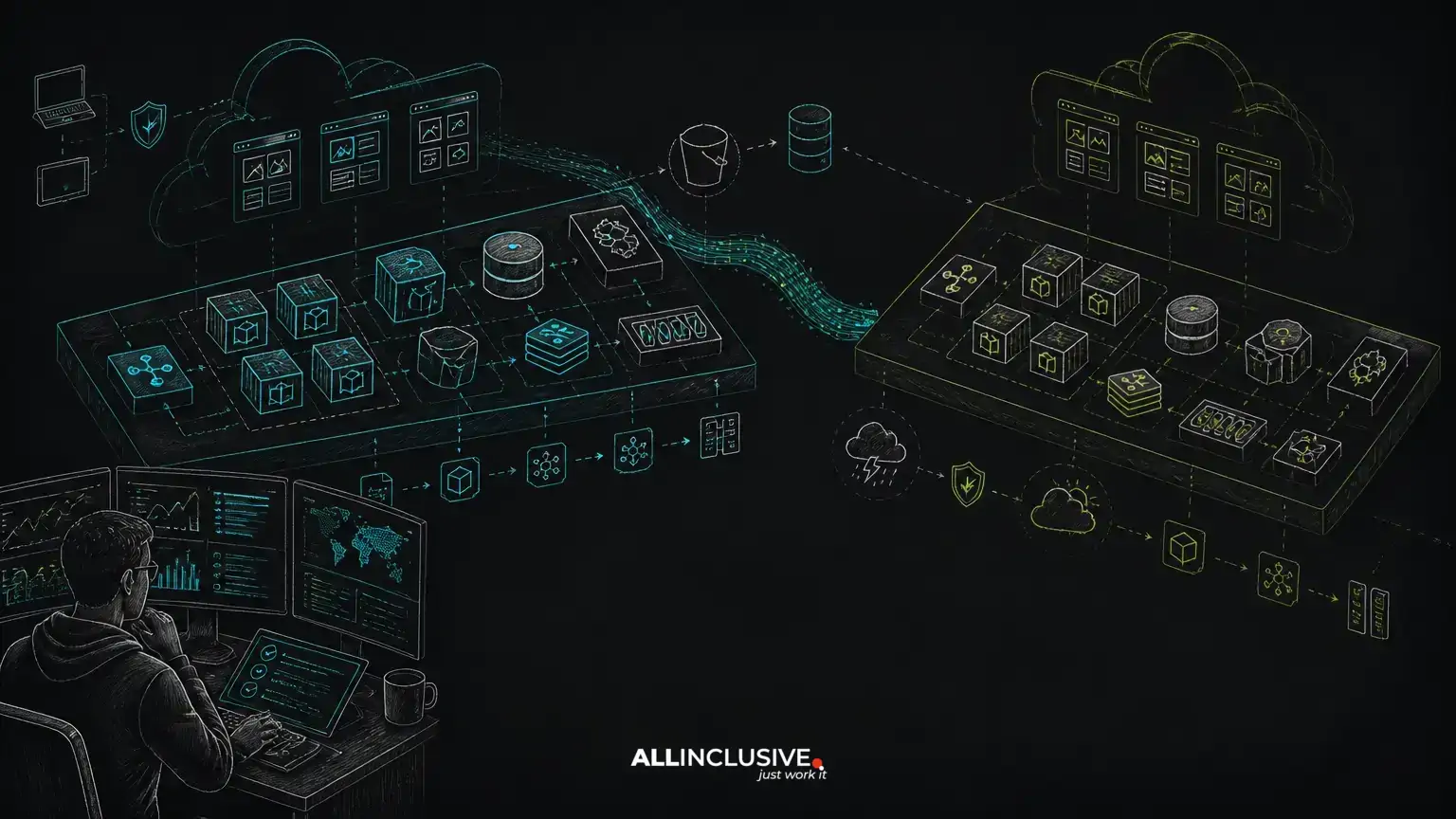
Legacy modernization should begin with risk classification rather than a preferred technology. Four different interventions are commonly confused:
- Stabilize: Improve deployment, monitoring, backups, dependency controls and security without substantially changing the application structure.
- Refactor: Improve internal structure while preserving observable behavior and interfaces.
- Upgrade: Move PHP, libraries or runtime components to supported versions, addressing compatibility issues along the way.
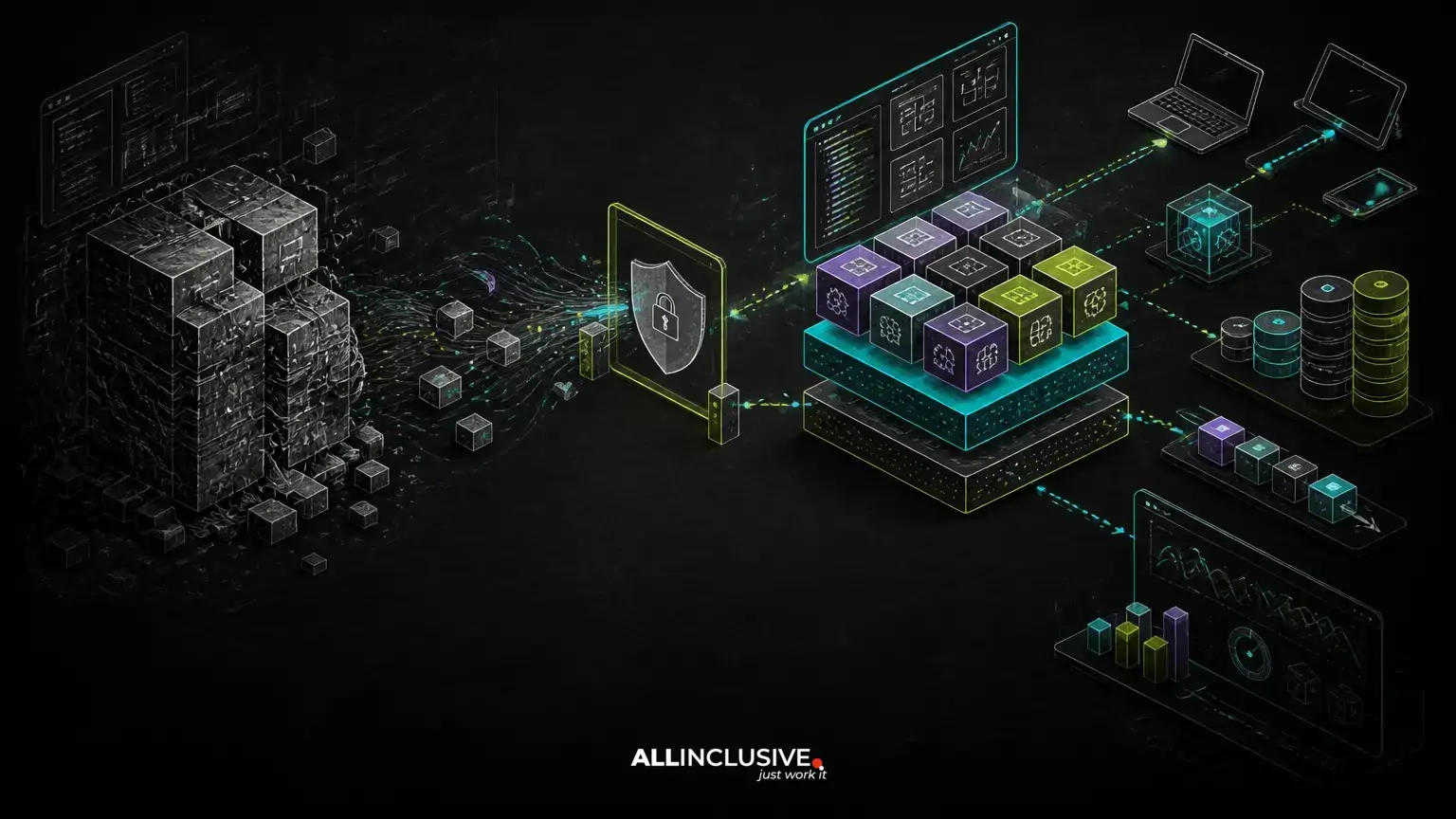
- Migrate: Move selected capabilities or the whole application to a different framework or architecture.
- Rebuild: Replace the existing implementation, usually because its constraints or business model no longer fit the required product.
A system may need more than one of these approaches. Stabilizing and upgrading can reduce immediate operational risk before a larger refactor. A targeted migration can isolate a high-change module while legacy behavior remains in place elsewhere.
Before changing implementation, document database behavior, scheduled jobs, integrations, permissions, background processes and edge cases. Add characterization tests around important existing behavior when formal tests are limited. These tests do not claim that the current behavior is ideal; they make unintended changes visible.
For a broader comparison of structural choices, see refactor versus rewrite in PHP.
When Laravel migration is justified
Laravel can be a strong choice when a PHP application benefits from a shared framework structure, established conventions, routing and middleware patterns, validation facilities, testing support and a broader hiring or maintenance ecosystem. Those benefits can reduce the amount of custom infrastructure a team must own.
A migration is more defensible when the existing system has inconsistent conventions, repeated infrastructure code, limited testability or a roadmap that requires capabilities the current structure cannot support safely. It is less defensible when the main problem is poorly defined business logic, unstable requirements or weak operational practices. A framework change will not resolve those issues by itself.
Migration planning should address:
- Which business rules remain authoritative during the transition
- Whether old and new components must run together
- How database schema changes will be introduced and reversed
- How authentication and permissions map to the new structure
- How integrations, jobs and webhooks will be maintained
- How consumers will be protected from contract changes
For a fuller technology comparison, read Custom PHP versus Laravel. The correct decision is based on ownership, complexity and change patterns—not on the framework name alone.
Delivery practices that reduce API risk
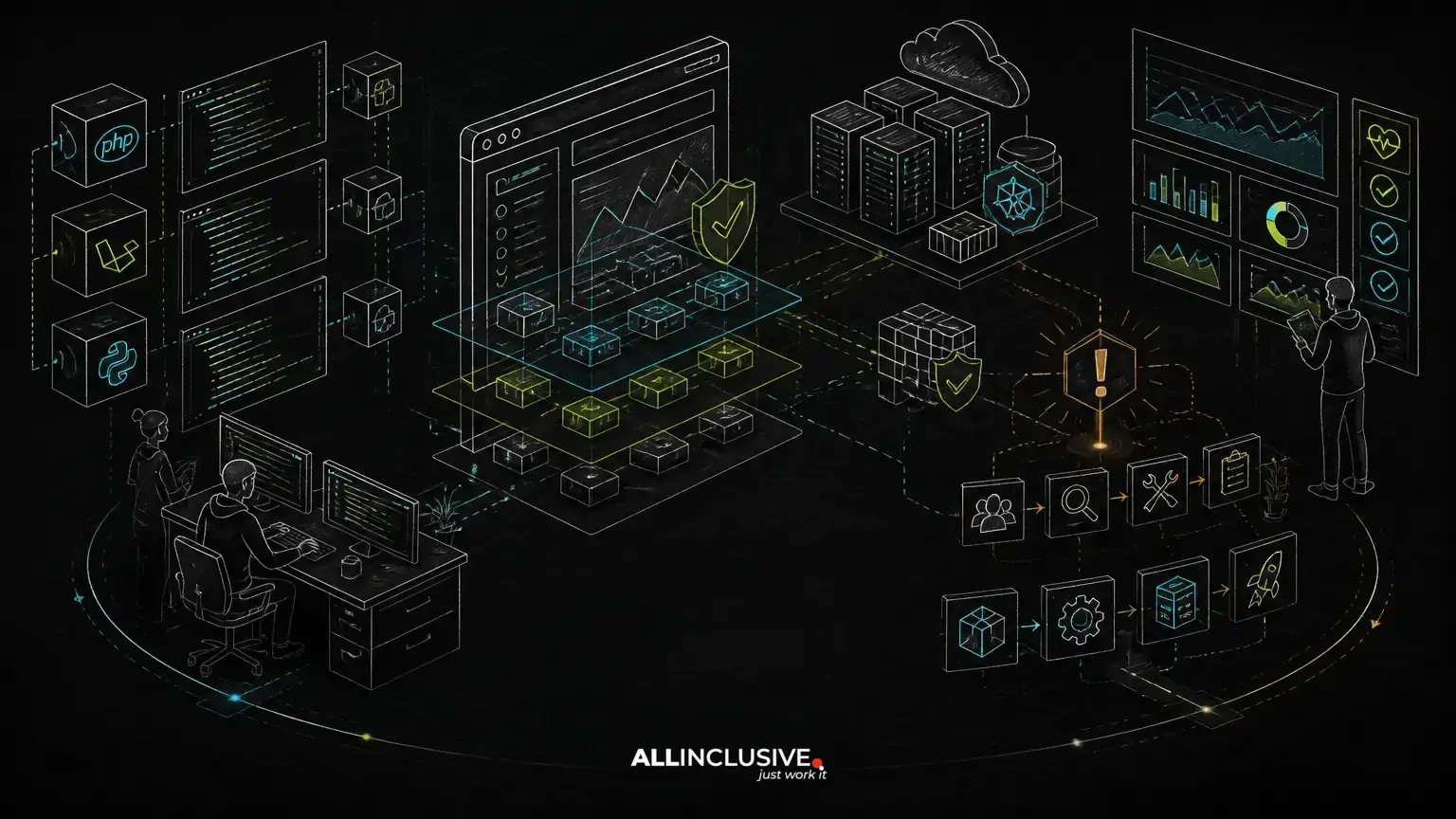
Teams building or modernizing a PHP API should establish a small set of repeatable controls:
- Document endpoint contracts and important business invariants.
- Use automated tests for validation, authorization, core use cases and integration boundaries.
- Run dependency and static analysis checks as part of delivery.
- Review database migrations for locking, rollback and data-volume risks.
- Test failure paths, retries, duplicate requests and partial downstream outages.
- Separate configuration and secrets from application code.
- Release incrementally when changing high-risk behavior or public contracts.
- Monitor real usage and remove deprecated behavior only after consumers are understood.
Idempotency deserves special attention for payment, provisioning, import and webhook operations. If a client retries after a timeout, the API should be able to determine whether the operation already completed rather than creating duplicate side effects.
Choosing the right PHP API path
For a new custom system, establish the business boundary, API contract, security model and data ownership before selecting implementation details. For an existing system, first determine whether instability comes from outdated dependencies, tangled code, unclear ownership, database constraints or changing product requirements.
That diagnosis leads to a more precise decision: stabilize the platform, refactor a capability, upgrade the runtime, migrate selected components or rebuild the product. Custom-made software can preserve valuable business logic, but only when that logic is identified and protected during change.
Allinclusive works across custom software and modernization initiatives, with architecture selected around the product’s operational and business requirements. Learn more about web development services, or review support and maintenance practices for the ownership work that keeps an API reliable after launch.
For broader engineering context, visit custom development services.