
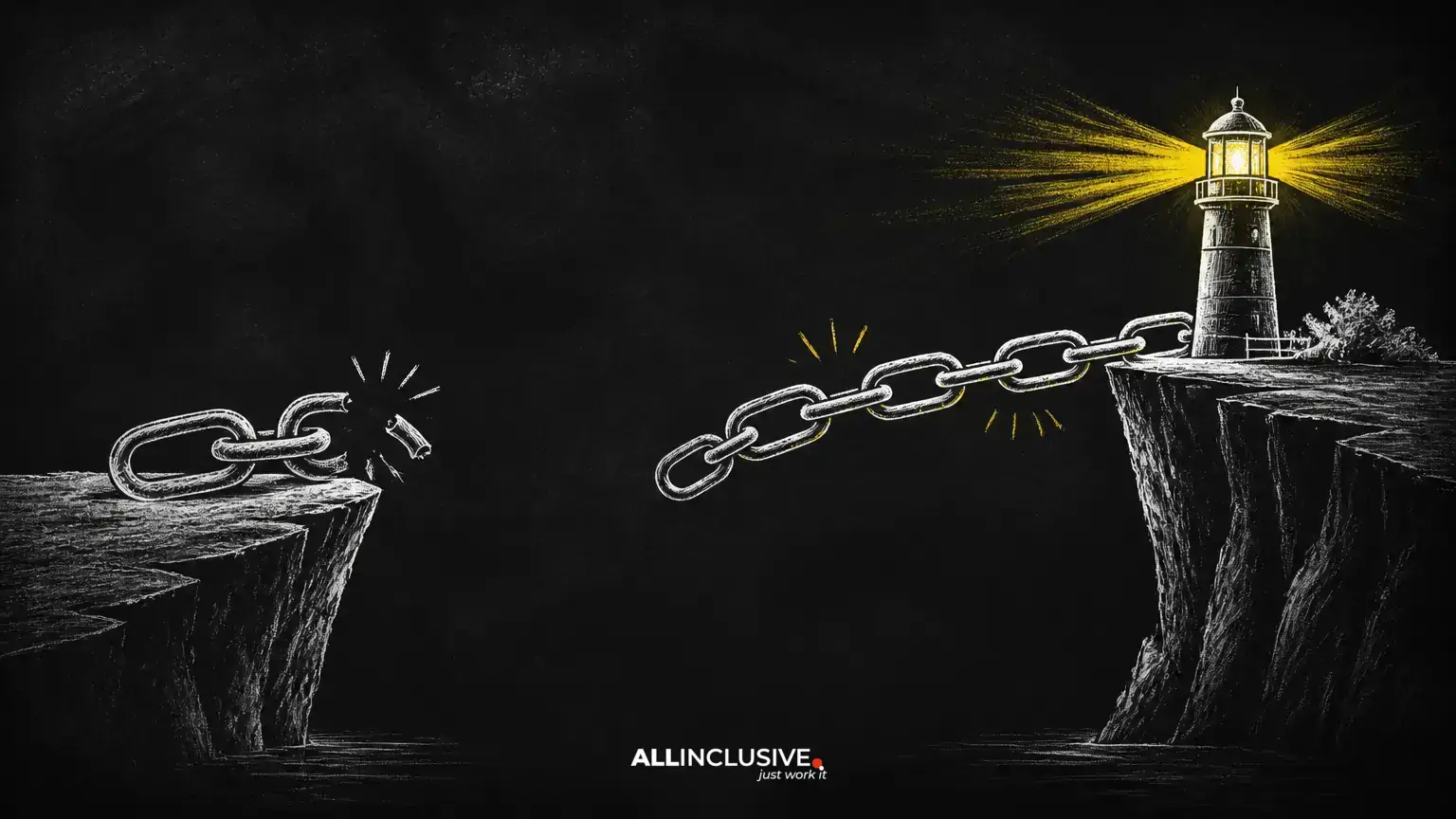
Link attributes are easy to reduce to a simple rule: follow links help SEO, while nofollow links do not. That summary is incomplete. A link’s value depends on its context, relevance, visibility, editorial purpose, and the experience it creates for users. The attribute is one part of that picture.
This guide explains the practical difference between follow and nofollow links, how rel="sponsored" and rel="ugc" fit into the model, and how to make better link-building decisions without treating links as a numbers game.
What is a follow link?
A follow link is an ordinary HTML hyperlink without a restrictive rel value:
<a href="https://example.com/resource">Helpful resource</a>
“Follow” is industry shorthand rather than a separate HTML attribute. Search engines can generally discover the linked URL through an ordinary link and may use the relationship between the pages as one part of their systems. That does not guarantee crawling, indexing, rankings, or a specific amount of authority.
A genuinely useful follow link usually comes from a page that is relevant to the reader and links naturally because the destination adds context, evidence, or a next step.
What is a nofollow link?
A nofollow link includes rel="nofollow":
<a href="https://example.com/resource" rel="nofollow">Helpful resource</a>
The attribute communicates that the publisher does not want the link treated as a conventional editorial endorsement, or cannot confidently classify the relationship another way. Search engines may treat the attribute as a signal or hint, but site owners should not use nofollow as a promise that a URL will never be crawled, indexed, or considered.
Nofollow links can still be valuable. They may send qualified referral traffic, expose a brand to a relevant audience, support reputation, and lead readers to discover or cite the linked resource independently. Those outcomes matter even when a link is not intended to pass conventional ranking signals.
Follow vs. nofollow: the practical differences
| Question | Follow link | Nofollow link |
|---|---|---|
| Typical HTML | rel is absent or does not restrict the relationship | rel="nofollow" is included |
| Editorial meaning | The publisher is generally comfortable with a conventional link relationship | The publisher does not want to endorse or classify the link as a standard editorial link |
| Potential user value | Referral traffic, context, discovery, and brand visibility | Referral traffic, context, discovery, and brand visibility |
| Ranking outcome | Not guaranteed | Not guaranteed |
| Best evaluation | Relevance, quality, placement, and usefulness | Relevance, quality, placement, and usefulness |
The most important distinction is intent and relationship, not a simplistic value ranking. A prominent nofollow link on a trusted, relevant publication may be more commercially useful than an obscure follow link on an unrelated site.
When should you use rel="nofollow"?
Use rel="nofollow" when a link does not fit a more specific relationship and you do not want to represent it as a conventional editorial endorsement. Common situations include:
- Untrusted or unreviewed destinations: for example, links submitted by users that have not been individually reviewed.
- Unclear commercial relationships: when the link may involve compensation but the site owner cannot classify the arrangement confidently.
- Publisher risk controls: when a site permits links but wants to limit the implied endorsement of destinations.
Do not add nofollow to every external link automatically. If your editorial policy permits and supports an ordinary reference link, the page should accurately express that relationship. Conversely, do not remove nofollow from paid or user-submitted links simply to pursue ranking value.
When should you use rel="sponsored"?
Use rel="sponsored" for links created as part of advertising, sponsorship, compensation, or another commercial arrangement:
<a href="https://example.com/offer" rel="sponsored">Partner offer</a>
The attribute describes the relationship more precisely than a generic nofollow value. Depending on the arrangement and the publisher’s policy, a link may use more than one value, such as rel="sponsored nofollow". The essential requirement is accurate disclosure and compliance with applicable advertising and consumer-protection rules.
Do not treat sponsored links as a shortcut for buying ranking influence. A commercial link should be valuable because it reaches the right audience and clearly communicates the relationship, not because it is disguised as an editorial citation.
When should you use rel="ugc"?
Use rel="ugc" for links in user-generated content, such as comments, forum posts, community submissions, or customer-contributed material:
<a href="https://example.com/topic" rel="ugc">Community reference</a>
Moderation still matters. The attribute helps identify the source of the link, but it does not make abusive, deceptive, or unsafe submissions acceptable. Sites should combine link attributes with spam controls, contributor policies, review processes, and removal procedures.
Nofollow is not the same as noindex
These directives address different questions:
- Nofollow on a link: describes how a particular link relationship should be treated.
- Nofollow on a page-level robots directive: communicates a preference about links found on that page.
- Noindex: communicates that a page should not be included in search results when the crawler can access and process the directive.
- Robots.txt: controls whether crawlers are allowed to request URLs; it is not a reliable replacement for a noindex directive.
If your goal is to keep a page out of search results, investigate the correct indexing controls for that page rather than adding nofollow to links pointing toward it. If your goal is to prevent access to private information, use authentication and access controls; search directives are not security measures.
How to evaluate a link for link building
Instead of asking only whether a link is follow or nofollow, review the complete opportunity:
- Audience relevance: Does the linking page reach people who could reasonably benefit from your resource?
- Topical fit: Is the surrounding content genuinely related to the destination?
- Editorial reason: Would the link make sense if search engines did not exist?
- Placement and visibility: Can readers find and use the link, or is it hidden among unrelated links?
- Destination quality: Does the target page satisfy the promise made by the anchor text?
- Commercial intent: Is the relationship paid, sponsored, affiliate-based, or otherwise compensated?
- Risk: Does the tactic rely on automation, mass placement, manipulative anchor text, or undisclosed compensation?
This framework applies to both inbound and outbound links. A site should also review its own outgoing links periodically, especially in comments, forums, partner pages, author profiles, and contributed content.
Common link-building mistakes
Chasing a follow-link percentage
There is no universal ideal ratio of follow to nofollow links. Trying to manufacture a particular mix encourages low-quality placements and distracts from audience relevance. Build useful assets and earn references that make sense for the subject.
Buying links for ranking purposes
Paid exposure can be legitimate advertising. The risk begins when a transaction is intended to manipulate search rankings and is presented as independent editorial support. Classify commercial relationships accurately and prioritize transparent promotion.
Using keyword-stuffed anchor text
Anchor text should help readers understand the destination. Brand names, descriptive phrases, and natural language are often more appropriate than repeatedly forcing an exact commercial keyword.
Using nofollow as a universal safety switch
Nofollow does not repair irrelevant content, deceptive outreach, poor moderation, or a manipulative campaign. It is a relationship signal, not a substitute for sound editorial judgment.
Ignoring traffic and conversions
A link that sends qualified visitors, assists discovery, or introduces a useful resource may be successful even when it is nofollow. Measure referral sessions, engaged visits, inquiries, assisted conversions, and audience fit alongside conventional SEO metrics.
How to audit link attributes
Start with a representative sample rather than changing every link at once. Review the HTML of important pages and inspect links in:
- navigation and footer components;
- author bios and partner sections;
- comments, forums, and other user-generated areas;
- advertising, affiliate, and sponsored content;
- editorial articles and resource pages.
For each link, record the destination, page location, anchor text, relationship attribute, commercial context, and whether the link is still useful. Correct the relationship when it does not match reality. Also check that internal links do not accidentally carry nofollow when normal discovery and navigation are intended.
Because search-engine handling can change and implementation varies by CMS, verify technical recommendations against current official documentation and your site’s own configuration before applying them broadly.
A responsible link-building decision process
- Define the audience and business purpose of the link.
- Create or identify a destination that genuinely answers a question or supports a claim.
- Find relevant publishers, communities, and partners rather than assembling bulk lists.
- Disclose compensation or sponsorship clearly.
- Use
ugc,sponsored, ornofollowaccording to the actual relationship. - Track referral quality and user outcomes, then remove links that become misleading, broken, or irrelevant.
Conclusion
Follow and nofollow links are not competing categories of “good” and “bad” links. Follow links can represent ordinary editorial references, while nofollow, sponsored, and UGC attributes help publishers describe relationships and manage trust. The strongest link-building strategy begins with relevance and usefulness, then applies accurate technical signals.
For a broader framework covering outreach, digital PR, content assets, and sustainable acquisition, explore Allinclusive’s link building guidance. If your site needs a coordinated technical and content strategy, review the SEO services resource as a next step.