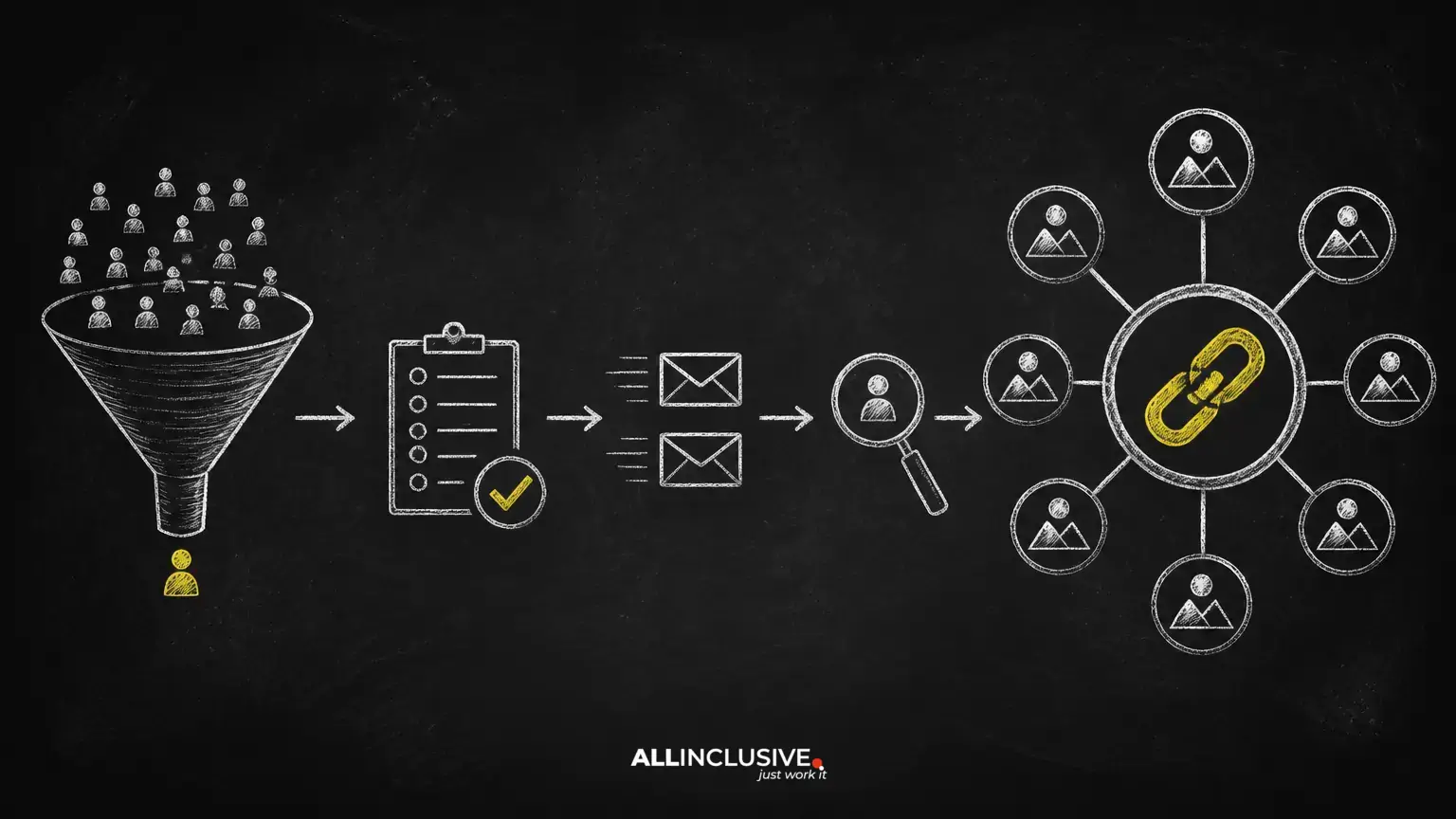
Link-building outreach works best when it is treated as relationship-driven distribution rather than a race to collect backlinks. The objective is to earn relevant editorial references that help people discover useful information, strengthen a site’s authority, and support meaningful organic search goals.
That requires more than sending a large batch of templated emails. A scalable process combines a clear campaign objective, a genuinely useful page, disciplined prospect research, respectful communication, and consistent evaluation. This guide explains how to build that process while avoiding the shortcuts that create low-quality links, wasted effort, or reputational risk.
Start with the outcome, not the backlink
A backlink is an input, not the final business result. Before researching prospects, define what the campaign should accomplish. Possible goals include increasing visibility for a commercial page, supporting a research resource, earning referrals from an industry publication, reclaiming relevant brand mentions, or building recognition in a particular audience.
The goal influences every later decision:
- Target page: Decide which page deserves attention and why it is useful to the intended reader.
- Audience: Identify the people who would benefit from discovering that page.
- Topic: Define the narrow subject area where a reference would make editorial sense.
- Success signals: Track qualified referring domains, referral visits, assisted conversions, brand visibility, and the quality of placements—not only link counts.
A campaign aimed at a technical guide may need different prospects and messaging from one promoting a product comparison or a local service page. Specific goals prevent broad, unfocused prospecting.
Create a page worth referencing
Outreach cannot compensate for a page that offers little beyond what is already available. A linkable asset does not need to be flashy. It may be an original explanation, a practical checklist, a transparent methodology, a useful template, a well-organized resource, or a page that answers a recurring question more clearly than competing results.
Review the page before contacting anyone:
- Is the intended audience obvious?
- Does the page answer a specific problem or question?
- Are important claims explained and supported appropriately?
- Is the content easy to scan and use on a mobile device?
- Would a publisher’s readers gain something by visiting it?
- Is the destination stable, accessible, and free from avoidable technical problems?
Sometimes the best opportunity is not a new asset. A relevant page may already exist on the site and need clearer organization, stronger examples, updated information, or a more useful title and introduction. Improve the destination before scaling promotion.
Build a qualified prospect list
Prospecting should identify pages where a reference would genuinely help the reader. Domain-level metrics can support prioritization, but they should not replace editorial judgment. A site with a smaller audience may be a stronger prospect than a large, unrelated publication if its readers and subject matter closely match the asset.
For each prospect, assess:
- Topical relevance: Does the publication regularly cover the subject?
- Audience fit: Would its readers plausibly use the destination page?
- Page context: Is there an existing article, resource page, or editorial format where the reference could fit naturally?
- Editorial standards: Does the site appear to review, edit, and maintain its content?
- Contact suitability: Is there an editor, author, publisher, or owner who is responsible for the relevant content?
- Link context: Would the link be descriptive and useful rather than forced or promotional?
- Risk signals: Does the site appear to sell manipulative placements, publish unrelated material, or host large volumes of thin content?
Record the evidence behind each prospect. A simple worksheet can include the publication, relevant page, suggested context, contact, reason for fit, outreach status, response, and final placement. This makes quality control easier and prevents repeated or contradictory messages.
Choose outreach opportunities carefully
Relevant unlinked mentions
If a publication already mentions a brand, organization, product, or research project without linking to an appropriate page, a concise request may be reasonable. The message should explain why the link would help readers and should point to the most relevant destination. Not every mention needs a link, so avoid treating every reference as an obligation.
Resource and reference pages
Some publications maintain collections of tools, guides, or further reading. These pages can be useful prospects when the asset fills a clear gap. Explain the specific gap rather than sending a generic request to be added.
Editorial contributions
Contributing an article can be legitimate when the subject is a strong fit and the publisher maintains meaningful editorial standards. The proposed contribution should be useful on its own, not a thin vehicle for inserting links. Agree on the topic, author requirements, disclosure expectations, and link treatment before drafting.
Digital public relations and original information
Original research, expert commentary, timely analysis, or a genuinely useful resource may attract attention from journalists and editors. This approach requires accuracy, clear methodology, and restraint. Do not manufacture data or exaggerate findings to create a link hook.
Write outreach that respects the recipient
Good outreach is brief, specific, and easy to evaluate. It shows that the sender understands the publication and presents a relevant idea instead of demanding a placement.
A useful email structure is:
- Specific opening: Identify the article, resource, or topic that prompted the message.
- Relevant observation: Explain what appears useful, incomplete, outdated, or connected to the proposed page.
- Clear suggestion: Describe how the destination could help readers in that exact context.
- Low-friction next step: Offer the URL, a concise summary, or a proposed contribution only if appropriate.
- Respectful close: Make it easy to decline and avoid pressure.
Personalization should be substantive, not the insertion of a first name into a mass template. Mention a real editorial detail and make a recommendation that would still make sense if no link were added.
Do not misrepresent your identity, imply an existing relationship, or promise exposure you cannot deliver. Avoid sending many follow-ups. A short reminder can be reasonable, but continued contact after a clear decline or silence is not a sustainable strategy.
Use tools to reduce administration, not judgment
Spreadsheets, customer relationship management systems, email tools, and SEO platforms can help organize research and status tracking. Automation is most useful for deduplication, reminders, categorization, and reporting. It should not decide whether an article is relevant or send large volumes of indistinguishable messages without review.
Establish quality controls before using any workflow automation:
- Require a human-reviewed reason for every prospect.
- Separate research, approval, outreach, and follow-up stages.
- Keep opt-outs and do-not-contact requests visible.
- Limit sending volume and monitor bounce or complaint signals.
- Review templates regularly for accuracy and tone.
- Remove prospects that no longer meet the campaign criteria.
Tool names and features change, so choose software based on current requirements, data practices, integrations, and legal obligations rather than on a static feature list.
Measure quality and business value
Report link-building as a contribution to broader performance, not as an isolated tally. Useful measures may include:
- Number of qualified prospects reviewed
- Positive response and placement rates by prospect type
- Relevance and editorial quality of acquired placements
- Referral sessions and engaged visitors
- Visibility or ranking changes for the supported page, interpreted cautiously
- Conversions or assisted conversions from referral and organic traffic
- Time and cost required per meaningful placement
Search performance is affected by many factors, so avoid claiming that one link caused a ranking change without strong evidence. Evaluate patterns over time and combine link data with analytics, conversion data, content performance, and technical SEO findings.
Common mistakes to avoid
- Chasing volume: A large prospect list is not useful if most sites are irrelevant.
- Leading with payment: Paid placements may require disclosure and different link handling; they should not be disguised as editorial endorsements.
- Using exact-match anchor text everywhere: Request descriptive, natural language only when the publisher chooses to link.
- Promoting every page: Focus on destinations that solve a clear reader need.
- Ignoring negative context: A mention or placement can affect reputation as well as visibility.
- Publishing thin guest content: Contributed content must meet the host’s standards and provide independent value.
- Failing to maintain assets: Broken, outdated, or inaccessible destinations weaken both user experience and outreach credibility.
A repeatable campaign checklist
- Define the business and audience outcome.
- Select or improve the destination page.
- Describe the editorial context where a reference would help.
- Research a focused set of relevant prospects.
- Verify each prospect and identify an appropriate contact.
- Draft a concise, genuinely personalized message.
- Send a controlled batch and review responses.
- Follow up sparingly and honor refusals.
- Check published placements for relevance, accuracy, and accessibility.
- Measure referral and business outcomes, then refine the next campaign.
For a broader view of how outreach fits into organic search strategy, explore Allinclusive’s link-building services and the wider SEO services offering.
Conclusion
Scalable link-building outreach is not mass email with a larger sending limit. It is a repeatable editorial process: create something useful, find the right context, contact the right person, communicate clearly, and measure whether the resulting visibility helps the business. When relevance and reader value guide every stage, efficiency improves without sacrificing trust.