
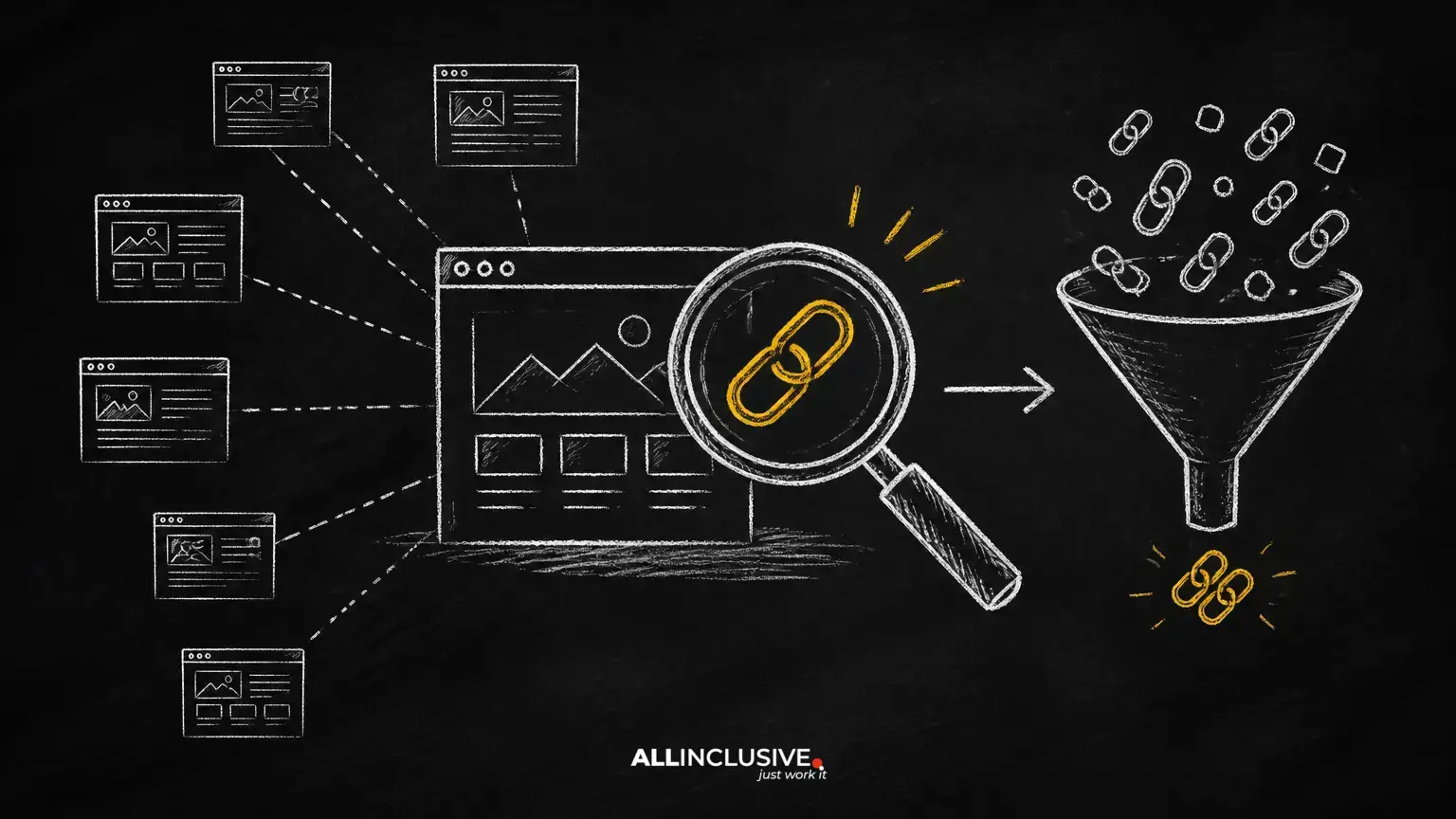
Backlink research shows which websites reference a page, what content attracts those references, and where your site may have credible opportunities to earn attention. It is not a contest to collect the largest possible number of links. A smaller set of relevant, editorially earned links can be more useful than a large list of unrelated domains.
This guide presents a repeatable way to find backlinks pointing to your own website or a competitor’s site. It also explains how to interpret the data without treating third-party metrics as proof of quality. For broader strategy, see our link building guide.
What backlink research can help you discover
A backlink is a link from one website to a page on another website. A backlink report can help you answer several different questions:
- Which pages on your site attract references from other publishers?
- Which websites link to competitors but not to you?
- What topics, formats, tools, or research appear to earn editorial attention?
- Are important pages difficult to discover because internal or external links are weak?
- Are there suspicious patterns that require investigation?
These questions have different uses. Competitor research may inform content planning and outreach. Your own backlink review may reveal valuable mentions, broken destinations, or links that need closer inspection. Separating those objectives prevents a large export from becoming an unfocused spreadsheet.
Choose the right scope before collecting data
Start by defining the object you want to analyze. A root-domain report provides a broad view of a website’s link profile, while a page-level report helps explain why a particular asset attracts links. If a site operates several subdomains or country versions, decide whether they should be reviewed together or separately.
Record the scope in your worksheet. At minimum, include the analyzed domain or URL, the date of collection, the tool used, and the reason for the review. Backlink indexes are incomplete and change over time, so a report should be treated as a working snapshot rather than a permanent inventory.
How to find backlinks step by step
1. Use a backlink discovery source
Use a reputable SEO platform, a search console property for your own site, or another dependable source that reports linking pages and referring domains. The names of reports and available filters vary by provider, so focus on the underlying fields rather than copying a vendor-specific workflow.
For a competitor, enter the domain or individual page you want to study. For your own site, begin with the domain-level report and then examine important pages individually. Export the available records when practical, but retain the original report so decisions can be traced back to the source data.
2. Separate referring domains from individual backlinks
A backlink count can be inflated when one website links to you from many pages. Referring domains count the distinct websites sending links. Review both measures, but do not assume either one represents authority by itself.
Group records by referring domain and note the number of linking pages, the linked URLs, and whether the links appear editorial, navigational, user-generated, or part of a sitewide element. This grouping makes it easier to identify meaningful relationships and repeated templates.
3. Inspect the linking page and destination
Open a sample of linking pages rather than relying only on exported fields. Ask:
- Does the page exist and provide a real context for the link?
- Is the linking website relevant to the subject, audience, or location?
- Is the link placed within useful editorial content or an automatically generated area?
- Does the destination page satisfy the reason a reader would follow the link?
- Is the link accessible to users, or is it hidden behind an unusable or blocked experience?
Context matters more than a single numeric score. A modest industry publication that genuinely serves the target audience may be a better prospect than a high-scoring but unrelated domain.
4. Review anchor text carefully
Anchor text is the clickable wording of a link. Review it for meaning and natural variation. Branded anchors, plain URLs, descriptive phrases, and generic wording can all occur naturally. A concentrated pattern of exact-match commercial phrases, especially across unrelated sites, deserves investigation.
Do not try to manufacture a preferred anchor-text ratio. When earning links through legitimate editorial relationships, the publisher controls the wording. Your job is to create a useful destination and describe it accurately when making a relevant suggestion.
5. Identify the pages that attract links
Sort or group the report by destination URL. Look for pages that earn links because they offer original research, a practical tool, a clear explanation, a strong reference resource, or a timely contribution to a conversation.
Then compare those successful pages with your own content. The goal is not to reproduce another site’s page. Instead, identify the underlying value: a missing dataset, clearer process, better documentation, a local resource, or an expert explanation. Build something genuinely useful before considering promotion.
6. Compare several relevant competitors
A single competitor can produce misleading conclusions. Compare a small set of sites that compete for the same audience or search topics. Look for domains that link to multiple competitors but not to your site, as these may be worth researching.
Treat a link gap as a prospecting lead, not an automatic outreach target. The site may have linked to a specific campaign, an unavailable resource, or a relationship that does not apply to your business. Review the page, the reason for the original link, and whether you have a better or relevant contribution.
How to evaluate backlink quality
Use a consistent evaluation checklist. Consider the following dimensions together:
- Topical relevance: Does the site or page serve a related subject, audience, industry, or community?
- Editorial context: Does the link appear because it helps readers understand or verify something?
- Destination quality: Does your page deliver the information promised by the link?
- Visibility: Is the link placed where users can reasonably see and use it?
- Pattern and intent: Does the link look independently chosen, sponsored, user-submitted, or automatically repeated?
- Business value: Could the relationship bring qualified referral traffic, credibility, partnerships, or useful awareness?
Third-party authority and toxicity scores can help prioritize a review, but they are not final judgments. A tool may misclassify a legitimate page, miss a link, or measure its own index rather than the entire web. Visit important prospects and document your reasoning.
Finding ethical link opportunities from backlink data
Content-led opportunities
If a competitor earns links to a guide, calculator, study, or reference page, study the audience need behind those links. Create an original resource only when it improves the answer through accuracy, usability, depth, accessibility, or a distinct point of view.
Broken destination research
Some reports identify pages that no longer resolve but still have external references. Confirm that the page is genuinely unavailable, inspect the old topic, and determine whether you have a closely matching replacement. Contact the site owner with a concise explanation. Do not recommend an unrelated page simply because it is yours.
Unlinked mentions
Research may reveal websites that mention a brand, organization, product, or published work without linking. A polite request can be appropriate when the link would help readers verify or access the referenced resource. This is more credible when the page already contains a factual mention and the proposed destination directly supports it.
Relationship and expertise opportunities
Relevant associations, publications, community organizations, and industry resources may welcome useful contributions. Prioritize opportunities where you can provide genuine expertise, documentation, or a resource for their audience. Avoid mass submissions, paid schemes disguised as editorial coverage, and promises of ranking outcomes.
Reviewing your own backlink profile responsibly
A backlink report may contain links you did not request. That alone does not mean they are harmful. First check whether there is a manual action, a clear pattern of manipulation, or another specific reason for concern. Do not remove or disavow links solely because a software label looks alarming.
Investigate suspicious records in context. Check the linking pages, recurring domains, anchor patterns, language, templates, and timing. Keep evidence of what you reviewed and why an action was or was not taken. If the issue involves a large-scale manipulation pattern or a manual action, seek qualified technical guidance before making irreversible changes.
Turn the export into an actionable workflow
- Collect: Export or record backlink and referring-domain data for a defined scope.
- Normalize: Standardize domains, destination URLs, link attributes, and duplicate records.
- Classify: Label links by relevance, context, opportunity type, and review status.
- Prioritize: Rank prospects by audience fit, likely usefulness, relationship potential, and effort.
- Act: Improve the destination, repair a broken resource, contribute expertise, or make a specific outreach request.
- Measure: Track responses, earned coverage, referral visits, qualified inquiries, and the quality of new relationships.
Useful columns include referring domain, linking URL, destination URL, anchor text, page topic, link context, opportunity type, contact or publication, proposed action, status, and notes. This structure keeps analysis connected to decisions rather than vanity totals.
Common backlink research mistakes
- Chasing volume: More links do not automatically mean more value.
- Copying competitor tactics: A competitor’s link may come from a partnership or campaign that does not fit your business.
- Relying on one score: Metrics are estimates and should support, not replace, human review.
- Ignoring the destination: Outreach fails when the proposed page is thin, outdated, or unrelated.
- Using generic mass outreach: Relevance and specificity matter more than sending a larger number of messages.
- Reacting to every suspicious link: Investigate patterns before taking disruptive action.
Conclusion
Finding backlinks is the easy part; interpreting them well is the real SEO skill. Start with a clear question, distinguish links from referring domains, inspect context, study the pages that earn attention, and turn credible gaps into useful resources or relevant relationships. A disciplined review supports sustainable link building without relying on inflated metrics or manipulative shortcuts.
If you need to connect backlink research with a broader organic search plan, explore Allinclusive SEO services.