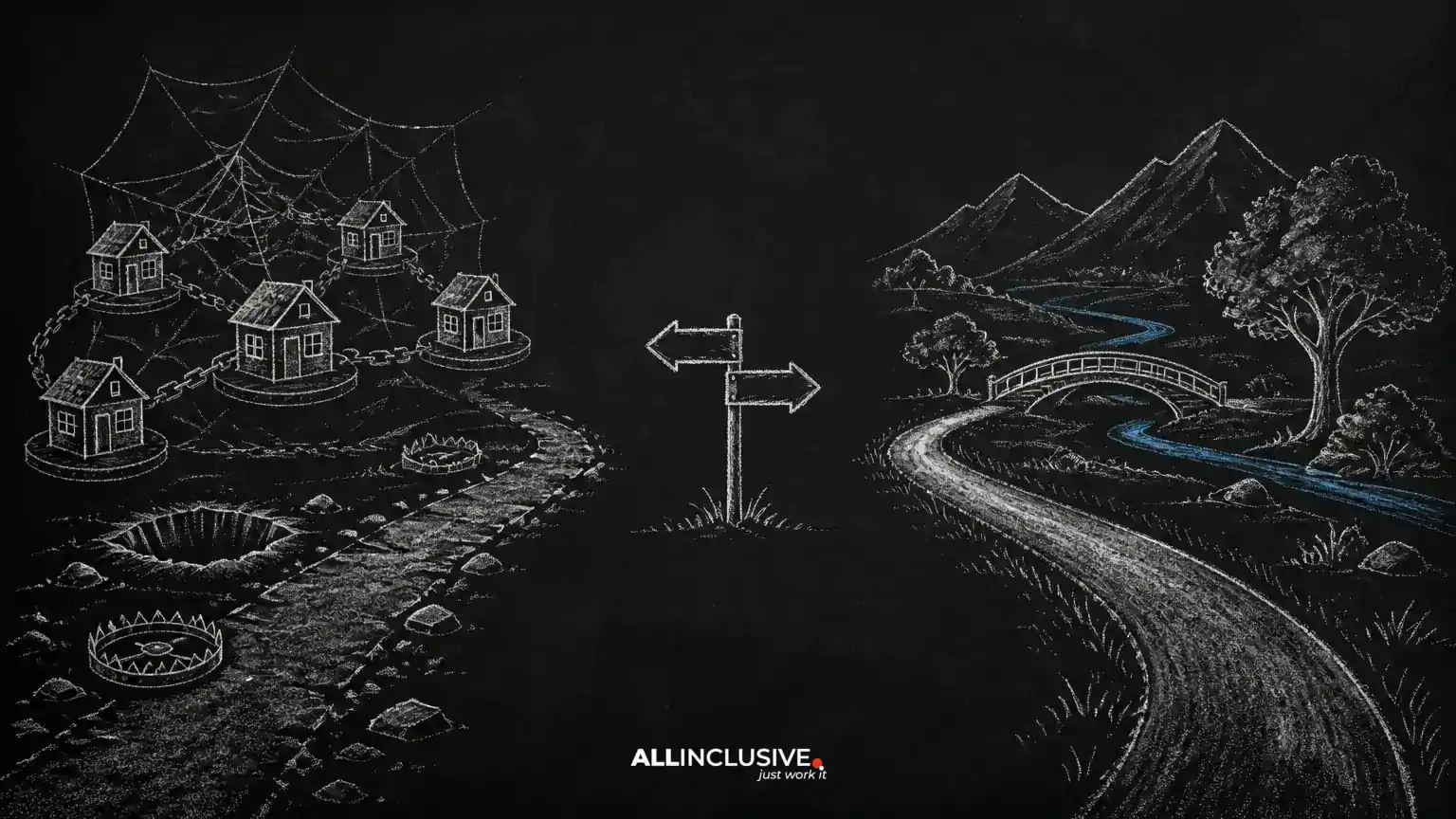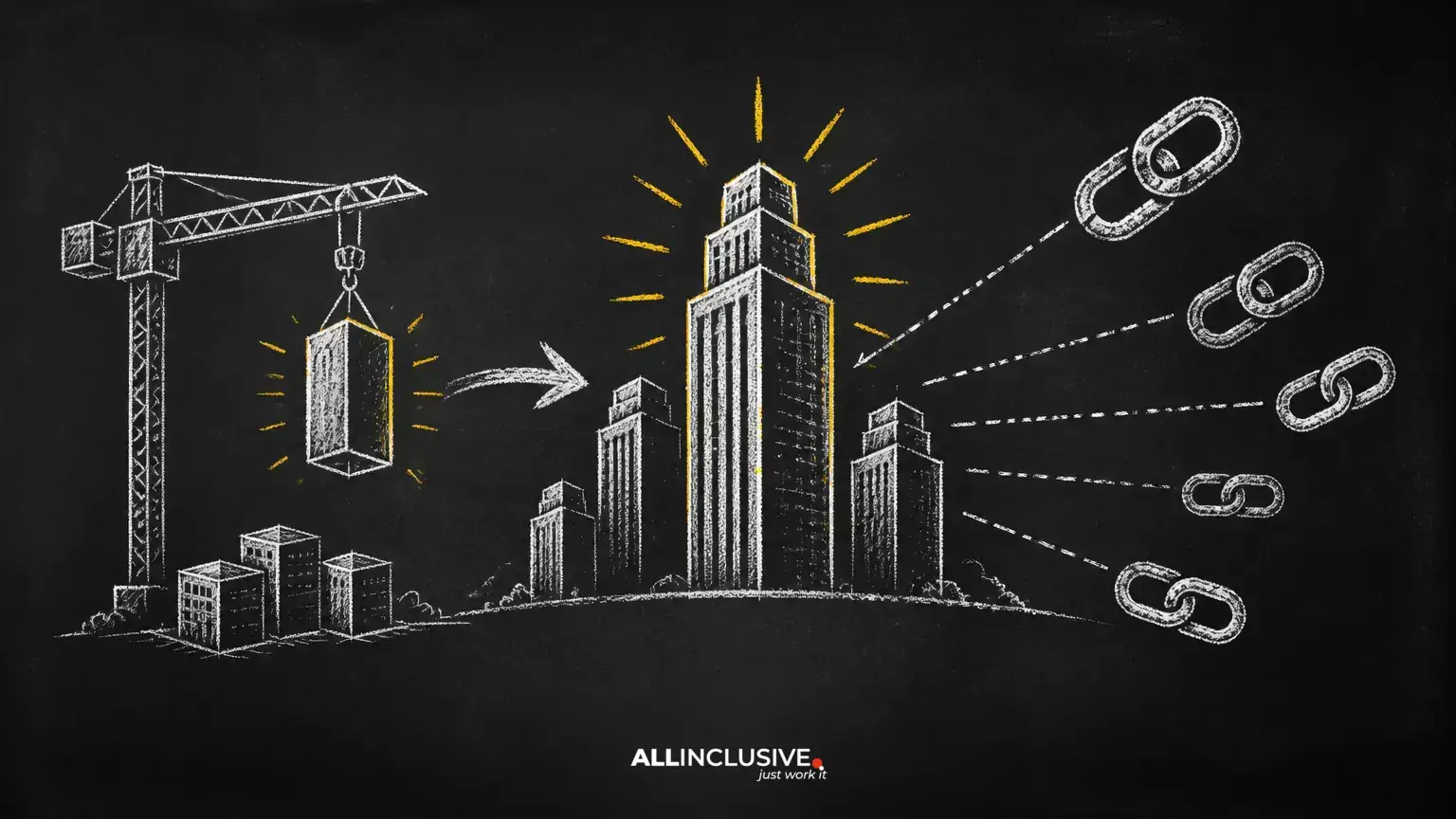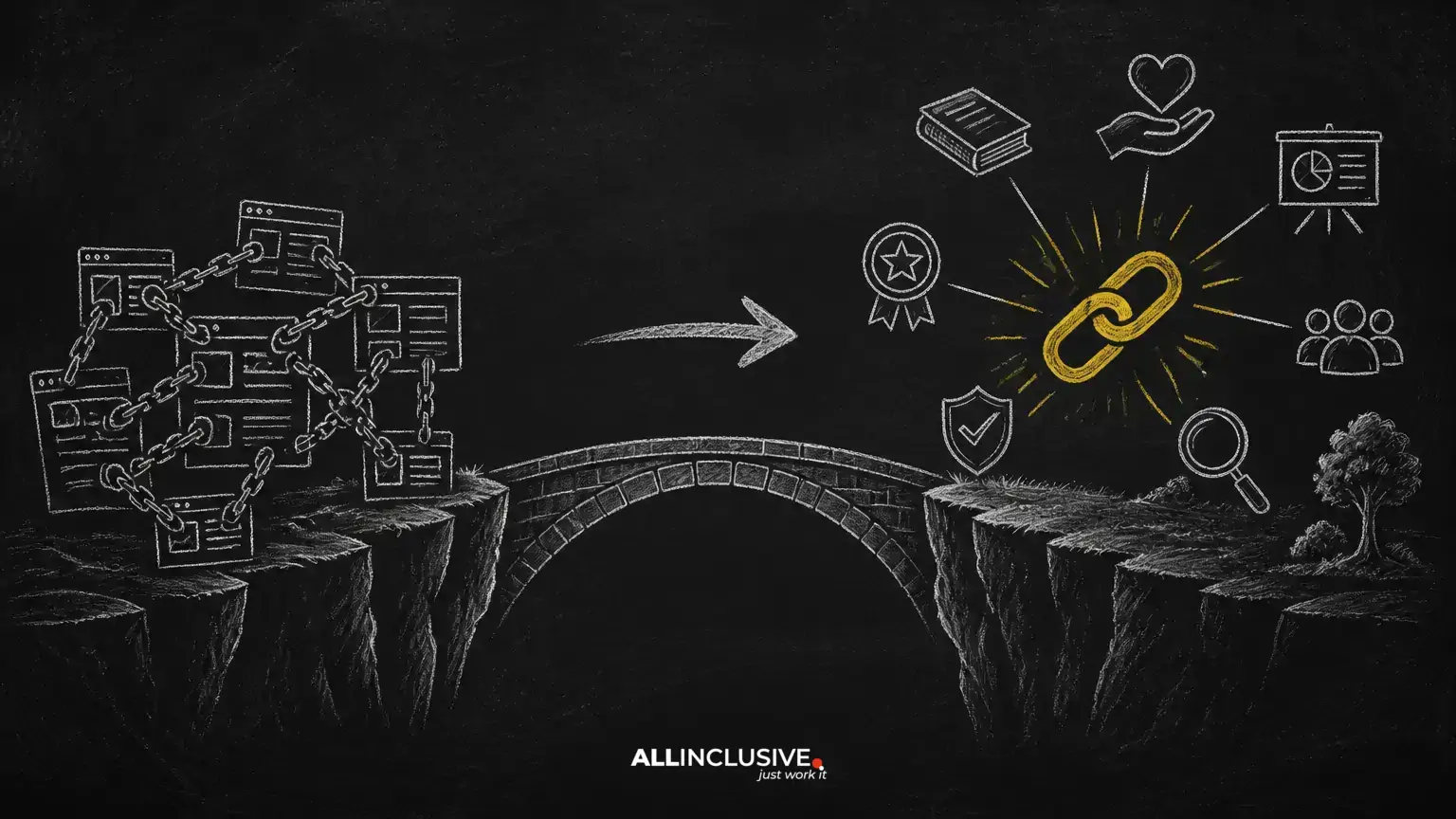
Link building is the practice of earning links from other websites to pages on your own site. Those links can send referral visitors, help people discover useful resources, and provide context about the relationships between websites. But a link is not automatically valuable because it exists. Its usefulness depends on relevance, editorial judgment, placement, and the experience it creates for the reader.
The history of link building illustrates that distinction. Early web communities used links to help people navigate related information. Later, marketers discovered ways to manufacture large volumes of links with directories, exchanges, networks, and other shortcuts. As search systems became better at evaluating quality and manipulation, durable link building moved back toward its most defensible purpose: publishing something worth citing and making the right people aware of it.
This article explains that evolution and turns it into a practical framework for modern link earning.
What link building is—and what it is not
A backlink is a hyperlink on another website that points to a page on your site. Link building includes the research, content development, relationship work, promotion, and measurement used to earn those links.
It is not simply collecting as many hyperlinks as possible. A large number of irrelevant, low-quality, or artificially placed links may contribute little to users and can create avoidable risk. Likewise, no ethical strategy can promise that a particular link will produce a specific ranking outcome. Search visibility depends on many factors, including the quality of the page, its usefulness for the query, technical accessibility, competition, and the broader credibility of the site.
A useful working standard is simple: would the link make sense if search engines did not exist? If the answer is no, the tactic deserves closer scrutiny.
How link building changed over time
Community links and early directories
In the early web, links often served as navigation. Web rings, curated lists, and topical directories helped people find sites before search engines offered comprehensive answers. A listing could be genuinely useful when it was selected by a relevant community and organized around a clear subject.
The weakness appeared when directories multiplied without meaningful review. A directory that accepted nearly every submission offered less guidance to users, while a link placed only to influence a ranking signal had little editorial value. The lesson remains relevant: a link is stronger when it is selected for a reason that readers can understand.
Link exchanges and automated placement
Reciprocal linking made it easier for site owners to trade visibility. Some exchanges were natural: two complementary businesses might recommend each other because their audiences benefit from both resources. Problems arose when the exchange became the purpose rather than a consequence of relevance.
Automation amplified that problem. Mass requests, templated submissions, and networks of sites could produce links at scale, but volume did not make the recommendations more useful. When the surrounding content was thin or unrelated, both readers and publishers received a worse experience.
Paid links and disclosure
Paid placements can be legitimate advertising. A sponsored article, directory listing, or partnership may reach an appropriate audience and deliver referral traffic. The important distinction is transparency and intent. Buying exposure is a marketing decision; presenting a paid placement as an independent editorial endorsement is misleading.
Before entering a paid arrangement, clarify who controls the content, how the relationship is disclosed, whether the link is intended to pass ranking credit, and whether the placement would still be worthwhile for direct visitors. If the answer depends entirely on manipulating search visibility, the arrangement is strategically fragile.
Guest contributions and content-led outreach
Guest publishing can be valuable when the contribution is original, expertly informed, and written for the host publication’s audience. It becomes weak when articles are mass-produced solely to obtain keyword-rich anchor text or when publishers accept nearly any submission for payment.
The durable version of guest contribution is closer to editorial collaboration than link placement. The author brings a useful perspective, the publisher protects its standards, and any link supports a claim or gives readers a logical next step.
Why relevance and editorial context matter
A relevant link helps readers move from one piece of information to another. For example, a professional association might cite a detailed compliance checklist, or a local publication might reference a business’s original community resource. In both cases, the link has a visible reason to exist.
Evaluate a potential link by asking:
- Does the referring site serve an audience that could reasonably benefit from this page?
- Is the linking page itself useful, maintained, and clearly connected to the subject?
- Would an editor include the link without being pressured by a ranking objective?
- Does the destination answer the question or support the claim introduced by the link?
- Is the anchor text natural and descriptive rather than stuffed with repeated commercial phrases?
Relevance does not require an exact keyword match. A natural phrase such as “the complete maintenance checklist” can be more helpful than repeating a target term. Good anchor text describes the destination without making the sentence awkward.
Modern link-earning strategies
Create assets that deserve citation
Start with a page that makes a clear contribution. Useful assets may include an original process guide, a well-organized glossary, a practical template, a transparent comparison, a local resource, or a carefully documented explanation of a complex topic. The format matters less than the value.
Before promotion, improve the asset itself. Define its audience, support important claims, remove unnecessary repetition, provide clear examples, and make the page easy to scan. If another publisher links to it, their readers should immediately understand why the recommendation was made.
Use digital public relations thoughtfully
Public relations and link building overlap when a genuinely newsworthy idea earns coverage. A new report, expert commentary, community initiative, or distinctive resource may attract attention from journalists and specialist publishers. The outreach should lead with the story or public value, not with a demand for a backlink.
Be accurate about what you are offering. Do not exaggerate novelty, imply guaranteed coverage, or send irrelevant pitches to large lists of contacts. A small number of well-researched messages is usually more respectful and more useful than indiscriminate outreach.
Repair broken resources
Broken-link outreach can help a publisher maintain a useful page. First, identify a dead or outdated reference on a relevant page. Then determine whether you have—or can responsibly create—a replacement that serves the same reader need. Contact the publisher with the location of the problem and a concise explanation of the alternative.
This tactic is not a pretext for substituting an unrelated commercial page. The replacement should match the original subject and improve the page for users.
Build relationships before requesting coverage
Strong link opportunities often come from genuine professional relationships: trade publications, associations, complementary businesses, educators, community groups, and subject-matter experts. Follow their work, contribute useful information, and understand their editorial needs before making a request.
Relationship building does not mean manufacturing personal familiarity or offering undisclosed incentives. It means making collaboration easier because both parties understand the audience and the value of the proposed resource.
A practical link-building workflow
- Set a useful objective. Decide whether the priority is referral traffic, awareness among a specific audience, support for an important resource, or a broader authority-building program.
- Choose a page worth promoting. Audit the destination for accuracy, clarity, accessibility, and a clear next step. Do not promote a weak page simply because it targets an attractive phrase.
- Map relevant audiences. Identify publications, organizations, communities, and professionals whose readers could benefit from the resource.
- Study editorial fit. Review the site’s subjects, formats, contributor rules, and existing outbound links. Avoid prospects that are clearly unrelated or dominated by low-value placements.
- Offer a specific reason to care. Explain what the resource adds to the publisher’s page or audience. Keep the message concise and factual.
- Follow up responsibly. One reasonable follow-up can clarify a message. Repeated pressure, mass automation, and deceptive personalization damage trust.
- Measure meaningful outcomes. Track qualified referral visits, assisted conversions, mentions, relationship development, and the quality of the resulting coverage—not only the number of acquired links.
Practices to avoid
Be cautious with link packages, private networks, automated submissions, irrelevant guest-post marketplaces, excessive reciprocal linking, comment spam, and requests that require exact-match commercial anchor text. These approaches can produce activity without producing genuine value.
Also avoid treating every high-authority metric as a guarantee. Third-party scores are estimates, not universal measures of editorial quality. Inspect the actual site, its audience, its content, and the context in which links appear.
When a relationship is commercial, disclose it appropriately and follow the publisher’s requirements. If a link is not an independent editorial recommendation, do not describe it as one.
How link building fits into SEO
Link earning works best as part of a broader SEO program. Strong information architecture helps users and crawlers discover important pages. Useful content gives other publishers something to reference. Technical maintenance prevents avoidable access and indexing problems. On-page optimization makes the destination understandable once visitors arrive.
For a broader view of how these activities work together, explore Allinclusive SEO services. For focused guidance on the wider discipline, visit the link building service page.
Conclusion
Link building has evolved from informal web navigation into a sophisticated marketing discipline, but its most durable principle has stayed consistent: useful information earns recommendations more reliably than manufactured signals. Build resources that deserve citation, identify publishers whose audiences genuinely fit, communicate with precision, and judge success by the value created for people.
That approach may produce fewer links than automation-driven tactics, but the links are more likely to be relevant, understandable, and valuable beyond search visibility.