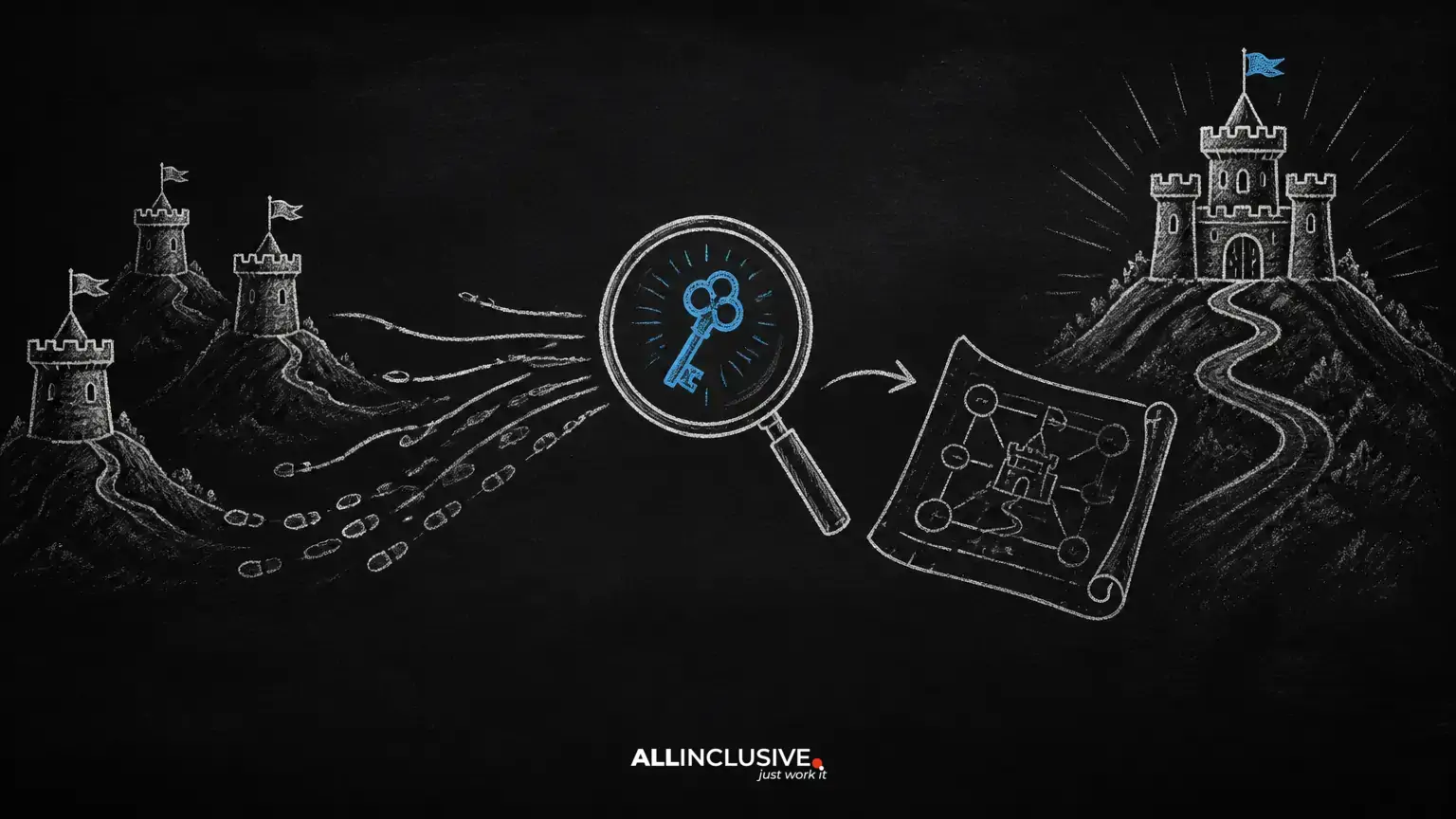
Searchers rarely express the same need in exactly the same words. Someone looking for help choosing a service might search for “how much does it cost,” “best provider near me,” or “what should I look for?” These queries differ on the surface, but they may belong to the same customer journey.
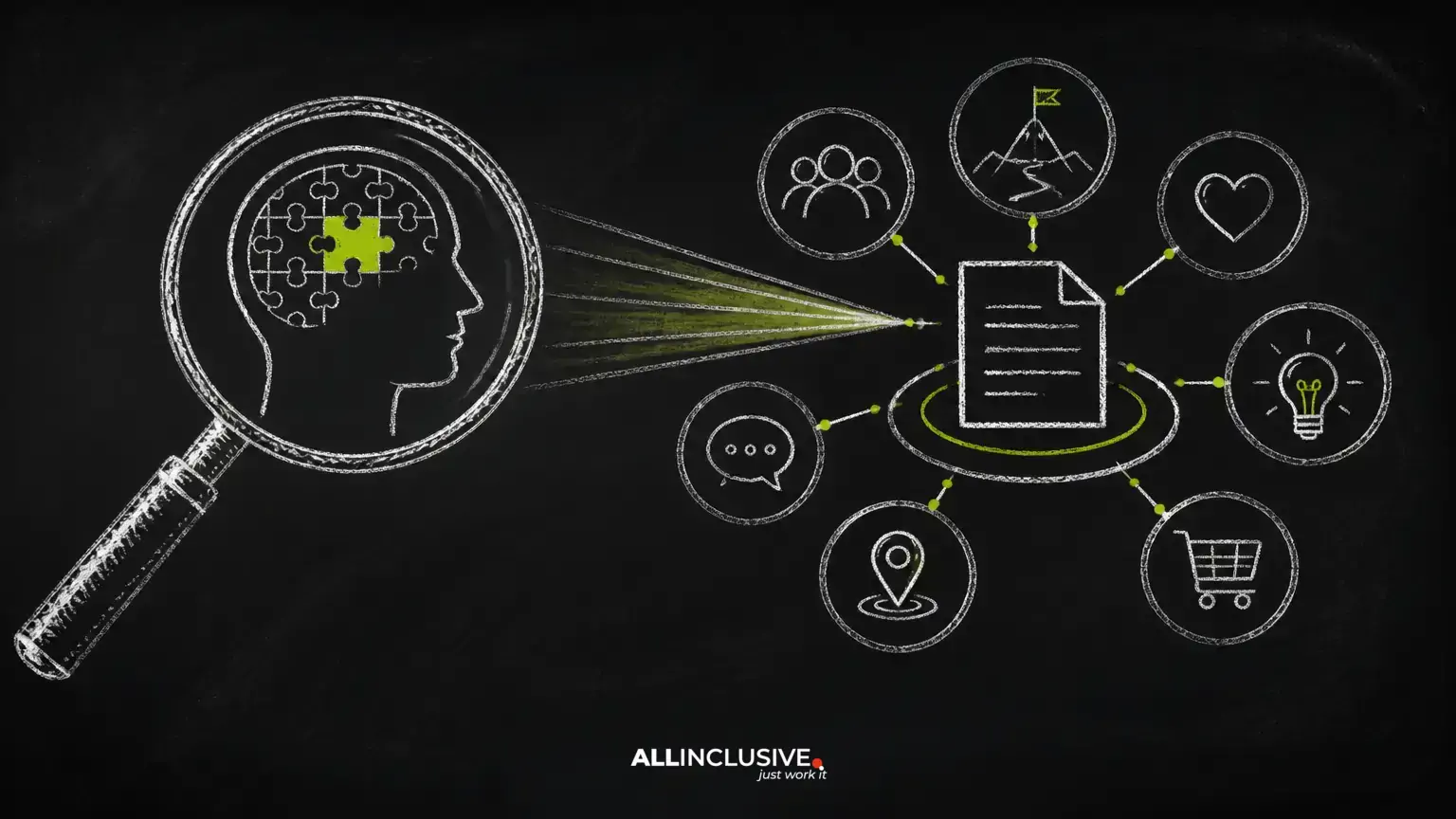
Semantic search is the set of methods search systems use to interpret meaning, context, relationships, and likely intent rather than matching pages to isolated words alone. For SEO, the practical lesson is straightforward: create pages that solve a clearly defined problem, use language naturally, and make the relationships between ideas easy to understand.
This guide explains what semantic search means for content planning and how to apply it without chasing every algorithm change or creating unnecessary pages.
What is semantic search?
Traditional keyword matching treats a query largely as a string of words. Semantic search attempts to understand what those words mean together. It can consider the relationship between terms, the type of answer being requested, the ambiguity of a phrase, and the context surrounding a search.
For example, a query such as “jaguar habitat” signals an informational need about an animal, while “Jaguar service center” signals a need related to a vehicle brand. The important distinction is not simply the presence of the word “Jaguar.” It is the relationship between the words and the likely task behind the search.
Semantic interpretation does not mean search engines understand every page perfectly, nor does it make keywords irrelevant. It means that a successful page usually needs to address the topic and intent comprehensively enough that both readers and search systems can identify its purpose.
Why semantic search matters for SEO
Semantic search changes the questions an SEO strategy should ask. Instead of focusing only on how often a phrase appears, a stronger process considers:
- What problem is the searcher trying to solve?
- What information would allow the reader to take the next step?
- Which related concepts are necessary to explain the subject accurately?
- What format best fits the task: a guide, comparison, definition, checklist, product page, or service page?
- Which questions are likely to arise after the initial answer?
This approach helps avoid two common weaknesses: thin pages built around minor keyword variations and broad articles that mention a topic without satisfying a specific need. It also supports clearer site architecture because related pages can be connected according to their roles and relationships.
Semantic search is not a reason to abandon keyword research
Keywords remain useful evidence about how people describe a problem. They can reveal vocabulary, recurring questions, competing interpretations, and differences between informational and commercial searches. The mistake is treating every variation as a separate content target.
Begin with a primary topic, then group closely related phrases when they express the same intent. A single well-structured page may naturally address variations such as “technical SEO audit,” “website technical audit,” and “technical SEO review” if the underlying task is the same. Separate pages may be appropriate when the user expects a different format, audience, product, location, or stage of decision-making.
Use keyword research to discover language and demand, not to justify awkward repetition. A page should use the terms readers recognize, but it should also explain the subject with precise language, examples, qualifications, and relevant subtopics.
How to optimize content for semantic search
1. Define the page’s primary intent
Before drafting, write one sentence that describes the page’s job. For example: “This guide helps small businesses decide whether they need an SEO audit.” If the page cannot be described clearly, the topic may be too broad or several intents may be competing.
Intent is often expressed through the action the searcher wants to take:
- Informational: understand a concept, process, or problem.
- Commercial investigation: compare options or evaluate providers.
- Transactional: complete an action such as purchasing, booking, or requesting a quote.
- Navigational: reach a known brand, page, or resource.
These categories are useful planning tools, not rigid labels. Review the current search results and the language of real customers where possible, then make the page’s purpose explicit in its title, introduction, headings, and calls to action.
2. Build a topic map before writing
A topic map lists the concepts needed to answer the main question well. For a guide about local SEO, that might include business information consistency, location relevance, service-area pages, reviews, local intent, and measurement. The map should reflect what the reader needs, not an arbitrary list of related words.
Separate essential subtopics from optional detail. If a concept is necessary to understand the answer, give it a useful section. If it is only loosely related, link to a dedicated resource or omit it. This keeps the page focused while allowing the wider site to cover the subject in depth.
3. Answer important questions directly
Readers often scan before committing to a full article. Put a concise answer near the beginning of each major section, then add context, examples, limitations, or steps. This structure helps users find the information they need without forcing them through a long preamble.
Questions can be formatted as headings when they represent genuine sections of the topic. Avoid adding question headings solely to insert phrases. A useful answer should be complete enough to stand on its own and should not promise information the section does not provide.
4. Use clear, descriptive structure
Use one logical title at the page level, followed by a hierarchy of descriptive headings. Although HTML structure alone does not guarantee visibility, it helps readers, assistive technologies, editors, and search systems interpret the document.
Prefer specific headings such as “How to assess search intent” over vague headings such as “Important information.” Use lists for processes and criteria, tables for genuine comparisons, and short paragraphs for explanations. Strong structure improves comprehension without requiring unnatural keyword placement.
5. Explain entities and relationships
Many topics involve entities: people, organizations, products, places, services, concepts, or events. Make the relationships between them explicit. Instead of mentioning “structured data” without context, explain that it is machine-readable information describing a page or entity and that eligibility for enhanced search features depends on search-engine guidelines and page quality.
Define specialized terms at first use. Distinguish similar concepts, identify dependencies, and state where advice may vary by industry or situation. This precision is more valuable than adding a long list of loosely related terms.
6. Connect related pages with internal links
Internal links help readers move from a broad explanation to a deeper resource or a relevant service. Link when the destination adds meaningful context, and use anchor text that describes the destination accurately. Do not create excessive links or use the same anchor text mechanically.
For businesses evaluating a broader organic-growth program, the Allinclusive SEO services page is a relevant next step. Supporting resources should be connected according to user needs, such as moving from an educational explanation to an audit, technical implementation guide, or service overview.
7. Treat structured data as supporting context
Structured data can help communicate the type and properties of page content when it accurately reflects what users can see. It should be implemented carefully, validated with appropriate tools, and kept current. It is not a substitute for useful content, clear site architecture, crawlable pages, or a strong user experience.
Only mark up information that is present and accurate on the page. Avoid using structured data to imply reviews, offers, events, or other facts that are not genuinely supported. Search features and eligibility can change, so implementation should be checked against current official documentation before publication.
How to build a semantic SEO workflow
- Choose a defined audience and problem. Identify who the page serves and what decision or task it supports.
- Review the search landscape. Examine result formats and recurring themes to understand the dominant intent, without assuming that existing pages are correct.
- Group related queries. Combine variations that share the same purpose and separate those with materially different expectations.
- Create an outline based on user decisions. Put foundational explanations before advanced detail and address likely objections.
- Draft for clarity first. Use natural language, examples, definitions, and caveats. Add keyword variations only where they improve precision.
- Connect the page to the site. Add relevant internal links and confirm that the page has a clear place in the information architecture.
- Review and improve. Use performance data, user feedback, conversions, and content reviews to identify unanswered questions or outdated claims.
Common semantic SEO mistakes
Creating a page for every keyword variation
Near-duplicate pages can divide internal links, confuse users, and make maintenance harder. Consolidate variations when the intent is the same. Create separate pages when the audience, task, offering, or expected answer is genuinely different.
Adding related terms without adding meaning
A paragraph filled with adjacent vocabulary is not comprehensive content. Explain why each concept matters, how it connects to the central question, and what the reader should do with the information.
Confusing breadth with usefulness
A page can mention many subtopics and still fail to answer the primary question. Keep the main path visible, then link to deeper resources when detail would distract from the immediate task.
Promising guaranteed visibility
Semantic optimization can improve clarity and relevance, but no tactic guarantees rankings, featured results, or traffic. Search results depend on many factors, including competition, technical accessibility, quality, intent, and changing search features.
How to measure whether the strategy is working
Evaluate more than a single ranking for one exact phrase. Depending on the page’s purpose, useful signals may include impressions across related queries, qualified organic visits, engagement with the next step, conversions, assisted conversions, and feedback from sales or support teams.
Look for gaps rather than reacting to every fluctuation. If a page receives impressions for questions it does not answer, improve the relevant section or create a better supporting resource. If visitors arrive but do not continue, check whether the page matches the promise in the search result and whether the next action is clear.
Conclusion
Semantic search makes meaning and intent central to SEO. The most durable response is not to repeat more keyword variations; it is to understand the searcher’s task, organize the topic logically, explain important relationships, and connect the page to useful resources.
Use keyword research as evidence, not as a writing formula. Build focused pages around distinct intents, support them with clear internal linking, and review them as audience needs and search results evolve. For broader planning and implementation, explore SEO services from Allinclusive while treating every recommendation as something to evaluate against your goals, audience, and available evidence.
For related guidance, see contact Allinclusive.