
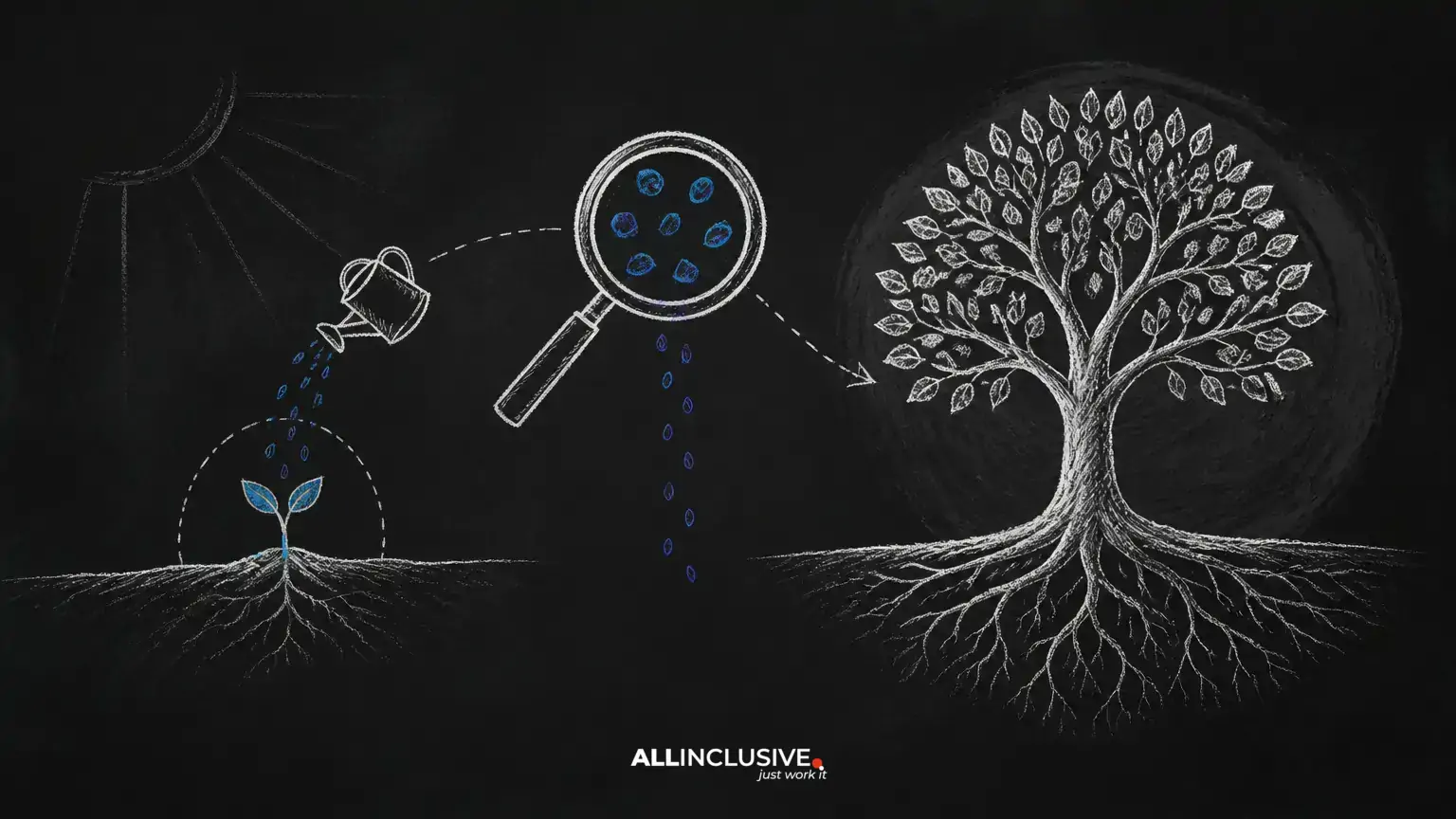
Keyword research is not a one-size-fits-all exercise. A new website and an established website may pursue similar customers, but they begin with very different levels of evidence.
An established site can examine pages, queries, conversions, rankings, and content that already attracts attention. A new site has little or no first-party performance history, so it must build its initial keyword set from business knowledge, audience research, search results, and credible competitors.
That difference should shape both the research process and the expectations. The goal is not to collect the largest possible list of keywords. The goal is to identify topics and queries that match the audience, the business offer, the page’s purpose, and the site’s ability to compete.
For a broader view of how keyword research fits into a complete search strategy, visit Allinclusive SEO services.
Why the starting point matters
Keyword research is partly an evidence-gathering process. The evidence available to an established site is different from the evidence available to a new site.
- Established websites: use existing impressions, clicks, landing pages, conversions, rankings, internal search data, and customer language to find opportunities.
- New websites: rely more heavily on customer interviews, business expertise, competitor analysis, search-result interpretation, and careful assumptions.
This does not mean an established site can skip strategic research or that a new site must guess blindly. It means each site should weight its sources differently. Existing performance data can reveal overlooked opportunities, while competitor and audience research can expose gaps that current analytics cannot show.
Keyword research for an established website
An established website should begin by understanding what is already working, what is close to working, and what supports the business financially. This prevents the common mistake of creating a new content calendar while ignoring pages that already have visibility.
1. Review valuable organic outcomes
Start with the pages and search queries associated with meaningful outcomes. Depending on the business, that may include purchases, qualified inquiries, booked appointments, registrations, downloads, or assisted conversions.
Separate traffic volume from business value. A high-traffic informational page may be useful for awareness, but a lower-volume service query may be more important because it attracts visitors who are ready to act. Review both metrics rather than treating sessions or clicks as the final measure of success.
When evaluating analytics, account for attribution limitations and tracking quality. A conversion report is only as reliable as the implementation behind it. Confirm that important forms, calls, transactions, and other outcomes are being recorded consistently before using them to make major content decisions.
2. Examine current query and ranking coverage
Export or review the site’s current search-query data from the tools available to you. Useful fields may include the query, landing page, impressions, clicks, click-through rate, average position, device, country, and date range.
Look for several opportunity patterns:
- Queries with substantial impressions but comparatively few clicks.
- Pages ranking near the first page that could improve with clearer coverage or stronger alignment.
- Relevant queries assigned to the wrong page.
- Pages receiving impressions for topics they do not address thoroughly.
- Important commercial topics with no dedicated, useful destination.
- Declining queries that may indicate outdated information, weaker relevance, or technical problems.
Do not treat a ranking position as a guarantee of traffic. Search results vary by location, device, personalization, competition, and intent. Use ranking information as directional evidence, then inspect the page and the result type before deciding what to change.
3. Map queries to pages before creating new content
A keyword list is more useful when every priority topic has a logical page. Build a simple map with columns for the primary topic, related terms, intended audience, search intent, existing URL, recommended action, and business objective.
Possible actions include:
- Improve: strengthen an existing page that already matches the intent.
- Consolidate: combine overlapping pages when they compete for the same audience and purpose.
- Redirect or retire: address obsolete or redundant content carefully.
- Create: publish a new page when no suitable destination exists.
- Monitor: defer a change when the evidence is weak or the page is already performing appropriately.
This mapping step reduces internal competition and keeps content production connected to the site architecture.
Keyword research for a new website
A new website has less first-party evidence, so the initial process should focus on understanding the market and defining a realistic topical foundation.
1. Start with the business and customer problem
List the products, services, audiences, locations, use cases, objections, and outcomes the business serves. Then record the words real customers use to describe their problem, desired result, and buying process.
Business terminology is not always audience terminology. A company may use a technical category name while prospects search for a symptom, task, comparison, or plain-language solution. Interviews, sales conversations, support questions, reviews, and customer-facing documentation can reveal this vocabulary.
2. Build topic groups, not isolated terms
Organize the initial research into topic groups such as:
- Core services or products.
- Problems and symptoms.
- How-to and educational questions.
- Comparisons and alternatives.
- Pricing, process, and qualification questions.
- Industry, audience, or location modifiers where they are genuinely relevant.
Topic groups make it easier to plan useful pages and recognize related language. They also discourage the practice of producing a separate, thin page for every minor variation of the same query.
3. Study search results for intent
Search results provide a practical view of what users may expect for a query. Examine the types of pages that appear, the questions addressed, the level of detail, the apparent audience, and the calls to action.
Classify the dominant intent conservatively:
- Informational: the searcher wants an explanation, answer, or process.
- Commercial investigation: the searcher is comparing options, providers, or approaches.
- Transactional: the searcher appears ready to purchase, contact, book, or start.
- Navigational: the searcher is seeking a particular brand, site, or destination.
Intent is not always fixed. A broad query may produce a mixed result page, and the result set can change over time. Treat the search results as a current directional signal rather than an unquestionable rule.
4. Use competitors for discovery, not imitation
Relevant competitors can help reveal recurring topics, service categories, questions, and content formats. Review sites that serve a similar audience and offer a comparable solution. Avoid using only the largest publishers or nationally recognized brands as your competitive benchmark; their authority, resources, and audience may differ substantially from yours.
Competitor research should lead to questions such as:
- Which important customer questions are consistently answered?
- Where do competing pages appear unclear, shallow, or poorly organized?
- What proof, process detail, or qualification information is missing?
- Which topics are relevant to the business but underdeveloped in the market?
The objective is not to reproduce another site’s page titles or structure. Use observations as inputs, then create a more accurate and useful resource for your own audience.
How to prioritize keywords for either type of website
Search volume can help estimate demand, but it should not determine the entire roadmap. Prioritize each topic using a balanced set of criteria:
- Relevance: does the query describe a problem or need the business can genuinely address?
- Intent fit: can the site provide the type of page the searcher appears to want?
- Business value: could the topic support an important customer or commercial outcome?
- Evidence: do analytics, customer language, search results, or competitor patterns support the opportunity?
- Feasibility: can the site create a substantially useful page and compete within a reasonable timeframe?
- Distinctiveness: can the content add original expertise, clarity, examples, or decision support?
An established site may place greater weight on existing performance gaps and conversion data. A new site may place greater weight on audience relevance, foundational coverage, and a realistic competitive set. Neither approach should rely on a single metric.
Common mistakes to avoid
Chasing broad terms too early
Broad phrases often combine several intents and attract audiences with different needs. A narrower topic with clear intent may produce a more useful page and a more qualified visit.
Creating pages for every keyword variation
Close variants do not automatically require separate URLs. Decide whether the audience, intent, and expected answer are meaningfully different before splitting a topic into multiple pages.
Confusing visibility with success
Impressions, rankings, and visits are useful diagnostic signals, but they are not substitutes for relevance and business outcomes. Establish measurement around the actions that matter to the organization.
Ignoring existing content
New content is not always the best answer. An established site may gain more by improving a relevant page, fixing its page targeting, strengthening internal links, or consolidating overlap.
Failing to revisit assumptions
Keyword research is a working model. Review performance after publishing or updating content, compare results with the original intent assessment, and refine the roadmap as customer language and search behavior become clearer.
A practical workflow
Use this sequence to turn research into an actionable plan:
- Define business goals, audiences, offers, and priority problems.
- For an established site, audit current pages, queries, conversions, and technical context.
- For a new site, gather customer language and analyze relevant competitors and result pages.
- Group related queries by audience need and search intent.
- Assign one primary purpose and destination to each topic group.
- Prioritize opportunities using relevance, value, evidence, feasibility, and distinctiveness.
- Choose whether to improve, consolidate, create, or monitor each opportunity.
- Measure outcomes and update the map as new evidence appears.
Conclusion
Keyword research for an established website is an optimization and discovery exercise supported by first-party evidence. Keyword research for a new website is a market-understanding and prioritization exercise that must make careful use of external signals.
The strongest strategy combines both perspectives over time: start with the evidence available today, create pages that genuinely satisfy the intended need, and use performance data to improve the next decision. For help connecting research with a broader organic growth plan, explore SEO services from Allinclusive.
For related guidance, see Contact.