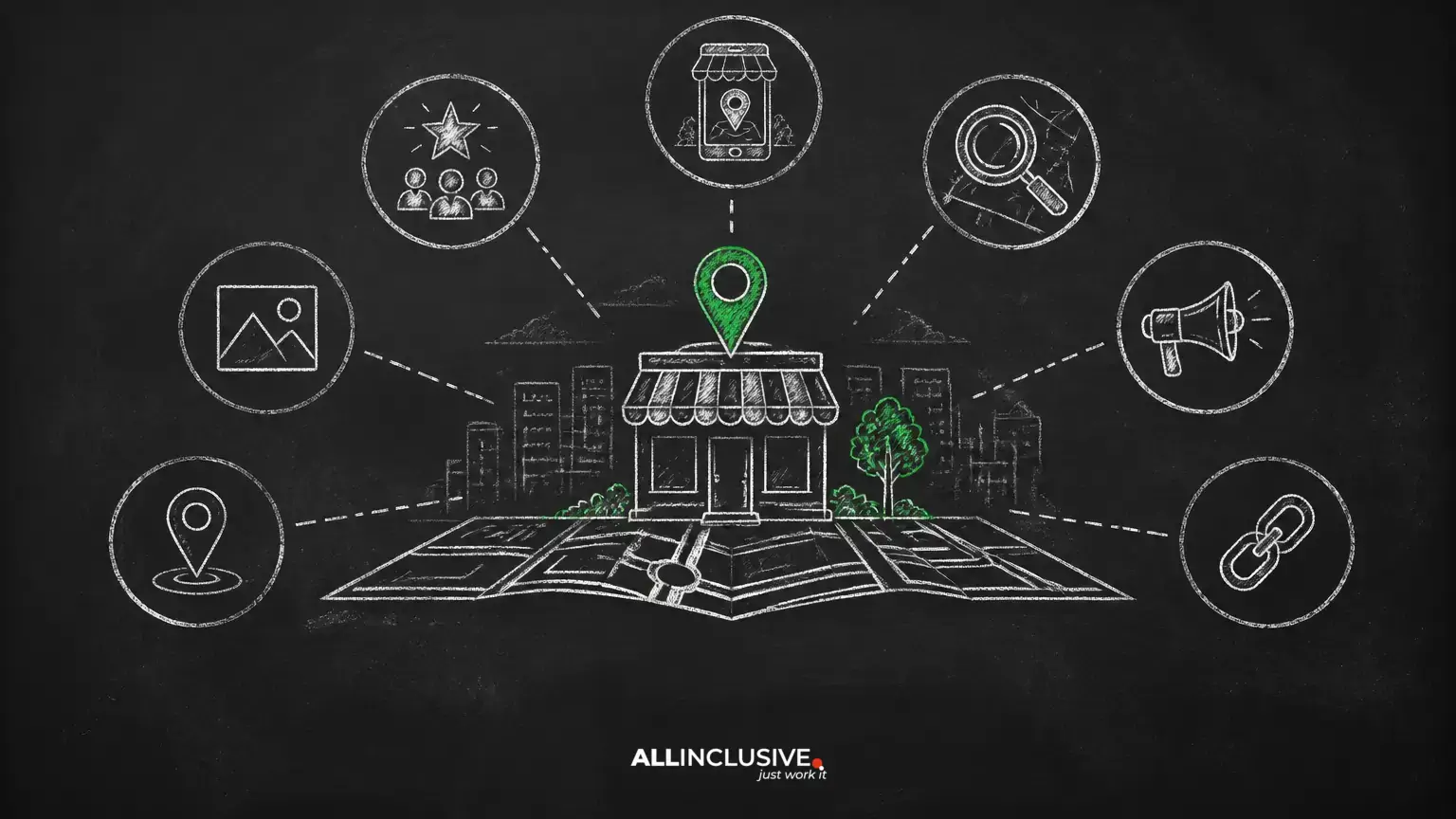
Local SEO helps a business become more visible when people search for products or services in a specific area. It combines clear website content, accurate business information, useful location pages, strong customer experiences, and a measurement process that connects visibility to real inquiries.
There is no single tactic that guarantees prominent rankings. A durable local SEO program starts by making the business genuinely useful to local searchers and then ensuring search engines can interpret that usefulness accurately. The following framework provides a practical starting point for service-area businesses, storefronts, and organizations with multiple locations.
1. Define the local customer and search intent
Begin with the people you want to reach, not with a long list of keywords. Identify the services they need, the areas you actually serve, and the questions they ask before contacting a business.
Local searches often reflect different stages of intent. Someone searching for “how to repair a leaking faucet” needs information, while someone searching for “emergency plumber near me” may be ready to call. Your site should support both needs with appropriate pages and calls to action.
Build a simple topic map that includes:
- Your primary products or services.
- The locations you legitimately serve.
- Common problems, questions, and purchasing concerns.
- Urgent versus research-oriented searches.
- Evidence that helps customers choose, such as qualifications, process details, service areas, and policies.
Use keyword tools, customer conversations, support records, and internal search data as research inputs. Treat volume estimates as directional rather than as promises of traffic or conversions. A lower-volume query can be valuable when it closely matches a service and a real local need.
2. Create useful, distinct location pages
A location page should help a visitor understand whether your business can serve them and what will happen next. Simply replacing a city name throughout a copied template creates thin pages and gives users little reason to trust the business.
For each legitimate location, explain the services available there, relevant operating details, the communities or neighborhoods served when appropriate, and the easiest way to request help. Add locally meaningful information only when it is accurate and useful. Examples might include service boundaries, parking guidance, delivery coverage, appointment procedures, or regional considerations.
A practical location-page structure
- Clear introduction: State the service and location in language customers understand.
- Service details: Explain what is offered, for whom, and what the process involves.
- Local context: Include genuinely useful information specific to the area.
- Trust information: Present verifiable credentials, policies, reviews, photographs, or team information.
- Frequently asked questions: Answer questions that are relevant to the service and location.
- Next step: Make calling, booking, requesting a quote, or visiting straightforward.
Do not publish pages for places you do not serve merely to capture searches. Inaccurate location targeting can frustrate users and weaken trust. If a business serves a broad area from one base, describe the service area honestly rather than implying a physical office at every destination.
3. Make your business information consistent and easy to verify
Search engines and customers need dependable information about your business. Review the name, address, phone number, hours, service areas, categories, website URL, and appointment instructions wherever the business is represented.
Consistency does not mean every profile must use identical wording. It means the core facts should agree and reflect the current business. Create a simple record of approved details, then use it when updating your website and third-party profiles.
Pay particular attention to changes such as:
- Moving to a new address.
- Changing phone numbers or booking methods.
- Opening or closing a location.
- Adjusting holiday or seasonal hours.
- Changing the services offered.
Do not add categories, locations, or service claims that do not accurately describe the business. Structured data can help clarify information when it matches visible page content, but markup is not a substitute for accurate information or a useful page.
4. Improve the path from the homepage to local service pages
Visitors should not have to search through a complicated menu to find the service or location that fits their needs. A clear information architecture helps users and gives search engines stronger signals about how pages relate to one another.
For a multi-location organization, the homepage can introduce the brand and guide visitors to services or locations. A location directory can then link to individual pages. Service pages should link to relevant locations, and location pages should link back to related services.
Use descriptive link text rather than vague labels such as “learn more.” Keep important pages within a reasonable number of clicks from the homepage, and test navigation on mobile devices. A high exit rate or short visit is not automatically a ranking problem, but confusing navigation can prevent users from completing the action that matters.
5. Build trust through useful local proof
Local customers often want reassurance before they call or visit. Show evidence that answers their concerns without exaggeration.
Useful proof may include:
- Specific service descriptions and realistic expectations.
- Staff or practitioner qualifications where relevant.
- Before-and-after examples when appropriate and permitted.
- Clear guarantees, cancellation terms, pricing guidance, or response times.
- Authentic customer reviews displayed in accordance with applicable platform and legal requirements.
- Community involvement or partnerships that are genuine and relevant.
Ask satisfied customers for honest feedback, but do not offer incentives for positive reviews or pressure people to use particular language. Respond to reviews professionally and protect customer privacy. A thoughtful response can clarify misunderstandings and show prospective customers how the business handles concerns.
6. Earn relevant local mentions without manufactured links
Links and mentions can help people discover a business, but the strongest outreach usually begins with a legitimate reason for another organization to reference it. Consider useful contributions such as educational resources, local events, professional associations, community programs, expert commentary, or partnerships that already exist.
Avoid schemes built solely to obtain links, including paid placements presented as editorial recommendations, mass directory submissions, or programs that require participants to publish promotional content. A scholarship or community initiative should be created because it provides real value, not as a shortcut to search visibility.
Before seeking coverage, create something worth sharing. This could be a local planning checklist, a transparent explanation of an industry process, a resource for customers, or original information based on the business’s legitimate expertise. Outreach should be selective, accurate, and respectful of the publisher’s standards.
7. Measure local SEO using business outcomes
Rankings can fluctuate by location, device, personalization, and search context. Track them carefully, but do not treat a ranking position as the complete definition of success.
Establish a baseline for organic visits, calls, form submissions, booking requests, direction requests, and qualified leads. Where possible, connect those actions to specific pages and locations. Review performance over a meaningful period rather than reacting to a single day or an isolated query.
Questions for a useful monthly review
- Which service and location pages attract relevant visitors?
- Which pages generate calls, forms, bookings, or other valuable actions?
- Are users reaching the correct location and service information?
- Have hours, contact details, or service boundaries changed?
- Are there technical issues affecting crawling, speed, mobile usability, or forms?
- Do search queries reveal unanswered customer questions?
Use the findings to improve content and the customer journey. If a page receives impressions but few visits, review its title and description for clarity. If it receives visits but few inquiries, examine the offer, proof, page structure, and call to action. If a page attracts irrelevant traffic, clarify its audience and service boundaries.
Common local SEO mistakes to avoid
- Publishing near-identical city pages with little local value.
- Using a location name where the business has no legitimate presence or service coverage.
- Adding keywords unnaturally to headings, paragraphs, or business names.
- Allowing outdated hours or contact information to remain live.
- Relying on markup, directory listings, or backlinks while neglecting the customer experience.
- Measuring visits without checking whether they produce meaningful business actions.
Put the framework into practice
Start with the locations and services that matter most to the business. Audit their accuracy, improve the pages that customers use to decide, simplify navigation, and establish a repeatable measurement process. Then expand carefully, using real customer questions and operational knowledge to guide new content.
For a broader view of how technical, content, and authority work fit together, explore Allinclusive’s local SEO resources. If your needs extend beyond local visibility, review the SEO services overview for a wider search strategy framework.
Local SEO is most sustainable when it reflects the real business: accurate information, useful answers, trustworthy evidence, and an easy next step. Those fundamentals serve searchers first while giving search engines clearer information to evaluate.