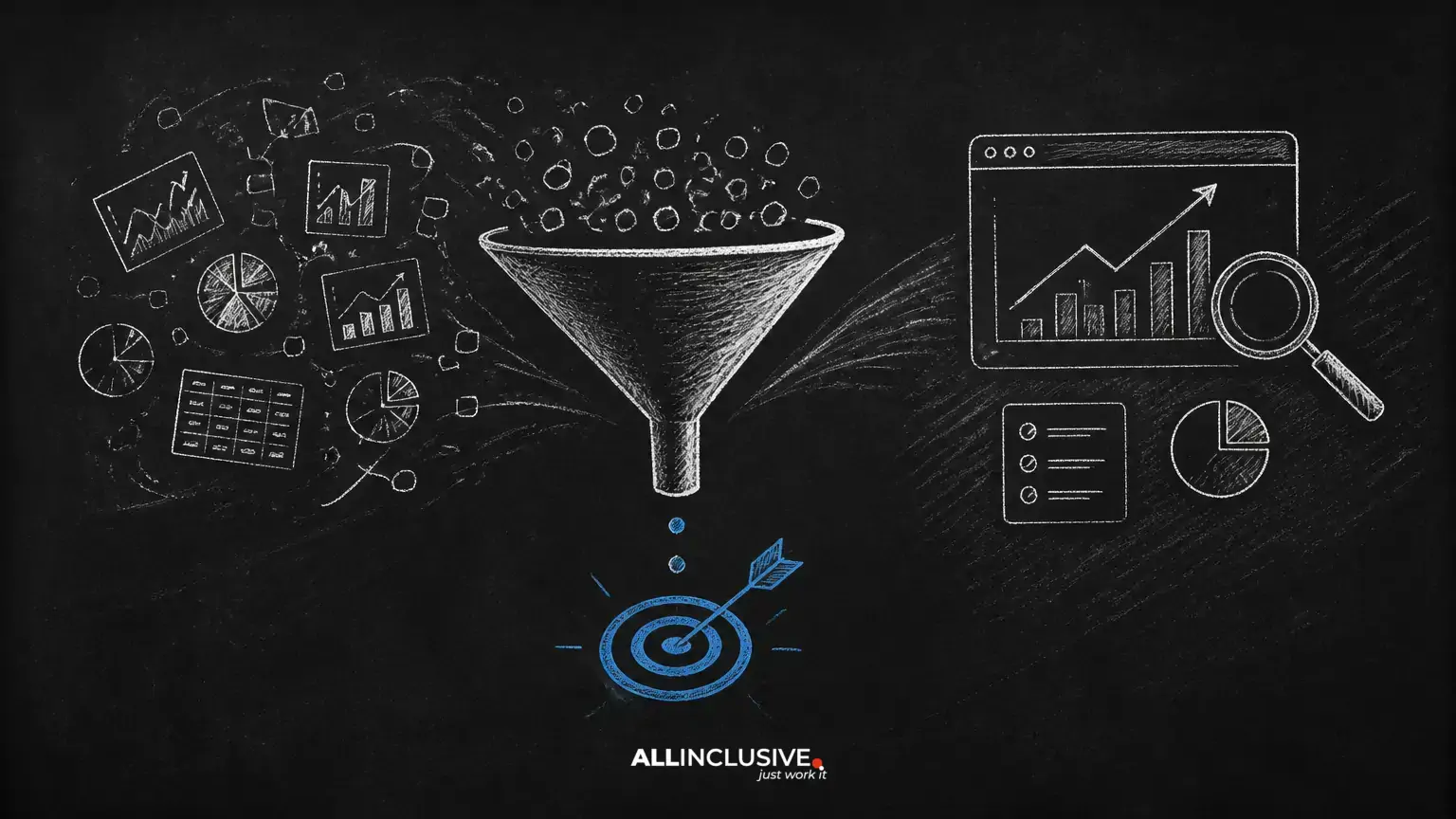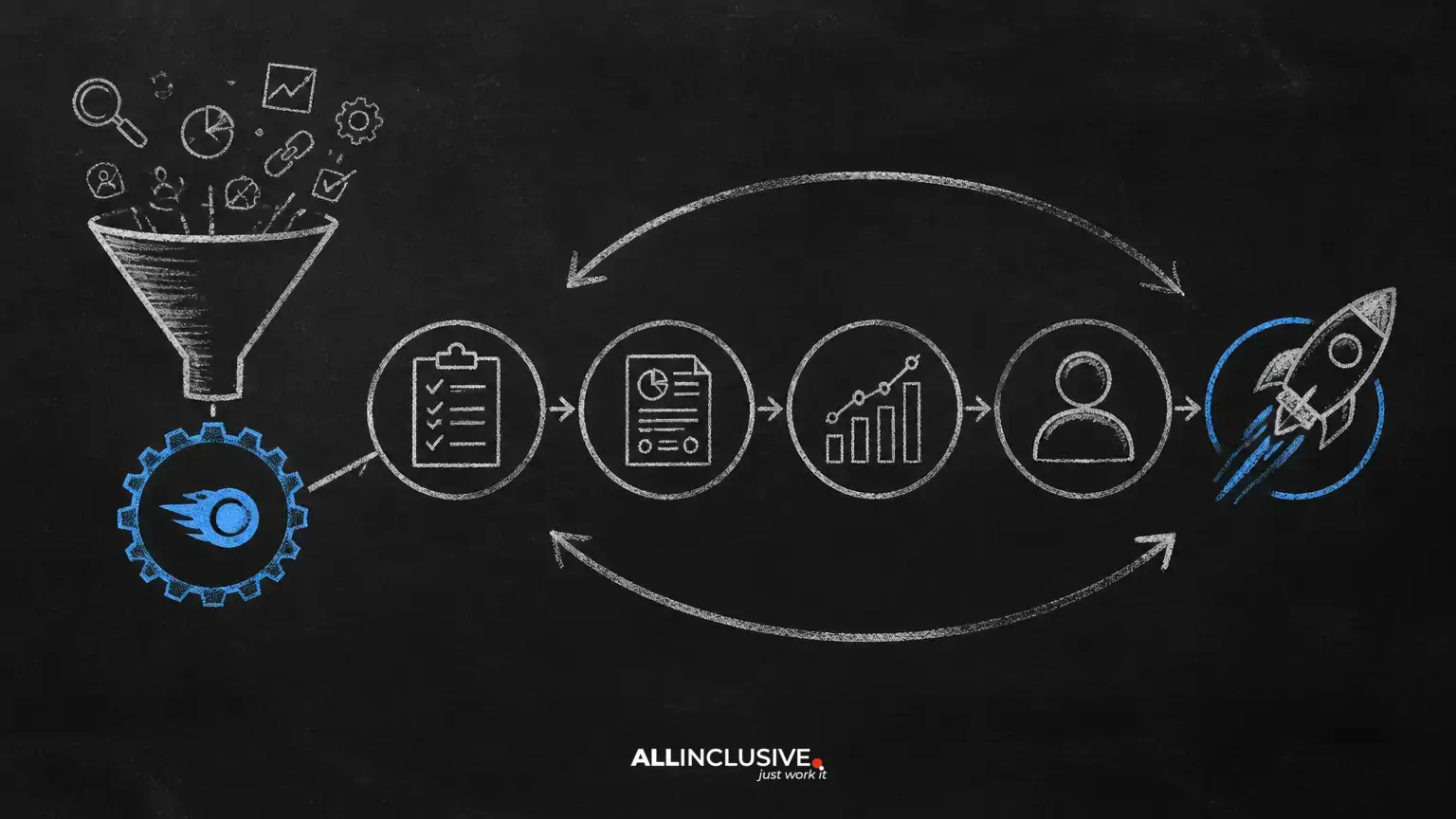
SEO platforms are most valuable when they help a team make better decisions—not when they generate more reports. Semrush can support many parts of an agency workflow, including prospect research, technical reviews, competitor analysis, keyword discovery, content planning, and performance monitoring. The challenge is turning those capabilities into a process that is useful, ethical, and easy to repeat.
A strong workflow does not begin with a dramatic traffic estimate or a long list of technical warnings. It begins with the client’s business model, audience, search demand, conversion paths, and available resources. From there, an agency can use third-party tools to investigate opportunities, form hypotheses, and prioritize work. Actual performance should still be validated with first-party analytics, search-console data, rankings, conversions, and business outcomes.
This guide presents a practical framework for using Semrush as one part of an SEO process. Interface names, limits, and available features can change, so verify current functionality and plan access before building a client deliverable around a specific report.
Start with a decision framework, not a tool
Before opening a platform, define what the analysis needs to answer. Common questions include:
- Which audience or market segment is the business trying to reach?
- Where does the site appear to be visible, and where is it absent?
- Which competitors are winning relevant searches?
- What technical or content constraints could prevent growth?
- Which actions are realistic within the client’s budget, team, and timeline?
Document these questions in the brief. This prevents the workflow from becoming a collection of disconnected exports. It also gives the team a standard for judging whether a finding matters. A keyword gap is not automatically an opportunity, and an audit warning is not automatically a priority.
1. Use market and competitor research to qualify prospects
Prospecting research should help an agency determine whether a company has a plausible SEO opportunity and whether the company is a sensible fit. It should not be used to make unsupported promises.
Define the market before comparing domains
Choose a location, language, product category, and audience before reviewing competitors. A national database may not represent a local business, while a broad industry comparison may be misleading for a specialist provider. Record the country and device assumptions used in the analysis so the findings can be reproduced.
Then review several relevant businesses rather than treating one domain as the entire market. Compare the prospect with organizations that serve the same audience, solve a similar problem, or compete for the same commercial searches. Large websites can distort broad comparisons, so consider building a smaller comparison set of genuine business competitors.
Look for patterns in visibility
Useful questions include:
- Does the site rank mainly for its brand, or does it also reach people who do not know the brand?
- Are important service, product, location, or problem-based topics missing?
- Do competitors have useful pages that answer questions the prospect does not address?
- Are rankings concentrated on a small number of pages?
- Does the site appear competitive for relevant terms, or only for low-value variations?
Estimated traffic and keyword data are directional. They may be modeled from rankings, search-volume assumptions, click behavior, or third-party datasets rather than measured visits. Present them as estimates and validate them against the prospect’s own analytics and search-console information whenever possible.
Separate fit from opportunity
A company may have visible weaknesses but still be a poor prospect if it lacks resources, has no clear offer, operates in a highly restricted market, or expects immediate results from a long-term channel. Add qualification criteria such as decision-maker access, technical capacity, content expertise, conversion readiness, and realistic expectations.
2. Turn prospect research into a useful audit conversation
An audit is more persuasive when it connects a finding to a consequence and a practical next step. Avoid presenting every warning produced by a crawler. A long issue list often hides the few items that deserve attention.
Validate technical findings
A technical audit can surface crawlability, indexation, duplicate-content, metadata, redirect, performance, internal-linking, and structured-data questions. Treat each item as a prompt for verification. Crawler rules can misinterpret intentional site behavior, development environments, faceted navigation, or templates that are appropriate for the business.
For every proposed issue, record:
- Observation: what the tool detected.
- Validation: how the team confirmed or rejected the finding.
- Impact: which users, search systems, pages, or business goals may be affected.
- Recommendation: what should change and why.
- Owner and effort: who can implement it and how difficult the change may be.
This structure makes the audit more actionable than a generic health score. A score can be used as a high-level diagnostic, but it should not be treated as a ranking guarantee or a complete measure of SEO quality.
Prioritize by business impact
Prioritize issues that block important pages, distort search signals, prevent conversions, or create a poor experience for a meaningful audience. A small number of duplicate titles on a large site may be less important than an accidentally blocked service section. Conversely, a seemingly minor template issue can matter if it affects thousands of high-value pages.
Explain trade-offs. For example, changing a URL structure may improve clarity but create migration risk. Removing filtered pages may reduce duplication but eliminate useful discovery paths. Good SEO recommendations account for engineering effort, analytics continuity, legal requirements, accessibility, and customer experience.
3. Build a search strategy from gaps and intent
Keyword-gap analysis is a starting point for understanding how competitors address demand. It is not a publishing queue. Exported keywords need to be grouped by intent, audience, funnel stage, product relationship, and business value.
Map topics to pages
For each potential topic, ask:
- What does the searcher need at this stage?
- Would a new page provide a substantially better answer than an existing page?
- Is the topic relevant to the company’s offer and expertise?
- Can the business support the claim with accurate information?
- What action should a satisfied visitor take next?
Use one primary purpose per page. If several keywords describe the same underlying need, combine them into a comprehensive resource. If one keyword group contains clearly different intents, create separate pages and connect them with contextual internal links. This reduces cannibalization and gives readers a clearer path.
Study competitors without copying them
Competitor pages can reveal common questions, missing subtopics, formats, and linkable angles. They should not become a template to reproduce. Create an original brief that includes the audience, promise, evidence requirements, content outline, conversion path, and editorial standards.
Content quality depends on usefulness and trust, not on inserting a target phrase a particular number of times. Explain concepts plainly, include relevant examples, state limitations, and update claims that can change. For topics affecting health, finance, safety, law, or major purchases, apply an appropriately rigorous review process.
4. Create a campaign roadmap that teams can execute
Research becomes valuable when it leads to a sequence of actions. A practical roadmap can be organized into four workstreams:
- Foundation: access, measurement, indexation, templates, redirects, and critical technical constraints.
- Opportunity pages: improvements to existing pages that already have relevance, impressions, or conversion potential.
- Content expansion: new pages that address validated audience needs and support commercial goals.
- Authority and distribution: digital PR, partnerships, expert contributions, community participation, and other legitimate ways to earn attention and links.
Assign each item an expected outcome, owner, dependency, effort estimate, and review date. Do not promise a specific ranking position or traffic increase when the underlying variables are outside the team’s control.
Use tools to form hypotheses, then test them
Examples of testable hypotheses include:
- Improving a page’s explanation and internal links will help it serve a clearly defined search intent better.
- Resolving an indexation problem will make eligible pages easier for search engines to discover.
- Adding a comparison or implementation section will answer an important gap for the intended audience.
- Improving a commercial page’s clarity will help qualified visitors understand the next step.
Set a baseline before implementation. Track relevant impressions, clicks, rankings, organic sessions, leads, sales, assisted conversions, and qualitative feedback according to the page’s purpose. Allow enough time for the change to be crawled and evaluated, and interpret results alongside seasonality, promotions, site changes, and measurement limitations.
5. Report progress without overstating certainty
Client reporting should distinguish between measured outcomes, modeled estimates, completed work, and future expectations. A clear report usually includes:
- What was completed during the reporting period.
- What changed in search visibility and organic traffic.
- Which landing pages and queries contributed to the change.
- What happened to qualified leads or other agreed conversions.
- What remains uncertain and what additional data is needed.
- Which actions are recommended next and why they are prioritized.
Third-party visibility or competitor estimates can provide context, but they should not replace first-party measurement. Avoid framing correlation as causation. If traffic increased after a content update, describe the timing and evidence without claiming the update alone caused every change.
6. Common mistakes to avoid
Using estimated data as proof
Modeled traffic, keyword volume, authority measures, and competitor metrics can be useful for comparison, but they are not the client’s accounting system. Label assumptions and avoid false precision.
Making the audit about the software
Clients need decisions, priorities, and explanations. A feature-by-feature tour is rarely as useful as a short set of verified findings connected to business objectives.
Chasing competitor keywords without strategic fit
A competitor may rank for topics that do not suit the prospect’s products, audience, expertise, or risk tolerance. Relevance and usefulness should outrank copying market coverage.
Equating links with automatic growth
Links can support discovery, authority, and referral traffic, but quantity alone is not a strategy. Focus on genuinely useful resources, credible relationships, and content that deserves attention.
Reporting activity instead of outcomes
Published articles, completed audits, and outreach emails are inputs. Measure whether the work improves visibility for relevant searches, user experience, qualified demand, and business performance.
Conclusion
A repeatable Semrush workflow is less about finding a secret report and more about creating disciplined habits: define the question, use the tool for directional evidence, verify important findings, prioritize by impact, and measure what changed. When this process is connected to a broader SEO services strategy, agencies can turn research into clear recommendations without relying on inflated estimates or unsupported promises.
For related planning, connect technical improvements, content decisions, internal linking, and measurement into one documented roadmap. The platform can accelerate investigation, but sound judgment, accurate implementation, and honest reporting determine whether the work is useful.
For related guidance, see Contact.