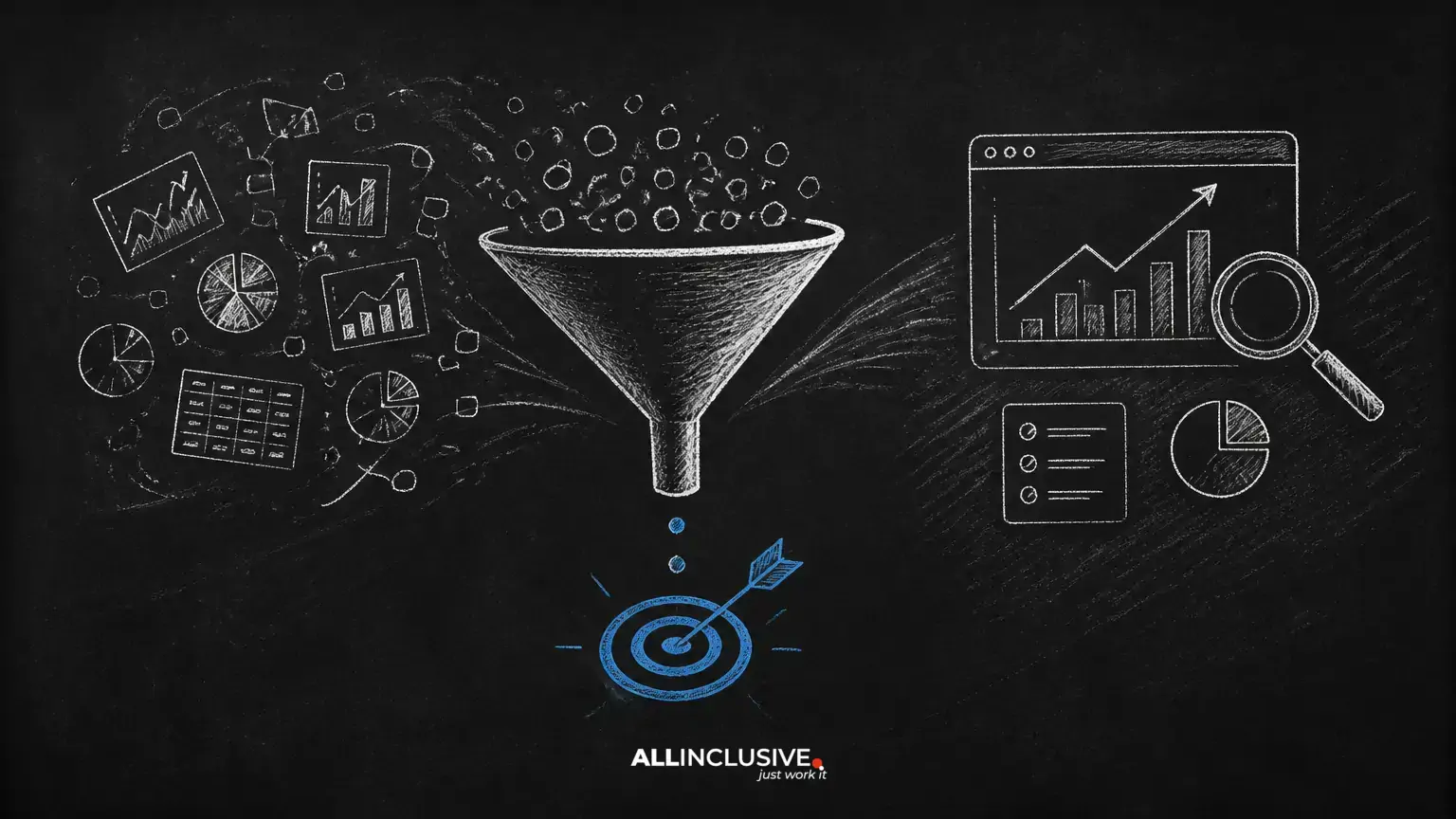
SEO tools can make content planning more informed, but they cannot create a strategy on their own. The most useful platforms help you examine search demand, understand competing pages, identify technical or content problems, and measure what changes over time. The work still depends on choosing the right audience, interpreting evidence carefully, and publishing something genuinely useful.
This guide explains how to use an SEO platform such as Semrush as part of a broader content workflow. Features, reports, data coverage, and pricing can change, so verify current capabilities directly with the provider before selecting a tool or relying on a specific report.
Start with business and audience questions
Keyword data is most valuable when it answers a real business question. Before opening a tool, define what you want the content to accomplish. Possible goals include educating prospective customers, supporting a product decision, generating qualified inquiries, strengthening an existing service page, or reducing support questions.
Then describe the audience in practical terms. What problem are they trying to solve? What do they already understand? What would make an answer credible? These questions prevent a common mistake: choosing topics solely because they appear to have search demand, even when they do not fit the organization’s expertise or offer.
Use keyword research to understand intent
Keyword research is not simply a hunt for phrases with the largest possible volume. It is a way to discover the language people use and the type of answer they expect. Examine related queries, modifiers, questions, and the pages currently visible for an important phrase.
Classify each opportunity by intent:
- Informational: the searcher wants an explanation, process, definition, or comparison.
- Commercial investigation: the searcher is evaluating approaches, providers, or products.
- Transactional: the searcher is ready to take an action such as requesting a quote or making a purchase.
- Navigational: the searcher is looking for a particular organization, page, or resource.
A strong content plan usually includes more than one intent type. Educational articles can establish relevance, while service and comparison pages help readers who are closer to a decision. Do not force one page to answer every possible intent. Create a clear primary purpose and use internal links to guide readers to the next useful step.
Study search results instead of copying competitors
Competitor reports can reveal which websites appear for related searches, but a list of ranking domains is only a starting point. Open the relevant results and evaluate what they actually do well. Look for the depth of explanation, missing subtopics, original examples, page structure, clarity, and evidence.
Separate direct competitors from search competitors. A direct competitor sells a similar product or service. A search competitor may be a publisher, nonprofit, forum, marketplace, or educational site that ranks for the same query. Both can teach you about the searcher’s expectations, but neither should be treated as a template to reproduce.
Turn competitive observations into a useful brief
A useful brief should state the audience, primary intent, promised outcome, important questions, required evidence, internal links, and editorial boundaries. It should also identify how the planned page will be more useful than existing results. That advantage might be a clearer process, a better example, a decision framework, a first-hand explanation, or a more accessible presentation.
Build topic groups rather than isolated posts
Publishing unrelated articles can make a site harder to navigate and harder to maintain. Instead, organize content around a central service, subject, or audience problem. A pillar page introduces the broad topic, while supporting pages answer narrower questions and link back to the pillar when appropriate.
For example, a search strategy cluster might include pages about keyword research, technical audits, content refreshes, local visibility, measurement, and link earning. The connections should be editorially natural. Internal links are most helpful when they give readers context or a next step, not when they are added merely to increase link counts.
Use Allinclusive SEO services as the relevant pillar for readers who want to move from general SEO guidance to a broader service overview. A page about content strategy can also point readers to a more specific explanation of SEO planning and execution when that context is genuinely relevant.
Use content tools as assistants, not editors
Many SEO platforms can help create briefs, surface related terms, compare pages, or identify questions. These functions can reduce research time, but automated recommendations should be reviewed by a knowledgeable editor.
Do not treat a suggested word count, term list, or readability score as a definition of quality. A page can include every related phrase and still fail because it is vague, repetitive, inaccurate, or poorly matched to the reader’s need. Write for comprehension first. Use terminology naturally, explain unfamiliar concepts, and remove sections that do not help the reader make progress.
Audit existing content before creating more
New content is not always the highest-value task. Review existing pages for declining visibility, outdated information, overlapping intent, weak internal links, inaccurate claims, and poor conversion paths. An audit should end in a decision, not just a spreadsheet.
- Keep: the page satisfies its intent and needs only routine maintenance.
- Refresh: the topic remains valuable, but the explanation, examples, structure, or links need improvement.
- Consolidate: multiple pages target the same intent and would be stronger as one authoritative resource.
- Redirect or retire: the page has no durable purpose, meaningful audience, or suitable replacement.
When updating a page, preserve what is still accurate but reassess the premise, not just the wording. Check titles, headings, examples, calls to action, structured navigation, and internal links. If the page makes time-sensitive claims, confirm them before publication.
Measure outcomes with context
Rankings and organic visits can provide useful directional signals, but they are not the full definition of success. Track metrics that reflect the page’s purpose, such as qualified inquiries, assisted conversions, engaged reading, downloads, email signups, or successful navigation to a service page.
Compare performance over an appropriate period and account for seasonality, technical changes, algorithmic volatility, brand demand, and changes in the search results. Avoid declaring success or failure from a single keyword movement or a short reporting window.
Use backlink research ethically
Competitive backlink analysis can help you discover publications, organizations, and resources that care about a subject. It should not become a reason to copy link profiles or send irrelevant mass outreach. The sustainable question is: what asset would be useful enough for a credible source to reference?
Potential assets include original research, a clear explanatory guide, a practical template, a well-maintained glossary, or a genuinely useful tool. Outreach should be selective, transparent, and relevant to the recipient. Never offer misleading incentives or place links where they do not help the audience.
Common mistakes to avoid
- Choosing keywords without checking the actual intent of the results.
- Assuming a tool’s estimated volume is precise or guaranteed.
- Writing to a prescribed word count instead of answering the question.
- Repeating competitor headings without adding distinct value.
- Publishing many overlapping pages rather than maintaining a coherent topic structure.
- Treating rankings as guaranteed outcomes or ignoring leads and business relevance.
- Using automated recommendations without human fact-checking and editing.
A practical SEO tool workflow
- Define the audience, business objective, and primary question.
- Research query variations and classify intent.
- Review relevant search results and identify quality gaps.
- Choose the right page type and connect it to the content cluster.
- Create a brief with evidence requirements, questions, and internal links.
- Draft an original, useful answer and edit it for accuracy and clarity.
- Publish with sound technical basics, then record the page’s purpose and baseline metrics.
- Review performance and reader behavior after an appropriate period.
- Refresh, consolidate, expand, or retire the page based on evidence.
Conclusion
SEO software is most effective when it supports disciplined editorial decisions. Use it to discover language, investigate the competitive environment, prioritize maintenance, and evaluate progress. Do not let reports replace audience understanding or turn content into a checklist of phrases. A focused strategy combines search evidence with expertise, clear page purposes, ethical promotion, and ongoing improvement. Search evidence becomes more actionable when search volume is weighed alongside competition, intent, and page purpose.
For related guidance, see Contact.